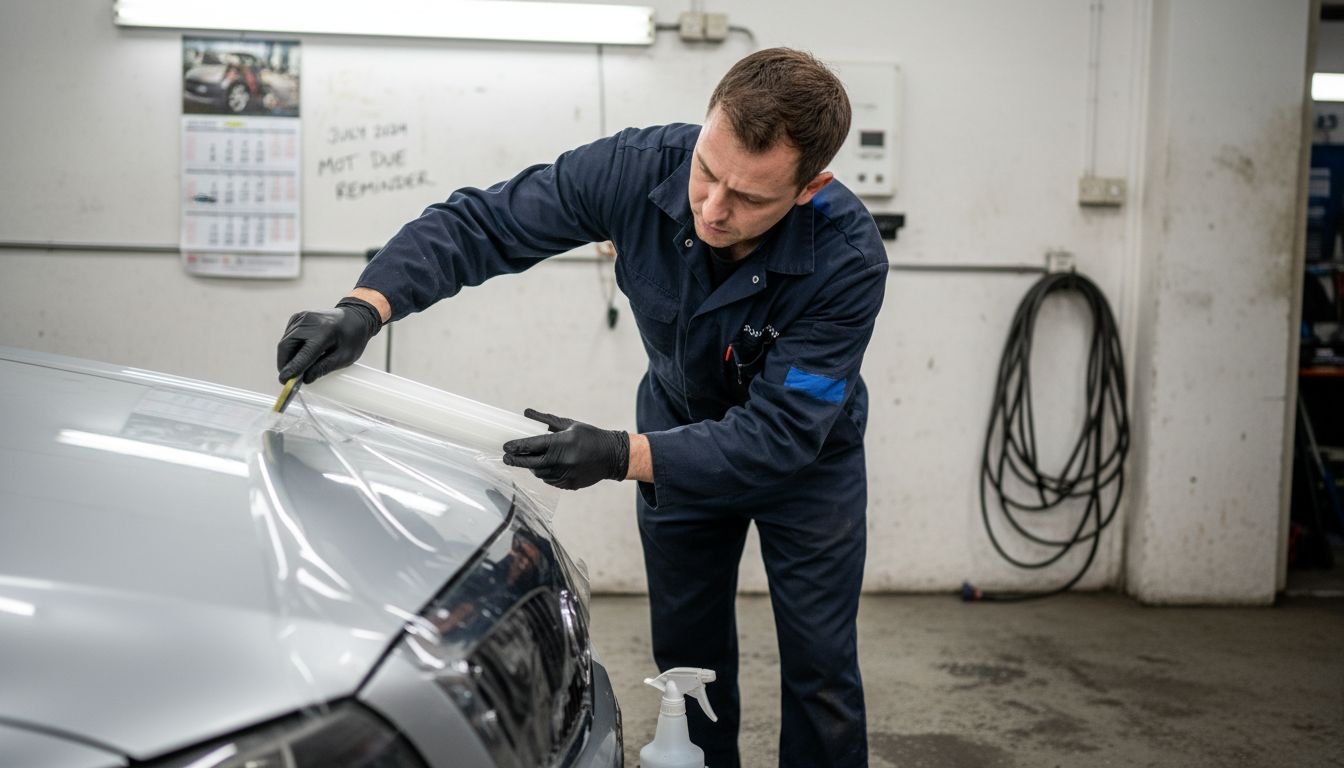
Most British installers agree that small details make the biggest impact in paint protection film work. With consumer demand for flawless vehicle finishes higher than ever, the difference between average and outstanding results often comes down to technique. More than 80 percent of professional installers credit their reputation to obsessive attention at every stage of the process. This guide reveals proven British strategies for precision edge alignment, advanced material management, and achieving near-invisible protection on any vehicle.
Table of Contents
- 1. Mastering Seamless Edge Alignment For A Flawless Finish
- 2. Advanced Auto-Nesting For Maximum Material Efficiency
- 3. Precision Knife Handling To Prevent Vehicle Surface Damage
- 4. Using AI-Driven Pattern Adjustments For Complex Shapes
- 5. Fine-Tuning Pre-Cut Patterns For Custom Vehicle Designs
- 6. Optimising Film Stretch To Reduce Wrinkles And Waste
- 7. Speeding Up Installation With Efficient Workflow Setups
Quick Summary
| Takeaway | Explanation |
|---|---|
| 1. Clean Surface Preparation is Essential | Thoroughly clean and degrease vehicle surfaces to ensure optimal paint protection film adhesion and prevent installation defects. |
| 2. Implement Advanced Auto-Nesting Techniques | Use digital software to strategically arrange film patterns, minimising waste and maximising material efficiency for cost-effective installations. |
| 3. Master Knife Handling for Precision | Maintain sharp blades and apply controlled pressure to avoid damaging vehicle surfaces during film cutting and installation. |
| 4. Utilise AI for Accurate Pattern Adjustments | Leverage AI-driven algorithms to adapt patterns to complex shapes, enhancing fitment accuracy and installation quality. |
| 5. Optimise Workflow for Faster Installations | Streamline your workspace and schedule to reduce project time while maintaining high standards of quality in PPF applications. |
1. Mastering Seamless Edge Alignment for a Flawless Finish
Precision edge alignment is the hallmark of professional paint protection film (PPF) installation. Professional installers understand that flawless results hinge on meticulous edge preparation and seamless transitions between film sections.
Achieving perfect edge alignment requires more than just technical skill—it demands a systematic approach to film placement. When working with vehicle surfaces, proper edge preparation techniques are crucial for preventing lifting, bubbling, and premature wear.
Key Edge Alignment Strategies:
- Clean Surface Preparation: Thoroughly clean and degrease the vehicle surface before film application
- Precise Trimming: Use sharp, high-quality cutting tools for clean edge cuts
- Gradual Pressure Application: Apply film with consistent, controlled pressure to minimise air bubbles
- Overlap Management: Create minimal but strategic overlaps to ensure complete surface coverage
Professional installers recognise that edge alignment is not just about technical skill—it is about understanding how different vehicle contours interact with protective film. Smooth transitions between panel sections require a keen eye and steady hand.
“Perfect edges are the signature of a truly professional PPF installation.”
To master seamless edge alignment, practice and patience are essential. Start with smaller, flatter surfaces and progressively challenge yourself with more complex vehicle geometries. Your precision will improve with each installation, transforming good work into exceptional results.
2. Advanced Auto-Nesting for Maximum Material Efficiency
Auto-nesting represents a game-changing strategy for paint protection film (PPF) installers seeking to maximise material usage and minimise waste. Professional installers recognise that intelligent pattern arrangement can significantly reduce material costs and improve overall project efficiency.
Advanced material optimisation techniques enable installers to pack complex vehicle panel patterns more strategically, reducing unused film remnants and cutting expenses.
Key Auto-Nesting Strategies:
- Digital Pattern Mapping: Utilise software that automatically arranges patterns to minimise material waste
- Intelligent Rotation: Leverage algorithms that rotate and align patterns for optimal sheet coverage
- Precision Placement: Position intricate cuts to maximise usable film surface
- Minimal Overlap Management: Reduce unnecessary material consumption through smart nesting techniques
Professional installers understand that effective auto-nesting is not merely about saving material—it is about creating a more sustainable and cost-effective workflow. By implementing intelligent software solutions, you can transform your installation process from basic cutting to strategic material management.
“Efficiency is not about working harder, but working smarter with your resources.”
To truly master auto-nesting, invest time in understanding your cutting software’s capabilities. Practice with different vehicle models and panel configurations to develop an intuitive sense of how patterns can be optimally arranged. Your bottom line will thank you for the precision and thoughtfulness.
3. Precision Knife Handling to Prevent Vehicle Surface Damage
Knife handling represents the most critical skill separating professional PPF installers from amateurs. Every slice, every movement can potentially determine the difference between a flawless installation and costly surface damage.
Professional installation techniques demand extraordinary precision and control when working with cutting tools near delicate vehicle surfaces.
Essential Knife Handling Principles:
- Blade Sharpness: Always use brand new or extremely sharp blades
- Controlled Pressure: Apply consistent light pressure to prevent gouging
- Protective Underlayment: Use quality cutting mats to shield vehicle surfaces
- Angle Management: Maintain a precise 30-degree blade angle during cutting
- Blade Replacement: Change blades frequently to maintain cutting accuracy
Most installers underestimate the complexity of knife control. Professional grade PPF installation requires developing muscle memory and understanding how different blade types interact with various film materials and vehicle contours.
“Your knife is an extension of your hand—treat it with respect and precision.”
Mastering knife handling is about developing a delicate touch. Practice on sacrificial materials before attempting installation on actual vehicles. Your patience and attention to detail will translate directly into superior results and satisfied customers.
4. Using AI-Driven Pattern Adjustments for Complex Shapes
AI-driven pattern adjustments represent the frontier of precision in paint protection film (PPF) installation. Professional installers now leverage advanced algorithms to transform complex vehicle geometries from challenging obstacles into perfectly tailored film applications.
Intelligent pattern registration techniques enable unprecedented accuracy when working with intricate automotive surfaces that traditional methods struggle to accommodate.
AI Pattern Adjustment Strategies:
- Geometric Analysis: Use machine learning algorithms to map vehicle contours
- Dynamic Scaling: Automatically adjust pattern dimensions for precise fitment
- Micro Correction: Apply minute adjustments to account for surface variations
- Complex Curve Compensation: Predict and adapt to non-linear surface geometries
- Real Time Modification: Instantly recalculate pattern parameters during installation
Traditional cutting approaches often fail when confronted with modern vehicle designs characterised by complex curves and unconventional angles. AI technology bridges this precision gap, transforming installation from a manual process to an intelligent, adaptive workflow.
“Precision is not about perfection. It is about intelligent adaptation.”
Mastering AI-driven pattern adjustments requires both technological understanding and practical experience. Invest time in learning how these advanced systems interpret and respond to unique vehicle surfaces. Your ability to leverage these tools will set you apart in an increasingly competitive installation landscape.
5. Fine-Tuning Pre-Cut Patterns for Custom Vehicle Designs
Pre-cut patterns represent the foundation of professional paint protection film (PPF) installation, but true mastery lies in understanding how to adapt these templates to unique vehicle geometries. Professional installers recognise that no two vehicles are exactly alike.
Custom pattern adaptation techniques enable precision modifications that transform standard templates into perfectly tailored solutions for individual vehicle designs.
Pattern Fine-Tuning Strategies:
- Digital Template Modification: Leverage software tools to adjust pre-existing patterns
- Millimetre Precision Adjustments: Make incremental changes to accommodate unique surface contours
- Multi Layer Editing: Create complex modifications across different vehicle sections
- Digital Mapping: Use advanced scanning techniques to capture exact vehicle geometries
- Comparative Analysis: Compare original pattern with vehicle surface to identify necessary alterations
Successful fine-tuning requires a combination of technological understanding and hands-on experience. Professional installers develop an intuitive sense of how small adjustments can dramatically improve film fitment.
“Perfection is not about uniformity. It is about intelligent adaptation.”
Remember that each vehicle presents a unique challenge. Approach pre-cut pattern modifications as an art form that blends technical precision with creative problem solving. Your ability to transform standard templates into custom solutions will set you apart in the competitive PPF installation market.
6. Optimising Film Stretch to Reduce Wrinkles and Waste
Film stretch represents a critical technique that separates professional PPF installers from amateurs. Understanding how to manipulate film tension can dramatically improve installation quality and minimise material wastage.
Advanced film application techniques enable installers to achieve seamless coverage while preserving film integrity and reducing unnecessary material consumption.
Strategic Film Stretch Principles:
- Temperature Management: Utilise controlled heat to enhance film malleability
- Gradual Tension Application: Apply stretch incrementally to prevent tearing
- Directional Stretching: Understand film grain and stretch along optimal axes
- Minimal Overlap Strategy: Reduce material waste through precise stretching
- Adaptive Pressure Technique: Modify hand pressure based on surface curvature
Professional installers develop an intuitive understanding of film behaviour. They recognise that each vehicle surface demands a unique approach to stretching and application.
“Mastery is not about force. It is about understanding material limits.”
Consistent practice and careful observation will help you develop the nuanced skills required to optimise film stretch. Your goal is to create a flawless finish that appears effortless while minimising material waste and installation time.
7. Speeding Up Installation with Efficient Workflow Setups
Workflow efficiency separates top-tier PPF installers from average performers. Professional shops understand that time management is just as critical as technical skill when delivering exceptional vehicle protection services.
Streamlined installation processes can dramatically reduce project completion times while maintaining the highest quality standards.
Workflow Optimisation Strategies:
- Workspace Organisation: Create a logical, ergonomic workspace with pre-positioned tools
- Digital Template Preparation: Use software to map vehicle patterns before physical installation
- Sequential Task Management: Develop a standardised installation sequence
- Parallel Process Development: Train team members to work simultaneously on different vehicle sections
- Minimum Movement Principle: Arrange workstations to reduce unnecessary physical movement
Professional installers recognise that efficiency is not about rushing but about eliminating unnecessary steps and creating a smooth, predictable workflow. Each movement should be deliberate and purposeful.
“Speed is a product of systematic preparation, not frantic activity.”
Mastering workflow efficiency requires continuous analysis and incremental improvements. Record your installation times, identify bottlenecks, and consistently refine your approach. Your ability to deliver high-quality work quickly will become your competitive advantage.
Below is a comprehensive table summarising the key strategies and techniques discussed in the article for professional paint protection film (PPF) installation.
| Technique/Strategy | Implementation | Benefits/Outcomes |
|---|---|---|
| Clean Surface Preparation | Thoroughly clean and degrease surfaces | Prevents lifting and bubbling |
| Precise Trimming | Use sharp cutting tools for clean edges | Ensures a seamless finish |
| Auto-Nesting | Utilise digital software for pattern arrangement | Maximises material use and reduces waste |
| Knife Handling | Apply controlled pressure and maintain blade sharpness | Prevents vehicle surface damage |
| AI Pattern Adjustment | Employ machine learning for geometric analysis | Achieves precision fitment on complex shapes |
| Pre-Cut Pattern Fine-Tuning | Use digital tools for millimetre precision adjustments | Tailors templates to unique vehicle designs |
| Film Stretch Optimisation | Control temperature and apply gradual tension for optimal stretch | Reduces wrinkles and material waste |
| Efficient Workflow Setups | Organise workspaces and utilise digital templates for installation sequences | Speeds up installation and maintains quality |
Elevate Your PPF Installation with Precision Cutting Software
Mastering advanced cutting techniques like seamless edge alignment and AI-driven pattern adjustments demands not only skill but also the right tools. If you aim to reduce material waste, enhance accuracy, and streamline your workflow, then utilising specialised software is essential. AEONCUT’s solutions help professional installers and enthusiasts achieve flawless results by delivering highly precise pre-cut patterns, intelligent auto-nesting, and ongoing enhancements tailored for complex vehicle geometries.
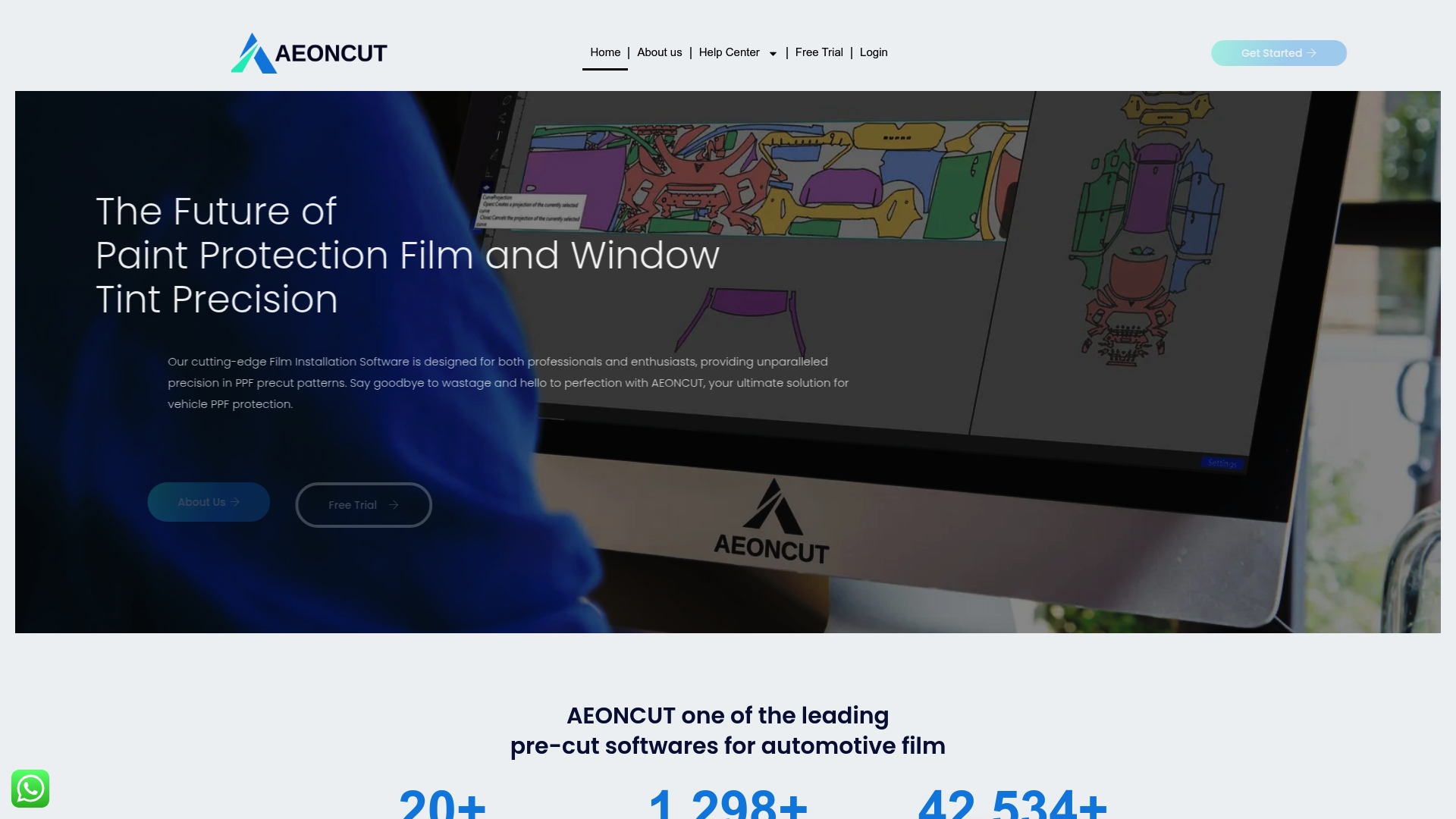
Ready to transform your paint protection film installation process with cutting-edge technology? Discover the latest features and updates that keep you ahead in material efficiency and pattern customisation at Software Update – AEONCUT PPF Pre-cut Cutting software. Step up your craft and ensure your next installation is flawless by exploring all AEONCUT offers at aeoncutsw.com. Don’t wait—boost your accuracy, efficiency, and customer satisfaction today.
Frequently Asked Questions
How can I ensure seamless edge alignment during PPF installation?
To achieve seamless edge alignment, start by thoroughly cleaning and degreasing the vehicle surface before applying the film. Use sharp cutting tools for precise trimming and apply the film with gradual, controlled pressure to minimise air bubbles.
What are the key techniques for optimising material efficiency with auto-nesting?
To maximise material efficiency, utilise software for digital pattern mapping and intelligent rotation of patterns. This approach can reduce waste significantly, allowing for optimal coverage of vehicle panels while keeping costs low.
What is the best way to handle knives while cutting PPF?
Always use brand new or extremely sharp blades to prevent gouging. Maintain a 30-degree angle while cutting and apply consistent light pressure to handle the knife effectively and avoid damaging the vehicle’s surface.
How does AI technology improve pattern adjustments for complex vehicle shapes?
AI technology enhances pattern adjustments by using machine learning algorithms to analyse vehicle contours. This enables you to make real-time modifications, ensuring a precise fit for intricate shapes, thus improving the overall installation accuracy.
What should I consider when fine-tuning pre-cut patterns for custom vehicle designs?
Focus on digital template modification to make incremental adjustments tailored to unique vehicle geometries. Use scanning techniques to capture exact shapes, allowing for comprehensive comparisons between original patterns and actual surfaces.
How can I improve my film stretching technique to avoid wrinkles?
Enhance your film stretching technique by managing temperature and applying stretch gradually. Aim for an adaptive pressure technique that responds to different surface curvatures, which will help reduce wrinkles and waste during installation.
Recommended
- How to Create Custom PPF Patterns Using Aeoncut: Step-by-Step Guide – AEONCUT PPF Pre-cut Cutting software
- How to Create Custom PPF Patterns Using Aeoncut: Step-by-Step Guide – AEONCUT PPF Pre-cut Cutting software
- PPF Cutting Software: Essential Guide for Installers 2025 – AEONCUT PPF Pre-cut Cutting software
- Common Mistakes in PPF Installation and How to Avoid Them – AEONCUT PPF Pre-cut Cutting software
- Diesel Particulate Filter Maintenance for Professionals – My WordPress