Most british installers now rely on automatic car tinting for greater material savings and accurate results. Advanced automatic tint techniques reduce waste by as much as 30 percent compared to manual methods, transforming both small independent shops and high-volume service centers worldwide. This shift matters for anyone aiming to maximise workflow efficiency, achieve flawless outcomes, and stay competitive. Discover how modern technology helps professional teams deliver consistent, high-quality installations while dodging common myths that slow the industry.
Table of Contents
- Automatic Car Tint Explained and Common Myths
- Main Types of Automatic Car Tint Systems
- How Precision Cutting Software Streamlines Application
- Legal, Safety, and Industry Compliance Considerations
- Reducing Costs and Common Pitfalls in Tint Installation
Key Takeaways
| Point | Details |
|---|---|
| Automatic Car Tinting Offers Multiple Benefits | Beyond aesthetics, window tinting significantly reduces UV radiation, enhances privacy, and improves vehicle safety. |
| Understanding Tint Types is Essential | Different tint technologies provide varying heat rejection and signal interference levels; selecting the right type depends on vehicle requirements and climate. |
| Precision Cutting Software Enhances Installation Efficiency | Advanced software optimises material use and reduces human errors, increasing the overall quality and speed of installations. |
| Legal Compliance is Crucial | Installers must be aware of local regulations regarding tint darkness and visible light transmission to avoid legal complications. |
Automatic Car Tint Explained and Common Myths
Automatic car tint represents a sophisticated solution for vehicle window treatments, offering far more complexity than simple aesthetic modifications. Professional installers understand that modern window tinting involves precision engineering, advanced materials, and strategic application techniques. Common misconceptions about window tinting persist, often preventing vehicle owners from understanding its genuine functional benefits.
Window tinting provides multiple critical advantages beyond visual appeal. Professional grade tints deliver significant protection against ultraviolet radiation, substantially reduce interior heat absorption, enhance privacy, and contribute to overall vehicle safety. Legal regulations regarding tint darkness vary between jurisdictions, making professional consultation essential for compliant installations. Modern automatic tinting technologies enable precise application, ensuring uniform coverage and minimal material waste during installation.
Several persistent myths continue to circulate within automotive customisation circles. Contrary to popular belief, high-quality window tints do not automatically compromise night-time visibility or constitute an illegal vehicle modification. Professional installers understand that proper tint selection involves selecting appropriate transparency levels that meet both aesthetic preferences and regional legal requirements. Advanced automatic tinting solutions now incorporate computer-aided design and cutting technologies, enabling precise pattern matching and seamless application across various vehicle models.
Pro tip: Always verify local vehicle tinting regulations before commencing any window treatment project to ensure full legal compliance and avoid potential future complications.
Main Types of Automatic Car Tint Systems
Automatic car tint systems represent a sophisticated technological solution for vehicle window treatments, offering professional installers multiple film options tailored to specific performance requirements. Automotive window tint films are engineered as multi-layered technologies designed to control light transmission, thermal radiation, and ultraviolet penetration across diverse environmental conditions.
The primary automatic car tint systems can be categorised into several distinct types, each with unique characteristics and performance profiles. Dyed tints provide basic aesthetic modifications and modest heat control, while metalized films offer enhanced durability and reflective properties. Carbon tints deliver superior heat rejection without signal interference, representing a mid-range technological solution. Ceramic tints emerge as the most advanced option, providing exceptional heat reduction, UV protection, and minimal electronic signal disruption.
Professional installers must understand the nuanced differences between these automatic tint technologies, considering factors such as climate conditions, legal regulations, client preferences, and vehicle specifications. Each tint system presents specific advantages: dyed films offer affordability, metalized options provide increased strength, carbon tints balance performance and cost, while ceramic tints represent the pinnacle of window treatment technology, delivering unparalleled protection and aesthetic refinement.
Here is a concise overview of the main automatic car tint system types and their distinguishing characteristics:
| Tint Type | Key Benefit | Common Drawback | Ideal Application |
|---|---|---|---|
| Dyed | Affordable aesthetics | Limited heat rejection | Basic upgrades |
| Metalized | Increased strength and reflection | Can disrupt signals | Commercial vehicles |
| Carbon | Superior heat block, no interference | Mid-range price | Family cars |
| Ceramic | Maximum UV/heat protection | Higher cost | Premium installations |
Pro tip: Always conduct a comprehensive client consultation to match the most appropriate automatic tint system with specific vehicle requirements and environmental conditions.
How Precision Cutting Software Streamlines Application
Precision cutting software has revolutionised the automotive tint installation industry, transforming traditional manual processes into highly efficient digital workflows. Advanced software technologies integrate seamlessly with computer-aided design systems to deliver unprecedented accuracy and material optimization for professional installers.
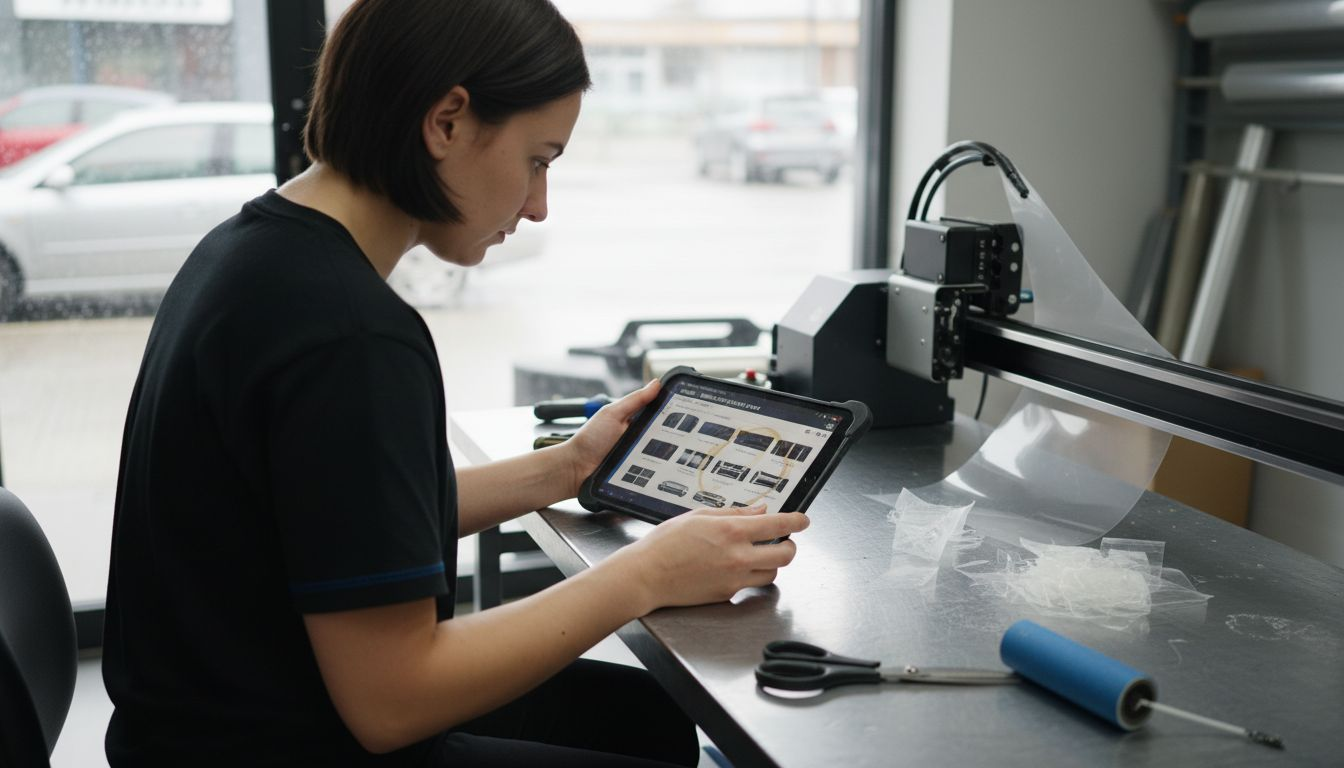
The core functionality of precision cutting software revolves around several key technological innovations. Auto-nesting algorithms enable installers to maximize material usage by intelligently arranging cutting patterns to minimize waste. Computer-aided design (CAD) integration provides real-time simulation and adjustment capabilities, allowing technicians to predict potential installation challenges before physical cutting begins. These digital tools support complex design requirements, ensuring that each vehicle receives a precisely tailored window tint solution.
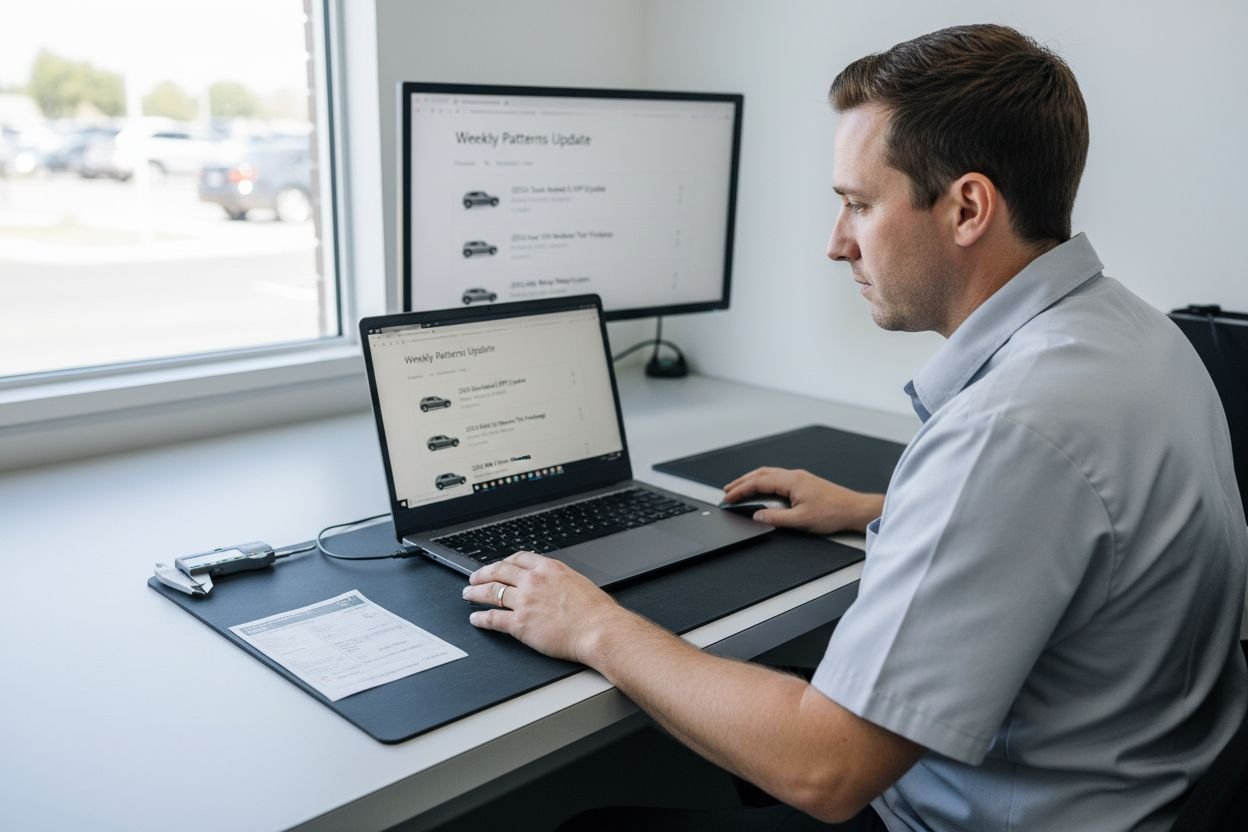
Professional installers benefit from multiple advanced features inherent in modern precision cutting software. Digital pattern libraries contain extensive vehicle-specific templates, enabling rapid and accurate film cutting across diverse automotive models. Real-time measurement validation, cloud-based pattern updates, and automated error checking mechanisms significantly reduce human error and installation time. The software’s ability to generate intricate cutting paths with millimetre-level precision represents a quantum leap in tint application technology, dramatically improving overall installation quality and efficiency.
Pro tip: Invest time in thoroughly understanding your precision cutting software’s features to maximize its potential and improve your installation workflow productivity.
Legal, Safety, and Industry Compliance Considerations
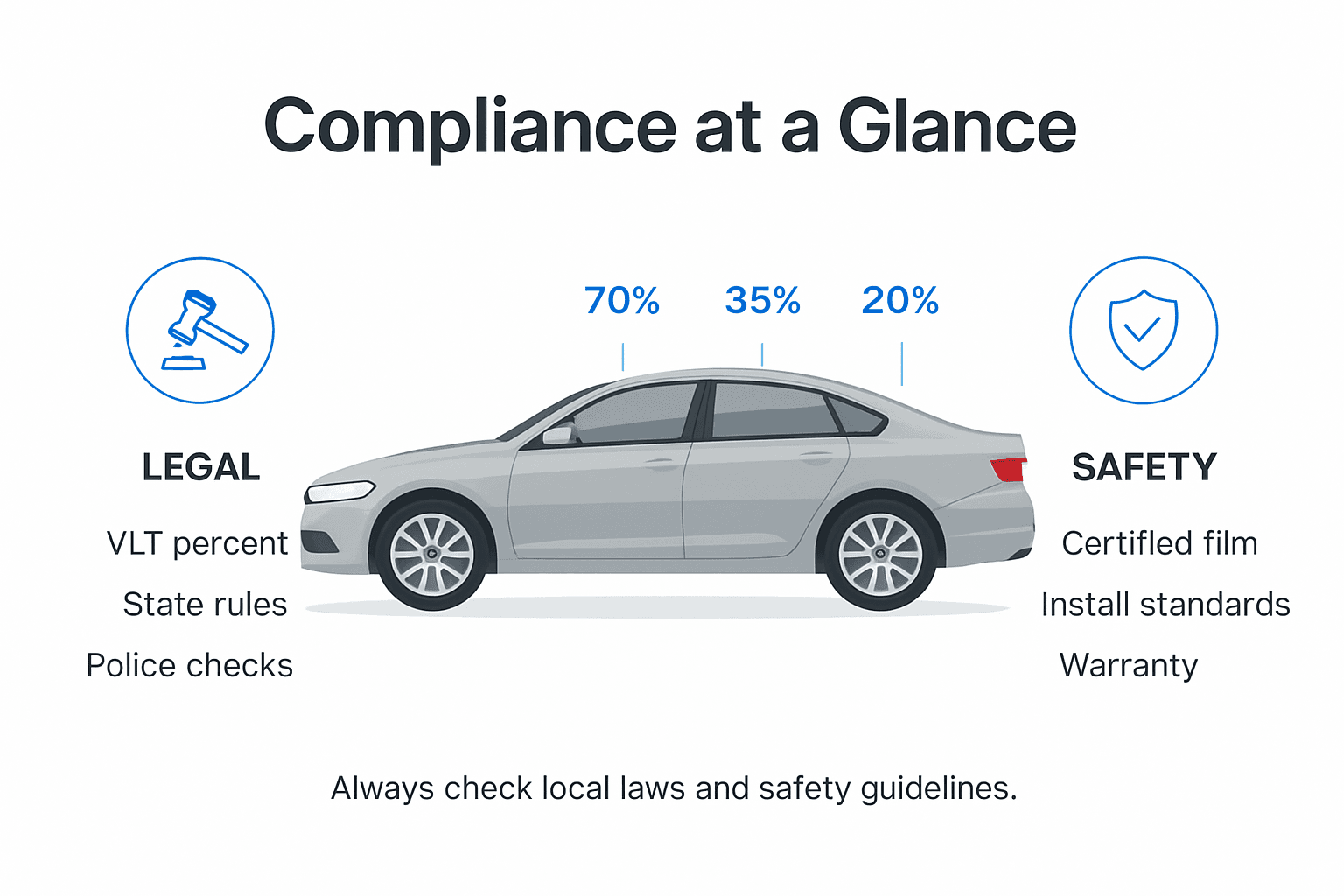
Professional window tint installers must navigate a complex landscape of legal regulations and safety standards that govern automotive film applications. Vehicle window tinting involves critical legal considerations that directly impact driver visibility and road safety, requiring meticulous attention to regional legislative requirements and industry compliance standards.
The primary legal considerations centre around Visible Light Transmission (VLT) percentages, which dictate the amount of light permitted through vehicle windows. Different jurisdictions mandate specific VLT thresholds for front windscreens, side windows, and rear windows, with variations based on vehicle type and intended usage. Professional installers must understand these nuanced regulations to ensure client compliance, avoiding potential legal penalties, vehicle inspection failures, and potential safety risks associated with excessive window darkening.
Beyond VLT regulations, industry compliance encompasses multiple critical dimensions. Safety standards require window tints to maintain sufficient visibility for drivers, particularly during night-time and adverse weather conditions. Installers must consider factors such as reflectivity, colour restrictions, and potential interference with electronic systems like GPS, mobile communication devices, and advanced driver assistance technologies. Additionally, professional liability considerations demand rigorous documentation of tint specifications, client consultations, and compliance verification to mitigate potential legal challenges.
Pro tip: Develop a comprehensive regional regulation checklist and regularly update your reference materials to ensure consistent compliance across different jurisdictions.
Reducing Costs and Common Pitfalls in Tint Installation
Professional window tint installers must strategically approach their craft to minimise material waste and avoid costly errors. Common installation mistakes can significantly increase project expenses and compromise final quality, necessitating a comprehensive understanding of precision techniques and potential technical challenges.
Preparation represents the most critical phase in cost-effective tint installation. Surface preparation demands meticulous cleaning to eliminate dust, oils, and microscopic debris that could compromise film adhesion. Installers frequently encounter multiple potential pitfalls during window treatment processes, including insufficient lubrication, improper environmental conditions, and inappropriate film selection. These errors can result in bubbling, premature peeling, and reduced overall film performance, leading to expensive rework and customer dissatisfaction.
Technical expertise plays a pivotal role in reducing installation costs. Professional installers must invest in continuous training, understand precise cutting techniques, and select high-quality materials matched to specific vehicle requirements. Advanced techniques such as computer-aided design cutting, proper heat shrinking methods, and understanding film characteristics across different environmental conditions can dramatically reduce material waste and installation time. Systematic quality control, including thorough initial assessment, careful film selection, and precise application techniques, ultimately minimises unexpected expenses and enhances overall project profitability.
Reviewing typical pitfalls and cost-saving tips in professional tint installations helps optimise results:
| Pitfall | Impact | Cost-Saving Tip |
|---|---|---|
| Poor surface cleaning | Reduced film life | Use dedicated cleaning agents |
| Incorrect film choice | Bubbling, peeling | Select film by climate and car |
| Inadequate training | Waste, rework | Invest in installer education |
| Skipping quality checks | Customer dissatisfaction | Adopt systematic project checklists |
Pro tip: Develop a standardised pre-installation checklist to systematically identify and mitigate potential risks before commencing any window tint project.
Enhance Your Car Tint Installations with Precision Cutting Software
Professional installers know that achieving flawless automatic car tint applications requires precision, efficiency and minimal waste. The challenges of selecting the right tint type, adhering to legal requirements and avoiding costly installation errors can be simplified through advanced cutting technology. AEONCUT’s cutting-edge software offers just that – extensive vehicle-specific pattern libraries, AI-driven auto-nesting and cloud-based updates designed to streamline your workflow and elevate your craft.
Discover how you can transform tint installation into a fast, accurate and profitable process with our window Tint – AEONCUT PPF Pre-cut Cutting software solutions.
Ready to reduce material waste, increase accuracy and ensure compliance in every project? Visit AEONCUT now and choose the perfect subscription plan tailored for professional installers. Explore detailed features and expert resources today at window Tint – AEONCUT PPF Pre-cut Cutting software and get started immediately with the ultimate tool in automotive window tint cutting.
Frequently Asked Questions
What are the main benefits of automatic car tinting?
Automatic car tinting provides various advantages, including protection against ultraviolet radiation, reduced interior heat absorption, enhanced privacy, and improved vehicle safety. These benefits go beyond mere aesthetics, offering practical solutions for vehicle owners.
How do different types of automatic car tint systems compare?
Types of automatic car tint systems include dyed tints, metalized films, carbon tints, and ceramic tints. Dyed tints are more affordable but offer limited heat rejection. Metalized films have increased strength and reflection, while carbon tints provide superior heat rejection without signal interference. Ceramic tints are the most advanced, offering maximum UV protection and heat reduction, though at a higher cost.
What role does precision cutting software play in tint installation?
Precision cutting software enhances tint installation efficiency by enabling accurate material cutting and minimising waste. It integrates with computer-aided design systems to allow real-time adjustments and simulations, ensuring that each tint application is tailored to the specific vehicle requirements with millimetre-level precision.
What legal considerations should installers be aware of when tinting windows?
Installers must understand Visible Light Transmission (VLT) regulations, which dictate the allowable light that can pass through tinted windows. Adhering to these standards is essential for compliance and avoiding penalties. It’s also important to consider safety standards to ensure sufficient visibility for drivers, especially in adverse weather conditions.
Recommended
- How Window Tint Works: Essential Guide for Auto Professionals 2025 – AEONCUT PPF Pre-cut Cutting software
- Types of Window Tint: Guide for Installers and Dealers 2025 – AEONCUT PPF Pre-cut Cutting software
- Tinting Curved Windows: Pro Tips and Solutions 2025 – AEONCUT PPF Pre-cut Cutting software
- What is Window Tint? Essential Guide for Tinting Pros 2025 – AEONCUT PPF Pre-cut Cutting software
- industrial painting services orlando fl – Resources – Southern Sandblasting & Painting LLC
- Custom Stickers up to 1 inch, Transparent or White Stickers, Real Foil – BcardsCreation