More than 90 percent of British automotive professionals report that ultraviolet exposure is the leading cause of paint fading and deterioration in modern vehicles. For installers and mobile tint technicians, delivering reliable UV protection is every bit as crucial as perfect fit and finish. Understanding the actual science behind advanced paint protection will help you avoid common myths, choose efficient solutions, and set yourself apart in an industry where expertise drives customer satisfaction.
Table of Contents
- UV Car Paint Protection Defined And Misconceptions
- Leading UV Protection Products And Technologies
- Application Processes For Optimal UV Defence
- Comparing Durability, Costs, And Effectiveness
- Common Mistakes And How To Avoid Them
Key Takeaways
| Point | Details |
|---|---|
| Understanding UV Protection | Modern paint protection films provide superior UV resistance compared to traditional wax, essential for preserving vehicle aesthetics and longevity. |
| Importance of Professional Installation | Proper surface preparation and meticulous application are critical for effective UV defence; inadequate processes can lead to significant protection failures. |
| Evaluating Protection Solutions | Investing in high-quality protection technologies can reduce long-term maintenance costs and increase resale value, making them a worthwhile addition for vehicle owners. |
| Avoiding Common Mistakes | Key errors include insufficient surface cleaning and neglecting environmental factors, which can compromise the performance of protective coatings. |
UV car paint protection defined and misconceptions
Modern automotive paint protection is a sophisticated defence mechanism against environmental degradation, particularly ultraviolet radiation. Paint protection film represents a technological advancement originally developed for military applications, now refined for automotive preservation. The primary purpose involves creating a transparent barrier that shields vehicle paintwork from harmful solar radiation, stone chips, and minor abrasions.
Understanding UV damage requires recognising that sunlight contains multiple wavelengths capable of progressively breaking down automotive paint molecular structures. Ultraviolet rays penetrate clear coat layers, causing oxidation, colour fading, and structural weakening. Professional installers know that not all protection films provide equivalent defence – modern urethane-based solutions offer superior UV resistance compared to traditional wax or sealant treatments.
Common misconceptions about UV paint protection persist among vehicle owners. Many believe any transparent film will provide comprehensive protection, whereas professional standards like ASTM D4587 demonstrate significant variability in UV resistance. Factors such as film thickness, material composition, and application technique dramatically influence the protective capabilities. High-quality paint protection films typically block 99% of ultraviolet radiation, preventing paint degradation and maintaining vehicle aesthetic value.
Pro tip: Always request professional UV transmission measurements when selecting paint protection film to ensure genuine comprehensive protection for your vehicle’s paintwork.
Leading UV protection products and technologies
The automotive UV protection market has witnessed remarkable technological advancements, with paint protection films emerging as sophisticated defence mechanisms against environmental degradation. Modern technologies span multiple categories, including advanced thermoplastic urethane films, nano-engineered coatings, and specialised UV-resistant clear coat formulations designed to preserve vehicle aesthetics and structural integrity.
Cutting-edge developments in UV protection now incorporate nano-silica polyether technologies that provide exceptional performance characteristics. These innovative formulations cure rapidly under ultraviolet light, creating robust crosslinked networks that dramatically enhance scratch resistance and weathering protection. Professional installers increasingly recognise these nano-scaled solutions as superior alternatives to traditional protective treatments, offering remarkable mechanical strength and superior adhesion on automotive surfaces.
Key technological approaches in contemporary UV protection include self-healing paint protection films, ceramic nano-coatings, and advanced UV-curable resin systems that provide multilayered defence against solar radiation. These technologies typically incorporate specialised ingredients like nano-silica particles, photostabilising agents, and crosslinking polymers that interact synergistically to block harmful ultraviolet wavelengths while maintaining optical clarity and paint transparency.
Pro tip: Request detailed spectral transmission data when selecting UV protection products to understand precise ultraviolet blocking capabilities across different wavelength ranges.
Application processes for optimal UV defence
Professional UV paint protection requires meticulous preparation and application techniques that go far beyond simple surface treatments. UV coating technologies provide sophisticated surface protection through advanced methodologies that involve precise cleaning, priming, and application processes designed to maximise long-term automotive paint preservation.
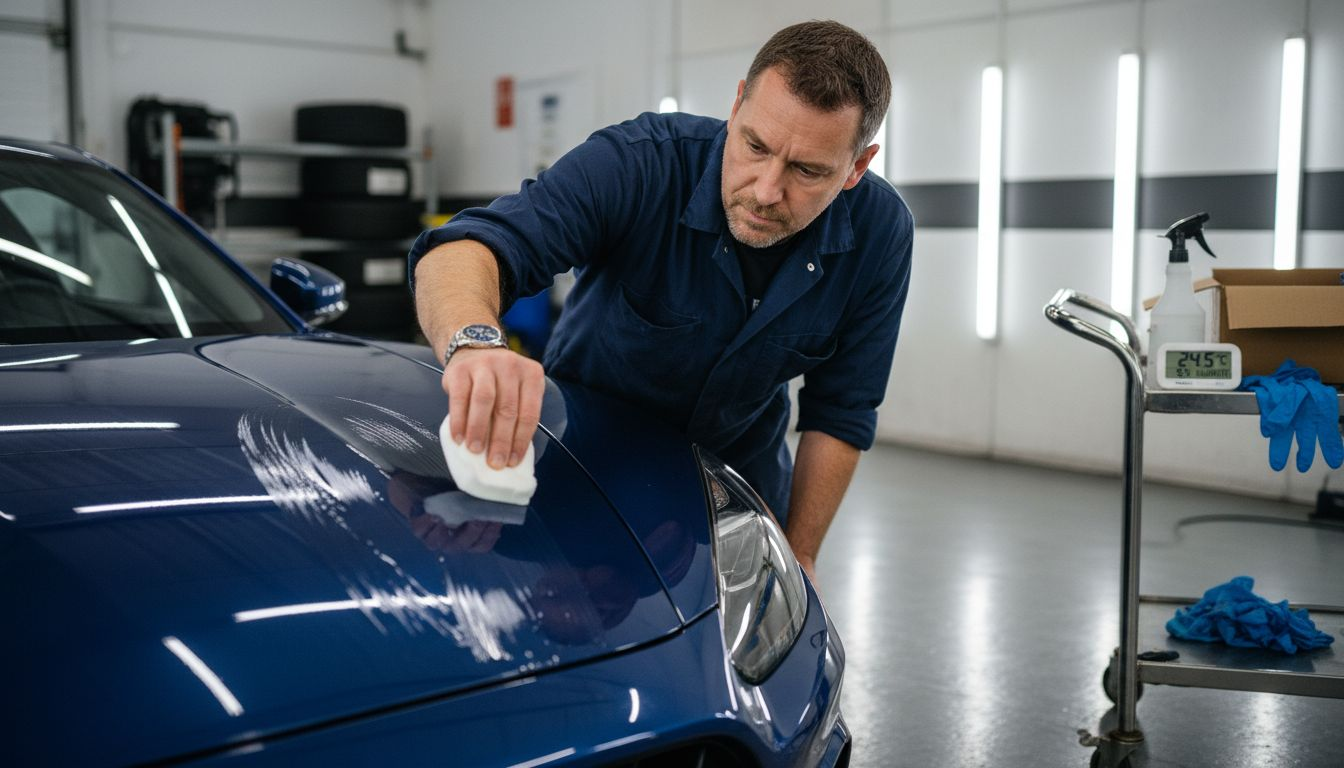
The application process begins with comprehensive surface preparation, which includes thorough cleaning, decontamination, and potential minor paint correction to ensure optimal adhesion. Professional installers utilise specialised cleaning solutions that remove microscopic contaminants, creating an immaculate surface ready for protective film or coating application. Temperature and humidity control during application becomes critical, with most professional workshops maintaining controlled environments between 20-25 degrees Celsius and 40-50% relative humidity to ensure optimal product performance.
UV curing technologies transform liquid coatings into robust protective layers through rapid polymerisation processes. Technicians apply thin, uniform layers of UV-reactive resins, followed by immediate exposure to ultraviolet light sources that trigger instantaneous crosslinking. This method produces exceptionally durable protective films with superior scratch resistance, significantly reducing traditional drying times and minimising potential environmental contamination during the application process.
Pro tip: Invest in professional-grade infrared thermometers to monitor surface temperatures accurately during UV protection film application, ensuring consistent and optimal results.
Use this table to quickly reference best practice factors for optimal UV film installation:
| Factor | Ideal Range | Its Importance |
|---|---|---|
| Temperature | 20-25°C | Ensures proper film adhesion |
| Relative Humidity | 40-50% | Prevents bubbling, uneven finish |
| Surface Preparation | Complete decontamination | Maximises protection quality |
| Application Speed | Controlled, unrushed | Avoids errors and poor bonding |
| Environmental Monitoring | Use calibrated instruments | Maintains consistent results |
Comparing durability, costs, and effectiveness
Automotive paint protection technologies represent significant investments with nuanced considerations beyond initial purchase price. Professional installers must evaluate multiple factors including material performance, longevity, and comprehensive protection capabilities when selecting UV defence solutions. The spectrum of protection ranges from basic clear coats to advanced paint protection films, each offering distinct advantages in preserving vehicle aesthetic and structural integrity.
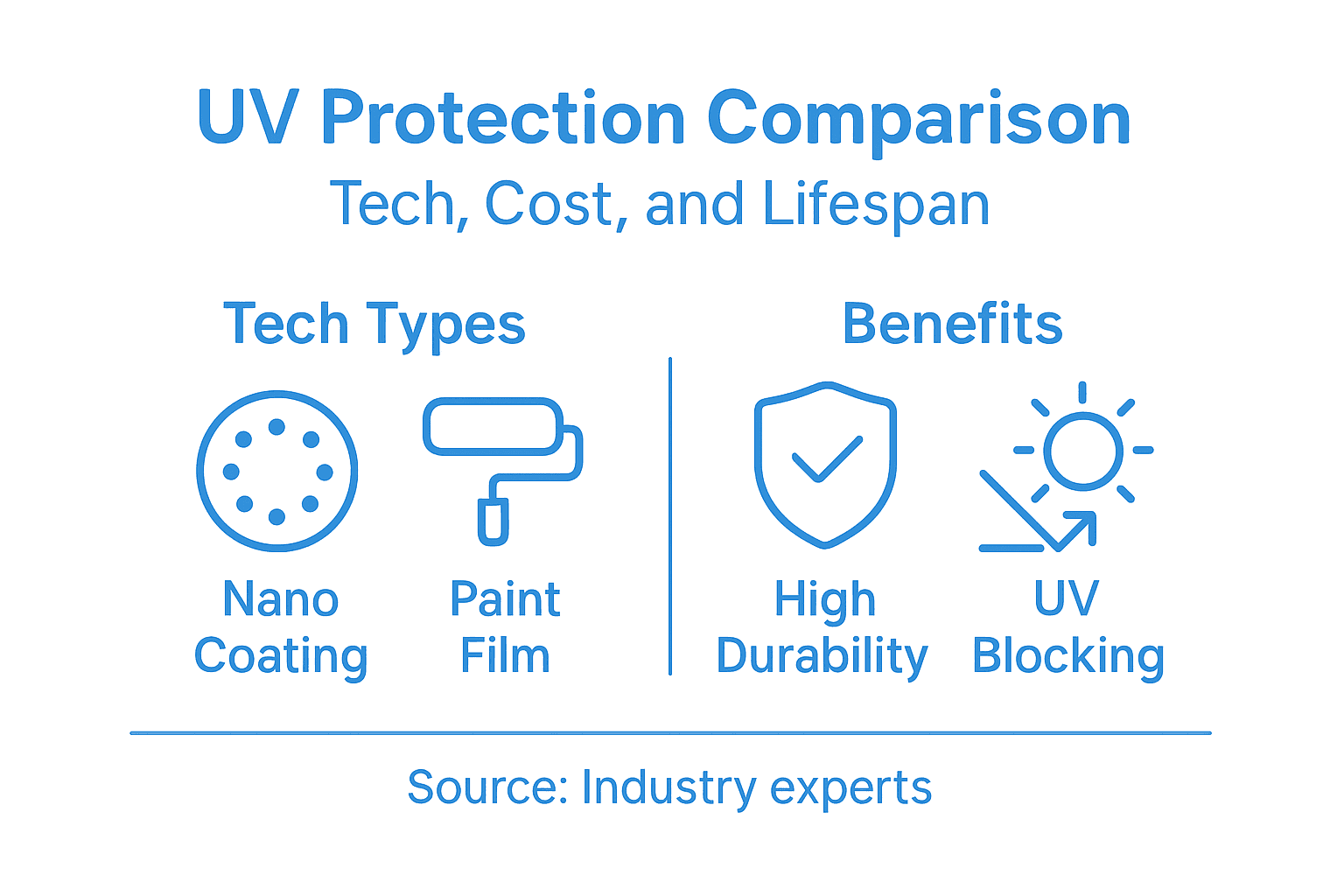
Durability metrics reveal substantial variations across protection technologies. High-end paint protection films demonstrate remarkable resilience, with self-healing properties and robust resistance against environmental challenges. Professional-grade solutions typically offer multi-layered protection that combines UV blocking, scratch resistance, and molecular-level paint preservation. Costs escalate proportionally with technological sophistication, with premium films providing comprehensive defence that can potentially prevent thousands of pounds in potential paint restoration expenses.
Comparative Performance Metrics:
- Standard Clear Coat: Limited UV protection, minimal scratch resistance
- Mid-Range PPF: Moderate UV blocking, some self-healing capabilities
- Premium PPF: Comprehensive UV defence, advanced self-healing technologies
Understanding long-term value becomes crucial when evaluating coating durability across different protection technologies. While initial investments might seem substantial, professional-grade UV protection can significantly reduce maintenance costs and preserve vehicle resale value. Experienced automotive professionals recognise that strategic protection represents an investment rather than an expense, with high-quality films potentially extending paint longevity by several years.
Here’s a summary comparing the characteristics of major automotive UV protection technologies:
| Technology Type | UV Blocking Efficiency | Scratch Resistance | Longevity |
|---|---|---|---|
| Standard Clear Coat | Low, partial coverage | Minimal, prone to wear | 1-3 years typical |
| Mid-Range PPF | Moderate, improved | Good, some self-healing | 3-5 years typical |
| Premium PPF | Superior, up to 99% | Excellent, advanced tech | 5-10 years possible |
| Nano-Ceramic Coating | High, tailored formula | Strong, resists marks | 3-5 years typical |
| UV-Curable Resin System | Customisable, multilayer | Exceptional, rapid bonding | 5+ years possible |
Pro tip: Always request comprehensive performance documentation and independent testing results when selecting UV paint protection technologies to ensure genuine long-term value.
Common mistakes and how to avoid them
Automotive paint protection requires precision and attention to detail that many professionals and enthusiasts overlook. Surface preparation represents the critical foundation for successful UV defence, with seemingly minor errors potentially compromising entire protection strategies. Inadequate cleaning, improper environmental conditions, and rushed application techniques can dramatically reduce the effectiveness and longevity of protective coatings.
Professional installers must remain vigilant about several key error points. Surface contamination remains a primary concern, with dust, oils, and microscopic debris potentially creating barriers to proper film adhesion. Humidity and temperature extremes can introduce significant variability, causing uneven application, bubbling, or incomplete bonding. Experienced technicians recommend maintaining workshop environments between 20-22 degrees Celsius with relative humidity below 50% to ensure optimal application conditions.
Common application mistakes include:
- Insufficient surface decontamination
- Applying films in inappropriate environmental conditions
- Rushing the preparation or installation process
- Using incorrect tools or techniques
- Neglecting manufacturer-specific application guidelines
Protective coating application protocols emphasise the importance of systematic approach and meticulous preparation. Professional-grade UV protection demands comprehensive surface profiling, precise material mixing, and controlled application environments. Technicians must invest time in understanding specific product requirements, conducting thorough surface assessments, and maintaining rigorous quality control throughout the installation process.
Pro tip: Invest in professional-grade surface preparation kits and calibrated environmental monitoring equipment to systematically eliminate potential application variables.
Elevate Your UV Car Paint Protection with Precision Cutting Solutions
Protecting your vehicle’s paint from UV damage and wear requires not only high-quality films but also exact pattern cutting for flawless application. This article highlights the challenge of achieving optimal UV defence through professional installation, meticulous surface preparation and advanced paint protection films. To avoid common pitfalls like bubbling, poor adhesion or wasted material, precision and efficiency in film cutting are essential.
With AEONCUT’s Paint Protection Film – AEONCUT PPF Pre-cut Cutting software, professional installers and serious car enthusiasts gain access to cutting-edge software tailored for accurate pre-cut PPF patterns. Benefit from features such as AI-driven auto-nesting and an extensive pattern library designed to minimise waste and ensure perfect fits that preserve your vehicle’s value and shine.
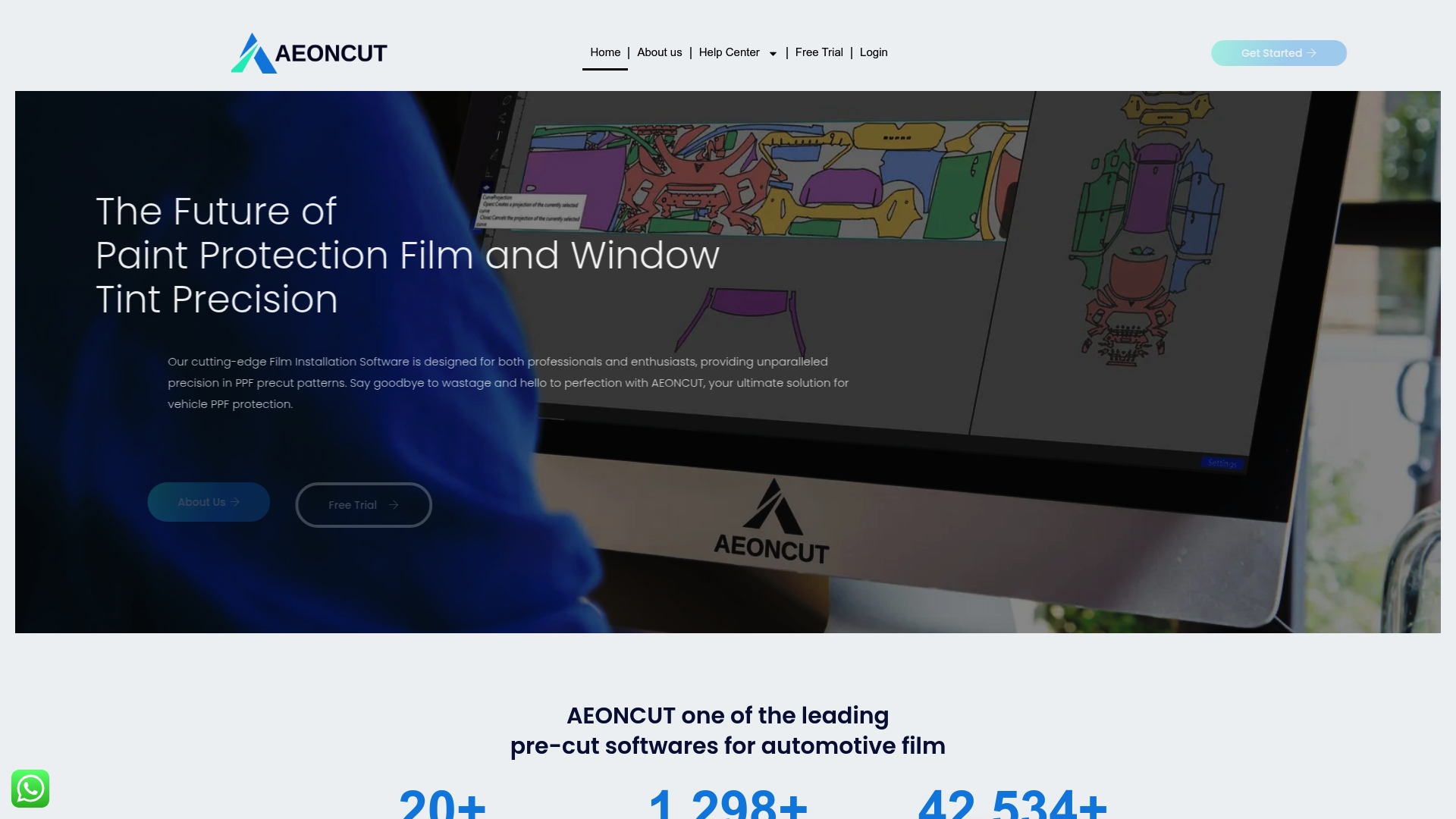
Ready to enhance your UV car paint protection installations with unmatched precision and efficiency? Explore AEONCUT’s flexible subscription plans with unlimited pattern access and cloud-based updates at aeoncutsw.com. Experience how smart cutting software transforms your workflow and delivers flawless results every time. Visit our Featured – AEONCUT PPF Pre-cut Cutting software page to discover user success stories and tutorials that put you ahead in paint protection technology.
Frequently Asked Questions
What is UV car paint protection?
UV car paint protection refers to advanced technologies, such as paint protection films and coatings, designed to shield automotive paint from ultraviolet rays, environmental damage, and minor abrasions.
How does UV paint protection work?
UV paint protection works by creating a transparent barrier on the vehicle’s surface, which blocks harmful ultraviolet radiation and prevents oxidation, fading, and structural weakening of the paint.
What are the differences between paint protection films and traditional wax?
Paint protection films offer superior UV resistance and durability compared to traditional wax treatments. While wax may provide temporary shine, it lacks the long-lasting protective properties of high-quality paint protection films.
How long does UV paint protection last?
The longevity of UV paint protection varies by product type. Premium paint protection films can last between 5 to 10 years, whereas mid-range options typically last 3 to 5 years, depending on environmental conditions and maintenance.
Recommended
- Top Paint Protection Film Benefits for Auto Professionals 2025 – AEONCUT PPF Pre-cut Cutting software
- PPF Versus Ceramic Coating: Best Choice for Automotive Pros 2025 – AEONCUT PPF Pre-cut Cutting software
- Understanding Paint Protection Film Lifespan: Insights for Professionals 2025 – AEONCUT PPF Pre-cut Cutting software
- How Does PPF Work? Guide for Car Care Pros 2025 – AEONCUT PPF Pre-cut Cutting software