Most professional detailers agree that maintaining flawless leather interiors is one of the biggest challenges, with nearly half of luxury vehicles experiencing premature leather wear. For British installers and their international peers, finding solutions that truly preserve both aesthetic value and structural integrity matters more than ever. This guide reveals the latest professional techniques and product options that reduce waste, safeguard interiors, and leave your clients genuinely impressed.
Table of Contents
- Explaining Car Interior Leather Protection
- Professional-Grade Leather Protection Options
- How Protective Treatments Actually Work
- Best Practices For Installer Application
- Common Mistakes And Risk Factors
Key Takeaways
| Point | Details |
|---|---|
| Tanning Methods Are Crucial | Leather used in automotive interiors can be treated using chrome-based or vegetable-based tanning, each providing unique benefits for durability and environmental impact. |
| Professional Protection Strategies Are Essential | Implementing cleaning, conditioning, and protective treatments is key to preserving leather’s appearance and longevity. |
| Advanced Products Offer Superior Protection | Professional-grade products like GYEON Leather Shield EVO and Chemical Guys HydroLeather feature specialised formulations for enhanced durability and aesthetic appeal. |
| Preparation and Environmental Control Are Key | Thorough surface preparation and controlled application conditions are vital for achieving effective leather protection treatments. |
Explaining car interior leather protection
Automotive leather protection is a sophisticated process involving careful material selection and preservation techniques aimed at maintaining the luxurious feel and durability of vehicle interiors. Professional detailers understand that leather upholstery represents more than just a surface treatment – it’s an intricate preservation strategy that balances aesthetic appeal with long-term material integrity.
The leather used in automotive interiors undergoes meticulous tanning and processing techniques designed to enhance its resilience against environmental stressors. Manufacturers employ two primary tanning methods: chrome-based and vegetable-based processes, each offering distinct advantages for leather durability. Chrome tanning provides exceptional colour retention and water resistance, while vegetable tanning delivers superior natural characteristics and environmental sustainability.
Here’s a comparison of the two main automotive leather tanning methods used in car interiors:
| Tanning Method | Durability | Environmental Impact | Key Benefits |
|---|---|---|---|
| Chrome-based | Highly resilient | Moderate sustainability | Superior colour retention, water resistance |
| Vegetable-based | Natural ageing | High sustainability | Rich texture, eco-friendly production |
Professional leather protection strategies encompass multiple layers of defence. These include:
- Regular cleaning with specialised leather solutions
- Application of protective sealants
- Conditioning treatments to prevent cracking and UV damage
- Careful management of humidity and temperature exposure
Pro tip: Invest in professional-grade leather protection products specifically formulated for automotive interiors to ensure maximum longevity and aesthetic preservation.
Professional-grade leather protection options
Professional detailers rely on advanced ceramic coating technologies to provide comprehensive protection for automotive leather surfaces. These specialised treatments create a robust, hydrophobic barrier that shields leather from multiple environmental threats, including ultraviolet radiation, moisture, dirt accumulation, and premature wear.
The market offers several premium leather protection solutions designed specifically for automotive interiors. Top-tier products like GYEON Leather Shield EVO, Chemical Guys HydroLeather, and DuraSlic LeatherCoat Max represent the pinnacle of professional leather preservation. These advanced formulations not only protect but also condition leather, maintaining its natural texture and preventing cracking, fading, and degradation.
Below is a summary of the leading professional leather protection products and their unique features:
| Product Name | Primary Strength | Typical Longevity | Notable Attribute |
|---|---|---|---|
| GYEON Leather Shield EVO | Advanced hydrophobic | 9-12 months | Maintains soft feel |
| Chemical Guys HydroLeather | Strong UV resistance | 6-8 months | Rapid, easy application |
| DuraSlic LeatherCoat Max | Superior conditioning | 12+ months | Resists cracking and fading |
Effective professional-grade leather protection encompasses a comprehensive approach:
- Selection of industry-specific protective treatments
- Precise application techniques
- Regular maintenance and reapplication schedules
- Understanding different leather types and their unique protection requirements
Key considerations for selecting professional leather protection products include:
- Compatibility with specific leather types
- Duration of protection
- Ease of application
- Resistance to environmental stressors
- Non-greasy finish
Pro tip: Always perform a small patch test with new leather protection products to ensure compatibility and prevent potential discolouration or unexpected reactions.
How protective treatments actually work
Protective leather treatments operate through sophisticated molecular technologies that create an invisible protective barrier against environmental damage. These advanced chemical formulations work at the microscopic level, forming a resilient shield that repels water, dirt, and other potential contaminants while maintaining the leather’s inherent aesthetic qualities.
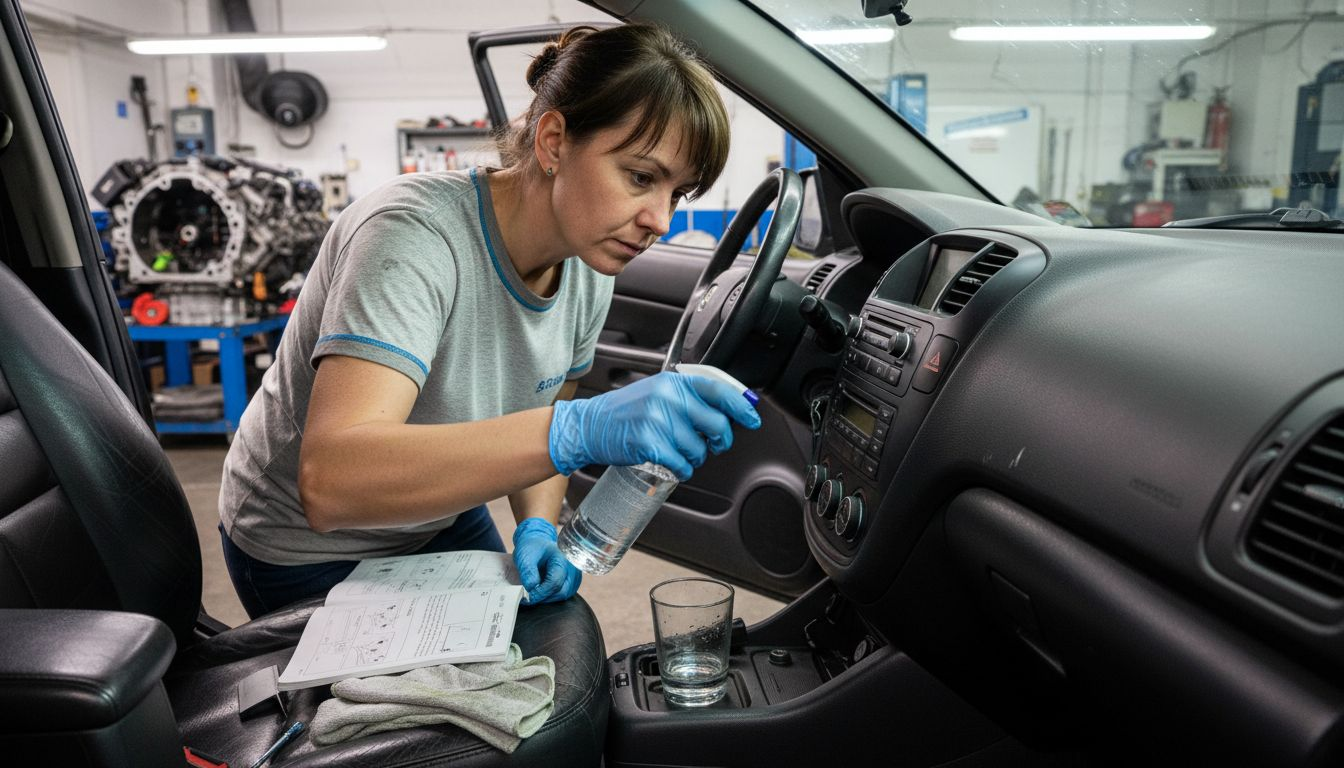
The core mechanism of protective treatments involves creating a hydrophobic layer that prevents moisture and dirt from penetrating the leather’s surface. This molecular barrier disrupts the typical absorption process, causing liquids and particulate matter to bead up and slide off instead of being absorbed into the leather’s porous structure. By blocking ultraviolet radiation and minimising oxidative stress, these treatments significantly reduce the rate of colour fading and material degradation.
Key functional components of protective leather treatments include:
- Nano-ceramic particles
- Cross-linking polymers
- Silane-based compounds
- Fluoropolymer additives
The protective treatment process typically follows these critical stages:
- Surface preparation and thorough cleaning
- Application of molecular bonding agents
- Precise coating implementation
- Curing and setting of protective layer
Pro tip: Always apply protective treatments in a controlled environment with consistent temperature and minimal dust to ensure optimal molecular bonding and long-lasting performance.
Best practices for installer application
Successful leather protection treatment installation requires meticulous preparation and precision. Professional installers must create an environment that ensures optimal application, focusing on cleanliness, temperature control, and methodical surface preparation techniques that maximise the protective coating’s effectiveness and longevity.
The preparation process demands comprehensive surface assessment and systematic cleaning. This involves multiple critical steps: thoroughly removing existing contaminants, eliminating surface oils and residues, and creating an absolutely clean substrate that allows maximum molecular adhesion. Advanced microfibre cloths, specialised leather cleaning solutions, and lint-free preparation materials are essential tools for achieving the highest quality surface readiness.
Key procedural steps for professional leather protection installation include:
- Comprehensive surface inspection
- Precise cleaning and decontamination
- Temperature and humidity control
- Systematic application technique
- Controlled curing environment
Critical equipment and materials required for professional installation:
- High-quality microfibre cloths
- Specialised leather cleaning solutions
- Controlled temperature workspace
- Professional-grade protective coating
- Precision application tools
Pro tip: Invest in professional-grade lighting and magnification tools to identify and address minute surface imperfections before applying protective treatments.
Common mistakes and risk factors
Professional leather protection requires understanding the most prevalent risks and application errors that can compromise treatment effectiveness. Installers must recognise that seemingly minor mistakes can dramatically reduce the protective coating’s performance, leading to premature leather degradation and aesthetic deterioration.
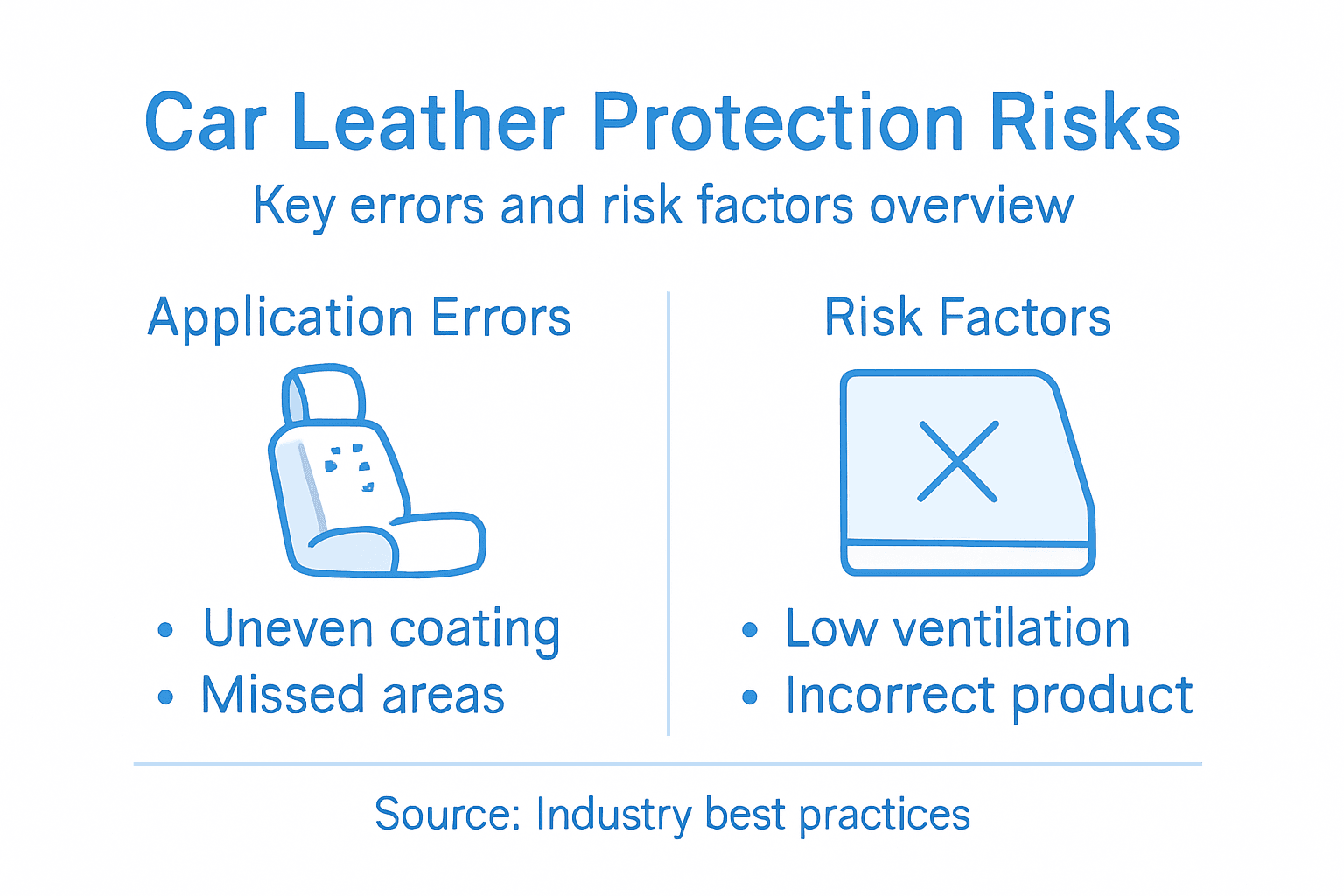
The most significant risk factors stem from improper preparation and application techniques. DIY treatments often lack the precision and comprehensive protection of professional solutions, resulting in uneven coverage, insufficient molecular bonding, and reduced resistance to environmental stressors. Critical errors include inadequate surface cleaning, inappropriate temperature and humidity control, and using incompatible cleaning agents that strip protective coatings.
Key risk factors and common installation mistakes include:
- Neglecting thorough surface preparation
- Using inappropriate cleaning solutions
- Applying treatments in unsuitable environmental conditions
- Inconsistent coating application
- Insufficient curing time
Comprehensive risk mitigation strategies:
- Invest in professional-grade cleaning and application tools
- Maintain strict environmental control during installation
- Use manufacturer-recommended preparation techniques
- Conduct detailed surface assessment before treatment
- Implement rigorous quality control checks
Pro tip: Develop a standardised checklist for leather protection installation to eliminate variability and ensure consistent, high-quality results.
Elevate Your Professional Leather Protection with Precision Tools
Achieving flawless car interior leather protection demands meticulous application and perfect surface preparation. The article highlights how critical precision and controlled environments are to optimise protective treatments and extend leather durability. For professional installers aiming to eliminate common mistakes while delivering impeccable results, utilising cutting-edge technology like AEONCUT’s software can enhance efficiency in partnering processes such as paint protection film and window tint installation.
Discover how AEONCUT’s advanced pre-cut pattern solutions in the Paint Protection Film and window Tint categories empower installers with accuracy, reducing material waste and saving time. Take your leather protection services to the next level with tools designed for professional precision. Visit aeoncutsw.com now to explore subscription plans tailored to your expertise and gain access to the most comprehensive cutting software for automotive professionals.
Frequently Asked Questions
What is automotive leather protection?
Automotive leather protection is a preservation strategy that involves selecting materials and methods to maintain the look and durability of leather upholstery in vehicles. It balances aesthetic appeal with long-term integrity through cleaning, conditioning, and protective treatments.
What are the main types of leather tanning used in automotive interiors?
The two primary tanning methods for automotive leather are chrome-based and vegetable-based processes. Chrome tanning is known for its colour retention and water resistance, while vegetable tanning offers natural characteristics and is more environmentally sustainable.
How do protective treatments work for automotive leather?
Protective treatments create a hydrophobic barrier at the molecular level that repels water, dirt, and contaminants. This layer helps prevent moisture absorption and UV damage, significantly prolonging the leather’s appearance and durability.
What are the key considerations when applying leather protection products?
When applying leather protection products, key considerations include compatibility with specific leather types, duration of protection, ease of application, resistance to environmental stressors, and ensuring a non-greasy finish.
Recommended
- Car Interior Cleaning Checklist for Professionals 2025 – AEONCUT PPF Pre-cut Cutting software
- Car Interior Cleaning Checklist for Professionals 2025 – AEONCUT PPF Pre-cut Cutting software
- Understanding Interior Protection Films: Benefits for Luxury Cars – AEONCUT PPF Pre-cut Cutting software
- Understanding Interior Protection Films: Benefits for Luxury Cars – AEONCUT PPF Pre-cut Cutting software
- Why Get Interior Detailing – Lasting Value for Your Car