
Finding the right balance between speed and precision is a daily challenge for every Paint Protection Film installer working in the bustling North American market. Accurately cutting and fitting PPF to modern vehicles demands more than just steady hands—it calls for advanced solutions that reduce measurement errors and support seamless application. With professional-grade software, you gain mastery over pattern accuracy and workflow efficiency, ensuring every installation delivers invisible protection and long-lasting performance your clients expect.
Table of Contents
- Defining PPF Car Coating Technology
- Types of Paint Protection Films for Cars
- How PPF Installation Process Works
- Key Benefits and Real-World Applications
- Comparing PPF to Other Protection Methods
- Costs, Risks and Common Misconceptions
Key Takeaways
| Point | Details |
|---|---|
| Understanding PPF Benefits | Paint Protection Film provides physical protection against scratches and environmental damage, significantly preserving vehicle appearance and value. |
| Material and Installation Quality | Premium TPU-based films offer superior durability, self-healing properties, and clarity, making professional installation essential for optimal performance. |
| Cost-Effectiveness | Investing in PPF can prevent costly paint repairs over time, making it a financially sound choice for vehicle protection. |
| Educating Clients | Clear communication about what PPF protects against and proper maintenance expectations is crucial for customer satisfaction and reducing warranty disputes. |
Defining PPF Car Coating Technology
Paint Protection Film, or PPF, is a transparent polyurethane coating applied directly to a vehicle’s exterior surfaces to shield the paint from physical damage, environmental contaminants, and chemical degradation. Think of it as an invisible barrier between your client’s vehicle and the harsh realities of the road. Unlike traditional wax or sealant products that sit on top of the paint, PPF bonds to the clear coat itself, creating a durable protective layer that absorbs impact energy from road debris, stone chips, and minor abrasions. The film typically measures between 80 and 200 micrometres thick, depending on the application type and manufacturer specifications.
The technology behind PPF involves a cross-linked polyurethane formulation that combines flexibility with exceptional durability. When a rock strikes the film at highway speeds, the material deforms and absorbs the kinetic energy rather than transferring that force directly to the paint underneath. This self-healing capability is one of the most sought-after features in modern PPF products. Minor scratches and swirl marks in the film’s surface can disappear when exposed to heat from direct sunlight or warm water, as the polyurethane softens and flows back into its original state. Understanding how PPF works mechanically helps you explain these benefits accurately to clients and set proper expectations.
What distinguishes professional-grade PPF from budget alternatives is the clarity, adhesive formulation, and longevity. Premium films maintain optical clarity for 7 to 10 years under normal conditions, whereas inferior products yellow, cloud, or peel prematurely. The adhesive layer bonds permanently to the clear coat without leaving residue if removed, which is critical for resale value and customer satisfaction. Installation precision matters enormously here. Poorly cut patterns create gaps where contamination enters, and improper application traps air bubbles that expand over time. This is where cutting accuracy becomes non-negotiable for your business. The quality of your patterns directly affects both the visual result and the protective performance of the finished installation.
Pro tip: When discussing PPF with clients, focus on the specific vehicles and surfaces they drive most regularly, then recommend coverage that prioritises impact zones such as the front bumper, bonnet, and door handles, where stone chips and scratches occur most frequently.
Types of Paint Protection Films for Cars
Paint protection films come in several distinct varieties, each designed to address different protection needs and aesthetic preferences. The primary distinction lies in the base material composition. TPU-based films (thermoplastic polyurethane) represent the premium standard in the industry, offering superior strength, flexibility, and self-healing properties that make them the go-to choice for professional installers. These films can absorb significant impact energy and recover from minor scratches when exposed to heat. In contrast, TPH films are a hybrid of TPU and PVC that may develop yellowing or cracking over time due to plasticiser degradation, making them less desirable for long-term protection on high-value vehicles. When you’re selecting materials for your client work, the material composition directly affects your warranty obligations and customer satisfaction rates.
Beyond material type, PPF variations also include different finish options and specialised formulations. Standard clear gloss films remain the most popular choice, maintaining the vehicle’s original paint appearance whilst providing full protection. Self-healing films with advanced elastomeric polymers can erase minor surface scratches automatically when warmed, reducing maintenance demands on your clients. Matte finish films have gained popularity among installers serving customers who prefer a more contemporary aesthetic without the reflective shine. Colour-tinted films allow for customisation and unique styling opportunities, though these require more precision during pattern application. High-gloss films enhance paint depth and clarity, which is particularly effective on darker paint colours. The differences between clear bra technology and PPF become relevant when clients ask about alternatives, though PPF remains superior in durability and optical clarity.
Thickness variations also matter significantly for your installation work. Film thickness typically ranges from 80 to 200 micrometres, with thicker applications providing more robust protection but requiring greater precision during cutting and application. Thinner films work well for partial coverage on specific impact zones like bonnet edges and door handles, where you need flexibility without excessive bulk. Thicker films suit full-body protection on luxury or performance vehicles where maximum durability justifies the additional installation complexity. The warranty period you can confidently offer your clients often depends on the film type and thickness you’ve selected, with premium TPU films typically backed by 7 to 10 year guarantees.
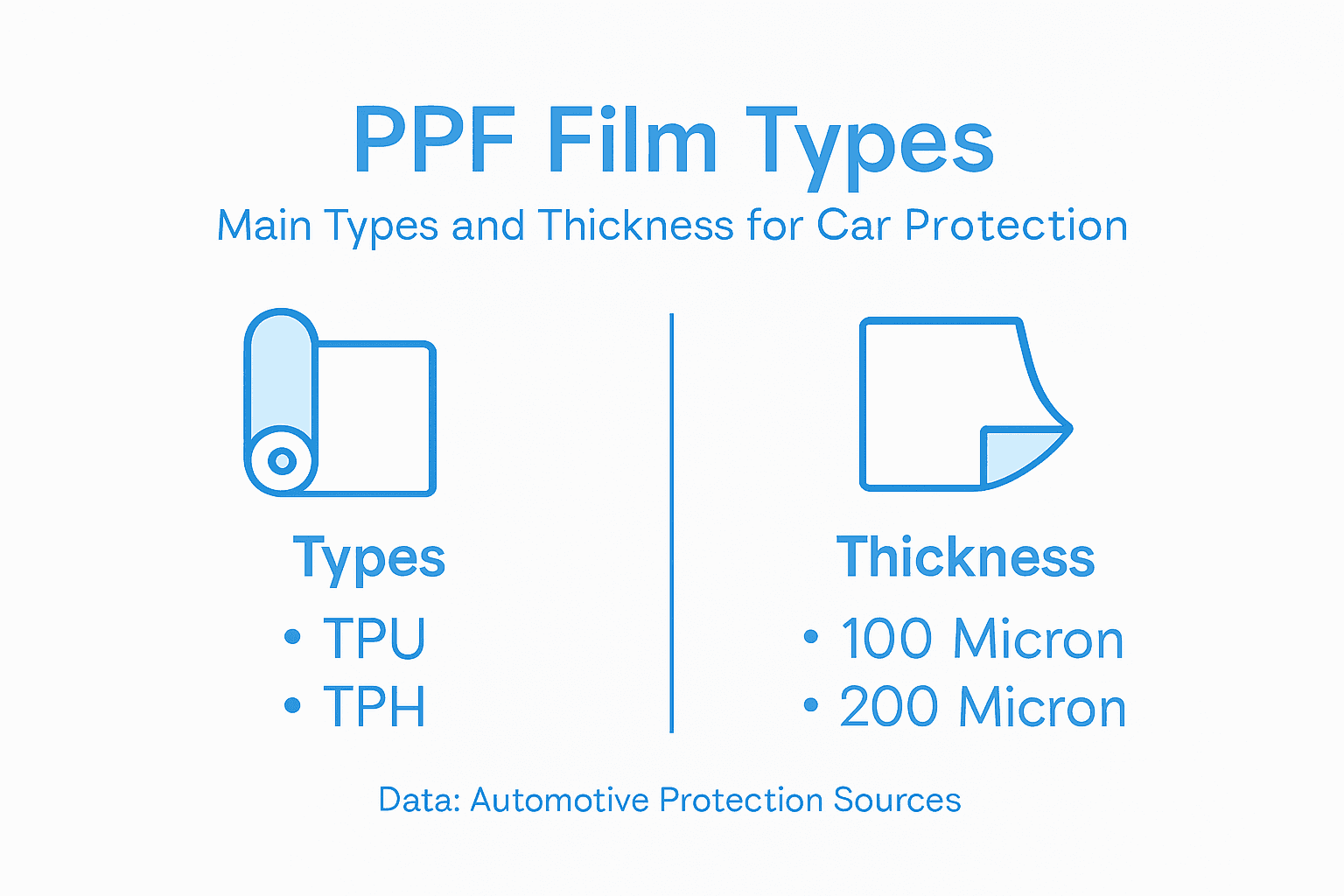
Pro tip: Create a reference chart showing your available film types with their thickness, finish options, and typical coverage areas, then match recommendations to the vehicle type and client budget rather than always defaulting to the most expensive option.
The following table summarises types of PPF films and their ideal usage:
| Film Type | Finish Options | Protection Level | Best Use Cases |
|---|---|---|---|
| TPU (Premium) | Gloss, Matte, Tint | Maximum, self-healing | Luxury, performance vehicles |
| TPH (Hybrid) | Gloss, Limited Tint | Moderate, reduced longevity | Budget and fleet vehicles |
| Colour-tinted | Wide colour range | Custom aesthetics | Personalisation, show cars |
How PPF Installation Process Works
The PPF installation process demands precision, patience, and methodical attention to detail at every stage. Success depends on getting the foundation right before the film even touches the vehicle. Surface preparation is where most installers either build confidence or create problems that compound later. The vehicle’s paint must be thoroughly cleaned, then decontaminated using clay bars to remove embedded industrial fallout, tar, and brake dust that could create bumps under the film. After clay treatment, you’ll use isopropyl alcohol to strip away any remaining residue and oils. This step takes time, but rushing through it means air pockets, adhesion failures, and unhappy customers down the road. Paint correction comes next if the vehicle has swirl marks, minor scratches, or oxidation that would be permanently visible under transparent PPF.
Once the surface is pristine, the actual film application begins. You’ll need to measure the vehicle’s panels carefully or use vehicle-specific pre-cut patterns that match the exact dimensions of bonnet, bumper, guards, and door handles. This is where precision matters enormously for your workflow efficiency. Apply a slip solution (typically a mixture of water and specialist soap) to both the film and the vehicle surface, giving yourself time to reposition the film without committing to permanent adhesion. As you work the film into place, a squeegee removes trapped air bubbles by pushing them outward from the centre of each panel. The slip solution allows you to adjust and correct minor misalignments before the adhesive fully sets. Paint protection film cutting software can significantly reduce the time spent on measurement and cutting, allowing you to focus on application quality instead.
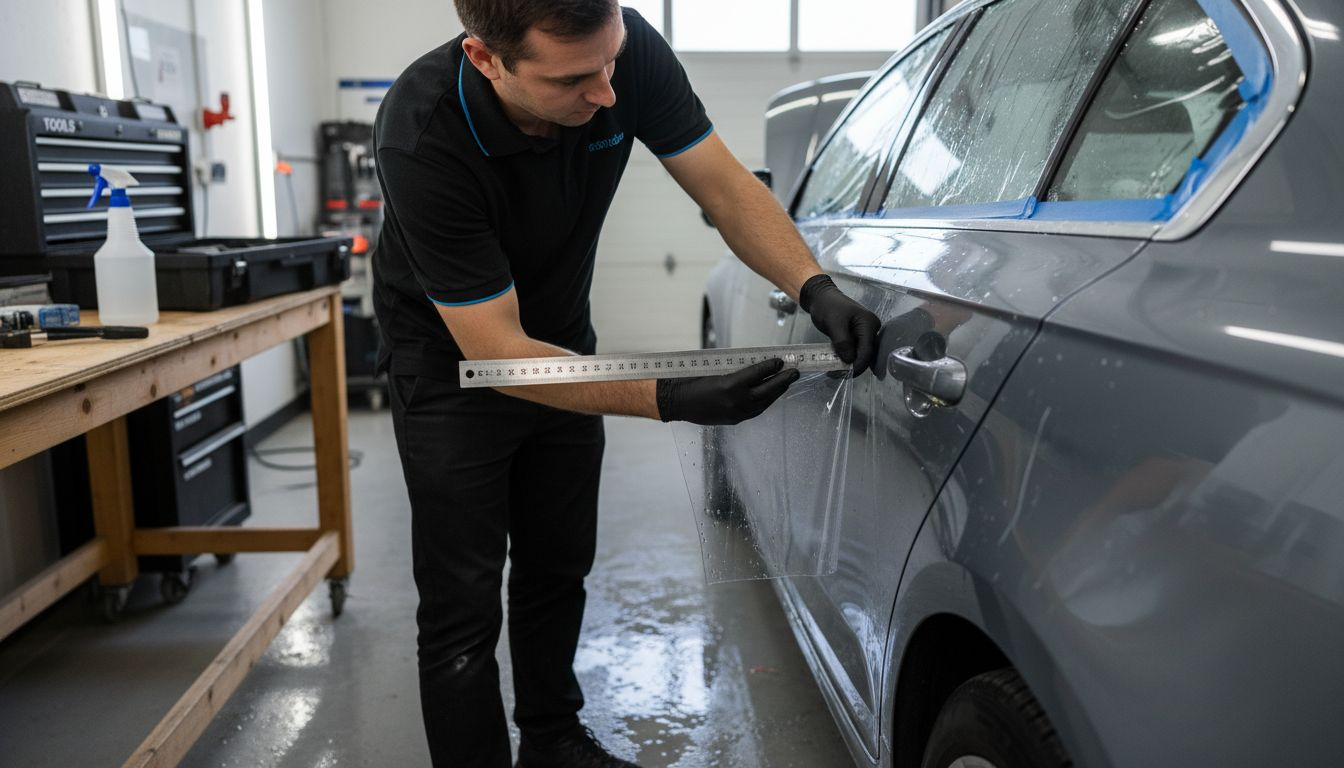
Once the film is positioned correctly, controlled heat application using a heat gun or thermal tool helps the polyurethane conform perfectly to the vehicle’s contours, especially around curves and complex panel shapes. This thermal activation is crucial for self-healing films to function properly once installed. For edges and panel seams, careful wrapping and tacking ensures water cannot seep underneath and cause separation. A final thorough inspection under strong lighting reveals any missed air bubbles, creases, or edge imperfections that need attention before the customer takes the vehicle. The entire process for a full-body installation typically requires 8 to 12 hours depending on vehicle complexity and your experience level.
Pro tip: Invest in a checklist template that breaks the installation into discrete stages (preparation, measurement, application, heat setting, edge work, final inspection), then photograph each completed stage as proof of workmanship and documentation for warranty claims.
Key Benefits and Real-World Applications
PPF delivers tangible, measurable benefits that translate directly into customer satisfaction and business profitability. The most obvious advantage is physical protection against scratches and dings that would otherwise require expensive paint correction or full repaints. A single stone chip repair costs between £150 and £500 depending on severity, whereas PPF investment typically ranges from £800 to £3,500 for full-body coverage. Over a vehicle’s five-year ownership period, that protection pays for itself many times over. Beyond impact resistance, the self-healing capability allows minor surface scratches to disappear when warmed by sunlight or heat, which is genuinely remarkable when customers first witness it. This feature reduces post-installation complaints and maintenance calls significantly. Additionally, PPF provides substantial protection benefits including UV blocking that preserves paint colour vibrancy, chemical resistance against road salt and acidic contaminants, and simplified cleaning that requires no special techniques.
Real-world applications show PPF’s value across diverse vehicle types and ownership scenarios. Luxury car owners protect six-figure investments from depreciation caused by paint damage, ensuring resale value remains intact. Fleet operators applying PPF to company vehicles reduce downtime from damage repairs and maintain professional appearance standards across their operations. New car buyers install PPF within weeks of purchase, preserving factory finish condition before road exposure. Track day enthusiasts and performance car owners use partial PPF coverage on high-impact zones (bonnet, front bumper, mirrors) whilst managing costs. Parents protecting family vehicles from the inevitable dings of young drivers find PPF more practical than constantly explaining damage repairs. Delivery drivers and tradespeople who spend 8 to 10 hours daily on roads apply PPF to protect their primary business asset from cumulative damage that accelerates wear.
From a business perspective, PPF installation creates recurring revenue opportunities through maintenance packages, touch-ups, and ceramic coating applications that complement the initial film installation. Customers who invest in PPF are typically willing to invest further in complementary protection services. The invisibility of quality PPF means your work speaks silently but powerfully, with satisfied customers becoming referral sources because the protection remains completely transparent. The durability of premium PPF ensures customers remain protected for 7 to 10 years, building trust and credibility within your market. Many installers find that PPF customers return for additional vehicles and recommend services to friends and family at significantly higher rates than non-PPF customers.
Pro tip: Develop case studies showing before-and-after photos of vehicles with untreated versus PPF-protected panels after 12 to 24 months of real-world driving, then share these on your website and social media to demonstrate the long-term value proposition to potential customers.
Comparing PPF to Other Protection Methods
When clients ask about paint protection, they typically present three options: PPF, ceramic coatings, and traditional wax. Understanding the distinctions between these methods is essential for recommending the right solution to each customer’s specific needs and budget. PPF is fundamentally different from the other two because it’s a physical barrier. The film measures 80 to 200 micrometres thick and absorbs impact energy from stone chips, road debris, and minor collisions. Ceramic coatings, by contrast, are thin chemical layers (typically 1 to 3 micrometres) that bond to clear coat and offer hydrophobic properties, enhanced gloss, and UV protection, but they provide virtually no defence against physical damage. Wax sits on the surface as a temporary cosmetic enhancement, offering minimal protection and requiring reapplication every four to eight weeks. The distinction matters because customers often assume all paint protection products perform similarly. They do not.
The durability timeline differs dramatically across these three methods. Premium PPF typically lasts between 5 and 10 years, with some formulations lasting longer when properly installed and maintained. Ceramic coatings generally provide 2 to 5 years of protection depending on the specific product and driving conditions, though some professional ceramic products claim longer longevity. Wax typically remains effective for only 4 to 8 weeks before UV exposure, washing, and environmental contaminants degrade its protective properties. From a business perspective, this means PPF customers commit once and remain protected for years, whilst wax customers return quarterly for reapplication and maintenance, and ceramic coating customers return for recoating every few years. PPF and ceramic coating comparisons reveal that many professional installers now recommend combining both technologies, using PPF for physical protection on impact zones and ceramic coating on remaining surfaces for enhanced gloss and hydrophobic benefits.
The cost perspective is equally important. Wax costs £15 to £50 per application, making it the cheapest option but also the least effective long-term investment. Ceramic coatings range from £200 to £1,500 depending on product quality and vehicle size, providing better protection than wax but limited defence against physical damage. Full-body PPF installation costs between £1,500 and £5,000, which seems expensive until you calculate the cost of paint repairs it prevents. A single deep stone chip, scratch, or impact damage repair costs £400 to £1,200. Most vehicles receive at least three to five significant impact damages during five years of ownership, meaning PPF investment pays for itself through repair cost avoidance alone. Many installers position PPF as the premium protection option for customers who understand the long-term value proposition, whilst ceramic coating serves clients wanting enhanced gloss and hydrophobic properties at a lower price point.
Here’s a quick comparison of popular paint protection options for cars:
| Protection Method | Physical Damage Resistance | Typical Durability | Annual Cost Estimate |
|---|---|---|---|
| PPF (Paint Protection Film) | Blocks chips and scratches | 7–10 years | £185–£700 |
| Ceramic Coating | Prevents minor stains only | 2–5 years | £80–£300 |
| Wax | Minimal cosmetic protection | 1–2 months | £90–£170 |
Pro tip: Create a comparison chart showing durability timelines, cost per year of protection, and specific damage types each method prevents, then use this during client consultations to help them understand why PPF represents the best value for their vehicle’s specific usage patterns and budget constraints.
Costs, Risks and Common Misconceptions
PPF installation carries genuine financial and technical risks that professional installers must understand and communicate transparently to clients. The most significant risk emerges during surface preparation and application. Improper surface preparation, inaccurate measuring and cutting, water contamination, and trapped debris lead directly to bubbling, peeling, and compromised film adhesion that renders the investment worthless. A poorly prepared surface with residual oils, wax, or contaminants prevents the adhesive from bonding properly, causing edge lift within weeks. Inaccurate cutting creates gaps where contamination enters, and trapped air bubbles that expand under heat become permanent defects. Water contamination during application can seep under the film and cause delamination months later. These errors are not cosmetic inconveniences; they represent complete failure of the protection system. This is precisely why professional installation using controlled environments, precision cutting equipment, and proven application techniques far outperforms DIY attempts. Your expertise and proper equipment investment directly translate into reliability that justifies your service fees.
Cost considerations extend beyond the initial installation price. Full-body PPF installation ranges from £1,500 to £5,000 depending on vehicle size, film quality, and your labour rates. Partial coverage on high-impact zones costs £600 to £1,500. These figures represent significant investment, which is why clear communication about what PPF can and cannot do is essential. Many clients arrive with misconceptions that jeopardise satisfaction and create warranty disputes. Common misconceptions include beliefs that modern PPF yellows over time, damages paint upon removal, is only suitable for luxury vehicles, or requires excessive maintenance. Modern premium TPU films resist UV yellowing effectively when manufactured by reputable brands and installed correctly. Quality PPF peels away cleanly without damaging paint if removal is handled properly by professionals, though this is rarely necessary given the 7 to 10 year lifespan. PPF suits all vehicle types, from economy cars to supercars, because the protection benefits apply regardless of vehicle value. Maintenance requirements are minimal; normal washing and occasional professional detailing maintain the film perfectly without specialised treatments.
Set realistic expectations by educating clients about what PPF protects against and what it does not. PPF protects against stone chips, scratches, UV fading, chemical damage, and minor abrasions. It does not prevent deep dents, major collisions, or intentional damage. The film is transparent, so it does not alter the vehicle’s appearance unless specifically chosen in matte or tinted finishes. Warranty claims arise when clients expect PPF to prevent damage that falls outside the product’s design parameters. Establish clear warranty terms in writing, specifying what you cover (manufacturing defects, adhesion failures, yellowing) versus what clients bear responsibility for (impact damage beyond normal driving conditions, intentional damage, improper care). Transparency builds trust and reduces dispute frequency significantly.
Pro tip: Document every installation with detailed before photos, cutting diagrams, application sequence photos, and post-installation inspection results, then provide clients with comprehensive written warranty terms and maintenance guidance to establish clear expectations and protect yourself against unfounded claims.
Elevate Your PPF Installations with Precision Cutting Software
Applying Paint Protection Film requires impeccable accuracy to avoid issues like air bubbles, improper adhesion, and edge lifting that the article highlights as key installation challenges. Professionals and enthusiasts alike strive for perfect panel fitting and minimal material waste while ensuring long-lasting protection and customer satisfaction. This is where advanced software solutions can make all the difference by delivering precise, ready-to-use pre-cut patterns and streamlining your workflow.
Discover the power of the PPF software – AEONCUT PPF Pre-cut Cutting software designed to tackle your exact needs. With features such as expansive libraries, AI-driven auto-nesting, and cloud-based updates, AEONCUT helps installers eliminate measuring errors and reduce installation time. See how PPF precut patterns – AEONCUT PPF Pre-cut Cutting software enhance protection quality by fitting perfectly to each vehicle model for a flawless finish.
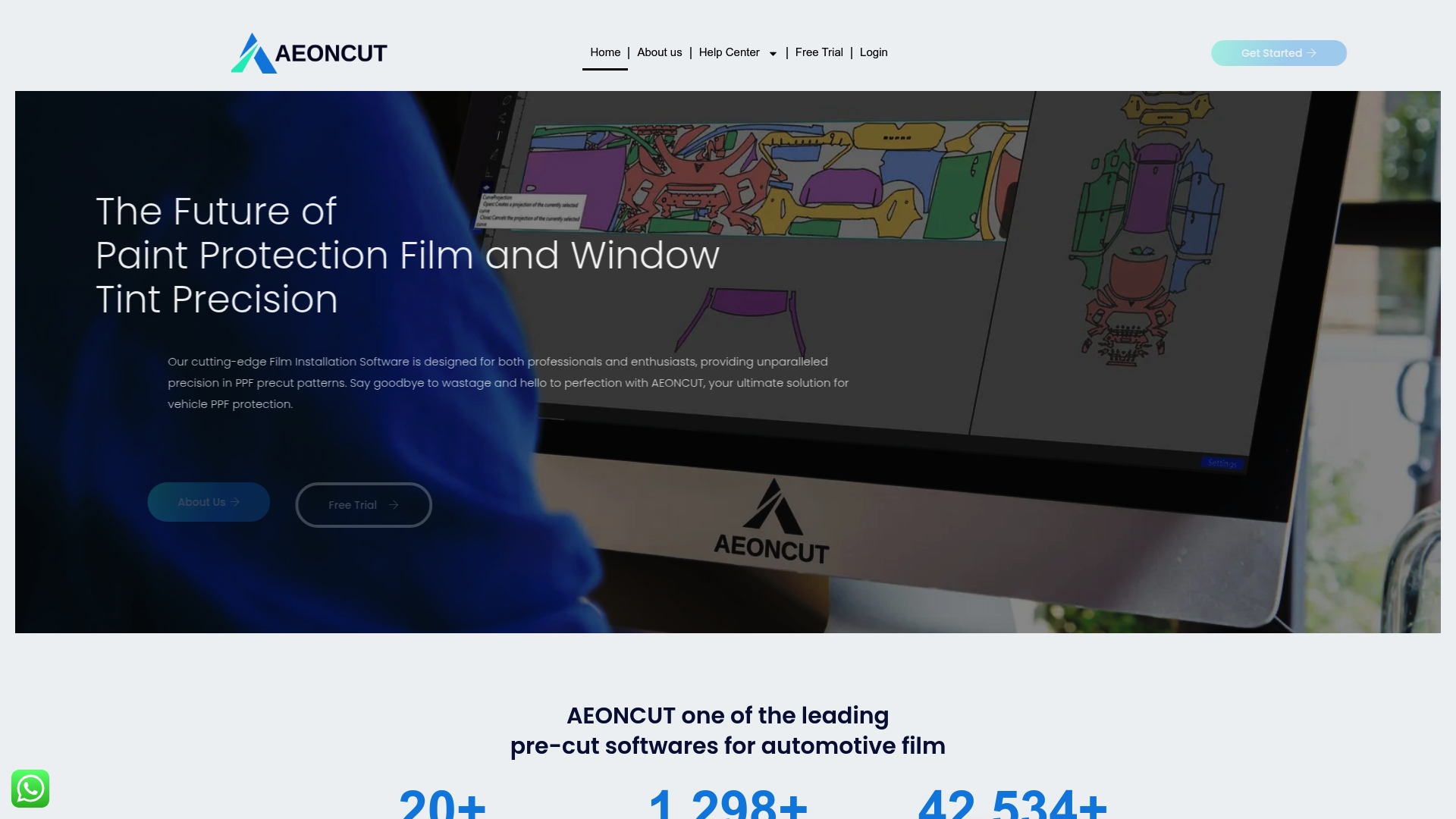
Take control of your PPF business today and deliver the high-precision results that customers demand. Visit https://aeoncutsw.com now to explore subscription plans tailored for professional installers and serious enthusiasts. Experience cutting accuracy that transforms complex installations into efficient, profitable jobs without compromising quality.
Frequently Asked Questions
What is PPF car coating technology?
PPF, or Paint Protection Film, is a transparent polyurethane coating that bonds to a vehicle’s exterior, providing protection against physical damage, contaminants, and chemical degradation. It serves as an invisible barrier between your vehicle’s paint and environmental hazards.
How long does PPF typically last?
Premium PPF can last between 7 to 10 years under normal conditions, while cheaper alternatives may yellow or peel more quickly. The durability largely depends on the quality of the film and the installation method.
What distinguishes TPU films from TPH films?
TPU-based films (thermoplastic polyurethane) are the premium standard, offering superior strength, flexibility, and self-healing properties. TPH films (hybrid of TPU and PVC) may be less durable and more prone to yellowing or cracking due to plasticiser degradation, making them less suitable for high-value vehicles.
How does the PPF installation process work?
The installation process involves several steps: preparing the vehicle’s surface through cleaning and decontamination, measuring and cutting the film, applying a slip solution to adjust the film position, and using heat to ensure the film conforms to the curves of the vehicle before conducting a final inspection for air bubbles and imperfections.
Recommended
- How Does PPF Work? Guide for Car Care Pros 2025 – AEONCUT PPF Pre-cut Cutting software
- Top Paint Protection Film Benefits for Auto Professionals 2025 – AEONCUT PPF Pre-cut Cutting software
- PPF Versus Ceramic Coating: Best Choice for Automotive Pros 2025 – AEONCUT PPF Pre-cut Cutting software
- Building a PPF Business in 2025: From Tools to First Clients – AEONCUT PPF Pre-cut Cutting software