Choosing the right window tint is far more than picking a shade or style for your clients’ vehicles. For professional installers across North America, delivering lasting results hinges on understanding both advanced technologies and common misconceptions that surround modern films. By focusing on precision-engineered window tint solutions that reduce heat, block up to 99 percent of UV rays, and increase installation efficiency, you can cut down on unnecessary waste and consistently meet your clients’ high standards.
Table of Contents
- Defining Window Tint: Function And Misconceptions
- Types Of Tint Films: Key Materials Compared
- Performance Features: Uv, Glare, And Longevity
- Legal Limits And Compliance For Installers
- Cost Analysis And Installation Pitfalls
- Alternatives And Hybrid Solutions Explained
Key Takeaways
| Point | Details |
|---|---|
| Importance of Understanding Tint Types | Professional installers should be well-versed in the characteristics of various window tint films to optimise performance for clients. |
| Significance of Legal Compliance | Installers must navigate local regulations carefully to ensure compliance and avoid legal complications, including maintaining accurate records. |
| Focus on Performance Features | Emphasising UV protection, heat rejection, and glare reduction is essential when selecting high-quality window tints for client satisfaction. |
| Economic Considerations in Installation | Balancing material quality with installation costs is crucial for maintaining competitiveness and ensuring long-term client value satisfaction. |
Defining Window Tint: Function and Misconceptions
Window tinting represents a sophisticated technological solution designed to transform glass surfaces into functional barriers against solar radiation and environmental challenges. Window tinting works by applying a precisely engineered thin film to windows, creating multiple layers of protection for vehicles and buildings.
At its core, window tint serves several critical functions beyond mere aesthetic enhancement:
- Heat reduction by reflecting solar energy
- UV ray blocking up to 99% of harmful radiation
- Glare minimisation for improved visual comfort
- Privacy enhancement through varied opacity levels
- Interior protection against sun-related damage
Professional installers must understand that not all window tints perform identically. Modern tinting technologies have evolved dramatically, with ceramic films representing the pinnacle of heat rejection and performance. These advanced films can block significantly more solar energy compared to traditional metallic or dyed alternatives.
Window tinting is not just about darkness – it’s a scientifically engineered solution for environmental control.
Common misconceptions about window tinting persist within the industry. Many individuals incorrectly assume that all tints function similarly or that the primary purpose is purely cosmetic. In reality, professional-grade window tints are sophisticated products designed with precise engineering to manage solar transmission, protect occupants, and extend the lifespan of interior surfaces.
Pro tip: Always verify the technical specifications of window tint films before installation to ensure optimal performance and client satisfaction.
Types of Tint Films: Key Materials Compared
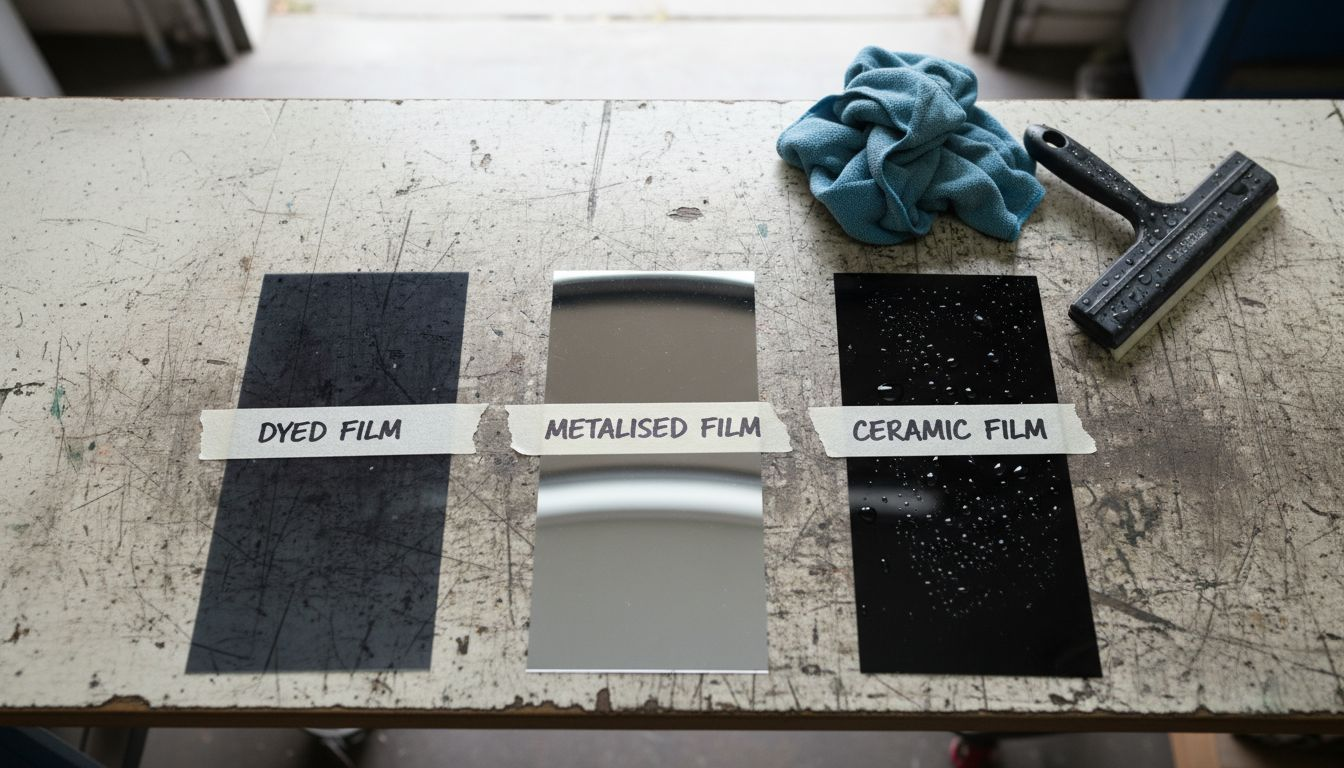
Professional window tint installers must understand the nuanced characteristics of different film materials to deliver optimal performance for clients. Window tint films vary dramatically in their composition, technological sophistication, and functional capabilities.
The primary types of window tint films include:
Dyed Films:
- Basic, cost-effective option
- Absorb sunlight and reduce glare
- Prone to fading over time
- Limited heat rejection
Metalized Films:
- Contain metallic layers
- Excellent heat reflection
- Potential signal interference issues
- Enhanced durability compared to dyed films
Carbon Films:
- Use carbon particle technology
- Superior infrared radiation absorption
- No signal interference
- Consistent performance over time
Hybrid Films:
- Combine dye and metal technologies
- Balanced performance characteristics
- Moderate heat and UV protection
Ceramic Films:
- Advanced nano-ceramic particle construction
- Highest heat and UV rejection
- Exceptional optical clarity
- Premium durability and performance
Each film type presents distinct advantages and limitations for professional installers. Ceramic films represent the pinnacle of window tinting technology, offering superior heat rejection, UV protection, and optical clarity without compromising signal transmission or visual aesthetics.
To help distinguish between different window tint film materials, the table below summarises their key strengths and limitations:
| Film Type | Main Performance Benefit | Major Limitation | Suitability |
|---|---|---|---|
| Dyed | Cost-effective glare control | Prone to fading and less durable | Entry-level, tight budgets |
| Metalized | Excellent heat reflection | Signal interference possible | Drivers prioritising temperature |
| Carbon | Superior IR absorption | Higher price point | Long-term value, no interference |
| Hybrid | Balanced performance/cost | Moderate UV/heat protection | Versatile, mid-range needs |
| Ceramic | Highest UV and heat rejection | Premium cost | Luxury, advanced protection needs |
Professional-grade window tints are precision-engineered solutions, not merely decorative accessories.
The selection of window tint film depends on multiple factors, including client budget, specific performance requirements, vehicle type, and local regulations. Installers must carefully evaluate these considerations to recommend the most suitable film for each unique application.
Pro tip: Invest time in understanding the technical specifications of each film type to provide clients with informed, tailored recommendations that balance performance, aesthetics, and cost-effectiveness.
Performance Features: UV, Glare, and Longevity
Professional window tint installers must comprehend the critical performance metrics that distinguish high-quality films from standard options. Ceramic window tint technologies represent a significant advancement in protecting vehicle interiors and occupants through sophisticated protective capabilities.
Key performance features that differentiate premium window tints include:
UV Protection:
- Blocks over 99% of ultraviolet radiation
- Prevents skin damage
- Reduces interior material degradation
- Protects passengers from harmful solar exposure
Heat Rejection:
- Ceramic films can reject up to 95% of solar heat
- Maintains cooler interior temperatures
- Reduces air conditioning strain
- Improves overall vehicle comfort
Glare Reduction:
- Minimises visual discomfort during driving
- Enhances visibility in bright conditions
- Reduces eye strain for drivers and passengers
- Improves safety through improved visual clarity
Professional-grade window tints demonstrate remarkable durability, with high-performance options potentially lasting 5-10 years when professionally installed. The longevity of these films depends on multiple factors, including material quality, installation precision, and environmental conditions.
Premium window tints are engineered solutions, not mere aesthetic accessories.
The selection of window tint films requires careful consideration of performance characteristics, client requirements, and budget constraints. Installers must balance heat rejection, UV protection, optical clarity, and long-term durability to recommend the most suitable product for each unique application.
Pro tip: Invest in high-quality ceramic or carbon-based films that offer superior performance metrics and longer warranties, ensuring client satisfaction and professional reputation.
Legal Limits and Compliance for Installers
Professional window tint installers must navigate a complex landscape of legal regulations that vary significantly across different jurisdictions. Vehicle window tinting laws require meticulous understanding to ensure client compliance and avoid potential legal complications.
Key legal considerations for window tint installers include:
Light Transmission Regulations:
- Specific minimum light transmission percentages
- Varies by vehicle type and window location
- Front windshield typically has strictest limits
- Different standards for newer and older vehicles
Regional Variation Factors:
- State/provincial specific regulations
- Vehicle classification requirements
- Differing enforcement approaches
- Potential fines for non-compliance
Compliance Documentation:
- Maintaining accurate installation records
- Providing clients with legal compliance certificates
- Understanding local vehicle inspection requirements
- Tracking regulatory updates
Non-compliance can result in significant consequences for both installers and vehicle owners. Potential penalties may include prohibition notices, substantial financial fines, vehicle registration complications, and mandatory film removal at the owner’s expense.
Professional installers are legally responsible for ensuring window tint meets regional regulatory standards.
Successful window tint professionals must develop a comprehensive approach to legal compliance. This involves continuous education, maintaining updated regulatory knowledge, and implementing rigorous verification processes during every installation.
For quick reference, here is a summary of critical regulatory risks and mitigation strategies related to window tint installation:
| Regulatory Risk | Consequence for Installers | Recommended Mitigation Step |
|---|---|---|
| Non-compliant darkness | Financial fines, removal orders | Always verify legal limits pre-install |
| Incomplete records | Potential legal disputes | Provide signed compliance certificates |
| Ignoring updates | Outdated installations | Regularly monitor law changes |
| Improper classification | Registration rejection | Clarify vehicle type before quoting |
Pro tip: Develop a comprehensive regulatory checklist for each jurisdiction you serve, ensuring every installation meets precise legal requirements before finalising the project.
Cost Analysis and Installation Pitfalls
Professional window tint installers must carefully navigate the complex financial landscape of their industry, understanding both material costs and potential operational challenges. Professional installation costs range dramatically from £150 to over £1,100, depending on multiple critical factors.
Key cost considerations for window tint professionals include:
Material Price Ranges:
- Dyed films: Most economical option
- Metallic films: Mid-range pricing
- Carbon films: Higher investment
- Ceramic films: Premium price point
Installation Cost Factors:
- Vehicle size and complexity
- Film quality and type
- Labour intensity
- Regional market rates
Potential Installation Pitfalls:
- Surface preparation errors
- Bubble formation
- Inadequate film adhesion
- Premature material degradation
- Non-compliance with legal standards
Successful window tint businesses must strategically balance material quality, installation expertise, and pricing to remain competitive. The most expensive film is not always the best solution, and professional installers must educate clients about value versus pure cost.
Precision in installation matters more than the initial price point.
Understanding the nuanced economics of window tinting requires continuous learning, investment in quality tools, and maintaining high professional standards. Cutting corners on materials or technique can lead to significantly higher long-term costs through warranty claims and reputation damage.
Pro tip: Develop a transparent pricing model that clearly communicates the value of professional installation, emphasising quality, durability, and expertise over mere price.
Alternatives and Hybrid Solutions Explained
Professional installers must understand the evolving landscape of window protection technologies beyond traditional tinting methods. Hybrid window tint films represent a sophisticated approach to balancing performance, cost, and aesthetic requirements for diverse client needs.
Key alternatives and hybrid solutions include:
Hybrid Film Technologies:
- Combine multiple material layers
- Balance affordability and performance
- Reduced signal interference
- Moderate heat and UV protection
Non-Tint Alternatives:
- Detachable sun shades
- Retractable window coverings
- Clear protective films
- Factory pre-installed tints
Advanced Hybrid Characteristics:
- Dye and metallic layer combinations
- Improved durability
- Enhanced glare reduction
- Cost-effective performance
Hybrid solutions offer professional installers flexible options for clients with varying budget constraints and specific protection requirements. These innovative approaches bridge the gap between traditional dyed films and premium ceramic technologies, providing nuanced performance capabilities.
Hybrid solutions represent the intelligent intersection of technology, affordability, and functionality.
The window protection market continues to evolve, with manufacturers developing increasingly sophisticated materials that challenge traditional categorisations. Professionals must remain adaptable, understanding the strengths and limitations of each emerging technology.
Pro tip: Continuously educate clients about hybrid solutions, highlighting their unique performance characteristics and value proposition beyond standard tinting options.
Elevate Your Window Tint Installations with Precision Cutting Solutions
Choosing the best window tint for professional installation requires not only understanding film types but also mastering precise application techniques. Common challenges include ensuring accurate cuts that fit complex vehicle window shapes, minimising material waste, and maintaining quality during high-volume projects. Our AEONCUT cutting software provides installers with advanced pre-cut patterns specifically designed for window tint films, transforming these challenges into seamless operations.
Experience advantages like:
- Highly accurate patterns that match diverse vehicles
- Reduced film waste for cost efficiency
- Cloud-based updates ensuring access to the latest designs
Ready to enhance your installation efficiency and client satisfaction? Explore our comprehensive window tint solutions at window Tint – AEONCUT PPF Pre-cut Cutting software and transform your workflow today. Visit https://aeoncutsw.com to choose a subscription plan tailored to your professional needs and start delivering flawless window tint installations now.
Frequently Asked Questions
What are the different types of window tint films?
The main types of window tint films include dyed, metalized, carbon, hybrid, and ceramic films, each with unique characteristics and benefits.
Why should professional installers choose ceramic window tint?
Ceramic films offer the highest heat and UV rejection, exceptional optical clarity, and durability without causing signal interference, making them ideal for high-performance installations.
How do I select the right window tint film for my client’s needs?
Consider factors such as the client’s budget, specific performance requirements (heat rejection, UV protection), vehicle type, and local regulations to recommend the most suitable film.
What common misconceptions exist about window tinting?
Many people mistakenly believe all tints are the same or that the primary purpose is cosmetic. In reality, professional-grade window tints are engineered for specific performance and environmental control.
Recommended
- Types of Window Tint: Guide for Installers and Dealers 2025 – AEONCUT PPF Pre-cut Cutting software
- What is Window Tint? Essential Guide for Tinting Pros 2025 – AEONCUT PPF Pre-cut Cutting software
- How Window Tint Works: Essential Guide for Auto Professionals 2025 – AEONCUT PPF Pre-cut Cutting software
- 2025 Guide to Window Tint Colour Options for Industry Pros – AEONCUT PPF Pre-cut Cutting software
- What is the best energy-efficient roofing option for you?
- Hurricane Impact Windows – Protection for Alabama Homes