Most british installers are surprised to learn that global window tint pricing can differ by over 200 percent depending on region, film type, and vehicle complexity. What looks straightforward often hides financial pitfalls and missed profit opportunities. When every detail counts, a clear grasp of the true cost breakdown—beyond just materials—empowers professionals to sidestep common mistakes and shape service offerings for maximum profitability.
Table of Contents
- Car Tint Cost And Common Misconceptions
- Types Of Window Tint Films And Pricing
- Installation Process And Technology Impact
- Global Regulations And Legal Compliance
- Cost Breakdown, Mistakes, And Profitability Strategies
Key Takeaways
| Point | Details |
|---|---|
| Pricing Complexity | Window tint pricing involves various factors beyond material costs, including labour, vehicle type, and regional regulations. |
| Film Quality and Value | Premium films offer enhanced UV protection and durability, justifying their higher initial cost compared to cheaper options. |
| Installation Technology | Modern technologies improve installation efficiency and quality, reducing time and error rates significantly. |
| Regulatory Compliance | Understanding local tinting regulations is crucial for installers to avoid legal complications and ensure customer satisfaction. |
Car tint cost and common misconceptions
Window tinting involves far more complexity than many automotive professionals initially understand. Pricing misconceptions frequently lead installers to underestimate the true economic landscape of this specialised service. Car tint laws worldwide demonstrate significant regional variations that directly impact installation costs and strategies.
Contrary to popular belief, car tint pricing isn’t simply about material expenses. Professional installers recognise multiple critical cost factors including labour time, equipment quality, film type, vehicle complexity, and regional regulatory requirements. A standard sedan might require 2-4 hours of precise installation, with costs ranging from £150 to £500 depending on film quality and professional expertise.
Common misconceptions plague the window tinting market. Many vehicle owners assume cheaper films represent better value, overlooking critical aspects like heat rejection, durability, and long-term performance. Professional installers understand that premium window tints offer superior ultraviolet protection, temperature regulation, and aesthetic consistency – factors that justify higher initial investments.
The most successful tinting professionals approach pricing through a comprehensive lens. They consider not just immediate material costs, but lifetime value, customer satisfaction, and potential warranty implications. Regional regulations also play a significant role, with certain jurisdictions imposing strict visibility and reflectivity standards that can influence film selection and pricing strategies.
Pro tip: Always conduct a thorough vehicle assessment and discuss client expectations before providing a final tinting quote to ensure accurate pricing and customer satisfaction.
Types of window tint films and pricing
The automotive tinting market offers a diverse range of film technologies designed to meet varying performance requirements and budget constraints. Global automotive tinting film markets reveal fascinating trends in film selection, with pricing heavily influenced by material composition and technological sophistication.
Dyed films represent the most economical option, typically priced between £50-£150 per vehicle. These entry-level films provide basic solar protection and aesthetic enhancement but offer limited heat rejection capabilities. Mid-range metalised films introduce enhanced performance, incorporating metal particles to improve heat reduction and UV blocking, with prices ranging from £150-£300. These films provide superior durability compared to standard dyed options.
Advanced film technologies like nano-ceramic and smart films represent the premium segment of window tinting. These sophisticated solutions offer exceptional heat rejection, near-total ultraviolet protection, and improved energy efficiency. Nano-ceramic films can cost between £300-£600, reflecting their superior technological capabilities. Professional installers increasingly recommend these high-performance films for clients seeking comprehensive vehicle protection and long-term value.
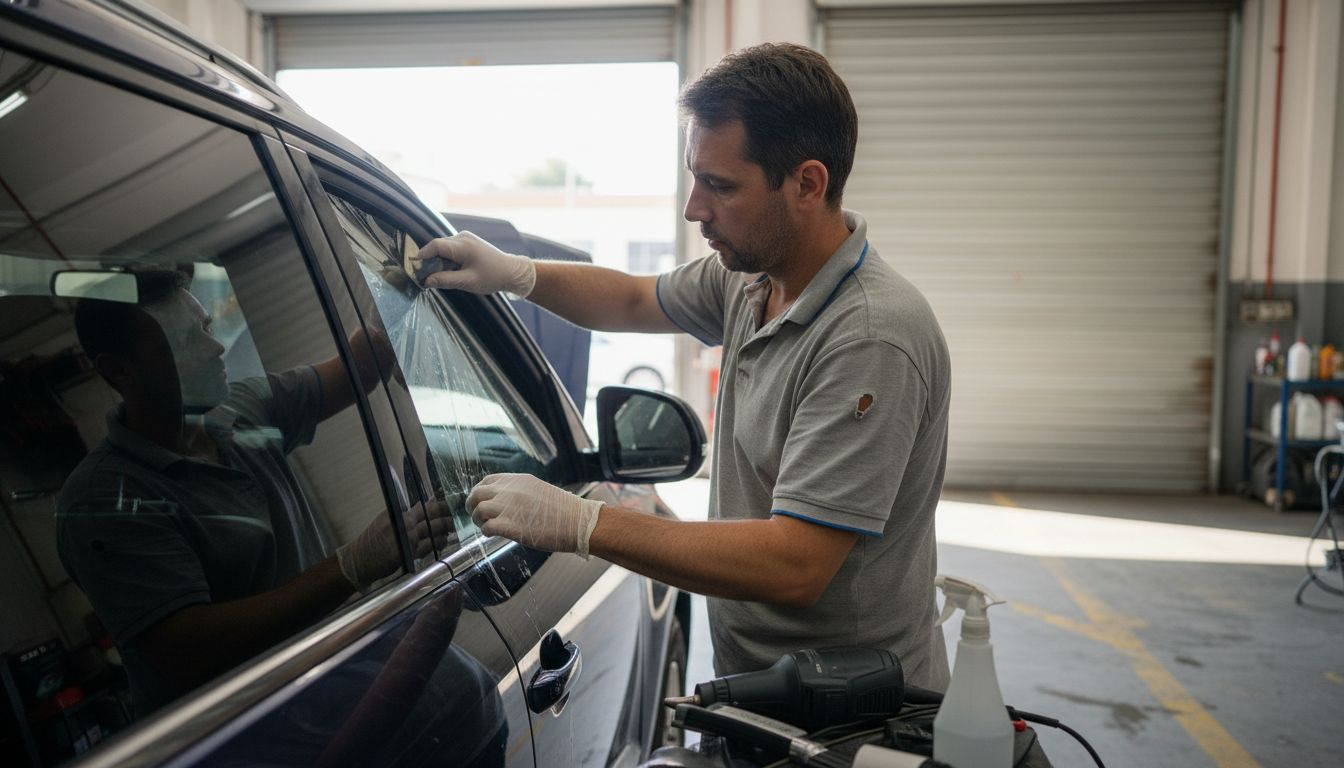
Pricing strategies in window tinting extend beyond material costs. Factors such as vehicle size, complexity of installation, regional regulations, and warranty provisions significantly impact final pricing. Luxury vehicles and specialised automotive models often require more intricate tinting approaches, potentially increasing installation time and overall expense.
Here is a summary comparing automotive window tint film types by key aspects:
| Film Type | Typical Cost Range | Main Benefit | Typical Drawback |
|---|---|---|---|
| Dyed | £50–£150 | Basic solar protection | Limited heat rejection |
| Metalised | £150–£300 | Improved durability | Possible signal interference |
| Nano-Ceramic | £300–£600 | Superior UV/heat block | Higher upfront cost |
| Smart Film | £500–£800+ | Adjustable transparency | Expensive, emerging tech |
Pro tip: Always maintain an inventory of film samples across different price points to demonstrate quality variations and help clients make informed purchasing decisions.
Installation process and technology impact
Window tinting has transformed from a manual craft to a precision technological process. Modern window tint installation represents a sophisticated blend of technical skill and advanced equipment, where accuracy and efficiency are paramount. Professional installers now leverage cutting-edge tools that dramatically improve film application quality and reduce potential errors.
The contemporary installation workflow involves several critical technological interventions. Digital plotters enable computer-precise film cutting, ensuring seamless patterns tailored exactly to specific vehicle models. Specialised heat guns facilitate controlled film manipulation, allowing installers to shrink films perfectly around curved automotive surfaces. These technological advances mean that modern installations can be completed 30-40% faster than traditional manual methods, with significantly reduced risk of imperfections.
Professional installers must invest in both sophisticated equipment and continuous skill development. Computerised cutting systems now provide template libraries covering thousands of vehicle makes and models, allowing unprecedented precision. Advanced slip solutions and professional-grade squeegees complement these technologies, enabling bubble-free applications that meet the highest industry standards. The investment in technology directly correlates with installation quality, customer satisfaction, and long-term business reputation.
Technological integration extends beyond installation equipment. Software solutions now enable precise measurements, virtual film simulations, and comprehensive tracking of installation processes. These digital tools help installers manage complex projects, maintain quality control, and provide clients with detailed documentation of their service.
Pro tip: Regularly update your digital pattern libraries and calibrate cutting equipment to maintain consistently high-quality window tint installations.
Global regulations and legal compliance
Window tinting regulations represent a complex landscape of international standards that professional installers must navigate carefully. European window tint laws demonstrate the intricate variations in legal requirements across different jurisdictions, highlighting the critical importance of regional compliance.
Regulatory frameworks typically focus on three primary considerations: light transmittance, reflectivity, and visibility. Most European countries mandate that front side windows maintain a minimum of 70% light transmission, ensuring sufficient visibility for driver safety. Rear windows and rear passenger windows often allow slightly darker tints, with specific percentage variations depending on local legislation. Windscreen regulations are particularly stringent, with most jurisdictions permitting only a narrow sun visor strip at the top of the windscreen.
Beyond European standards, global regulations exhibit significant diversity. North American states and Canadian provinces have their own unique tinting requirements, with some regions allowing darker tints and others implementing more restrictive measures. Asian markets present another complex regulatory environment, where countries like Japan and South Korea maintain particularly strict vehicle modification guidelines. Professional installers must develop a comprehensive understanding of these regional variations to avoid potential legal complications, vehicle inspection failures, and potential financial penalties.
Technological advancements are gradually influencing regulatory frameworks. Emerging smart film technologies that can dynamically adjust light transmission are challenging existing legal definitions, prompting regulators to develop more nuanced standards. Professional installers must stay informed about these evolving regulations, maintaining close communication with local transportation authorities and continuously updating their knowledge of regional legal requirements.
Below is an overview of factors influencing regional tint regulations and installer strategies:
| Region | Key Legal Focus | Requirement Example | Installer Consideration |
|---|---|---|---|
| Europe | Light transmittance | Front windows ≥ 70% | Strict compliance essential |
| North America | Varies by jurisdiction | Range: 30–70% front | Must check state/provincial laws |
| Asia | Restrictive modifications | Minimal tinting allowed | Detailed local knowledge required |
| Australia/NZ | Sunlight & safety | 35–70% limits typical | Regional consultation advised |
Pro tip: Maintain a comprehensive digital reference library of current regional tinting regulations to ensure consistent legal compliance across different installation projects.
Cost breakdown, mistakes, and profitability strategies
Window tint installation costs represent a complex financial ecosystem that demands strategic understanding. Professional installers must navigate material expenses, labour time, and value proposition to build sustainable business models. The most successful businesses recognise that pricing isn’t simply about covering immediate costs, but creating long-term customer relationships.
Material costs constitute the primary financial foundation of window tinting services. Dyed films typically range from £50-£150 per vehicle, offering basic protection at lower price points. Metalised films increase to £150-£300, providing enhanced durability and performance. Premium ceramic films represent the highest tier, commanding £300-£600 and delivering superior heat rejection and ultraviolet protection. Professional installers must carefully balance film quality with customer budget expectations.
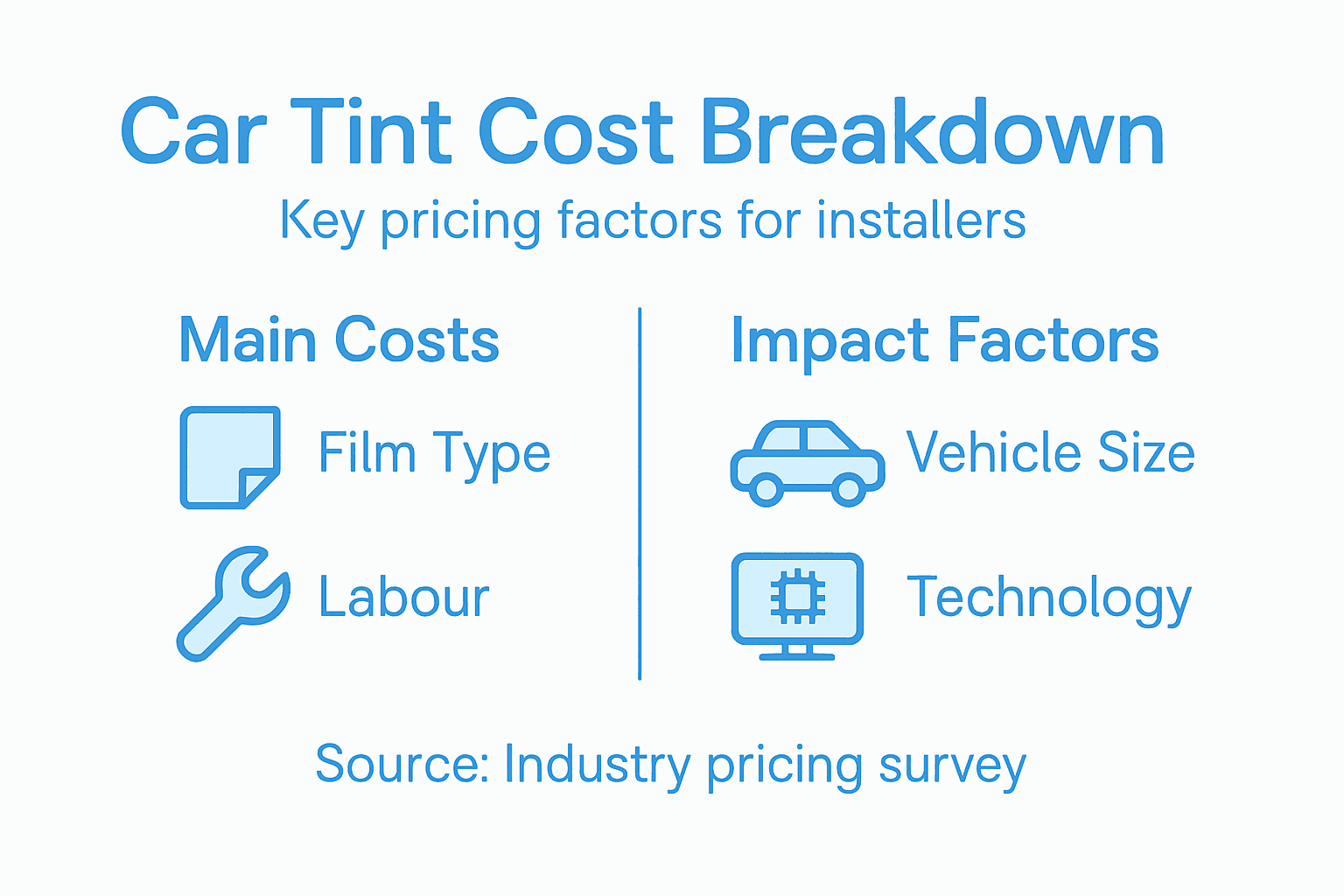
Profitability strategies extend far beyond simple material pricing. Window tint business profitability requires sophisticated approaches including strategic job selection, efficient scheduling, and intelligent cost management. Successful businesses focus on high-margin commercial contracts, invest in automation technologies to reduce labour time, and negotiate volume discounts with material suppliers. Controlling operational expenses like customer acquisition and field service costs becomes crucial for maintaining healthy profit margins.
Common mistakes can significantly erode profitability in window tinting businesses. These include underestimating labour time, failing to account for vehicle complexity, inadequate quality control, and poor customer communication. Installers must develop comprehensive pricing models that factor in vehicle size, window configuration, and potential complications. Transparent pricing, coupled with demonstrable quality, helps build client trust and enables premium service positioning.
Pro tip: Develop a standardised pricing matrix that accounts for vehicle type, film quality, and labour complexity to ensure consistent and profitable service delivery.
Enhance Your Car Tint Installations with Precision Cutting Software
Understanding the complexities of car tint cost and installation challenges emphasises the need for precision and efficiency in every project. Whether you face the pressure of tight labour schedules or seek to reduce material waste while maintaining premium quality, AEONCUT software offers a powerful solution tailored exactly to these pain points. Professional installers and serious enthusiasts can now leverage extensive vehicle pattern libraries, AI-driven auto-nesting, and cloud-based updates to ensure flawless window tint cuts that save time and improve customer satisfaction.
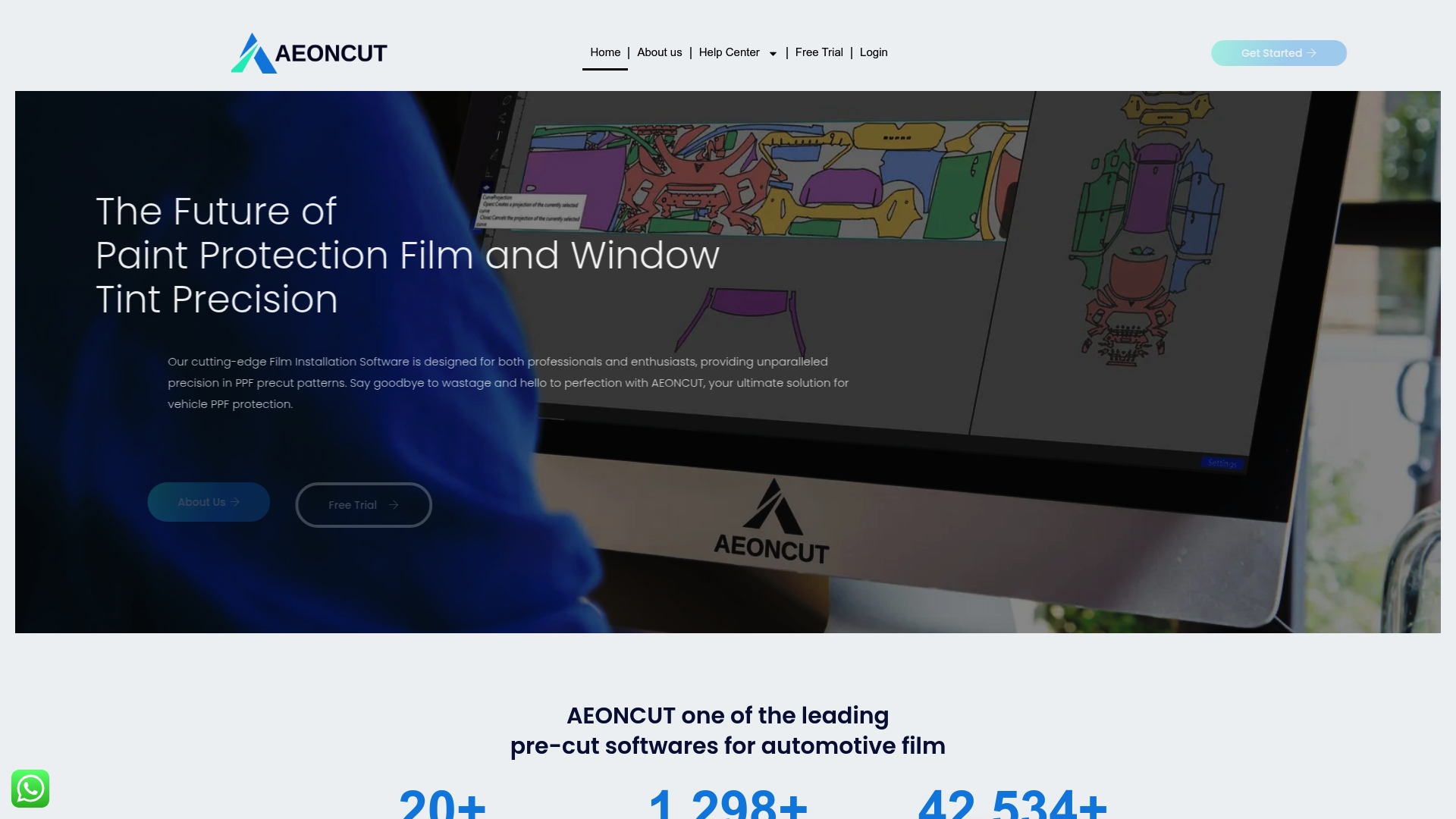
Discover how our window Tint – AEONCUT PPF Pre-cut Cutting software helps you master complex vehicle shapes easily to meet even the strictest regulations and boost profitability. Start simplifying your workflow and delivering consistent top-quality results today at https://aeoncutsw.com. Take the next step towards smarter tint installation efficiency now.
Frequently Asked Questions
What determines the cost of car window tinting?
The cost of car window tinting is influenced by several factors, including material type, labour time, equipment quality, vehicle complexity, and regional regulatory requirements.
What are the different types of window tint films available?
The main types of window tint films include dyed films, metalised films, nano-ceramic films, and smart films. Each type offers varying levels of solar protection, durability, and cost, with dyed films being the most economical and smart films being the most advanced.
Why should I choose premium window tints over cheaper options?
Premium window tints provide superior benefits such as better ultraviolet protection, improved heat rejection, and longer-lasting performance. While they may have a higher upfront cost, they typically provide greater value over time compared to cheaper options.
How long does the window tint installation process usually take?
The installation process typically takes between 2 to 4 hours for a standard sedan, depending on the film type and the complexity of the vehicle’s windows.
Recommended
- Cost of Window Tinting: 2025 Guide for Installers – AEONCUT PPF Pre-cut Cutting software
- How Window Tint Works: Essential Guide for Auto Professionals 2025 – AEONCUT PPF Pre-cut Cutting software
- Types of Window Tint: Guide for Installers and Dealers 2025 – AEONCUT PPF Pre-cut Cutting software
- What is Window Tint? Essential Guide for Tinting Pros 2025 – AEONCUT PPF Pre-cut Cutting software