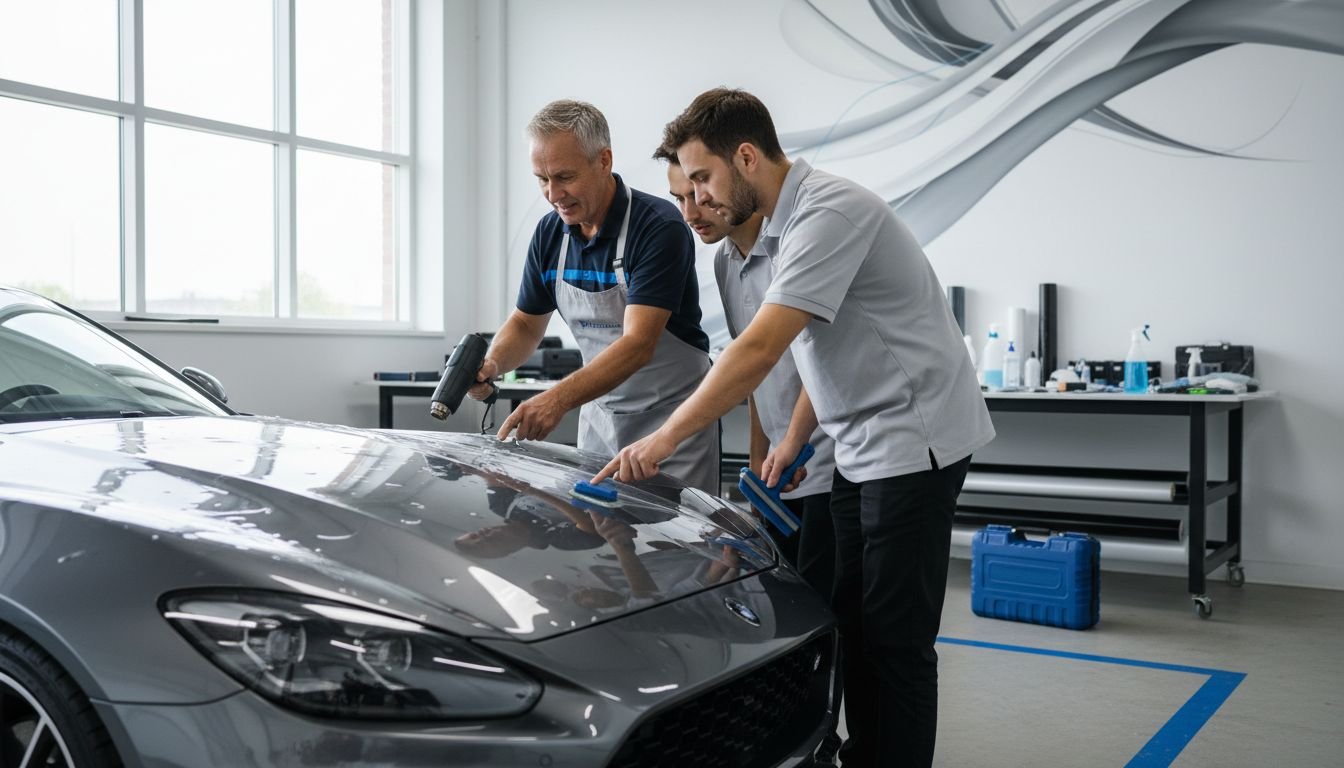
Car owners are spoilt for choice when it comes to protecting or customising their pride and joy. PPF can last up to 10 years while vinyl wraps typically max out at 7 years. Most think it is all about the looks or flashy colours, yet the true difference lies in their fundamental purpose and what your car endures every single day.
Table of Contents
- Understanding PPF And Vinyl Wrap Materials
- Durability, Maintenance And Lifespan Overview
- Customisation Options And Visual Appeal
- Cost, Installation Process And Professional Tips
Quick Summary
| Takeaway | Explanation |
|---|---|
| Choose PPF for Protection | Paint protection film is ideal for safeguarding original paint from damage while maintaining aesthetic integrity. |
| Vinyl Wrap for Aesthetics | Vinyl wraps allow for vibrant colour changes and graphic designs without permanent alterations to the paint. |
| Understand Lifespan Differences | PPF typically lasts 7 to 10 years, while vinyl wraps range from 3 to 7 years, impacting long-term value. |
| Maintenance Varies by Material | PPF requires careful washing to keep its properties, while vinyl wraps need regular cleaning to maintain appearance. |
| Installation Requires Skill | Both PPF and vinyl wrap installation requires technical expertise, with PPF needing advanced skills for optimal results. |
Understanding PPF and Vinyl Wrap Materials
Vehicle protection solutions have evolved dramatically, offering professionals and car enthusiasts advanced materials designed to preserve automotive aesthetics and structural integrity. Paint protection film (PPF) and vinyl wraps represent two distinct technologies with unique characteristics that serve different purposes in automotive surface management.
Material Composition and Technical Fundamentals
Paint protection film represents a sophisticated polyurethane-based material engineered for direct vehicle surface protection. According to the US Patent Office research, these films feature multilayered constructions specifically designed to absorb impact, resist UV degradation, and provide comprehensive automotive surface shielding. The typical PPF comprises several critical layers: an adhesive base layer, a protective polyurethane core, and a specialized topcoat that enables self-healing properties and enhanced durability.
In contrast, vinyl wraps are graphic materials composed of polyvinyl chloride (PVC) with significant flexibility and aesthetic versatility. These wraps primarily focus on cosmetic transformation, offering vehicle owners comprehensive colour and finish modifications. The material structure includes a flexible base layer, printed graphic design, and protective laminate that ensures colour retention and minimal degradation.
Performance Characteristics and Application Considerations
The fundamental difference between PPF and vinyl wraps lies in their primary functional objectives. PPF acts as a defensive barrier, protecting the original paint from rock chips, minor abrasions, and environmental contaminants. Professional installers recognize PPF as a precise, almost invisible protective solution that maintains the vehicle’s original aesthetic while providing robust protection.
Vinyl wraps, conversely, serve a more aesthetic purpose. They enable complete vehicle colour transformation, allowing complex graphic designs and personalised styling without permanent paint modification. Professional automotive customization experts highlight that vinyl wraps offer temporary aesthetic solutions with relatively straightforward removal processes, making them attractive for fleet branding, temporary styling, and creative automotive expressions.
For professionals in automotive detailing and protection, understanding these material nuances becomes crucial. While both PPF and vinyl wraps involve surface application techniques, their core purposes diverge significantly. PPF prioritizes protection, whereas vinyl wraps emphasize visual transformation.
If you’re interested in exploring more about professional PPF application techniques, check out our detailed guide on precision film cutting.
Ultimately, selecting between PPF and vinyl wrap depends on specific client requirements, budget constraints, and desired automotive aesthetic and protection outcomes. Professional installers must evaluate each project’s unique parameters to recommend the most suitable solution.
To clarify the key differences between paint protection film (PPF) and vinyl wraps, here’s a side-by-side comparison of their core features, applications, cost, and typical lifespans:
| Feature/Aspect | Paint Protection Film (PPF) | Vinyl Wrap |
|---|---|---|
| Main Purpose | Protection against chips, abrasions, and contaminants | Aesthetic customization, colour/finish changes |
| Material | Polyurethane, multi-layered | PVC (polyvinyl chloride), graphic laminate |
| Appearance Options | Clear or subtly tinted, some new finishes | Wide variety: gloss, matte, metallic, textured, designs |
| Lifespan | 7–10 years (with maintenance) | 3–7 years (depends on quality) |
| Maintenance | Gentle washing, avoid abrasives | Regular cleaning, avoid harsh chemicals |
| Cost Range | $1,300–$5,000 (partial/comprehensive) | $3,000–$8,000 (based on size/design) |
| Installation Skill | Advanced, requires specialist tools | Skilled, but less technical than PPF |
Durability, Maintenance and Lifespan Overview
Automotive surface protection technologies demand rigorous performance standards, with durability and maintenance being critical factors for professional installers and vehicle owners. Paint protection film (PPF) and vinyl wraps present distinct longevity profiles that significantly impact their long-term value and effectiveness.
Lifespan and Performance Characteristics
According to Wikipedia, paint protection film represents a sophisticated thermoplastic urethane technology engineered for comprehensive vehicle surface defense. Professional installers typically apply PPF to high-impact areas such as front fenders, bumpers, and rocker panels, where protection requirements are most demanding.
Research from automotive detailing experts indicates that vinyl wraps generally exhibit a lifespan ranging between 3 to 7 years. This duration depends critically on material quality, environmental exposure, and maintenance practices. High-quality vinyl wraps incorporate UV protection mechanisms that mitigate colour degradation and preserve material structural integrity.
Paint protection film demonstrates superior longevity, typically providing 7 to 10 years of continuous protection when properly maintained. Its advanced molecular composition resists yellowing, maintains clarity, and delivers consistent protective performance throughout its operational lifecycle.
Maintenance Requirements and Professional Considerations
Maintenance strategies differ substantially between PPF and vinyl wrap technologies. Vinyl wraps require meticulous cleaning protocols to preserve aesthetic qualities. Regular washing, avoiding aggressive chemical treatments, and minimizing direct sunlight exposure can extend their functional lifespan.
PPF maintenance involves more nuanced approaches. Professional automotive protection specialists recommend periodic gentle washing, avoiding abrasive cleaning techniques, and implementing protective strategies that preserve the film’s self-healing properties.
For professionals seeking comprehensive insights into PPF maintenance techniques, explore our detailed professional maintenance guide.
Critical maintenance factors include environmental exposure, installation quality, and ongoing care protocols. Professional installers must educate clients about specific maintenance requirements to maximize material performance and longevity.
To help readers understand the cleaning and care requirements for each material, here’s a summary table comparing maintenance guidelines for PPF and vinyl wraps:
| Maintenance Task | PPF Recommendations | Vinyl Wrap Recommendations |
|---|---|---|
| Regular Washing | Gentle car wash, no abrasives | Regular wash, avoid harsh chemicals |
| Sunlight Exposure | UV-resistant, minimise harsh prolonged exposure | Limit direct sunlight for longevity |
| Chemical Use | Avoid strong solvents | Avoid aggressive chemicals |
| Self-Healing Properties | Topcoat enables self-repair | Not applicable |
| Special Care | Gentle handling to protect surface | Prevent surface scratches during cleaning |
| Professional Guidance | Essential for maintenance tips | Recommend for best care results |
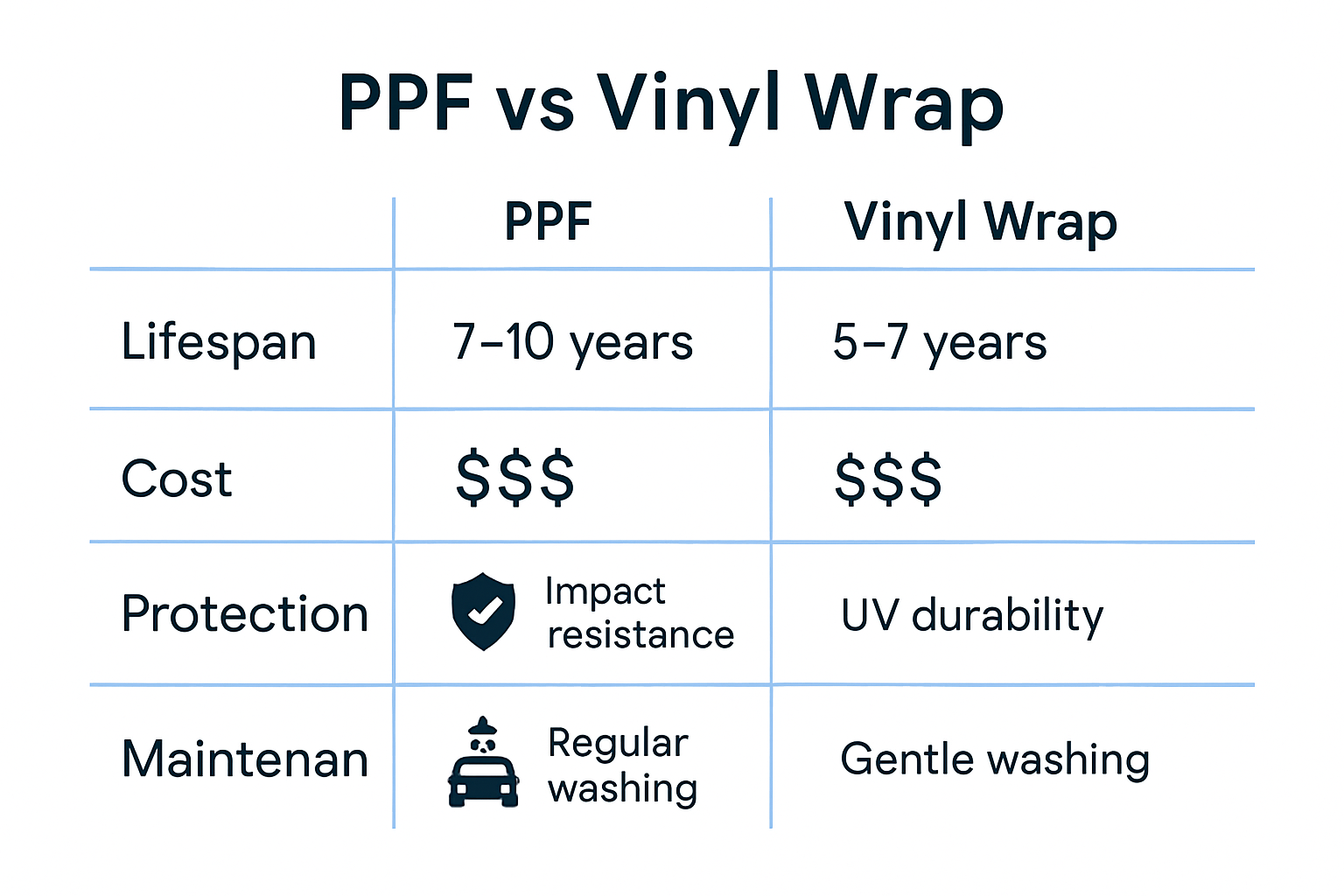
Ultimately, the selection between PPF and vinyl wrap depends on precise performance expectations, budgetary constraints, and specific vehicular protection objectives. Professionals must conduct thorough assessments, considering material characteristics, client needs, and long-term protective strategies to recommend optimal solutions.
Customisation Options and Visual Appeal
Customisation represents a critical consideration for automotive enthusiasts and professional installers seeking to enhance vehicle aesthetics and personal expression. Paint protection film (PPF) and vinyl wraps offer distinctly different approaches to visual transformation and aesthetic customisation.
Aesthetic Versatility and Design Potential
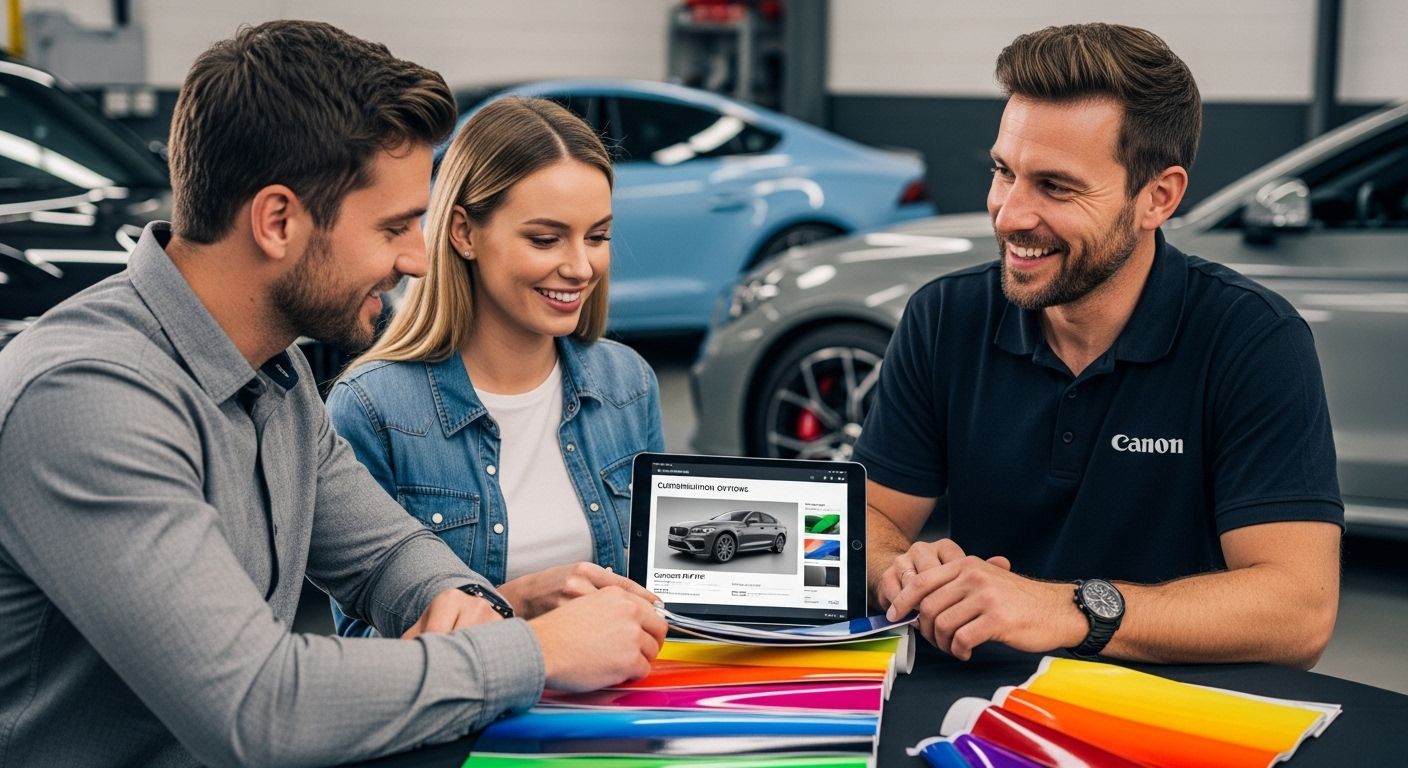
Automotive protection specialists highlight that vinyl wraps provide an unprecedented range of customisation options. These materials enable comprehensive visual transformations, offering finishes including gloss, matte, satin, metallic, and even textured surfaces like carbon fiber. Professionals can leverage vinyl wraps to create complex graphic designs, complete colour changes, and unique visual statements that reflect individual or brand identities.
Paint protection film traditionally presented more limited aesthetic options, predominantly existing as a clear protective layer. However, contemporary PPF technologies have evolved to include subtle colour variations and specialized finishes. Research from industry experts indicates that some manufacturers now produce tinted PPF variants, expanding aesthetic possibilities while maintaining primary protective functions.
Performance and Visual Longevity
Vinyl wraps excel in immediate visual impact but demonstrate potential limitations in long-term aesthetic preservation. Professional automotive customisation sources reveal that these wraps can effectively conceal existing paint imperfections and provide vibrant colour transformations. However, prolonged exposure to environmental factors may cause gradual colour fading and surface degradation.
Paint protection film offers a more nuanced approach to visual aesthetics. While primarily designed for protection, modern PPF technologies maintain surface clarity and prevent yellowing. Professional installers appreciate PPF’s ability to preserve the original paint’s depth and lustre while providing comprehensive surface protection.
For professionals seeking advanced precision in film application and customisation, explore our cutting-edge film preparation techniques.
Ultimately, the choice between PPF and vinyl wrap depends on specific aesthetic objectives, durability requirements, and budget considerations. Professionals must carefully evaluate client expectations, environmental conditions, and desired visual outcomes to recommend the most appropriate solution.
Cost, Installation Process and Professional Tips
Professional automotive surface protection requires meticulous planning, financial considerations, and technical expertise. Understanding the nuanced cost structures and installation complexities of paint protection film (PPF) and vinyl wraps becomes essential for industry professionals seeking optimal client solutions.
Cost Considerations and Financial Investment
According to Edmunds, vinyl wraps represent a versatile and financially accessible customisation option. Pricing typically ranges from $3,000 to $8,000, depending on vehicle size, design complexity, and material quality. These wraps offer unique finishes like chameleon, chrome, and matte, providing cost-effective aesthetic transformations compared to traditional paint jobs.
Shopmonkey research indicates that vinyl wraps provide moderate protection from sunlight and light scratches. Professional installers must communicate that while visually appealing, these wraps are not designed for heavy-duty paint defense.
Paint protection film demonstrates a different cost profile. Final Approach Detailing notes PPF installation costs ranging from $1,300 for partial coverage to $5,000 for comprehensive vehicle protection. The investment reflects PPF’s superior protective capabilities and precision engineering.
Installation Complexity and Professional Techniques
Vinyl wrap installation demands exceptional skill and attention to detail. The process requires thorough surface preparation, including meticulous cleaning and precise material handling. Professionals must manage complex surface contours, minimize air bubbles, and ensure seamless application across intricate vehicle geometries.
PPF installation represents an even more technically demanding procedure. Professional installers must possess advanced technical skills to achieve optimal results. The film’s self-healing properties and precise cutting requirements necessitate specialized training and sophisticated equipment.
For professionals seeking advanced film cutting precision, explore our professional film preparation techniques.
Successful installation requires understanding substrate preparation, environmental conditions, and material-specific application techniques. Professionals must invest in continuous training, maintain updated equipment, and develop refined technical skills to deliver exceptional results.
Ultimately, choosing between PPF and vinyl wrap depends on balancing client expectations, budgetary constraints, and specific protective or aesthetic objectives. Professional installers must conduct comprehensive consultations, evaluating each project’s unique requirements to recommend the most appropriate solution.
Frequently Asked Questions
What is the main difference between PPF and vinyl wrap?
Paint protection film (PPF) focuses on protecting the vehicle’s original paint from damage, while vinyl wraps are primarily used for cosmetic changes and aesthetic customisation.
How long do PPF and vinyl wraps typically last?
PPF generally has a lifespan of 7 to 10 years, while vinyl wraps usually last between 3 to 7 years, depending on quality and maintenance.
What are the maintenance requirements for PPF and vinyl wraps?
PPF requires gentle washing and the avoidance of abrasive cleaning methods, whereas vinyl wraps need regular cleaning and should avoid harsh chemicals to maintain their appearance.
Can vinyl wraps protect my car’s paint like PPF?
While vinyl wraps offer some level of protection against sunlight and light scratches, they are not designed for heavy-duty protection like PPF, which is specifically engineered to defend against chips and abrasions.
Bring Advanced PPF Precision to Your Business in 2025
Struggling to balance protection and perfect results as you weigh up Paint Protection Film against vinyl wrap for your clients? You have learned that true long-term value lies in professional precision, application efficiency and material savings. To deliver the highest standard of PPF installation, you need tools that are as advanced as the films you trust. Discover the Paint Protection Film category, where smart pattern software addresses daily installation pain points by ensuring every cut is accurate. Avoid wasteful guesswork and achieve a flawless fit, job after job.
Are you ready to offer your customers 2025-level care with seamless software support? See how AEONCUT PPF Pre-cut Cutting Software transforms the art of vehicle protection into a science of accuracy. Do not let outdated methods hold your business back—take your skills to a higher level today with our trusted technology at aeoncutsw.com.
Recommended
- Pros and Cons of PPF: Essential Insights for Installers 2025 – AEONCUT PPF Pre-cut Cutting software
- Matte PPF vs Gloss PPF: Professional Comparison 2025 – AEONCUT PPF Pre-cut Cutting software
- Matte PPF vs Gloss PPF: Professional Comparison 2025 – AEONCUT PPF Pre-cut Cutting software
- How Does PPF Work? Guide for Car Care Pros 2025 – AEONCUT PPF Pre-cut Cutting software