
Choosing the right mirror tint film often means juggling legal limits, material costs, and client expectations all in a single job. For North American vehicle wrap and tint professionals, mastering advanced reflective technologies can make every installation smoother and more profitable. Discover how mirror tint film leverages microscopic metallic particles to deliver real daytime privacy, heat control, and UV protection, while keeping your workflow efficient and compliant.
Table of Contents
- Defining Mirror Tint Film and Core Uses
- Key Types of Mirror Tint Film Explained
- How Mirror Tint Film Works on Vehicles
- Legal and Safety Standards Worldwide
- Maximising Efficiency With Pre-Cut Software
- Common Pitfalls and Installation Mistakes
Key Takeaways
| Point | Details |
|---|---|
| Mirror Tint Film Features | Comprised of polyester, it provides enhanced privacy and solar control while reducing heat absorption during daylight. |
| Variety of Film Types | Different types like high-reflective and smart films cater to specific requirements, with unique properties suited for various applications. |
| Installation Best Practices | Success hinges on meticulous surface preparation and environmental control to avoid common pitfalls during application. |
| Regulatory Compliance | Understanding local laws on light transmission and reflectivity is crucial for legal vehicle tinting practices. |
Defining Mirror Tint Film and Core Uses
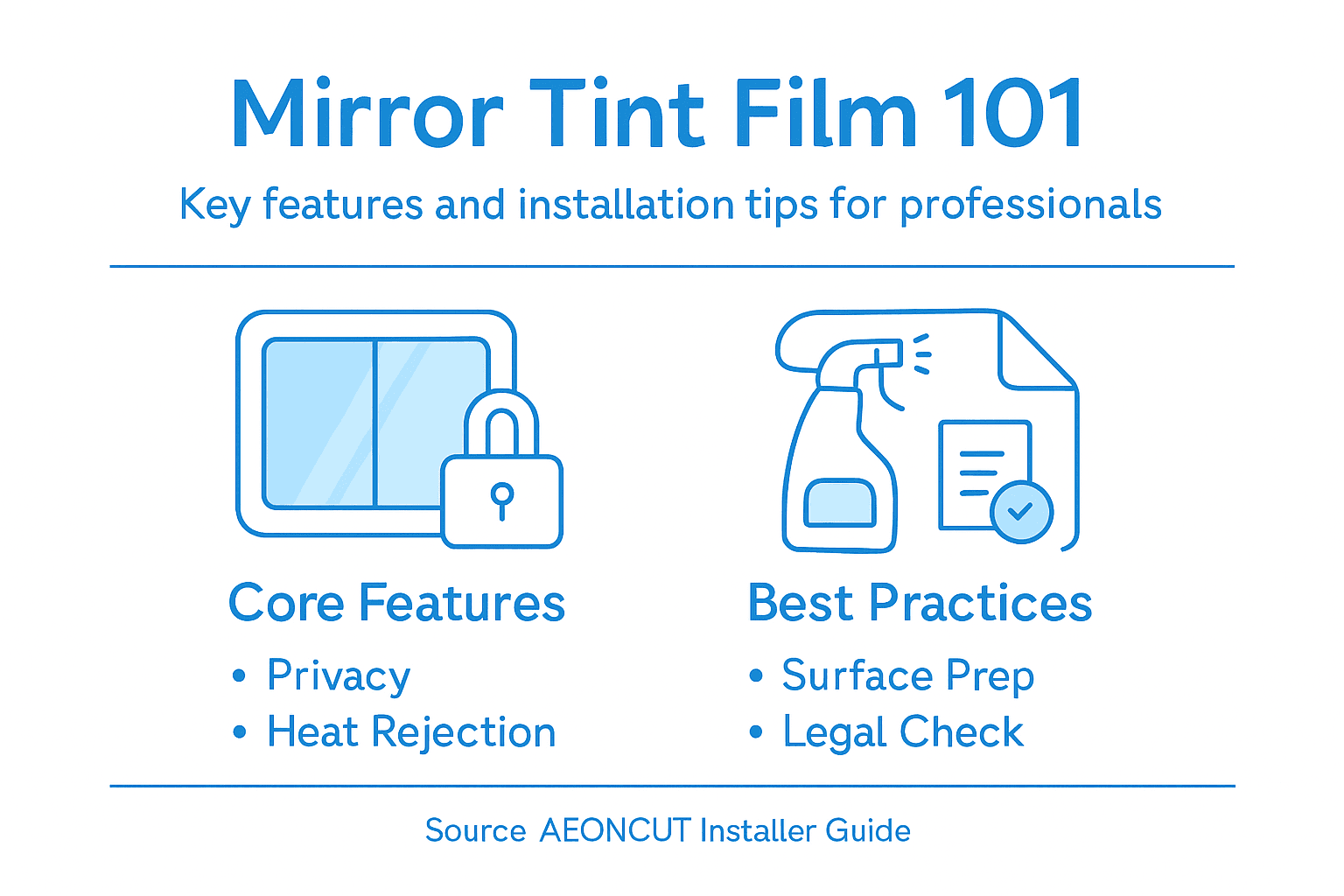
Mirror tint film is a specialised polyester-based material engineered to transform glass surfaces into highly reflective barriers. Reflective window technologies provide innovative solutions for privacy, heat management, and solar control across multiple environments.
The core characteristics of mirror tint film include:
- Polyester base material composition
- One-way mirror effect capability
- Solar radiation reflection properties
- Daytime privacy enhancement
- Reduced interior heat absorption
Primarily utilised in automotive, residential, and commercial settings, mirror tint film operates through a sophisticated light management mechanism. By exploiting differences in external and internal light intensity, the film creates a unique visual barrier. Mirror tint applications enable users to maintain visual privacy while preserving internal visibility during daylight conditions.
Technical performance characteristics make mirror tint film particularly valuable for professionals seeking efficient solar management. The metallized layers embedded within the film reflect solar radiation, significantly reducing heat transmission and protecting interior spaces from harmful ultraviolet exposure.
Pro tip: When selecting mirror tint film, prioritise professional-grade materials with verified heat rejection ratings and confirmed UV protection percentages.
Key Types of Mirror Tint Film Explained
Mirror tint films represent a sophisticated range of glass treatment technologies with diverse applications across multiple sectors. Mirror film variations offer professionals targeted solutions for privacy, solar control, and aesthetic enhancement.
The primary categories of mirror tint film include:
- Standard high-reflective films (85-95% reflectivity)
- Frosted diffusion films
- Metallic vacuum-deposited films
- Anti-scratch protective films
- Smart variable transmission films
Each mirror tint film type possesses unique performance characteristics tailored to specific environmental requirements. Standard high-reflective films provide maximum privacy and glare reduction, making them ideal for automotive and commercial applications. Metallic films, with their 75-85% reflectivity range, offer enhanced solar radiation management and temperature control.
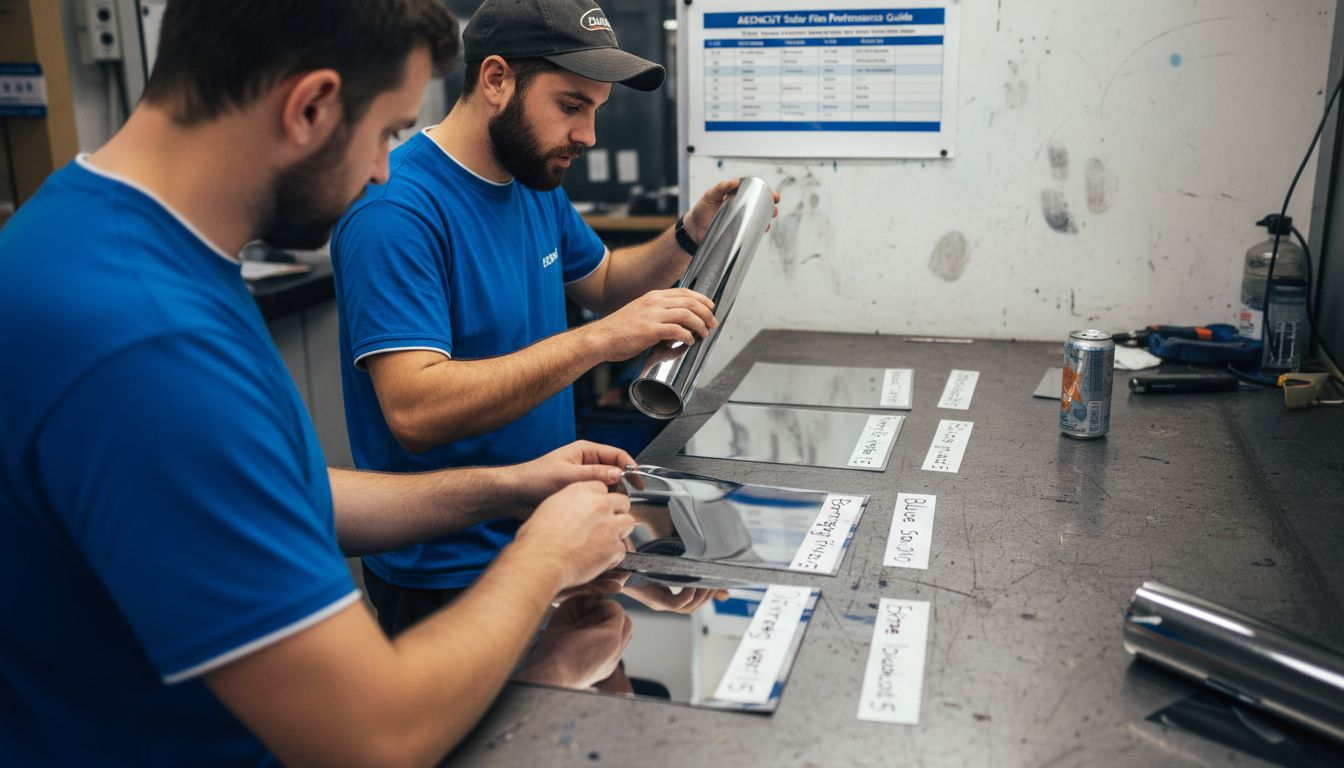
Advanced smart mirror films represent the pinnacle of technological innovation, enabling dynamic light transmission and privacy controls. These intelligent films can adjust transparency levels based on external light conditions, providing unprecedented flexibility for modern architectural and automotive design requirements.
Here’s a comparative overview of common mirror tint film types and their ideal environments:
| Film Type | Typical Reflectivity | Ideal Usage Environment | Durability Level |
|---|---|---|---|
| High-reflective standard | 85-95% | Commercial, automotive | Excellent |
| Frosted diffusion | Moderate | Residential, office privacy | Good |
| Metallic vacuum-deposited | 75-85% | Heat control in vehicles | Very high |
| Smart variable transmission | Adjustable | Advanced architecture, luxury vehicles | High |
| Anti-scratch protective | Variable | High-traffic or public areas | Exceptional |
Pro tip: Always evaluate mirror tint film specifications against your specific installation environment, considering factors like UV protection, temperature resistance, and durability before making a final selection.
How Mirror Tint Film Works on Vehicles
Mirror tint film represents an ingenious optical technology that transforms vehicle windows into sophisticated privacy barriers. Vehicle window tint mechanics rely on precise microscopic metallic particle deposition to create remarkable light management capabilities.
The key operational principles of mirror tint film include:
- Microscopic metallic particle layering
- One-way visual barrier creation
- Solar radiation reflection
- Temperature reduction mechanism
- Ambient light intensity manipulation
At its core, the film functions through a sophisticated light interaction process. By depositing metallic particles onto a polyester substrate, the film creates a reflective surface that appears mirror-like from the exterior. The mechanism depends critically on light intensity differences, allowing vehicle occupants to maintain clear visibility while preventing external observers from seeing inside.
Technical performance emerges from the film’s ability to selectively manage solar radiation. The metallised layer blocks significant portions of infrared and ultraviolet light, reducing interior heat gain and protecting occupants from harmful radiation. This intelligent design provides dual benefits of thermal management and visual privacy, making mirror tint films a sophisticated solution for modern vehicle protection.
Pro tip: Conduct thorough pre-installation light transmission measurements to ensure your mirror tint film meets legal visibility requirements for your specific vehicle and region.
Legal and Safety Standards Worldwide
Vehicle window tinting regulations represent a complex global landscape of safety and visibility requirements. Global vehicle tint regulations vary significantly across different jurisdictions, reflecting diverse safety priorities and environmental considerations.
Key international tinting regulation characteristics include:
- Visible Light Transmission (VLT) percentage restrictions
- Front side window transparency requirements
- Reflectivity limitations
- Regional legal variations
- Safety-focused enforcement standards
In European regions, most countries mandate front side windows maintain at least 70% light transmission, ensuring optimal driver visibility and pedestrian safety. North American jurisdictions typically implement more stringent restrictions, often prohibiting highly reflective or mirrored films on front windscreens and driver-side windows to prevent potential glare and visibility challenges.
Asia-Pacific regions demonstrate equally nuanced approaches, with countries like Japan and Australia implementing strict regulations that balance vehicle aesthetics with critical safety considerations. These legal frameworks typically focus on preventing excessive light reduction, minimising potential road hazards, and protecting driver and passenger visibility under varying lighting conditions.
Below is a summary table outlining regional vehicle window tint regulations for quick comparison:
| Region | Min. Light Transmission (Front) | Mirrored Film Legality | Primary Safety Focus |
|---|---|---|---|
| Europe | 70% | Heavily restricted | Driver and pedestrian visibility |
| North America | 70-75% (varies) | Usually prohibited | Anti-glare, accident prevention |
| Asia-Pacific | 65-70% (varies) | Restricted, heavily policed | Balanced aesthetics and safety |
Pro tip: Always consult local transportation authorities and obtain detailed written guidelines before installing mirror tint films to ensure full compliance with regional legal requirements.
Maximising Efficiency With Pre-Cut Software
Pre-cut software technologies revolutionise mirror tint film installation by streamlining complex design and cutting processes. PPF cutting software solutions enable installers to dramatically reduce material waste and improve precision across vehicle tinting projects.
Key efficiency-enhancing features of modern pre-cut software include:
- Automated pattern recognition
- Precise digital template generation
- Intelligent material nesting algorithms
- Cloud-based pattern libraries
- Real-time design modification capabilities
The core advantage of pre-cut software lies in its ability to transform complex manual processes into seamless digital workflows. Advanced artificial intelligence algorithms analyse vehicle model specifications, generating exact cutting patterns that minimise material consumption and maximise installation accuracy. These technologies eliminate traditional time-consuming measurement and manual tracing techniques, replacing them with millimetre-precise digital templates.
Professional installers benefit from comprehensive digital ecosystems that integrate pattern libraries, customisation tools, and material optimization strategies. By leveraging AI-powered cutting technologies, tinting professionals can reduce installation times, minimize material waste, and consistently deliver high-quality results across diverse vehicle models.
Pro tip: Invest time in learning your pre-cut software’s advanced features, as mastering these tools can significantly reduce installation complexity and improve overall workshop productivity.
Common Pitfalls and Installation Mistakes
Mirror tint film installation demands precision and careful technique to achieve professional results. Common window tint installation mistakes can significantly compromise the quality and longevity of automotive tinting projects.
Key installation errors that professionals must avoid include:
- Inadequate surface preparation
- Improper environmental conditions
- Insufficient cleaning techniques
- Rushing the application process
- Using inappropriate installation tools
- Selecting incompatible film types
Professional installers frequently encounter challenges related to surface contamination and preparation. Even microscopic dust particles or residual cleaning solutions can create bubbles, wrinkles, and uneven adhesion that compromise the entire installation. Ensuring a meticulously clean surface using specialised cleaning solutions and lint-free cloths is crucial for achieving a flawless mirror tint film application.
Environmental factors play a critical role in successful installation. Direct sunlight, extreme temperatures, and high humidity can dramatically affect film adhesion and overall performance. Experienced installers create controlled working environments, maintaining optimal temperatures between 10-32 degrees Celsius and minimising external atmospheric interference during the application process.
Pro tip: Invest in high-quality microfibre cloths and professional-grade cleaning solutions, and always perform a comprehensive surface inspection before beginning any mirror tint film installation.
Boost Your Mirror Tint Film Installations with AEONCUT Software
Installing mirror tint film demands precision, efficiency, and excellent material management to avoid costly waste and ensure flawless results. This article highlights the challenges of mastering complex cutting patterns and the critical need for advanced tools that can optimise both accuracy and installation speed. AEONCUT understands these pain points with its cutting-edge software tailored specifically for window tint professionals and installers.
Experience seamless pre-cut pattern generation with our AI-powered auto-nesting technology. Minimise film waste, reduce installation errors, and save valuable time by utilising extensive cloud-based libraries designed for automotive mirror tint applications. Whether you need detailed customization or smart pattern recognition, AEONCUT empowers you to deliver high-quality installations every time.
Ready to transform your workflow and maximise efficiency? Explore the benefits of AEONCUT’s solutions in our dedicated window Tint category and discover how hundreds of professional installers are raising their standards.
Elevate your mirror tint film projects today by visiting AEONCUT’s main site and start your journey towards precision, speed, and unmatched installation quality now.
Frequently Asked Questions
What is mirror tint film?
Mirror tint film is a polyester-based material designed to create reflective surfaces on glass, enhancing privacy, heat management, and solar control in various environments.
How does mirror tint film work on vehicles?
Mirror tint film uses microscopic metallic particle layering to create a one-way visual barrier, reflecting solar radiation and reducing interior heat while allowing occupants to maintain visibility.
What are the common installation mistakes to avoid with mirror tint film?
Common mistakes include inadequate surface preparation, improper environmental conditions, insufficient cleaning techniques, and rushing the application process, all of which can lead to a compromised installation result.
What types of mirror tint film are available and their uses?
Available types include high-reflective films for maximum privacy, frosted diffusion films for residential privacy, metallic films for heat control, smart variable transmission films for dynamic use, and anti-scratch protective films for high-traffic areas.
Recommended
- Types of Window Tint: Guide for Installers and Dealers 2025 – AEONCUT PPF Pre-cut Cutting software
- How Window Tint Works: Essential Guide for Auto Professionals 2025 – AEONCUT PPF Pre-cut Cutting software
- What is Window Tint? Essential Guide for Tinting Pros 2025 – AEONCUT PPF Pre-cut Cutting software
- Heat Shrinking Window Tint: 2025 Guide for Installers – AEONCUT PPF Pre-cut Cutting software
- Verschil Type Zonnepanelen: Complete Gids Voor 2024 – Holland Electric Duurzaam
- Matte Finish Surfaces – Impact on UK Kitchens – WordPress