
Over 80 percent of British car owners invest in some form of paint protection for their vehicles. Protecting a vehicle’s finish goes far beyond aesthetics. In today’s market, modern coatings use cutting-edge science to defend against harsh weather, chemical damage, and everyday wear. You will discover how evolving technologies transform basic car paint into a durable protective barrier, making informed choices about longevity and value much simpler.
Table of Contents
- Defining Car Paint Protection Coating Technologies
- Types of Paint Coatings and Their Distinctions
- Application Processes and Professional Requirements
- Lifespan, Maintenance, and Durability Factors
- Comparing Coatings, Films and Alternatives
- Cost Pitfalls and Avoidable Mistakes for Installers
Key Takeaways
| Point | Details |
|---|---|
| Advanced Coating Technologies | Modern automotive paint coatings utilise advanced materials and technologies, such as nanotechnology and ceramic compounds, to enhance durability and protect against environmental stressors. |
| Importance of Surface Preparation | Thorough surface preparation is crucial for maximising the adhesion and longevity of paint protection coatings. |
| Durability Factors | The lifespan of automotive coatings is influenced by exposure to UV radiation, chemical contaminants, and maintenance practices, necessitating regular upkeep to ensure performance. |
| Choosing the Right Coating | Evaluating specific environmental conditions and operational requirements is essential for selecting the appropriate paint protection technology for optimal results. |
Defining Car Paint Protection Coating Technologies
Automotive coatings represent sophisticated protective technologies designed to shield vehicle surfaces from environmental degradation. Automotive coatings are specialised formulations engineered with complex chemical compositions that serve multiple protective and aesthetic functions. These advanced protective layers typically consist of multiple intricate components, including primers, basecoats, and clearcoats, each contributing unique protective characteristics.
The fundamental structure of automotive paint protection coatings involves intricate chemical interactions between various substrate materials. Paint coatings are liquid substances that transform into solid protective films after application, incorporating critical elements like solvents, binders, pigments, and specialised additives. These components work synergistically to create a robust barrier against ultraviolet radiation, mechanical abrasion, chemical contaminants, and environmental weathering.
Modern automotive paint protection technologies have evolved dramatically, moving beyond simple aesthetic applications to become highly engineered protective systems. Contemporary coatings now integrate nanotechnology, ceramic compounds, and polymeric materials that provide enhanced durability, self-healing properties, and superior resistance to environmental stressors. These advanced formulations can repel water, resist minor scratches, and maintain a vehicle’s pristine appearance through complex molecular interactions.
Pro Tip for Car Care Professionals: Always conduct a comprehensive surface preparation before applying any paint protection coating, ensuring complete removal of contaminants and using appropriate cleaning techniques to maximise coating adhesion and longevity.
Types of Paint Coatings and Their Distinctions
Automotive paint coatings are systematically categorised into distinct types, each serving specific protective and aesthetic purposes within the automotive industry. These sophisticated coating systems are engineered to address varying environmental challenges, performance requirements, and substrate interactions. The primary classification encompasses three fundamental categories: architectural, industrial, and specialised purpose coatings, each representing a unique technological approach to surface protection and enhancement.
The architectural coating segment primarily focuses on exterior vehicle surfaces, providing robust protection against ultraviolet radiation, mechanical abrasion, and environmental contaminants. Industrial coatings, by contrast, are designed for more specialised applications, often incorporating advanced polymer technologies and nanotechnology to enhance durability and resistance. These coatings integrate complex chemical formulations that create microscopic protective barriers, enabling superior performance under extreme operational conditions.

Specialised purpose coatings represent the pinnacle of automotive protection technology, utilising cutting-edge materials science to develop highly sophisticated protective layers. These advanced formulations might include ceramic compounds, self-healing polymers, and hybrid organic-inorganic systems that provide unprecedented levels of surface protection. Such coatings can offer remarkable properties like hydrophobic surfaces, enhanced scratch resistance, and the ability to maintain aesthetic quality under challenging environmental conditions.
Pro Tip for Automotive Professionals: Always evaluate the specific environmental and operational conditions when selecting a paint coating, considering factors like ultraviolet exposure, temperature variations, and mechanical stress to ensure optimal long-term performance and protection.
Application Processes and Professional Requirements
Automotive coating application processes represent a sophisticated multistage technique requiring precision, technical expertise, and advanced methodological understanding. Professional installers must navigate a complex series of preparatory steps and application techniques that demand exceptional technical skill and meticulous attention to detail. The coating application journey encompasses multiple critical phases, each requiring specific knowledge and specialised equipment to ensure optimal performance and longevity.
The initial surface preparation stage represents a fundamental prerequisite for successful coating application. Professional coating procedures necessitate comprehensive surface cleaning, decontamination, and potential correction techniques to create an immaculate substrate. This preparatory phase involves mechanical and chemical processes designed to remove microscopic imperfections, eliminate potential adhesion barriers, and create an ideal surface topology that enables maximum coating performance and durability.
Advanced automotive coating technologies demand profound understanding of substrate interactions, chemical compatibility, and environmental influences. Professional installers must possess comprehensive knowledge of material science, understanding how different coating formulations interact with various surface materials, environmental conditions, and mechanical stressors. This expertise extends beyond mere application techniques, encompassing complex considerations of thermal expansion, chemical resistance, and long-term performance characteristics that significantly impact coating effectiveness and vehicle protection.
Pro Tip for Coating Professionals: Invest consistently in ongoing professional development and technical training, staying current with emerging coating technologies, application methodologies, and industry best practices to maintain competitive expertise in this rapidly evolving automotive protection landscape.
Lifespan, Maintenance, and Durability Factors
Automotive coating durability represents a complex interplay of material science, environmental interactions, and meticulous maintenance practices. Professional installers and vehicle owners must comprehend the multifaceted factors that directly influence protective coating longevity, recognising that performance extends far beyond initial application. The intricate relationship between coating composition, substrate characteristics, and environmental exposure determines the ultimate effectiveness and sustained protection of automotive surface treatments.
The critical determinants of coating lifespan encompass several interconnected variables. Coating maintenance practices significantly impact long-term performance, with environmental conditions playing a paramount role in degradation mechanisms. Ultraviolet radiation, temperature fluctuations, chemical contaminants, and mechanical stress collectively challenge the protective integrity of automotive coatings. Professional-grade formulations incorporate advanced stabilising compounds and molecular structures designed to resist these destructive environmental interactions, thereby extending the coating’s functional lifespan.
Advanced automotive protection technologies now integrate sophisticated self-healing polymers and nano-ceramic compounds that dramatically enhance durability and resilience. These innovative materials can autonomously repair microscopic surface abrasions, redistribute mechanical stress, and maintain aesthetic quality under challenging conditions. The evolutionary trajectory of coating technologies demonstrates a progressive movement towards more intelligent, responsive protective systems that adapt to environmental challenges and minimise degradation mechanisms through proactive molecular engineering.
The following table summarises key factors influencing the durability of automotive coatings:
| Factor | Influence on Durability | Maintenance Implication |
|---|---|---|
| UV Exposure | Causes fading, weaknesses | Park in shade, use UV blockers |
| Chemical Contaminants | Accelerates degradation | Regular cleaning, neutraliser usage |
| Mechanical Abrasion | Leads to scratches, wear | Gentle washing, avoid harsh tools |
| Coating Composition | Determines resistance qualities | Reapply or upgrade as needed |
Pro Tip for Coating Professionals: Implement a comprehensive environmental assessment protocol before coating application, systematically evaluating potential stress factors and selecting coating technologies specifically optimised for the predicted operational environment to maximise long-term performance and protection.
Comparing Coatings, Films and Alternatives
Automotive protective technologies represent a sophisticated spectrum of surface protection solutions, each offering unique performance characteristics and application methodologies. Professional installers and vehicle enthusiasts must navigate a complex landscape of coating options, understanding the nuanced differences between traditional paint systems, advanced films, and emerging protective technologies. The selection process demands comprehensive evaluation of performance metrics, durability factors, and specific environmental challenges.
Protective surface barriers encompass multiple technological approaches, ranging from conventional paint systems to advanced paint protection films (PPF) and ceramic coating technologies. Traditional automotive paint systems offer baseline aesthetic enhancement, while paint protection films provide superior physical protection against mechanical damage. Ceramic coatings represent a sophisticated middle ground, delivering exceptional chemical resistance and enhanced surface durability through nano-ceramic molecular structures that create an incredibly robust protective layer.
The comparative analysis of protective technologies reveals distinct performance characteristics across different environmental scenarios. Paint protection films excel in impact resistance and physical protection, making them ideal for high-stress automotive applications. Ceramic coatings offer superior chemical resistance and hydrophobic properties, providing excellent protection against environmental contaminants. Traditional paint systems, while less advanced, remain a cost-effective solution for basic aesthetic preservation and minimal environmental protection. Each technology presents a unique combination of performance attributes, requiring professionals to carefully match coating technologies with specific operational requirements and environmental challenges.
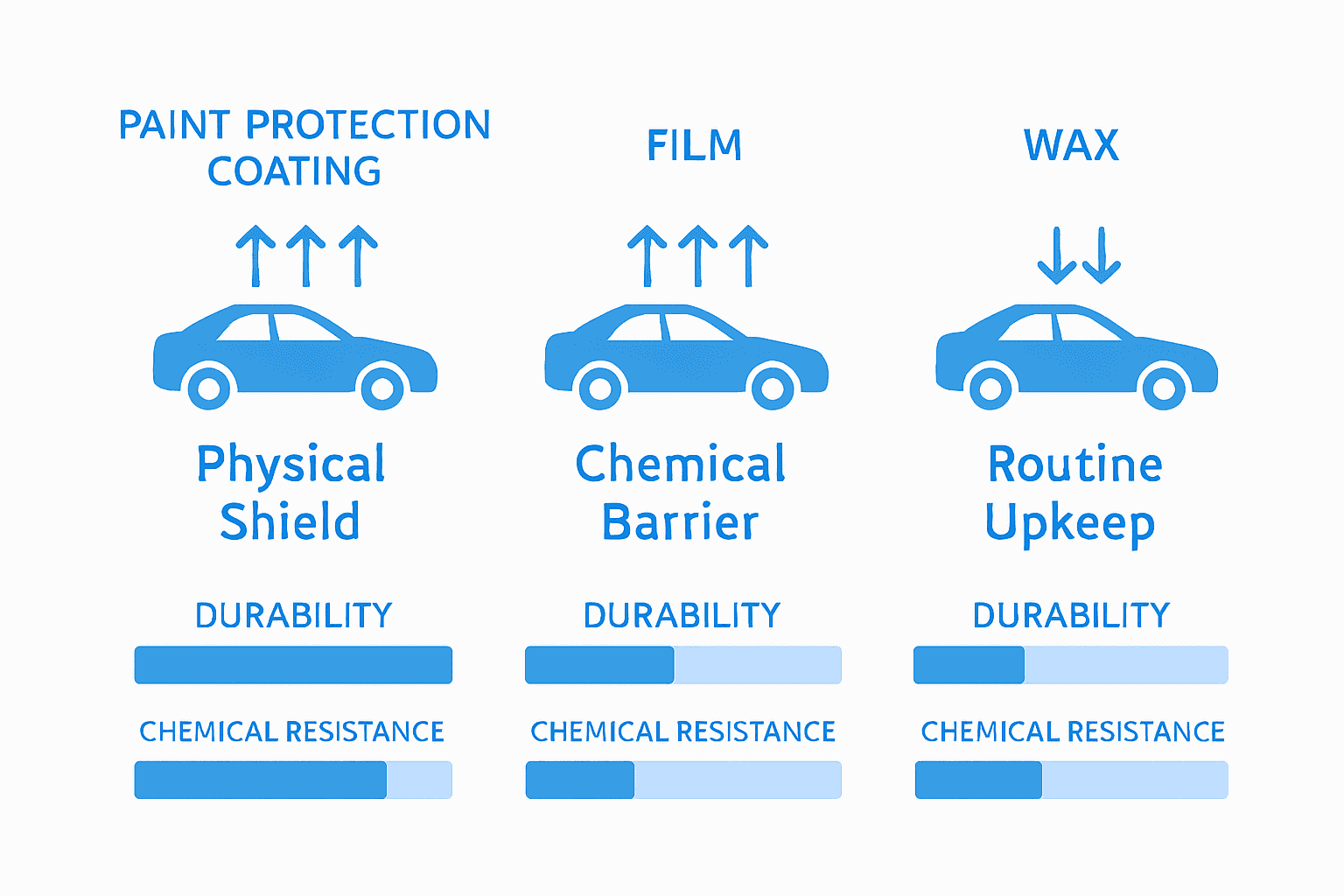
Here’s a comparison of the primary automotive paint protection technologies and their performance characteristics:
| Technology Type | Physical Protection Strength | Chemical Resistance | Typical Durability |
|---|---|---|---|
| Traditional Paint System | Basic scratch resistance | Limited (pollutants, UV) | 2-5 years |
| Paint Protection Film | Strong against chips/impacts | Moderate (varies by film) | 5-10 years |
| Ceramic Coating | Minor scratch resistance | Excellent (chemicals, UV) | 2-7 years |
Pro Tip for Automotive Protection Specialists: Conduct a comprehensive environmental assessment and substrate analysis before selecting a protective coating, considering factors such as geographical location, typical usage conditions, and specific vehicle exposure patterns to optimise protection strategy.
Cost Pitfalls and Avoidable Mistakes for Installers
Automotive coating application represents a sophisticated process fraught with potential financial risks for professional installers. The economic landscape of paint protection installation is characterised by complex technical challenges that can rapidly escalate operational costs if not meticulously managed. Understanding and preempting common systemic errors becomes crucial for maintaining profitability and professional reputation in this precision-driven industry.
Professional coating installation techniques reveal several critical financial pitfalls that routinely undermine installer efficiency and project economics. Surface preparation represents the most significant potential cost centre, with inadequate cleaning, contamination, or improper substrate treatment leading to catastrophic coating failures. Typical economic losses stem from rushed preparation processes, incorrect environmental condition management, and insufficient quality control protocols that necessitate complete reapplication of protective treatments.
Economic risk mitigation in automotive coating installation requires a systematic approach addressing multiple potential failure points. Installers must implement rigorous quality assurance mechanisms, invest in continuous professional training, and develop comprehensive understanding of material interactions, environmental variables, and precise application techniques. Critical cost management strategies include developing standardised workflow processes, investing in high-precision cutting technologies, maintaining calibrated equipment, and establishing meticulous documentation protocols that track every stage of the installation process and enable rapid error identification and correction.
Pro Tip for Coating Installation Professionals: Develop a comprehensive pre-installation diagnostic checklist that systematically evaluates substrate conditions, environmental parameters, and material compatibility to minimise potential financial risks and ensure consistently superior installation outcomes.
Maximise Your Car Paint Protection with Precision Cutting Solutions
The article highlights key challenges in car paint protection coating such as surface preparation intricacies, coating durability, and potential cost pitfalls for professional installers. To overcome these challenges, precision and efficiency in the application process are absolutely critical. Ensuring accurate pre-cut paint protection films that perfectly fit each vehicle can dramatically reduce material waste and improve the quality of protection against environmental stressors and mechanical abrasion.
Unlock superior installation performance by utilising Paint Protection Film – AEONCUT PPF Pre-cut Cutting software. Our groundbreaking AEONCUT software provides an extensive pattern library, AI-driven auto-nesting, and customisation features that empower professionals to deliver flawless coverage with ease.
Elevate your coating application and installation capabilities now. Discover how AEONCUT’s precision solutions can minimise costly mistakes and maximise coating longevity. Visit aeoncutsw.com to explore our Featured offerings and start your journey towards smarter automotive protection today.
Frequently Asked Questions
What are the main types of car paint protection coatings?
The main types of car paint protection coatings include architectural coatings, industrial coatings, and specialised purpose coatings. Each serves different protective roles and is engineered to handle various environmental challenges.
How do I ensure the longevity of my car’s paint protection coating?
To ensure longevity, conduct regular maintenance, such as cleaning the vehicle to remove contaminants, protecting it from excessive UV exposure, and avoiding mechanical abrasion. Using professional-grade formulations can also significantly enhance durability.
What is the difference between paint protection films and ceramic coatings?
Paint protection films excel in physical protection against chips and impacts, while ceramic coatings offer superior chemical resistance and hydrophobic properties. Each technology serves different protective needs and should be chosen based on the vehicle’s usage conditions.
What are common mistakes to avoid when applying car paint protection coatings?
Common mistakes include inadequate surface preparation, improper cleaning techniques, and failure to evaluate environmental conditions. Rushing the preparation process or ignoring quality control can lead to coating failures that necessitate reapplication.
Recommended
- PPF Versus Ceramic Coating: Best Choice for Automotive Pros 2025 – AEONCUT PPF Pre-cut Cutting software
- Clear Bra vs PPF: Key Differences for Detailing Pros 2025 – AEONCUT PPF Pre-cut Cutting software
- Top Paint Protection Film Benefits for Auto Professionals 2025 – AEONCUT PPF Pre-cut Cutting software
- How Does PPF Work? Guide for Car Care Pros 2025 – AEONCUT PPF Pre-cut Cutting software
- Diesel Particulate Filter Maintenance for Professionals – My WordPress