Choosing the right window tint for each vehicle goes beyond just style and customer preference. For professional installers and detailing specialists working across North America, understanding the legal limits on tint darkness and the precise meaning of Visible Light Transmission is a critical step in every project. Clear insight into these rules not only protects your business from costly penalties but also ensures your clients enjoy both compliance and optimal protection on the road. Mastering these standards strengthens your reputation and the trust customers place in your expertise.
Table of Contents
- Car Window Tint Limit And VLT Defined
- Types Of Window Tint And Real Distinctions
- Global Legal Restrictions By Region And Window
- Installer Roles And Measurement Obligations
- Penalties, Risks And Common Compliance Errors
Key Takeaways
| Point | Details |
|---|---|
| VLT Importance | Understanding Visible Light Transmission is crucial for legal compliance in window tinting. Each region has specific VLT limits that installers and vehicle owners must follow. |
| Tint Type Benefits | Different window tints offer varying heat rejection and durability levels. Ceramic tints are recommended for optimal performance and longevity. |
| Regional Regulation Variability | Window tinting laws differ widely across regions, affecting legal VLT percentages and compliance requirements. Installers should be familiar with local regulations. |
| Compliance Documentation | Maintaining accurate installation records and documentation is essential for installers to prevent legal issues and ensure adherence to regulations. |
Car window tint limit and VLT defined
Visible Light Transmission (VLT) is a critical measurement for automotive window tinting that determines how much light can pass through a vehicle’s glass. Understanding legal VLT percentages is essential for professional installers and vehicle owners seeking compliance with regional regulations.
VLT represents the percentage of visible light that penetrates through a window’s tinted surface. A lower VLT percentage indicates a darker tint, while higher percentages signify more transparent window coverings. Typically, automotive window tint limits range between 15% and 70%, depending on specific regional and vehicle type requirements.
Key characteristics of VLT measurement include:
- Percentage represents light transmission through glass
- Lower percentages create darker window appearances
- Legal limits vary by vehicle type and window location
- Front windscreen typically requires higher VLT percentages
- Rear and side windows often permit darker tint configurations
Safety and visibility remain paramount when determining appropriate window tint limits. Law enforcement and transportation authorities establish these regulations to ensure:
- Adequate driver visibility during various lighting conditions
- Clear identification of vehicle occupants
- Minimal obstruction of critical visual information
Pro tip: Always verify local regulations and obtain professional measurements before installing window tints to guarantee full legal compliance.
Types of window tint and real distinctions
Window tinting technologies have evolved significantly, offering professional installers multiple film options with unique characteristics. Distinct window tint types provide varying performance levels, aesthetic qualities, and functional benefits for vehicle owners.
Dyed window tints represent the most economical option, featuring a basic layer of dyed film that provides modest glare reduction and privacy. These tints are typically the most affordable but offer limited heat rejection and durability compared to more advanced technologies.
Advanced window tint varieties include:
- Metalized tints: Reflect heat effectively with enhanced durability
- Carbon tints: Provide excellent heat rejection with a sleek matte finish
- Ceramic tints: Offer premium heat blocking and superior clarity
- Hybrid tints: Balance performance and cost-effectiveness
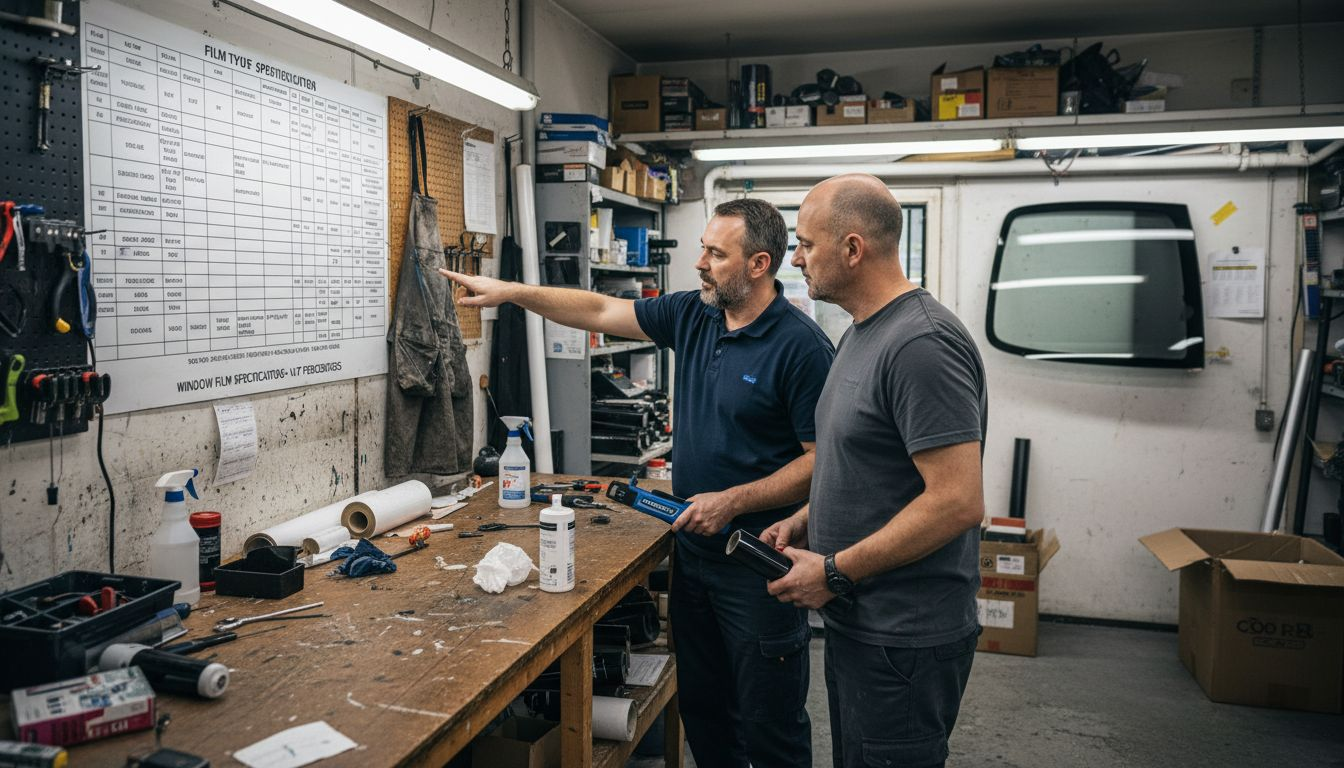
Professional installers must understand the nuanced differences between these tint technologies. Ceramic tints, for instance, represent the highest-performing option, providing exceptional heat rejection, UV protection, and signal transparency without interfering with electronic devices.
Performance considerations for selecting window tints involve evaluating:
Here is a summary comparing common automotive window tint types and their key features:
| Tint Type | Heat Rejection | Clarity & Appearance | Impact on Electronics |
|---|---|---|---|
| Dyed | Basic reduction | Modest, may fade | No interference |
| Metalised | High | Shiny, reflective | Possible signal issues |
| Carbon | Excellent | Matte, non-reflective | No impact |
| Ceramic | Superior | Clear, non-reflective | Maintains connectivity |
| Hybrid | Enhanced | Balanced aesthetics | Minimal interference |
- Heat rejection capabilities
- UV protection levels
- Durability and longevity
- Aesthetic appearance
- Compatibility with vehicle electronics
- Cost-effectiveness
Pro tip: Always recommend ceramic tints for clients seeking maximum performance and long-term value in window tinting solutions.
Global legal restrictions by region and window
Window tinting regulations demonstrate significant variations across different global regions, reflecting diverse safety standards and environmental considerations. European window tinting laws illustrate the complexity of navigating international compliance requirements for automotive window films.
Regional differences in window tint regulations typically focus on several critical aspects of light transmission and vehicle visibility. North American jurisdictions often implement stricter controls on front-side windows compared to rear windows, with most states mandating minimum light transmission percentages between 50% and 70%.
Key regional tinting restrictions include:
- North America: Typically 50-70% VLT for front windows
- European Union: Generally 70-75% VLT for front-side windows
- United Kingdom: Specific regulations varying by vehicle type
- Australia: State-specific regulations with national guidelines
- Middle East: Often more permissive tinting regulations
European countries demonstrate particularly nuanced approaches to window tinting regulations. Most European nations require:
The following table highlights legal VLT restrictions by region and typical affected windows:
| Region | Front Window VLT | Rear Window VLT | Windscreen Restriction |
|---|---|---|---|
| North America | 50-70% | Often less strict | Top band allowed only |
| European Union | 70-75% | More flexible | Upper 10% of windscreen |
| United Kingdom | Varies by type | Varies by type | Usually strict upper limit |
| Australia | State dependent | May allow darker | National upper band guideline |
| Middle East | Typically lower | Often most flexible | Usually minimal restriction |
- Windscreen tint limited to upper 10% of glass
- Front-side windows maintaining 70-75% light transmission
- Rear windows subject to more flexible regulations
- Clear visibility requirements for law enforcement
Compliance challenges for professional installers involve:
- Understanding local municipal regulations
- Verifying precise VLT percentages
- Maintaining documentation of tint specifications
- Keeping updated with changing legal standards
Pro tip: Always obtain written local regulations and maintain precise measurement documentation to protect your professional installation business.
Installer roles and measurement obligations
Professional window tint installers carry significant legal and technical responsibilities beyond mere application of film. Professional tint installation requirements demand precise technical expertise and comprehensive understanding of regulatory compliance.
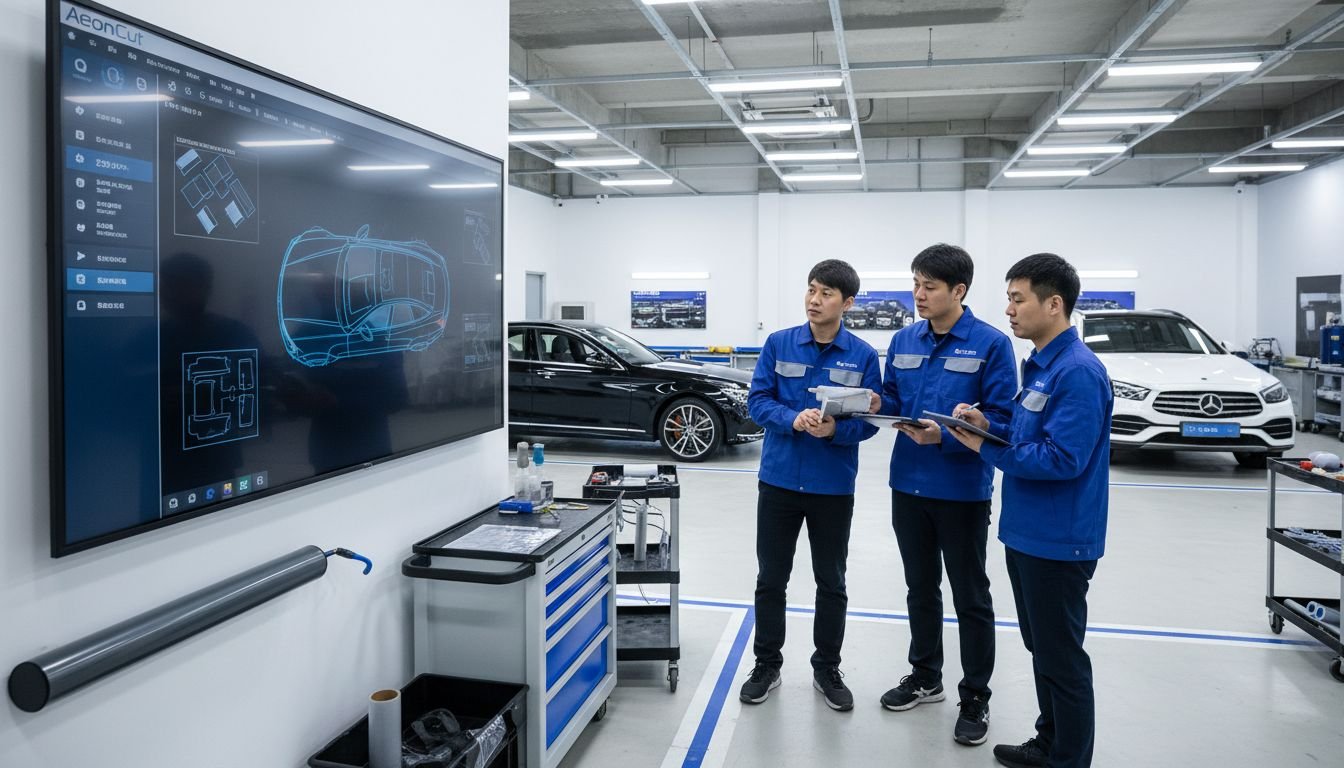
Measurement precision represents the cornerstone of professional window tinting services. Installers must possess specialised equipment capable of accurately measuring Visible Light Transmission (VLT) percentages, ensuring each vehicle’s tint meets specific legal standards across different jurisdictions.
Critical responsibilities for professional installers include:
- Verifying exact light transmission percentages
- Understanding regional regulatory variations
- Documenting measurement specifications
- Maintaining calibrated measurement tools
- Providing compliance certification
Technical competencies required for professional window tint installation encompass:
- Detailed knowledge of regional tinting regulations
- Precision measurement techniques
- Understanding optical transmission principles
- Advanced film application skills
- Legal compliance documentation
Measurement equipment plays a crucial role in professional installations. Installers must utilise:
- Calibrated digital light transmission meters
- Spectrophotometers for precise measurements
- Comprehensive record-keeping systems
- Verification tools for film quality
Compliance documentation involves maintaining:
- Detailed installation records
- Client consent forms
- Measurement certification
- Photographic evidence of application
Pro tip: Invest in high-quality digital measurement tools and develop a systematic documentation process to protect your professional reputation and ensure consistent legal compliance.
Penalties, risks and common compliance errors
Window tinting regulations carry significant legal consequences for non-compliance, potentially impacting both vehicle owners and professional installers. Vehicle tint compliance penalties represent a critical consideration for maintaining road safety and legal standards.
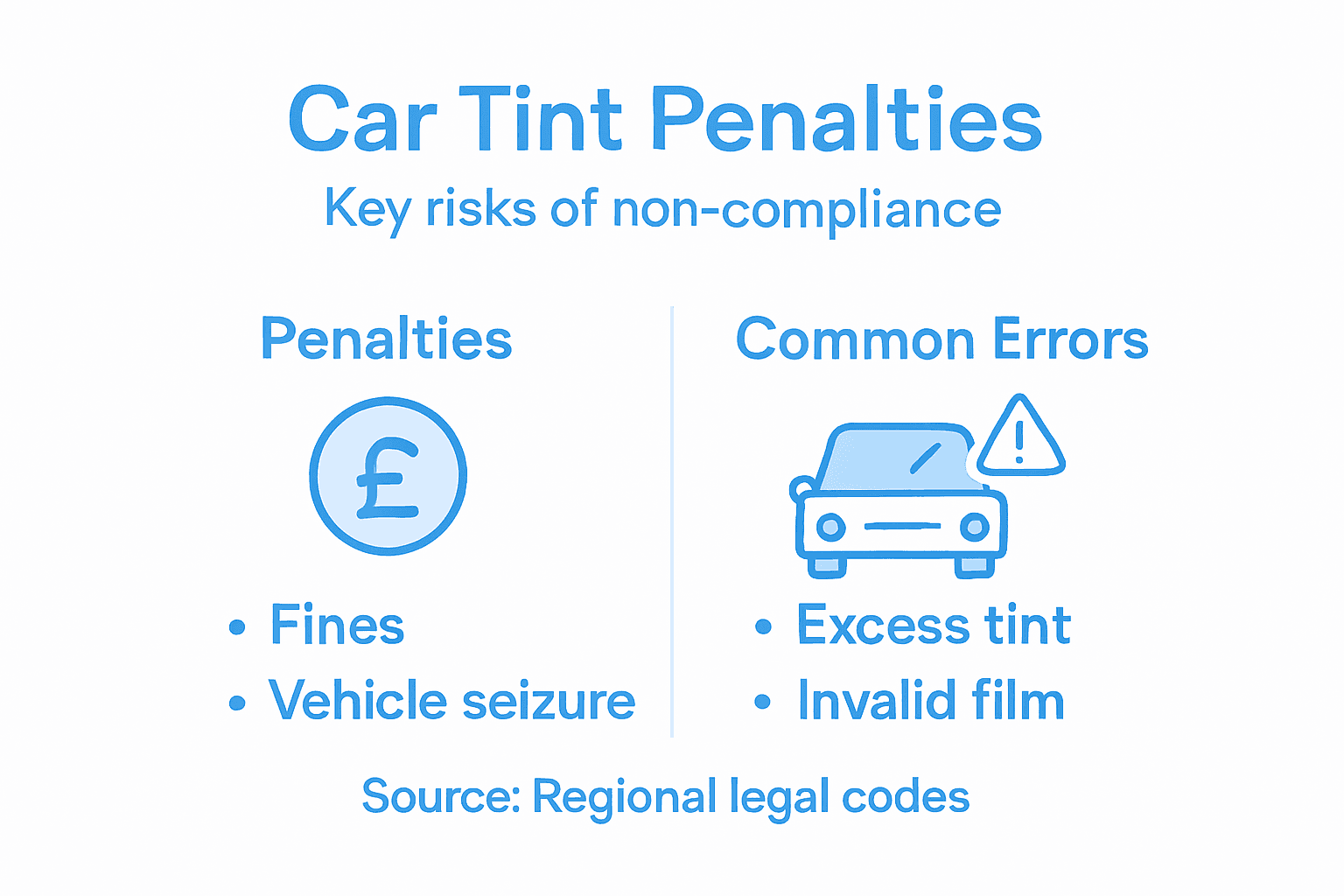
Legal repercussions for improper window tinting can be substantial, ranging from financial penalties to potential vehicle restrictions. Authorities may issue prohibition notices preventing vehicle operation, impose monetary fines, and potentially escalate matters to court proceedings for severe or repeated violations.
Common compliance errors that trigger penalties include:
- Exceeding permitted VLT percentages
- Tinting windscreens beyond legal limits
- Applying non-approved tinting materials
- Failing to maintain required light transmission
- Ignoring regional regulatory variations
Safety risks associated with non-compliant window tinting encompass:
- Reduced driver visibility during night driving
- Impaired recognition of road hazards
- Hindered law enforcement interactions
- Compromised emergency vehicle communication
- Potential increased accident risks
Potential consequences for professional installers involve:
- Loss of professional licensing
- Significant financial penalties
- Reputation damage
- Potential legal liability
- Client compensation requirements
Financial implications of non-compliance can be severe, with potential fines ranging from £60 to £1000 depending on jurisdiction and severity of the violation. Professional installers risk substantial professional and economic repercussions for systematic non-adherence to established regulations.
Pro tip: Maintain meticulous documentation of every installation, including precise VLT measurements and regional compliance verification, to protect your professional reputation and mitigate potential legal risks.
Stay Fully Compliant with Precision Window Tint Cutting Solutions
Ensuring your automotive window tint meets exact legal Visible Light Transmission (VLT) limits is a critical challenge highlighted in the article. Professional installers and vehicle owners alike must navigate regional variations and balance performance, safety and compliance risks. Without precise cutting and fitting, legal penalties and costly reworks become real threats.
Discover how AEONCUT’s cutting-edge software for window tint can empower your installations with pinpoint accuracy and minimal waste. Our AI-driven auto-nesting and extensive pattern libraries help you maintain strict adherence to legal tint limits while maximising efficiency and quality. Take control of regulatory complexity by using tools designed for professional excellence.
Ready to reduce compliance errors and boost your tint installation precision now Visit AEONCUT to explore flexible subscription plans designed for both professionals and serious enthusiasts. Start delivering flawless results with confidence and protect your business reputation today. Learn more on our main page and join the leaders in automotive tint software solutions.
Frequently Asked Questions
What is Visible Light Transmission (VLT) in window tinting?
Visible Light Transmission (VLT) measures the percentage of visible light that passes through tinted glass. A lower VLT percentage indicates a darker tint, while a higher percentage signifies more transparency.
Why is compliance with window tint regulations important?
Compliance with window tint regulations is essential for ensuring safety and visibility while driving. Regulations are designed to maintain adequate driver visibility and allow law enforcement to identify vehicle occupants clearly.
What are the common compliance errors with window tinting?
Common errors include exceeding permitted VLT percentages, tinting windscreens beyond legal limits, using non-approved materials, or failing to provide sufficient light transmission. These mistakes can lead to penalties and safety risks.
How can professional installers ensure compliance with VLT regulations?
Professional installers can ensure compliance by accurately measuring VLT percentages using calibrated tools, understanding regional regulations, documenting installation specifics, and maintaining high-quality tinting materials.
Recommended
- How to Read Tint Percentage: A Practical Guide for 2025 – AEONCUT PPF Pre-cut Cutting software
- How to Read Tint Percentage: A Practical Guide for 2025 – AEONCUT PPF Pre-cut Cutting software
- How to Read Tint Percentage: A Practical Guide for 2025 – AEONCUT PPF Pre-cut Cutting software
- How to Read Tint Percentage: A Practical Guide for 2025 – AEONCUT PPF Pre-cut Cutting software
- Airport Taxi Safety Standards – Why They Matter Most
- Hurricane Impact Windows – Protection for Alabama Homes