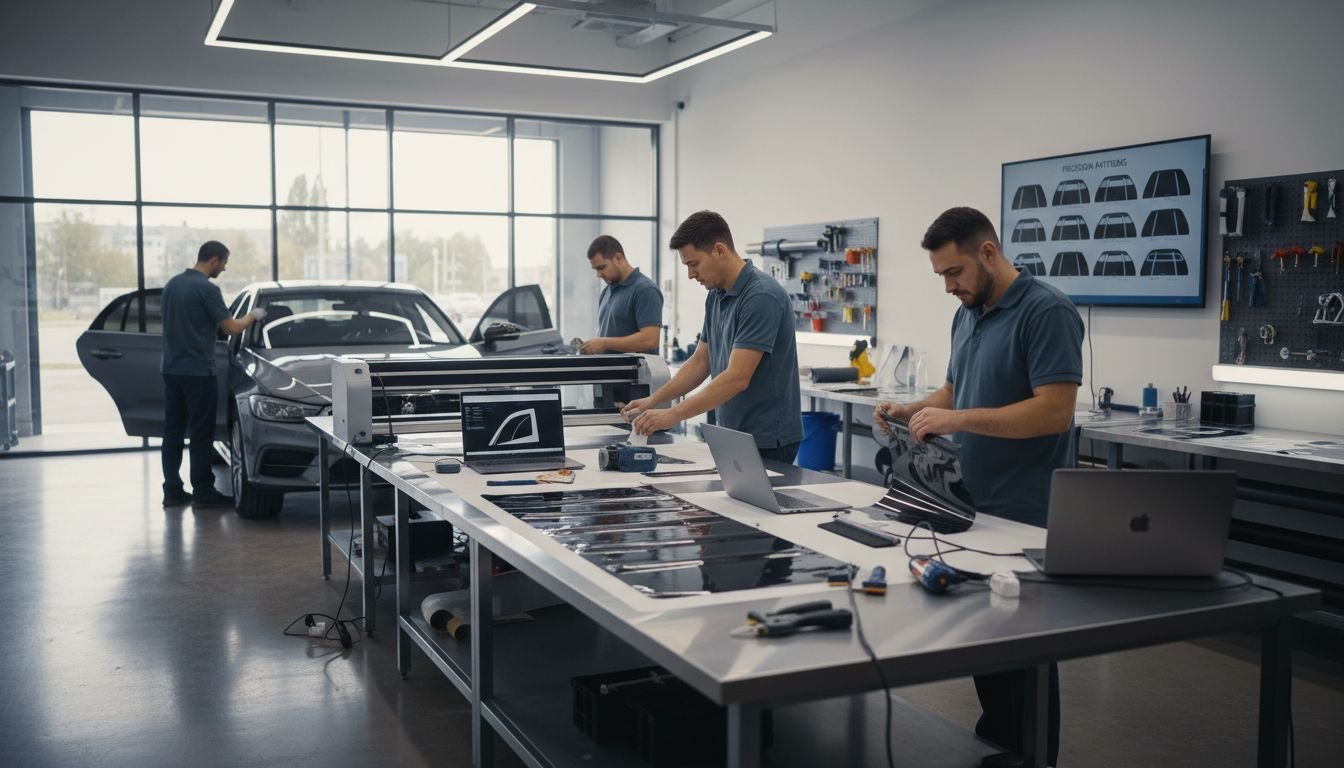
Selecting the right mirror window film often sparks questions about its real-world privacy and performance, especially for installers aiming to deliver flawless results. This topic matters because understanding the precise light reflection principle and installation nuances is crucial for achieving optimal privacy during daylight. You will gain practical insights into installation technology, common misconceptions, and ways to minimise material waste with high-precision tools, helping you maximise efficiency and client satisfaction.
Table of Contents
- Mirror Window Film – Definition And Misconceptions
- Types And Variations In Automotive Use
- Key Properties And Installation Technology
- Regional Legal Limits And Compliance Requirements
- Risks, Cost, And Mistakes Installers Must Avoid
Key Takeaways
| Point | Details |
|---|---|
| Functionality of Mirror Window Film | Provides daytime privacy through a one-way mirror effect based on light differential, effective only when outside is brighter than inside. |
| Types of Automotive Tints | Available in cosmetic, metallic, and hybrid variants, each catering to different privacy, performance, and legal requirements. |
| Installation Precision | Requires meticulous surface preparation and application to avoid costly mistakes and ensure optimal performance. |
| Legal Compliance | Strict regional regulations dictate the allowable light transmittance and reflectivity for window films, necessitating thorough familiarity with local laws. |
Mirror window film – Definition and misconceptions
Mirror window film is a sophisticated architectural solution designed to provide daytime privacy and enhanced visual comfort through advanced optical engineering. This specialised polyester laminate features a thin metallic coating that creates a highly reflective surface, transforming standard glass into an intelligent privacy barrier.
The fundamental mechanism of mirror window film relies on a precise light reflection principle. During daylight hours, the film reflects exterior light, effectively preventing outsiders from seeing inside while maintaining clear visibility for occupants within the space. Key characteristics include:
- Creates a one-way mirror effect
- Blocks up to 99% of ultraviolet radiation
- Reduces solar heat and glare
- Provides daytime visual privacy
However, critical misconceptions persist about mirror window film’s functionality. Many people incorrectly assume the reflective effect operates identically under all lighting conditions. In reality, the film’s privacy mechanism depends entirely on differential lighting – meaning the external environment must be brighter than interior spaces to maintain the mirror effect.
The mirror window film’s performance is entirely contingent on precise lighting differentials between interior and exterior environments.
At night, when interior lighting exceeds exterior illumination, the film’s reflective properties reverse. This means anyone outside can potentially see inside, completely negating the daytime privacy protection. Professional installers and consumers must understand these nuanced operational dynamics to set realistic expectations.
To clarify the main differences, here is a comparison of mirror window film functionality during day and night conditions:
| Lighting Condition | Privacy Level | Mirror Effect | Occupant Visibility |
|---|---|---|---|
| Daytime (outside brighter) | High privacy | Strong outside reflection | Clear inside view |
| Night-time (inside brighter) | Low privacy | Weak outside reflection | Outside can see in |
Pro tip: Always assess your specific lighting conditions and architectural context before selecting mirror window film to ensure optimal performance and privacy.
Types and variations in automotive use
Mirror window tints for automotive applications represent a sophisticated solution with multiple technical variations designed to meet diverse privacy and performance requirements. Automotive mirror window tints encompass three primary categories: cosmetic, metallic, and hybrid films, each offering distinct characteristics and performance capabilities.
The primary types of automotive mirror window tints include:
Cosmetic Tints: Non-metallic films providing basic privacy
- Minimal electronic signal interference
- Lower reflectivity
- Cost-effective option
Metallic Tints: High-performance reflective films
- Superior heat rejection
- Enhanced UV protection
- Potential electronic signal disruption
Hybrid Tints: Balanced performance solution
- Combines metallic and non-metallic film properties
- Moderate signal compatibility
- Versatile application range
Each tint variation presents unique advantages tailored to specific automotive requirements. Metallic tints offer superior heat rejection and UV protection but may interfere with electronic signals, while cosmetic tints provide privacy without significant technological complications. Hybrid films emerge as a strategic compromise, balancing performance characteristics.
Professional selection of mirror window tints demands careful consideration of performance specifications, legal restrictions, and specific vehicle requirements.
Regional legal frameworks significantly influence mirror window tint selection, with strict regulations governing darkness levels and reflectivity. Automotive professionals must navigate these complex requirements, ensuring compliance while meeting client aesthetic and functional preferences.

Pro tip: Conduct thorough regional legal research and perform comprehensive vehicle-specific assessments before recommending mirror window tint solutions.
Key properties and installation technology
Mirror window films represent a sophisticated optical technology engineered to provide precise light management and privacy solutions. Installation technology involves intricate processes that transform standard glass surfaces into intelligent privacy barriers through advanced material science and precise application techniques.
The critical properties of mirror window films include:
Optical Composition
- Semi-transparent polyester base
- Microscopic metallic coating layer
- Controlled light transmission mechanisms
Performance Specifications
- High visible light reflectivity
- Solar infrared rejection capabilities
- UV blocking up to 99%
- Temperature regulation properties
Professional installation demands exceptional precision and technical expertise. Installers must execute a systematic approach involving thorough surface preparation, exact measurements, and specialised application techniques. The process typically involves comprehensive surface cleaning, precise film cutting, wet application methods, and meticulous bubble removal using professional-grade squeegees.
Advanced installation requires understanding complex optical principles and maintaining perfect environmental conditions during application.
Modern installation technologies have dramatically evolved, incorporating sophisticated software solutions that enable pattern cutting, minimise material waste, and enhance overall installation accuracy. These technological advancements allow for more consistent, aesthetically pleasing, and functionally superior mirror window film applications across diverse architectural and automotive contexts.
Pro tip: Invest in high-quality professional tools and maintain a pristine, dust-free environment during mirror window film installation to ensure optimal adhesion and visual outcomes.
Regional legal limits and compliance requirements
Mirror window film regulations represent a complex landscape of national and regional legal frameworks designed to balance safety, privacy, and vehicular visibility. European window tint laws demonstrate the intricate approach governments take in regulating window film applications across different jurisdictions.
Key regulatory considerations for mirror window films include:
Visibility Requirements
- Minimum light transmittance standards
- Front side window transparency regulations
- Driver visibility preservation mandates
Reflectivity Restrictions
- Maximum reflectivity percentage limits
- Prohibition of highly reflective films
- Specific restrictions for different vehicle window zones
National regulations typically mandate precise technical specifications for window films. Most jurisdictions require a minimum of 70% light transmittance on front side windows, with more flexible regulations for rear and rear-side windows. These regulations aim to ensure driver safety by maintaining adequate visibility while allowing some aesthetic and functional modifications.
Legal compliance in window film installation requires meticulous attention to regional regulatory nuances and technical specifications.
Enforcement mechanisms vary across regions but commonly include vehicle inspections, potential fines, and mandatory film removal for non-compliant installations. Automotive professionals must stay continuously updated on local regulations, as window tint laws can change frequently and differ significantly between jurisdictions.
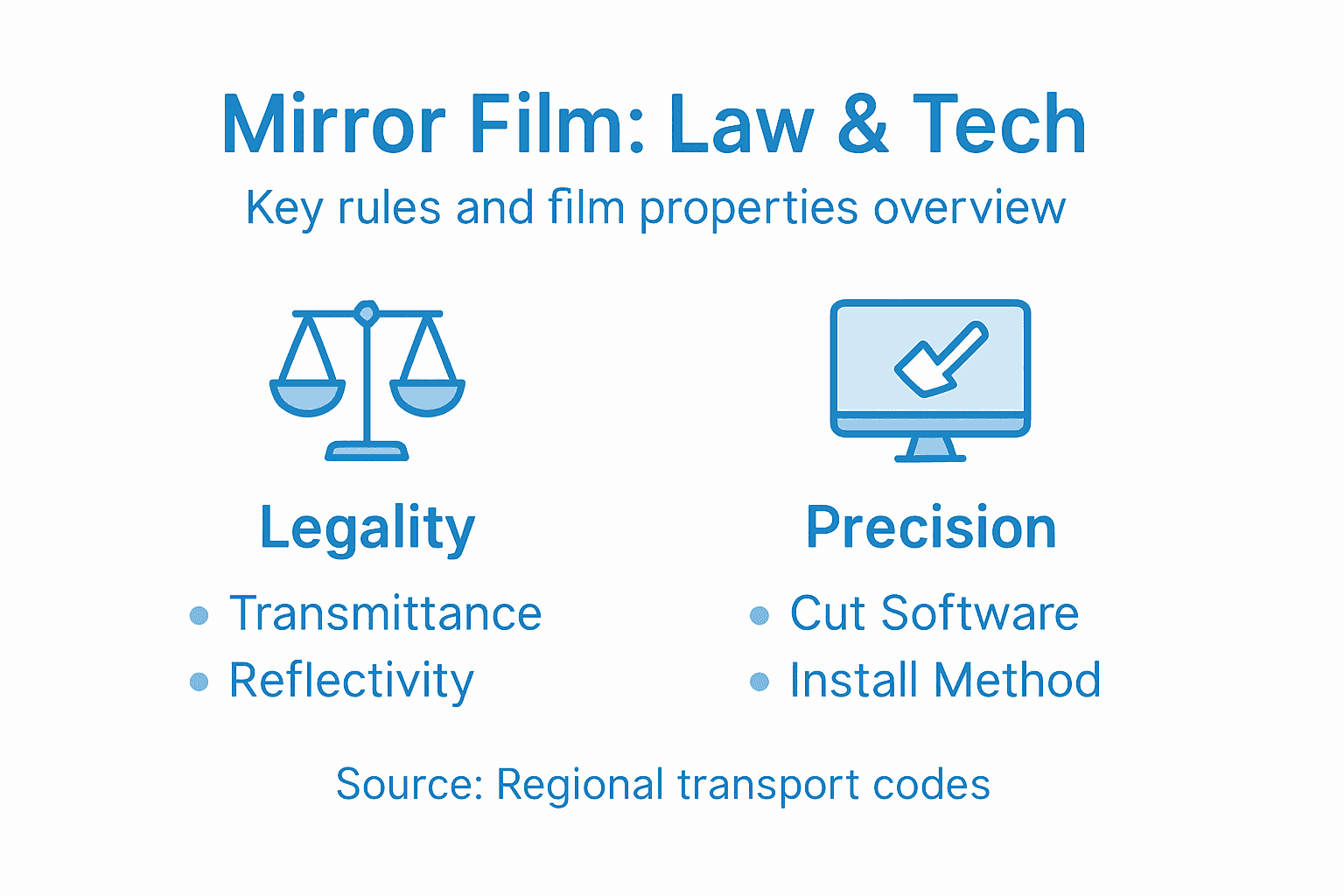
Here is a summary of regional legal requirements for automotive mirror window film in Europe:
| Window Location | Minimum Light Transmittance | Reflectivity Limit | Enforcement Method |
|---|---|---|---|
| Front side windows | 70% | Strict (below max) | Roadside checks |
| Rear/rear-side windows | Less restrictive | Flexible (varies) | Periodic inspections |
| Windscreen | Nearly clear (no film) | Total ban | Registration screening |
Pro tip: Always consult local transportation authorities and maintain updated documentation of window film specifications to ensure full legal compliance and avoid potential penalties.
Risks, cost, and mistakes installers must avoid
Mirror window film installation represents a precision-driven process where even minor errors can lead to significant financial and professional consequences. Common installation mistakes can dramatically undermine the quality and longevity of the final product, making professional attention to detail paramount.
Potential risks and critical mistakes for installers include:
Surface Preparation Errors
- Inadequate glass cleaning
- Trapped dust particles
- Risk of bubble formation
- Compromised film adhesion
Technical Application Failures
- Inaccurate measurements
- Rushed installation techniques
- Improper solution application
- Uneven film placement
Each installation mistake carries substantial financial implications. Poorly applied films can require complete removal and reapplication, potentially costing installers significant time and resources. Substandard installations may also lead to client dissatisfaction, negative reviews, and potential reputation damage within the professional community.
Professional window film installation demands precision, patience, and meticulous technical execution.
Cost considerations extend beyond immediate material expenses. Incorrectly installed mirror window films can reduce energy efficiency, compromise visual privacy, and potentially violate regional legal standards. Professional installers must invest in continuous training, high-quality tools, and systematic installation protocols to mitigate these multifaceted risks.
Pro tip: Develop a standardised pre-installation checklist and invest in professional-grade cleaning and application tools to minimise installation errors and potential financial losses.
Enhance Your Mirror Window Film Installations with Precision Cutting Software
Mirror window film installation requires exceptional accuracy to guarantee flawless adhesion and compliance with strict legal standards. Challenges such as exact measurements, precise cuts, and minimised material waste can be frustrating and costly for installers striving to deliver high-quality privacy and heat rejection solutions as highlighted in the article. With AEONCUT’s advanced pre-cut cutting software, you can overcome these pain points by accessing extensive pattern libraries and AI-driven auto-nesting technology tailored specifically for automotive window tint projects. Explore our window Tint collection and experience seamless integration of design and precision.
Take control of your mirror window film applications today by choosing AEONCUT’s innovative cutting solutions. Designed for professionals and enthusiasts alike, our platform ensures every film cut meets exact specifications to avoid installation errors and legal non-compliance. Act now to streamline your workflow, reduce costly mistakes, and deliver impeccable results with confidence. Visit aeoncutsw.com and start empowering your installations with cutting-edge technology. For more insights into how our solutions can elevate your projects, check out our Featured page.
Frequently Asked Questions
What is mirror window film?
Mirror window film is a specialised polyester laminate with a metallic coating that provides daytime privacy and visual comfort by reflecting external light, preventing outsiders from seeing inside while allowing clear visibility for occupants.
How does mirror window film work?
The film relies on light reflection principles, creating a one-way mirror effect during the day when it reflects brighter external light, maintaining privacy for those inside. However, at night, if the interior is brighter, the film no longer provides a privacy barrier.
What are the different types of automotive mirror window tints?
There are three primary categories of automotive mirror window tints: cosmetic, metallic, and hybrid films. Cosmetic tints offer basic privacy, metallic tints provide high performance with superior heat rejection, and hybrid tints combine properties from both, balancing aesthetics and function.
What legal considerations should I be aware of regarding mirror window film?
Legal considerations include minimum light transmittance standards and maximum reflectivity limits for vehicle windows. Compliance with local regulations is essential to ensure safety and avoid penalties, with specific requirements varying for different vehicle window zones.
Recommended
- Types of Window Tint: Guide for Installers and Dealers 2025 – AEONCUT PPF Pre-cut Cutting software
- How Window Tint Works: Essential Guide for Auto Professionals 2025 – AEONCUT PPF Pre-cut Cutting software
- What is Window Tint? Essential Guide for Tinting Pros 2025 – AEONCUT PPF Pre-cut Cutting software
- Understanding The Science of UV & IR Rejection in Automotive Window Films – AEONCUT PPF Pre-cut Cutting software
- Elettronica Pieghevole: Gli Emirati Arabi Brevettano nuovi Materiali per Schermi Flessibili e Trasparenti – Avvocato Carmine Coviello