Protecting a motorcycle tank from scratches, chemical exposure, and constant wear is a challenge every rider knows too well. The demand for highly efficient and invisible protection has driven the development of advanced paint protection film solutions that combine top-tier durability with smooth application. Whether you work as a professional installer or approach PPF with a DIY passion, understanding the unique advantages of each film type and the science behind their sacrificial barrier qualities is vital for delivering long-lasting results and preserving that factory-fresh finish.
Table of Contents
- PPF Motorcycle Tank Protection Explained
- Types of Paint Protection Films Compared
- Key Features For Effective Tank Coverage
- Installation Methods: DIY Versus Professional
- Common Application Mistakes And Solutions
Key Takeaways
| Point | Details |
|---|---|
| Importance of PPF | Paint Protection Film is vital for preserving motorcycle tanks against scratches, chemicals, and UV degradation. It acts as a sacrificial barrier, maintaining both aesthetic appeal and resale value. |
| Types of PPF | Different types of PPF, such as urethane and polyurethane films, offer unique benefits tailored to specific protective needs. Choosing the right type is crucial for optimal results. |
| Professional Installation | Professional installation ensures precision and effectiveness, minimising installation errors and maximising the protective capabilities of the film. It is highly recommended for best results. |
| Common Mistakes | Avoid common application mistakes like surface contamination and improper technique. Proper cleaning and technique are essential for achieving a flawless protective layer. |
PPF Motorcycle Tank Protection Explained
Paint Protection Film (PPF) represents a sophisticated protective technology designed specifically to shield motorcycle tanks from environmental damage and wear. By applying a transparent, durable polymer layer, riders can effectively preserve their vehicle’s aesthetic appeal and resale value. The film acts as a sacrificial barrier against scratches, chemical exposure, and ultraviolet degradation.
The core mechanism of PPF involves advanced polymer chemistry utilizing per- and polyfluoroalkyl substances that provide exceptional resistance to environmental challenges. These engineered polymers create a microscopic protective shield that:- Prevents direct surface contact with abrasive materials- Resists chemical staining and discolouration- Maintains original paint colour and finish- Provides self-healing properties for minor scratches- Offers long-lasting protection against UV radiationProfessional motorcycle enthusiasts recognise PPF as a critical investment in maintaining their vehicle’s appearance. By creating a transparent layer that absorbs impact and prevents direct damage, riders can significantly extend their motorcycle tank’s pristine condition.
The application process requires precision and expertise. Professionally installed PPF ensures maximum coverage and minimal visual interference, creating an almost invisible protective layer. Installers must carefully measure, cut, and apply the film to ensure seamless integration with the motorcycle tank’s contours.
Pro tip: Always clean and prepare the motorcycle tank surface thoroughly before PPF installation to ensure maximum adhesion and longevity.
Types of Paint Protection Films Compared
Motorcycle tank protection involves selecting from multiple paint protection film (PPF) types, each offering unique characteristics tailored to specific protective requirements. Thermal protection properties play a critical role in determining the most suitable film for motorcycle surfaces, with manufacturers developing specialised solutions to address diverse environmental challenges.
The primary categories of motorcycle tank PPF include:
- Urethane-based films: Offer high toughness and exceptional flexibility
- Polyurethane films: Provide superior gloss retention and chemical resistance
- Silicone coatings: Valued for hydrophobic properties and minimal surface interference
- Flexible polymer films: Designed to conform tightly to complex tank contours
Each PPF type presents distinct advantages depending on the specific motorcycle tank’s requirements. Urethane-based films excel in absorbing impacts and preventing direct surface damage, while polyurethane variants maintain exceptional visual clarity and colour preservation. Professional installers carefully evaluate surface geometry, environmental exposure, and aesthetic preferences when recommending the most appropriate protective film.
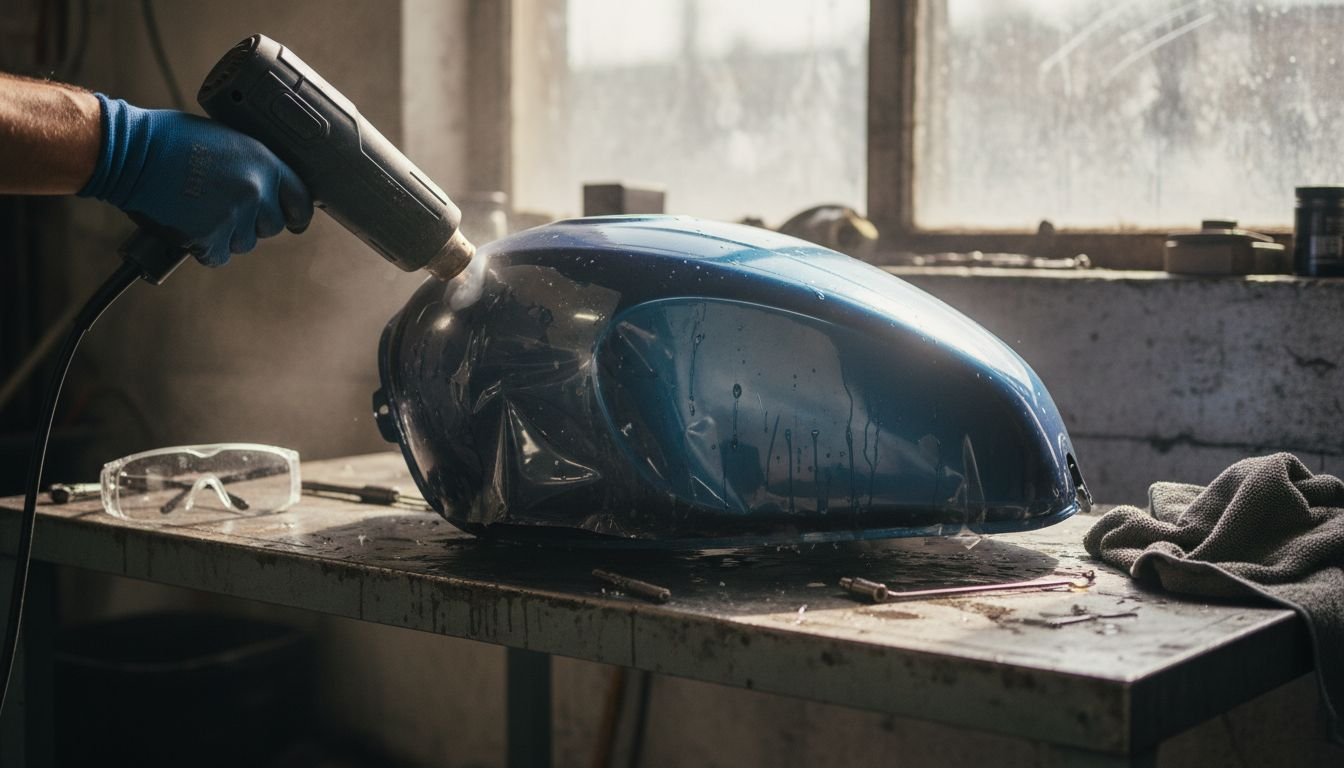
Advanced PPF technologies now incorporate sophisticated self-healing properties, enabling minor scratches to disappear through heat application or natural healing mechanisms. These innovative films represent a significant advancement in motorcycle tank protection, offering riders unprecedented preservation of their vehicle’s original finish.
Pro tip: Consult with professional PPF installers to match your specific motorcycle tank’s material and usage requirements with the most appropriate film type.
To clarify which paint protection film type suits various needs, see this comparison:
| PPF Type | Best Use Case | Durability Level | Visual Appearance |
|---|---|---|---|
| Urethane-based | Impact resistance | High | Slight matte finish |
| Polyurethane | Long-term clarity | Very high | High-gloss retention |
| Silicone coatings | Water repellent surfaces | Moderate | Minimal surface change |
| Flexible polymer | Complex tank shapes | High | Customisable fit |
Key Features for Effective Tank Coverage
Motorcycle tank protection demands a comprehensive approach to paint protection film performance, focusing on multiple critical characteristics that ensure long-term preservation of the vehicle’s aesthetic and structural integrity. Professional installers and motorcycle enthusiasts must carefully evaluate the complex requirements of effective PPF application.
The essential features for optimal motorcycle tank coverage include:
- UV Resistance: Prevents colour fading and paint degradation
- Chemical Protection: Guards against fuel, solvent, and environmental contaminant exposure
- Self-Healing Properties: Automatically repairs minor scratches and surface abrasions
- High Optical Clarity: Maintains the original paint’s visual brilliance
- Edge Sealing: Ensures complete surface coverage without vulnerable areas
- Thermal Flexibility: Adapts to temperature variations and tank contours
Professional-grade PPF technologies go beyond basic protection, incorporating advanced polymer compositions that offer superior mechanical resistance. These sophisticated films can withstand significant environmental challenges, including temperature fluctuations, mechanical wear, and prolonged exposure to harsh conditions. The goal is not merely to cover the surface but to create an almost invisible, durable shield that preserves the motorcycle tank’s original condition.
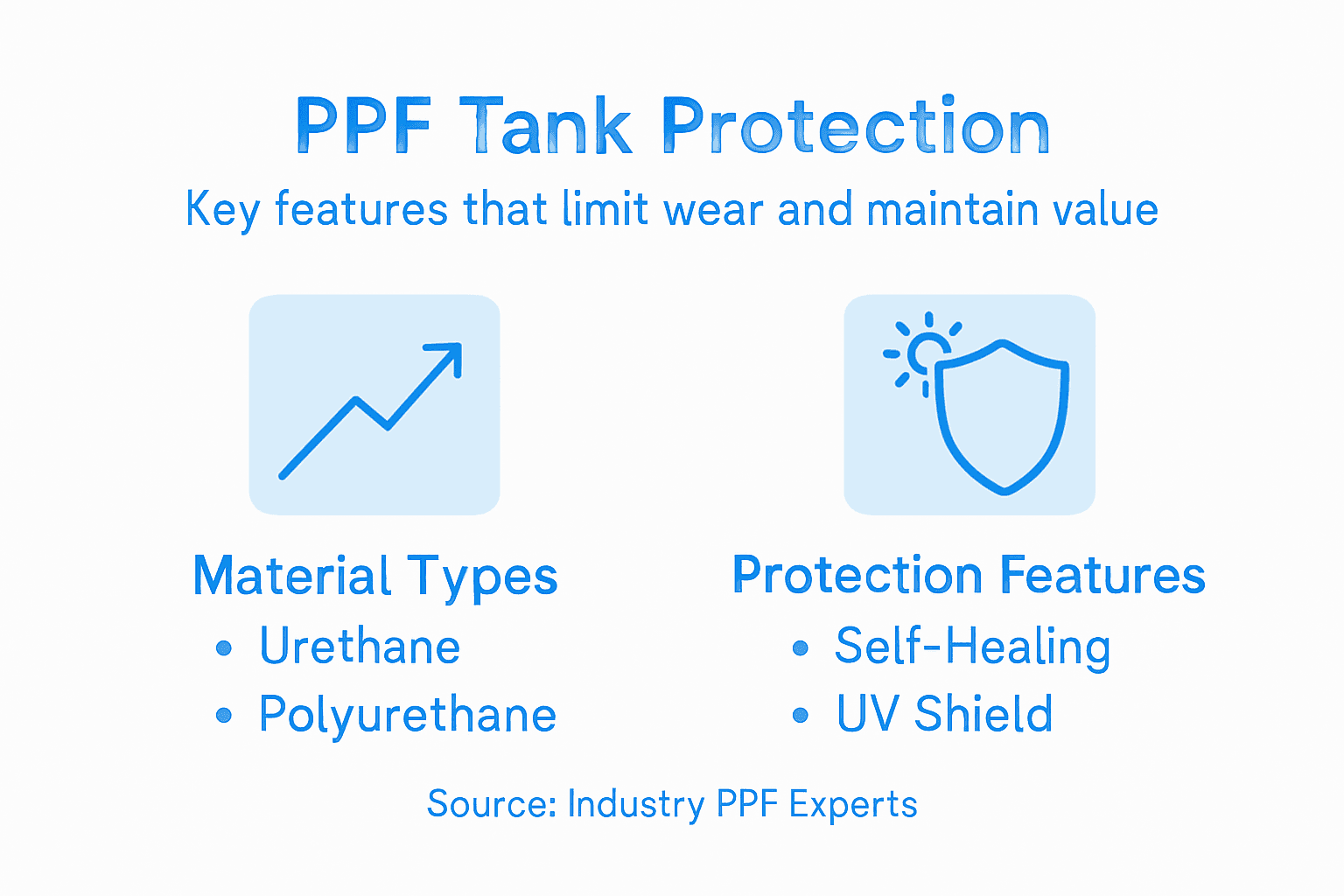
Modern PPF technologies have revolutionised motorcycle tank protection by developing films with microscopic self-healing capabilities. When exposed to moderate heat, these innovative films can naturally repair minor scratches, ensuring the tank maintains its pristine appearance over extended periods of use.
Pro tip: Always conduct a thorough surface preparation and professional installation to maximise the effectiveness of your motorcycle tank’s paint protection film.
Here’s a summary of critical features to look for in motorcycle tank PPF:
| Feature | Protective Benefit | Typical Lifespan |
|---|---|---|
| UV Resistance | Prevents fading | 5-7 years |
| Chemical Protection | Shields from fuel/solvents | 4-7 years |
| Self-Healing | Repairs light scratches | 3-6 years |
| Edge Sealing | Prevents peeling | 4-7 years |
| Thermal Flexibility | Adapts to temperature shifts | 5-7 years |
Installation Methods: DIY Versus Professional
Motorcycle tank paint protection film (PPF) installation presents riders with two primary approaches: do-it-yourself (DIY) application and professional installation techniques. Each method carries distinct advantages and challenges that motorcycle owners must carefully evaluate based on their skill level, available resources, and desired outcome.
Key differences between DIY and professional PPF installation include:
- Skill Level Required:
- DIY: Demands significant technical expertise
- Professional: Utilises trained technicians with specialised knowledge
- Equipment Access:
- DIY: Limited to consumer-grade tools
- Professional: Advanced precision instruments and controlled environments
- Preparation Quality:
- DIY: Potentially inconsistent surface preparation
- Professional: Thorough, standardised surface cleaning and treatment
- Risk Factors:
- DIY: Higher probability of bubbles, wrinkles, and improper adhesion
- Professional: Minimal installation errors and guaranteed quality
Professional installers bring comprehensive expertise that extends beyond simple film application. They understand intricate surface preparation techniques, maintain precise temperature controls, and possess specialised tools that ensure optimal film adhesion. These professionals can navigate complex tank contours and minimise the risk of installation errors that could compromise the protective film’s effectiveness.
While DIY installation might seem cost-effective initially, the potential for mistakes can lead to significant long-term expenses. Improper application can result in premature film failure, reduced protection, and potentially irreversible damage to the motorcycle tank’s original paintwork. Professional installation offers a comprehensive solution that guarantees both aesthetic quality and protective performance.
Pro tip: If you lack professional-level skills, invest in professional PPF installation to protect your motorcycle tank’s long-term value and appearance.
Common Application Mistakes and Solutions
Paint protection film (PPF) application for motorcycle tanks requires precision and attention to detail, with numerous potential installation challenges that can compromise the film’s protective capabilities. Understanding these common mistakes is crucial for achieving a flawless, long-lasting protective layer.
The most prevalent PPF application errors include:
- Surface Contamination:
- Problem: Dust and debris trapped under the film
- Solution: Meticulously clean surface in controlled environment
- Improper Surface Preparation:
- Problem: Inadequate cleaning and decontamination
- Solution: Use professional-grade cleaning solutions and lint-free cloths
- Environmental Challenges:
- Problem: Applying film in unsuitable temperature or humidity
- Solution: Maintain controlled workspace between 20-25°C with low humidity
- Alignment Issues:
- Problem: Misaligned film causing wrinkles and bubbles
- Solution: Use precision alignment techniques and professional squeegee methods
- Technique Errors:
- Problem: Incorrect squeegeeing causing air pockets
- Solution: Use consistent, gentle pressure with professional-grade squeegee
Professional installers understand that successful PPF application goes beyond simply placing the film. It requires a comprehensive understanding of surface chemistry, precise environmental controls, and meticulous technique. The smallest imperfection during installation can lead to significant aesthetic and protective compromises, potentially reducing the film’s effectiveness and longevity.
Advanced installers employ techniques like using heat guns for precise film manipulation, utilising specialised lighting to detect imperfections, and creating clean room-like conditions to minimise contamination. These sophisticated approaches ensure that the motorcycle tank receives optimal protection with minimal visual interference.
Pro tip: Invest in professional-grade cleaning materials and practice your technique on less visible surfaces before attempting full motorcycle tank PPF installation.
Enhance Your Motorcycle Tank Protection with Precision PPF Patterns
Protecting your motorcycle tank from wear and preserving its value takes more than just high-quality paint protection film. The article highlights key challenges such as ensuring perfect film adhesion and seamless coverage to avoid bubbles, wrinkles, and alignment errors. These issues can compromise the durability and visual clarity of your protection efforts. With AEONCUT’s advanced Paint Protection Film – AEONCUT PPF Pre-cut Cutting software, professional installers and passionate enthusiasts gain access to precise pre-cut PPF patterns that fit your motorcycle tank’s unique contours flawlessly. This technology minimises material waste while maximising installation accuracy and appearance.
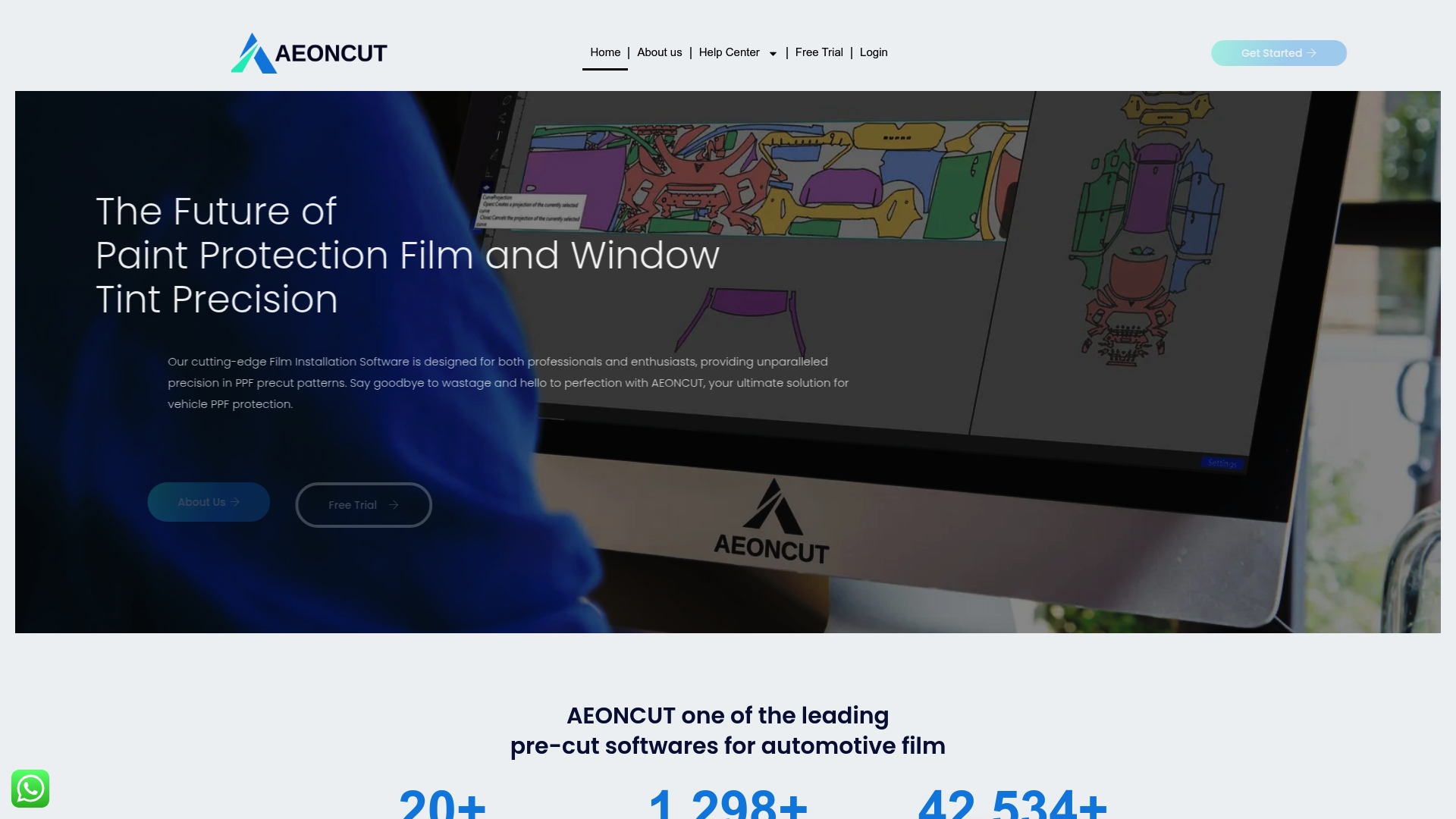
Take control of your motorcycle tank’s protection today by choosing AEONCUT’s innovative PPF precut pattern – AEONCUT PPF Pre-cut Cutting software for unmatched precision and efficiency. Don’t let installation mistakes reduce your investment’s lifetime benefit. Visit https://aeoncutsw.com now to explore subscription plans and resources designed to elevate your paint protection film application to the next level.
Frequently Asked Questions
What is Paint Protection Film (PPF) for motorcycle tanks?
Paint Protection Film (PPF) is a transparent, durable polymer layer applied to motorcycle tanks to protect against scratches, chemical exposure, and UV damage, helping to preserve the bike’s aesthetics and resale value.
How does PPF protect my motorcycle tank?
PPF acts as a sacrificial barrier that absorbs impact, prevents direct surface contact with abrasive materials, and has self-healing properties for minor scratches, ensuring long-lasting protection for your motorcycle tank.
What are the different types of paint protection films available for motorcycle tanks?
The main types of PPF for motorcycle tanks include urethane-based films, polyurethane films, silicone coatings, and flexible polymer films, each offering unique advantages such as impact resistance, clarity, and adaptability to tank contours.
Is it better to install PPF myself or hire a professional?
While DIY installation may seem cost-effective, professional installation ensures precision, quality, and optimal long-term protection, as trained technicians have the skills and tools necessary to avoid common mistakes and achieve the best results.
Recommended
- PPF for Motorcycles: 2025 Guide for Installers & Detailers – AEONCUT PPF Pre-cut Cutting software
- Understanding Paint Protection Film Lifespan: Insights for Professionals 2025 – AEONCUT PPF Pre-cut Cutting software
- Top Paint Protection Film Benefits for Auto Professionals 2025 – AEONCUT PPF Pre-cut Cutting software
- How Does PPF Work? Guide for Car Care Pros 2025 – AEONCUT PPF Pre-cut Cutting software
- Dirt Bike Gas Tank – GoKarts USA®