Every professional window tint installer knows that achieving the perfect balance between style, privacy, and legal compliance can make or break a client relationship. With every state across the United States setting its own distinct rules for back window tint limits, staying informed becomes more than a technical detail—it is a business imperative. In this guide, you will find clear guidance on understanding Visible Light Transmission (VLT), recognising key safety factors, and navigating regional laws to consistently deliver compliant, high-quality results that keep both customers and regulators satisfied.
Table of Contents
- Defining Back Window Tint Limit And VLT
- Variations In Tint Laws Across States
- Medical Exemptions And Special Cases
- Enforcement, Measurement, And Compliance Risks
- Penalties, Inspection Failure, And What To Avoid
Key Takeaways
| Point | Details |
|---|---|
| Understanding VLT is Essential | Visible Light Transmission (VLT) must be measured for legal compliance and safety when tinting back windows. |
| Know Local Regulations | Window tint laws differ significantly between jurisdictions, impacting both installation and ownership. |
| Medical Exemptions are Available | Individuals with specific health conditions can apply for medical exemptions to standard tint limits. |
| Compliance Risks can be Serious | Non-compliance with tint regulations can result in significant penalties, including financial fines and vehicle prohibition. |
Defining back window tint limit and VLT
Visible Light Transmission (VLT) represents the percentage of light permitted to pass through automotive glass and tint film. When examining back window tinting, understanding VLT becomes crucial for legal compliance and safety. Precise VLT measurements help professional installers navigate complex regional regulations effectively.
The technical definition of VLT involves quantifying light penetration through combined glass and film layers. For automotive applications, lower VLT percentages indicate darker tints that block more incoming light. Here are key characteristics of VLT measurement:
The following table highlights how different VLT (Visible Light Transmission) percentages impact window appearance, safety, and privacy:
| VLT Percentage | Appearance Level | Safety Considerations | Privacy Benefits |
|---|---|---|---|
| 100% | Fully transparent | Maximum driver visibility | No privacy enhancement |
| 70% | Slight tint | Good visibility in daylight | Minimal privacy increase |
| 50% | Moderate dark | Reduced night visibility risk | Noticeable privacy boost |
| 5% | Limo-dark | Potential visibility hazard | Maximum privacy provided |
- 100% VLT means completely clear glass
- 70% VLT allows significant light transmission
- 50% VLT represents moderate window darkness
- 5% VLT creates extremely dark “limo tint” conditions
Professional window tint installers must understand that legal tint limits vary by jurisdiction, with most regions implementing specific restrictions for back windows. Typical regulatory considerations include:
- Safety visibility requirements
- Nighttime driving considerations
- Law enforcement perspective
- Vehicle type regulations
Most jurisdictions permit slightly darker back window tints compared to front windows, recognising privacy and aesthetic preferences while maintaining essential safety standards.
Pro tip: Always verify local regulations and use calibrated tint meters to ensure precise VLT measurements before installation.
Variations in tint laws across states
Window tint laws demonstrate significant variation across different regions, creating a complex regulatory landscape for automotive professionals and vehicle owners. Tint regulations differ dramatically between states, with each jurisdiction establishing unique standards for visible light transmission (VLT) percentages and window coverage.
The regulatory differences typically manifest in several key areas:
- Front side window restrictions
- Rear window tinting allowances
- Reflection and colour limitations
- Medical exemption provisions
- Penalties for non-compliance
States implement markedly different approaches to window tinting regulations. For instance:
- New York mandates 70% VLT for front side windows
- Texas permits tints as dark as 25% on front sides
- Some states allow completely unrestricted back window tinting
- Certain jurisdictions require dual side mirrors for darker tints
State-specific window tint laws create substantial complexity for drivers travelling across multiple regions. Professional installers must remain vigilant about local regulations to ensure client compliance and avoid potential legal complications.
Pro tip: Always consult current local regulations and maintain detailed documentation of window tint specifications for each vehicle installation.
Medical exemptions and special cases
Medical window tint exemptions represent a critical pathway for individuals with specific health conditions requiring enhanced protection from sunlight and bright light. Medical waivers offer crucial legal alternatives to standard tinting restrictions, enabling individuals to customise vehicle window protection based on documented medical needs.
The typical medical exemption process involves several key requirements:
- Certification from a licensed medical professional
- Detailed documentation explaining medical condition
- Specific light sensitivity or photosensitivity diagnosis
- Written recommendation for darker window tinting
- Formal application to local transportation authorities
Documentation for medical exemptions typically must address several critical aspects:
- Specific medical condition causing light sensitivity
- Professional medical assessment
- Recommended light transmission levels
- Duration of medical exemption
- Periodic medical re-evaluation requirements
Most jurisdictions mandate that medical exemption certificates be carried within the vehicle and presented upon request by law enforcement. These waivers provide flexibility for individuals with genuine medical requirements while maintaining regulatory oversight.
Pro tip: Maintain multiple copies of medical exemption documentation and ensure they are updated annually to prevent potential legal complications.
Enforcement, measurement, and compliance risks
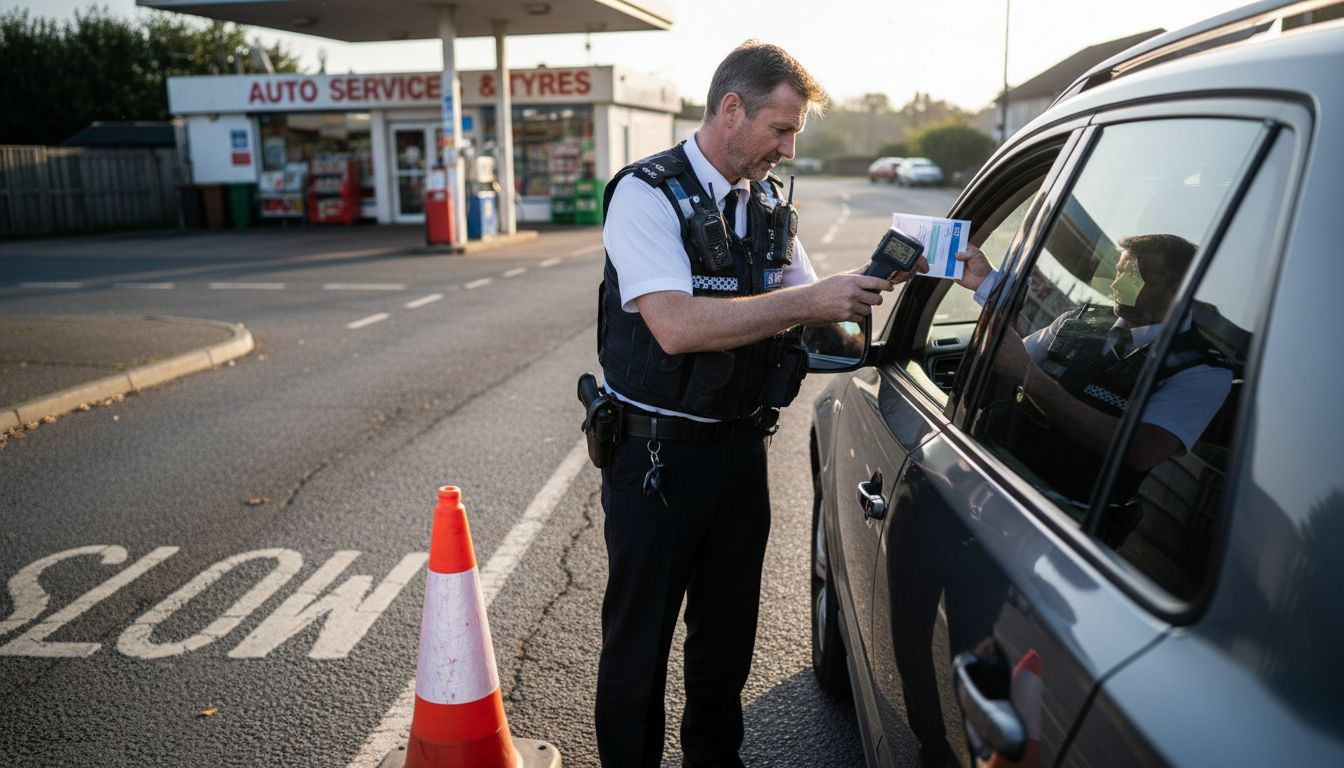
Window tint enforcement represents a complex regulatory landscape where law enforcement utilises precise technological methods to ensure legal compliance. Tint measurement techniques involve specialised handheld meters that determine exact Visible Light Transmission (VLT) percentages during vehicle inspections and traffic stops.
Key compliance risks for automotive professionals and vehicle owners include:
- Potential financial penalties
- Mandatory tint removal
- Vehicle inspection failures
- Increased legal liability
- Potential insurance complications
The enforcement process typically involves several critical stages:
- Initial visual inspection of window tint
- Measurement using calibrated tint meters
- Comparison against jurisdiction-specific legal standards
- Documentation of potential violations
- Issuance of citations or corrective instructions
Law enforcement strategies vary across jurisdictions, with some regions conducting dedicated roadside checkpoints to rigorously enforce window tint regulations. Professional installers must remain vigilant about local requirements to mitigate potential legal complications for their clients.
Here is a summary of common enforcement tools and their effects on compliance:
| Enforcement Method | Purpose | Risk if Non-Compliant |
|---|---|---|
| Calibrated tint meter | Accurately measure window VLT | On-the-spot fines or warnings |
| Roadside checks | Detect and deter illegal tints | Penalties and forced removal |
| Documentation review | Confirm legal justification (e.g., medical) | Seizure of exemption or citation |
| Annual inspection | Repeated compliance verification | Annual failure may bar road use |
Pro tip: Invest in professional-grade tint measurement devices to verify VLT percentages before vehicle delivery and maintain precise documentation of installation specifications.
Penalties, inspection failure, and what to avoid
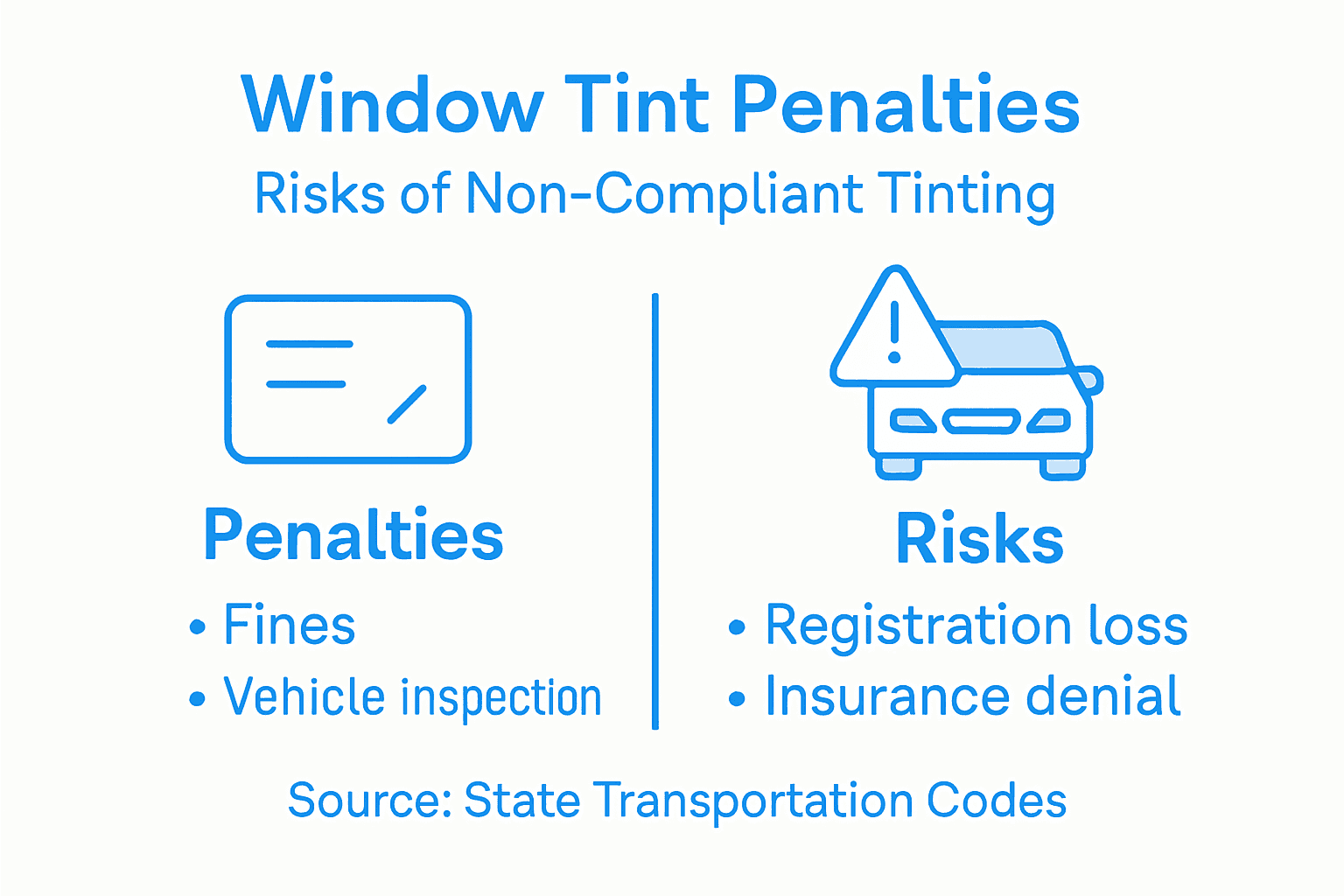
Window tint violations can result in significant legal and financial consequences for vehicle owners and professional installers. Vehicle inspection rules outline strict parameters for acceptable window tint darkness, with potential penalties ranging from fines to complete vehicle prohibition.
Typical penalties for illegal window tinting include:
- Fixed penalty notices
- Mandatory tint removal
- Vehicle inspection failures
- Potential license endorsements
- Increased insurance premiums
The enforcement process typically involves several critical stages:
- Initial roadside vehicle inspection
- Light transmission measurement
- Determination of tint compliance
- Issuance of corrective documentation
- Potential legal prosecution
Illegal window tint consequences can extend beyond immediate financial penalties, potentially impacting long-term vehicle roadworthiness and driver licensing. Professional installers must remain meticulously informed about regional regulations to protect their clients from potential legal complications.
Pro tip: Maintain comprehensive documentation of tint specifications and always recommend legal VLT percentages specific to each client’s local jurisdiction.
Stay Legally Compliant with Expert Window Tint Cutting Solutions
Navigating back window tint limits and legal compliance can be challenging for professional installers and vehicle owners aiming to meet precise Visible Light Transmission standards. Key concerns such as accuracy in tint application and avoiding costly penalties require dependable tools designed for precision and efficiency. By integrating advanced pre-cut patterns tailored specifically for window tinting, installers can ensure safety, legal adherence, and customer satisfaction without compromising on style or privacy.
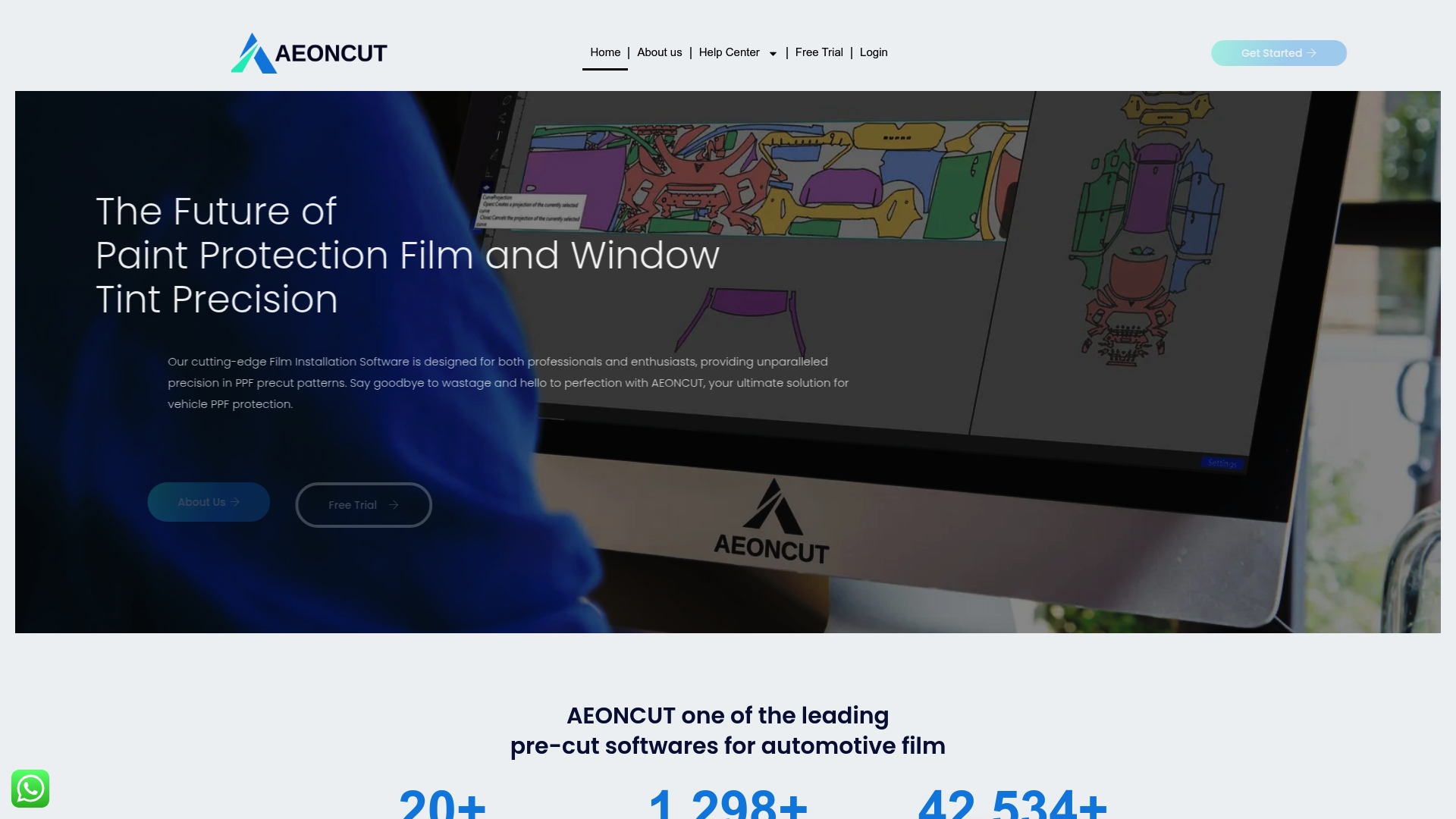
Discover how window Tint – AEONCUT PPF Pre-cut Cutting software empowers professionals with reliable pattern libraries and AI-driven features to deliver consistent, regulation-compliant tint installations. Act now to reduce waste and save installation time while meeting all regional tint regulations effectively. Visit AEONCUT today and transform your window tint workflow into a streamlined, legally sound process.
Frequently Asked Questions
What is the legal limit for back window tinting?
The legal limit for back window tinting varies by jurisdiction, with most regions allowing darker tints compared to front windows. It’s essential to check local regulations for specific Visible Light Transmission (VLT) percentage limits.
What are the safety considerations regarding darker back window tints?
Darker back window tints can reduce visibility, particularly at night. This can pose risks during driving, so it’s important to balance privacy preferences with safety standards.
How do I measure the VLT of my window tint?
To measure the VLT of your window tint, specialised calibrated tint meters are used. These devices determine the percentage of light that passes through the glass and film, ensuring compliance with legal standards.
What are the penalties for illegal window tinting?
Penalties for illegal window tinting may include fixed penalty notices, mandatory removal of the tint, vehicle inspection failures, and potential increases in insurance premiums.
Recommended
- How to Read Tint Percentage: A Practical Guide for 2025 – AEONCUT PPF Pre-cut Cutting software
- How to Read Tint Percentage: A Practical Guide for 2025 – AEONCUT PPF Pre-cut Cutting software
- How to Read Tint Percentage: A Practical Guide for 2025 – AEONCUT PPF Pre-cut Cutting software
- How to Read Tint Percentage: A Practical Guide for 2025 – AEONCUT PPF Pre-cut Cutting software