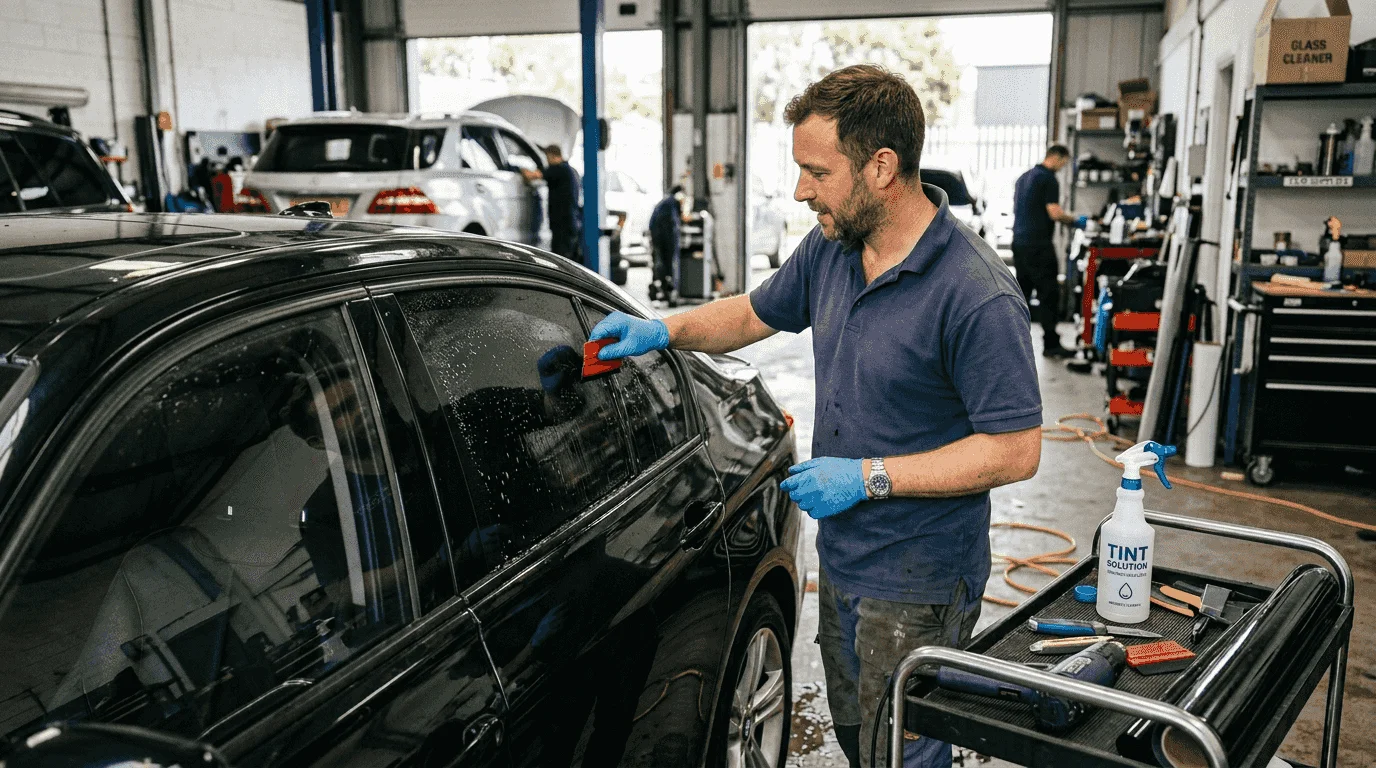
Every british driver who wants sleek professional-looking tinted windows faces the same challenge. Keeping particles off the glass surface can make or break the final result. In fact, even a single speck of dust can ruin the look and reduce the lifespan of your tint. This guide walks you through each step used by top European installers so you get flawless results, minimize hassle, and make your window tint look like it rolled off the showroom floor.
Table of Contents
- Step 1: Prepare Your Workspace And Vehicle Surfaces
- Step 2: Select And Measure Film Using Precision Software
- Step 3: Cut Tint Patterns With Advanced Tools
- Step 4: Apply Tint Film Using Professional Techniques
- Step 5: Inspect And Perfect The Finished Tint Installation
Quick Summary
| Key Point | Explanation |
|---|---|
| 1. Maintain a clean workspace | A controlled, clean environment minimises contaminants and enhances film adhesion during installation. Regularly clean your workspace and gather all essential tools for optimal results. |
| 2. Use precision software for measurements | Leveraging advanced digital tools ensures accurate film measurements, maximising material usage and reducing waste. Always validate measurements and download up-to-date vehicle templates for best results. |
| 3. Prioritise sharp cutting tools | Utilising high-quality cutting tools and mats ensures clean edges on film patterns. Consistent pressure and smooth movements contribute to precise cuts, preventing installation errors. |
| 4. Apply film with a slip solution | A mixture of distilled water and soap acts as a slip solution, allowing repositioning of the film during the application process. Use professional squeegee techniques to eliminate bubbles. |
| 5. Inspect installation thoroughly | Conduct a detailed visual inspection under different lighting conditions to identify imperfections. Patience and careful adjustments are crucial for achieving a flawless finish. |
Step 1: Prepare your workspace and vehicle surfaces
Successful window film installation requires a meticulously prepared workspace and pristine vehicle surfaces. The goal is creating an environment that minimises potential contaminants and ensures optimal film adhesion.
Begin by selecting an indoor area with controlled temperature and minimal airflow. Professional installers recommend choosing a clean, well-ventilated space that allows you to work systematically. Before starting, gather essential tools: lint-free microfibre cloths, professional-grade glass cleaner, razor blades, squeegees and isopropyl alcohol. Your workspace should be thoroughly cleaned to prevent dust particles from compromising the film.
Prepare the vehicle surfaces by performing a comprehensive cleaning process. Start with thoroughly washing the exterior, paying special attention to window areas. Use a clay bar to remove surface contaminants, then meticulously clean each window using a professional glass cleaner and lint-free cloths. Removing all dirt, dust, and residues is crucial for proper film adhesion, so take your time and inspect each surface carefully.
Pro tip: Maintain a consistent room temperature between 10-27 degrees Celsius for optimal window film installation, as temperature variations can impact adhesive performance and film flexibility.
Here is a summary of essential tools and their purposes for window film installation:
| Tool | Purpose | Impact on Quality |
|---|---|---|
| Microfibre cloths | Removes dust and fibres from surfaces | Prevents debris under film |
| Professional glass cleaner | Cleans windows thoroughly | Ensures optimal adhesion |
| Razor blades | Scrapes residues and stickers | Leaves glass perfectly clean |
| Squeegees | Removes water and air bubbles | Achieves smooth application |
| Isopropyl alcohol | Degreases glass | Eliminates invisible residues |
| Precision cutting tools | Cuts tint to exact shape | Ensures flawless fit |
Step 2: Select and measure film using precision software
Selecting and measuring window film requires precision and strategic planning to achieve professional results. The right approach ensures a perfect fit and minimises material waste during installation.
Professional window film training emphasises the importance of precise measurement techniques and leveraging advanced digital tools. Modern tint cutting software streamlines the measurement process by providing accurate digital templates specific to your vehicle’s make and model. Begin by inputting your vehicle details into the software precision tool, which will generate a comprehensive digital pattern matching your exact window specifications.
Utilise the software’s advanced features to validate measurements multiple times before cutting. Most professional grade programmes offer features like auto nesting functionality that maximises film usage and minimises waste. Carefully review the digital template overlay to confirm precise alignment and make any necessary adjustments before initiating the actual film cutting process.
Pro tip: Always download the most recent vehicle template library to ensure you have the most up-to-date and accurate cutting patterns for your specific vehicle model.
Below is a comparison of manual vs. software-based film measurement methods:
| Aspect | Manual Measurement | Precision Software Method |
|---|---|---|
| Accuracy | Prone to slight human error | High precision, digitally guided |
| Efficiency | Time-consuming for complex shapes | Rapid template matching |
| Waste Minimisation | More offcuts and material loss | Optimised cutting with nesting |
| Required Skill Level | Advanced measurement experience | Focus on digital tool operation |
Step 3: Cut tint patterns with advanced tools
Cutting precision window tint requires specialised tools and meticulous attention to detail. Your goal is creating flawless film patterns that fit vehicle windows perfectly without wasting expensive materials.
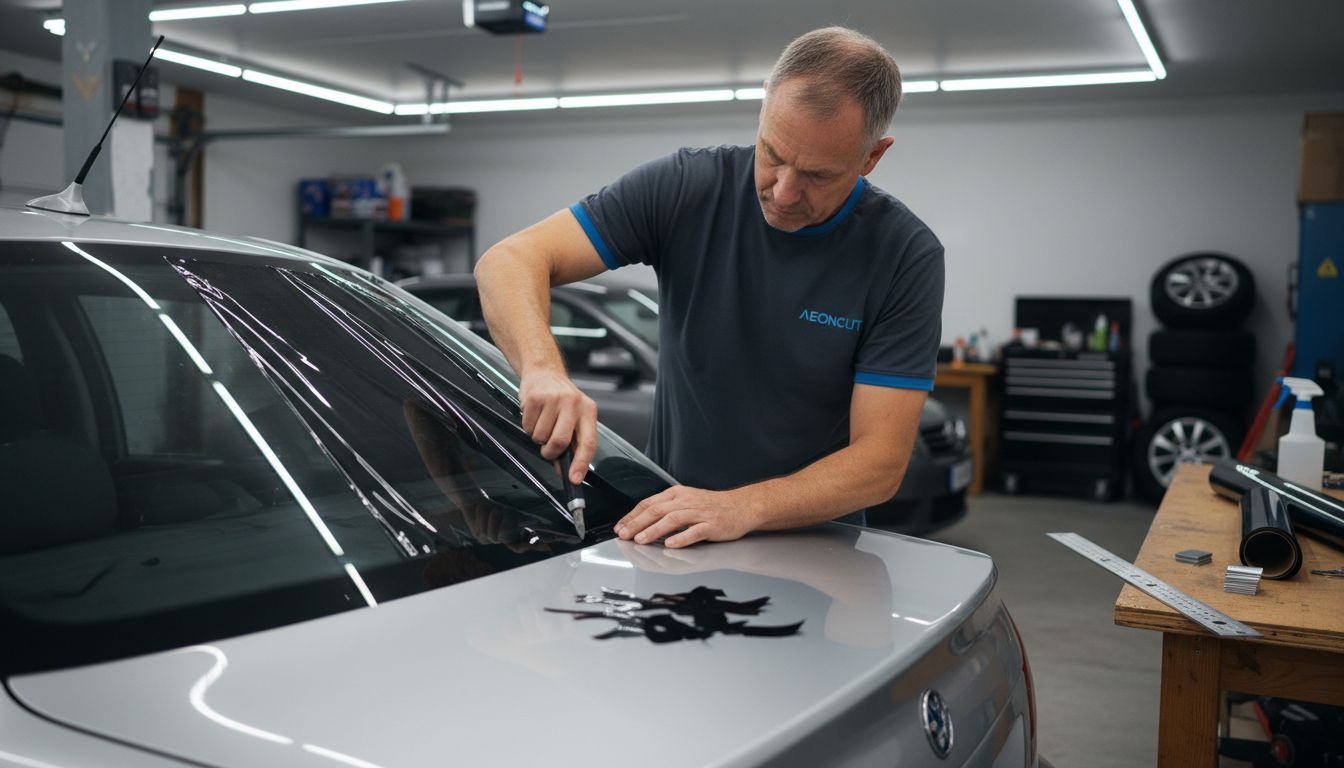
Professional tint training emphasises mastering advanced cutting techniques that ensure maximum efficiency and quality. Start by positioning your prepared digital template on the cutting surface, ensuring complete flatness and minimal tension. Use a sharp, high-quality cutting tool with replaceable blades to guarantee clean edges. Most professional window tint pattern tools recommend using a precision cutting mat with grid lines to help maintain straight lines and accurate measurements.
When cutting, apply consistent pressure and move the blade in smooth, controlled motions. Work systematically from one edge to another, rotating the film as needed to maintain optimal cutting angles. Double check each cut edge for smoothness and precision before separating the film sections. Remember that even minor imperfections can compromise the final installation quality.
Pro tip: Always keep multiple spare blades on hand and replace them frequently to maintain razor sharp cutting performance and prevent ragged edges.
Step 4: Apply tint film using professional techniques
Applying window tint film requires precision technique and careful preparation. Your objective is achieving a smooth professional finish without bubbles wrinkles or imperfections.
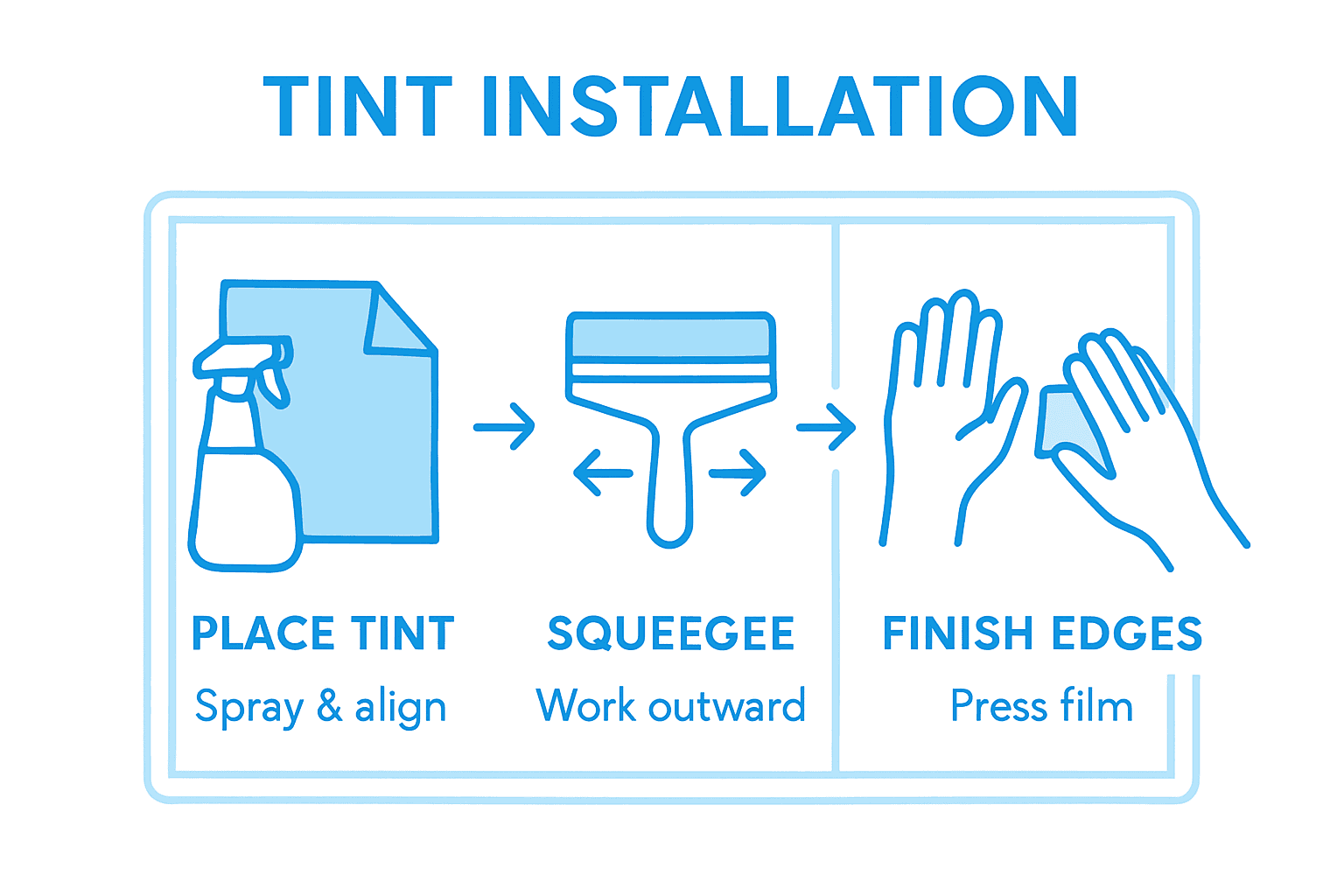
Professional window film application involves creating a specialised slip solution that allows precise positioning and minimises potential installation errors. Start by thoroughly cleaning the interior window surface and preparing your slip solution a mixture of distilled water and a few drops of liquid soap. Spray a light even coating on both the glass surface and the adhesive side of your pre cut film to facilitate smooth positioning.
Using a professional squeegee technique is critical for successful installation. Begin at the centre of the window and work methodically outwards using firm consistent pressure. Angle the squeegee at approximately 45 degrees and use overlapping strokes to push out any trapped water or air bubbles. Move systematically from the centre towards the edges ensuring complete adhesion and a wrinkle free finish. Take your time and maintain steady controlled movements throughout the application process.
Pro tip: Always maintain a clean workspace with good lighting to help you identify and eliminate potential installation imperfections during the tint application process.
Step 5: Inspect and perfect the finished tint installation
With the window tint applied your final task involves meticulously inspecting the installation to ensure a flawless professional finish. This critical evaluation stage determines the overall quality and longevity of your window film application.
Professional installers recommend conducting a thorough visual inspection under different lighting conditions to identify any potential imperfections. Start by examining the film in natural daylight and then under bright interior lighting. Look closely for telltale signs of poor installation such as air bubbles water pockets edge misalignments or uneven film tension. Pay particular attention to window corners and edges where most installation errors tend to occur.
Should you discover any minor imperfections use your professional squeegee to gently work out small bubbles or water pockets. Apply light consistent pressure moving from the centre towards the edges. For more significant issues you may need to carefully lift and reposition sections of the film. Remember that patience is key professional tint installations often require multiple careful adjustments to achieve a seamless result.
Pro tip: Allow the window tint to cure completely typically between 3 to 10 days before washing or rolling down windows to ensure optimal adhesion and prevent potential damage during the critical initial bonding period.
Achieve Flawless DIY Window Tint Installation with Precision Software
If you are aiming for a perfect window tint application without the common pitfalls like bubbles, wrinkles or misaligned cuts, leveraging precise digital tools is essential. The article highlights challenges such as ensuring exact measurements, optimising material use and mastering advanced cutting techniques—these are the very problems that AEONCUT’s cutting-edge software is designed to solve for both professionals and dedicated DIY enthusiasts.
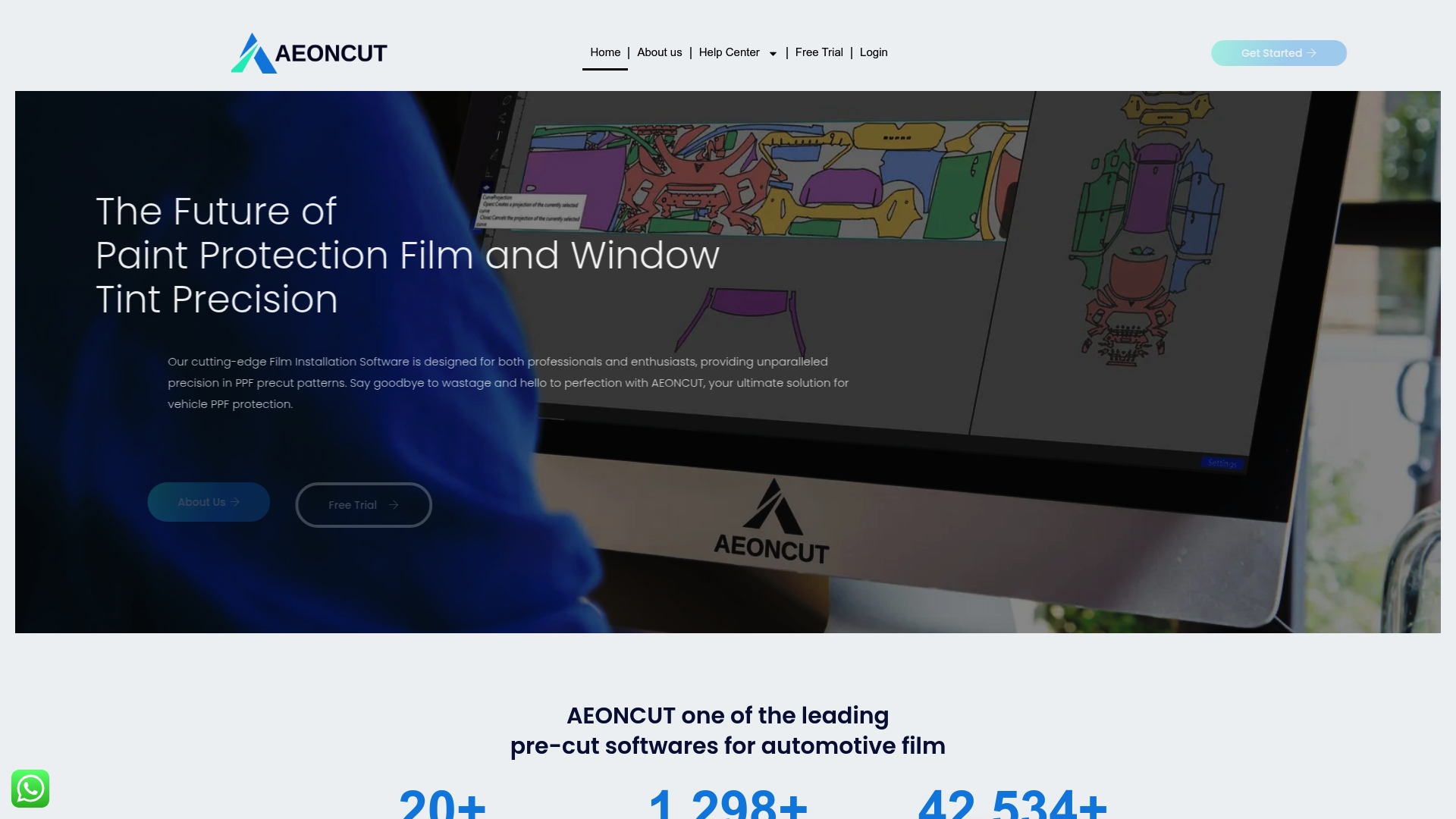
Explore how the window Tint – AEONCUT PPF Pre-cut Cutting software can transform your installation process by providing accurate pre-cut patterns tailored to your vehicle. With features like AI-driven auto-nesting and an extensive pattern library, you can reduce waste and achieve flawless fits every time. Ready to elevate your tint installations with precision and confidence? Visit aeoncutsw.com now and discover flexible subscription plans customised for your needs. For additional insights on utilising high-tech solutions and practical tutorials, check out our Uncategorised – AEONCUT PPF Pre-cut Cutting software. Take control of your tinting projects today and achieve professional results from start to finish.
Frequently Asked Questions
What tools do I need for DIY tint installation?
To successfully install window film, gather essential tools such as lint-free microfibre cloths, professional-grade glass cleaner, razor blades, squeegees, and isopropyl alcohol. Ensure your workspace is clean and organised to prevent contaminants while installing the tint.
How do I prepare my vehicle’s surfaces before tinting?
Begin by washing the exterior of the vehicle thoroughly, focusing on the windows. Use a clay bar to remove any surface contaminants, then clean each window with a professional glass cleaner to ensure all dirt and residues are removed for optimal film adhesion.
How do I accurately measure window film for my vehicle?
Utilise precision measurement techniques by using digital tint cutting software that provides precise templates for your specific vehicle model. Input your vehicle details and validate measurements multiple times before cutting to ensure a perfect fit while minimising material waste.
What is the best way to apply window tint film?
Create a slip solution by mixing distilled water with a few drops of liquid soap, and apply it to both the glass surface and the adhesive side of the film. Start from the centre of the window and use a squeegee to work out bubbles, ensuring firm pressure and a wrinkle-free finish.
How can I inspect my finished tint installation for flaws?
Conduct a thorough visual inspection of the tinted windows under both natural daylight and artificial lighting conditions. Look for air bubbles, water pockets, or edge misalignments, and use a squeegee to remove minor imperfections, making careful adjustments as needed.
How long should I wait before washing my tinted windows?
Allow the window tint to cure completely, which typically takes between 3 to 10 days, before washing or rolling down the windows. This waiting period ensures optimal adhesive performance and prevents potential damage during the initial bonding phase.
Recommended
- Tinting Curved Windows: Pro Tips and Solutions 2025 – AEONCUT PPF Pre-cut Cutting software
- Heat Shrinking Window Tint: 2025 Guide for Installers – AEONCUT PPF Pre-cut Cutting software
- Types of Window Tint: Guide for Installers and Dealers 2025 – AEONCUT PPF Pre-cut Cutting software
- How to Cut Window Film: Precision Tips for Pros 2025 – AEONCUT PPF Pre-cut Cutting software
- Essential Things to Know Before Installing a New Roof