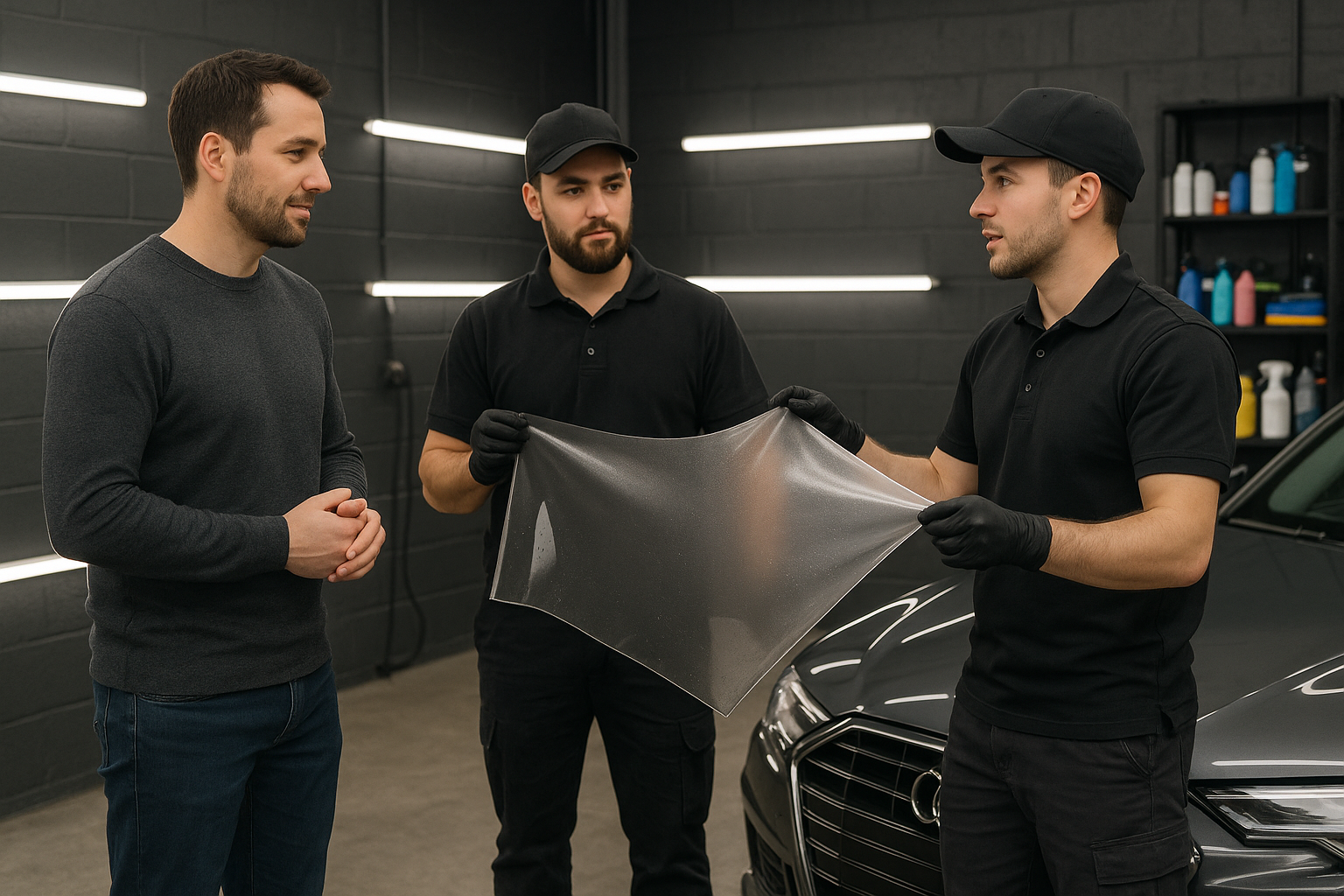
Choosing the right automotive window tint film can feel like a complex puzzle for professional installers aiming to meet both client expectations and local legal standards. Every step, from assessing vehicle types and user priorities to understanding compliance and quality guidelines, must be tackled with care. By focusing on client requirements and regulatory compliance, you set the foundation for installations that satisfy your customers while protecting your business from potential pitfalls.
Table of Contents
- Step 1: Assess Vehicle And Client Requirements
- Step 2: Compare Tint Film Types And Features
- Step 3: Evaluate Compatibility With Cutting Software
- Step 4: Verify Quality And Regulatory Compliance
- Step 5: Test Film With Demo Application
Quick Summary
| Key Point | Explanation |
|---|---|
| 1. Assess client and vehicle needs | Conduct a thorough consultation to understand client priorities and vehicle specifications for optimal tint recommendations. |
| 2. Compare tint film categories | Evaluate the four main window tint types—dyed, metallic, carbon, and ceramic—for performance traits that suit individual client requirements. |
| 3. Ensure cutting software compatibility | Choose compatible cutting software that integrates well with equipment and supports extensive vehicle pattern databases for efficient installations. |
| 4. Verify legal compliance | Maintain a compliance checklist to ensure adherence to local regulations regarding tint darkness, reflectivity, and safety standards. |
| 5. Conduct demo applications | Perform demonstration applications to assess film performance and validate quality before applying it to the entire vehicle. |
Step 1: Assess Vehicle and Client Requirements
Choosing automotive window tint begins with a comprehensive understanding of vehicle specifications and client expectations. Professional installers must carefully evaluate multiple factors to recommend the most suitable film solution matching client priorities.
The assessment process involves reviewing several key aspects including vehicle type, intended use, local climate conditions, and specific client preferences. You will need to discuss the primary objectives driving the client’s tint selection such as UV protection, privacy levels, heat rejection, and potential impact on vehicle electronics. Some clients prioritise aesthetic enhancement while others focus on functional benefits like temperature regulation or increased security.
Successful tint selection requires understanding both legal restrictions and performance characteristics. Evaluating vehicle requirements means examining window dimensions, glass curvature, existing vehicle features, and potential electronic interference. Professional installers must balance client desires with practical constraints to deliver an optimal solution that meets safety standards and customer expectations.
Expert Recommendation: Always schedule an initial consultation that allows sufficient time to thoroughly discuss client needs and conduct a detailed vehicle inspection prior to recommending specific tint films.
Step 2: Compare Tint Film Types and Features
Understanding the nuanced differences between automotive window tint films enables professional installers to recommend optimal solutions for each unique client requirement. Comparative analysis of window tint materials reveals four primary film categories: dyed, metallic, carbon, and ceramic.
Each tint film type presents distinctive performance characteristics that professional installers must carefully evaluate. Dyed films provide basic aesthetic appeal and modest heat reduction at lower price points. Metallic films offer superior heat rejection and enhanced durability but potentially interfere with electronic signals. Carbon films represent a balanced option with excellent heat blocking capabilities and minimal signal disruption. Ceramic films emerge as the premium solution providing exceptional heat rejection, maximum UV protection, and superior signal transparency without metallic interference.
The selection process requires weighing multiple factors including heat rejection efficiency, signal compatibility, reflectivity, longevity, and installation complexity. Your recommendation must align with client priorities such as budget constraints, performance expectations, and specific vehicle characteristics. Professional installers should conduct thorough consultations to match film characteristics with individual client needs.
Expert Recommendation: Always request manufacturer specification sheets and conduct practical performance tests to validate film characteristics before making final recommendations to clients.
Here is a concise comparison of major automotive window tint film types for professional installers:
| Film Type | Key Benefits | Potential Drawbacks | Ideal Use Case |
|---|---|---|---|
| Dyed | Cost-effective, improved style | Lower heat rejection, fades over time | Entry-level budget vehicles |
| Metallic | Strong heat rejection, durable | Can disrupt electronics, high reflectivity | Vehicles needing robust cooling |
| Carbon | Excellent heat blocking, stable colour | Slightly higher cost than dyed, less premium than ceramic | Balanced performance, family cars |
| Ceramic | Maximum UV and heat protection, no signal issues | Highest cost, premium installation | Luxury vehicles, high-performance needs |
Step 3: Evaluate Compatibility with Cutting Software
Professional window tint installers must carefully consider software compatibility as a critical factor in achieving precise and efficient film application. Top PPF cutting software solutions provide advanced technologies that streamline the entire installation process from pattern generation to final application.
The evaluation process involves assessing several key compatibility factors including plotter integration, pattern library comprehensiveness, file format support, and cloud synchronisation capabilities. Your chosen cutting software must seamlessly interact with your existing equipment while offering extensive vehicle make and model pattern databases. Modern software platforms enable installers to upload custom measurements, automatically generate precise cutting templates, and minimise material waste through intelligent nesting algorithms.
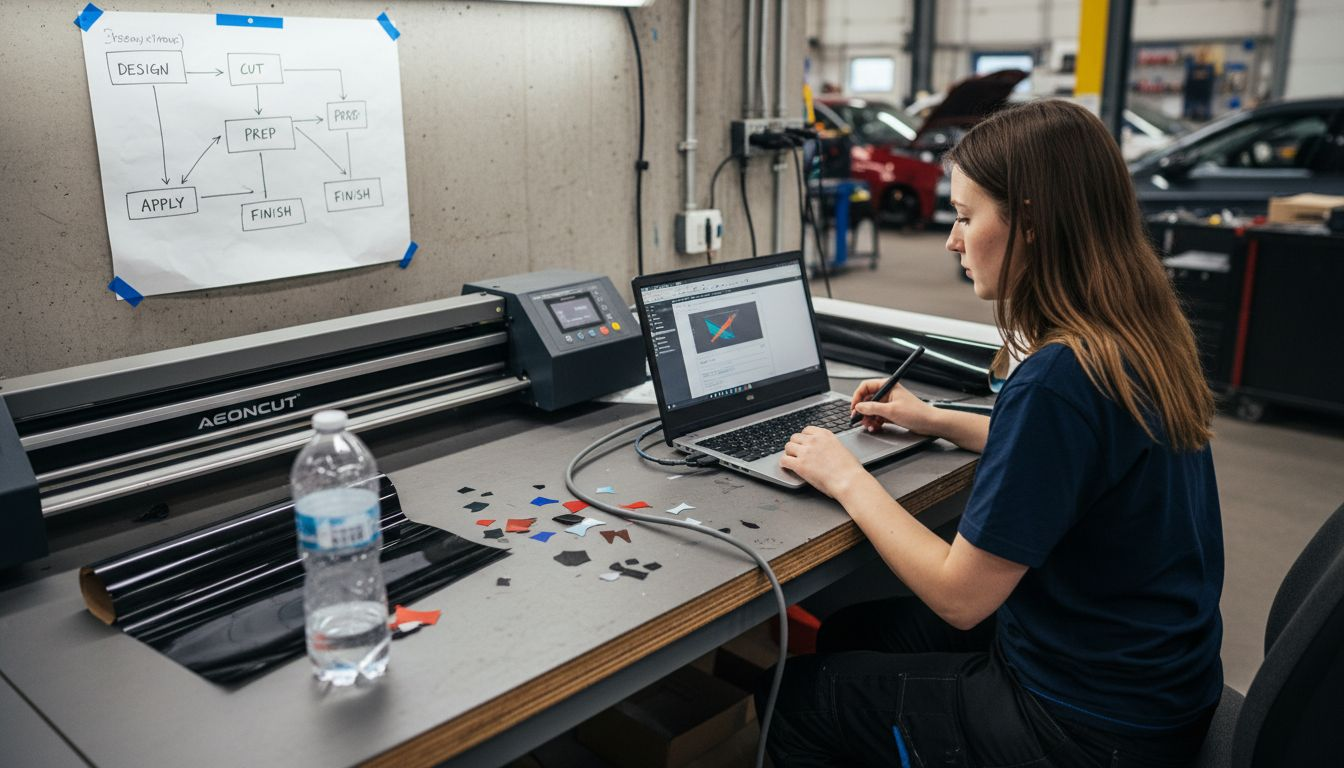
Successful software selection requires understanding your specific workflow requirements and technical infrastructure. Professional installers should prioritise solutions offering real time updates, comprehensive vehicle model coverage, and intuitive user interfaces that reduce learning curves and potential installation errors. Compatibility extends beyond technical specifications to include ongoing support, training resources, and potential future software enhancements.
Expert Recommendation: Request comprehensive software demonstrations and trial periods to thoroughly validate compatibility with your specific installation workflow and equipment configuration.
Step 4: Verify Quality and Regulatory Compliance
Professional window tint installers must navigate a complex landscape of regulatory requirements to ensure legal and safe installations. Automotive regulatory compliance encompasses critical safety standards that protect both installers and vehicle owners from potential legal risks.
The verification process involves comprehensive evaluation of multiple compliance dimensions. This includes assessing film reflectance levels, visible light transmission percentages, colour stability, and adherence to regional and national vehicle window tinting regulations. Different jurisdictions maintain unique standards governing permissible tint darkness, reflectivity, and application zones which professional installers must meticulously understand and implement. Verification requires examining manufacturer certification documents, conducting light transmission measurements, and cross referencing local automotive modification guidelines.
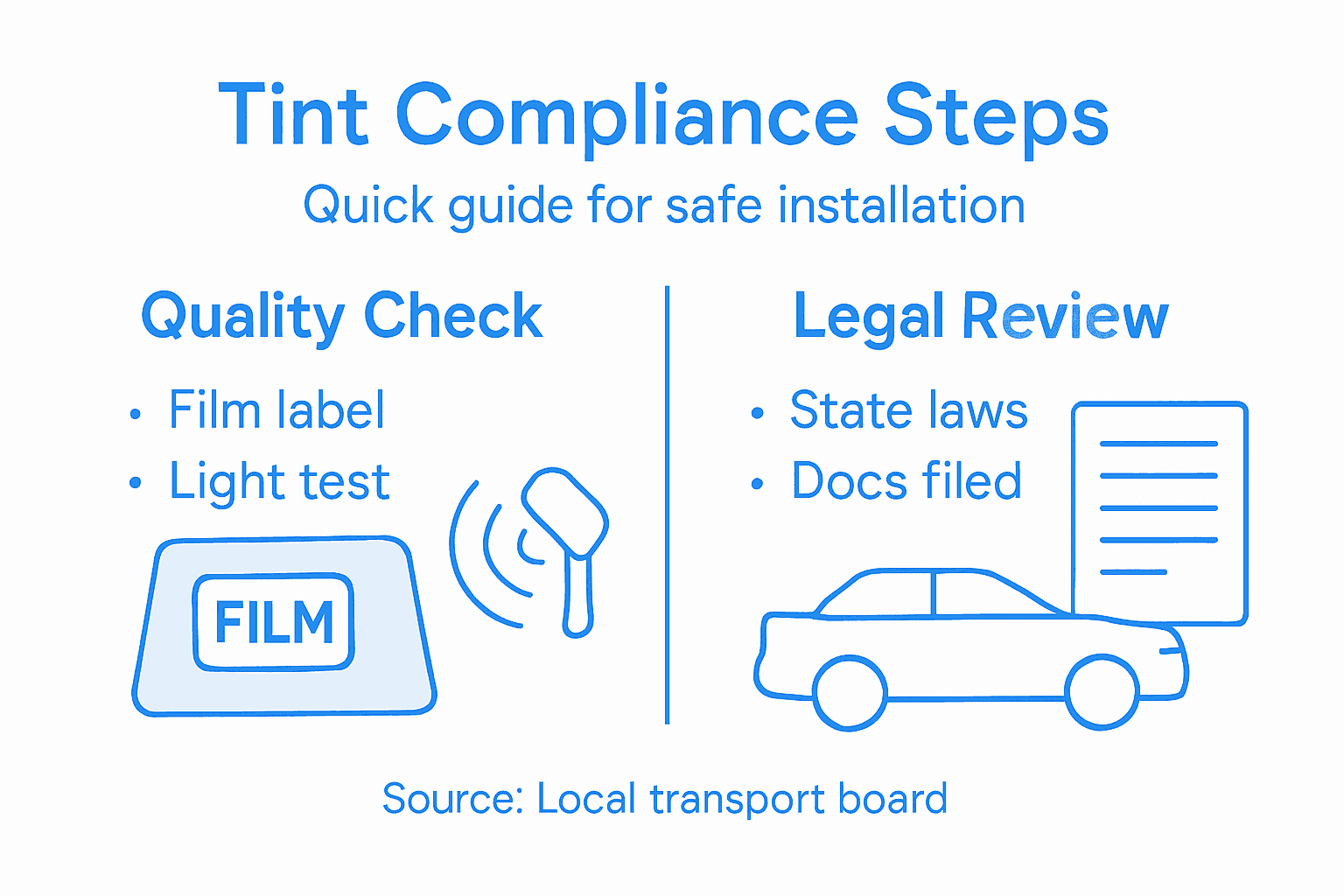
Successful regulatory compliance extends beyond technical measurements to include documentation and record keeping. Professional installers should maintain detailed installation records documenting film specifications, vehicle details, and compliance verification processes. This approach not only demonstrates professional accountability but also provides critical protection against potential legal challenges or warranty claims.
Expert Recommendation: Develop a standardised compliance checklist for each installation to systematically document and verify regulatory requirements across different vehicle types and jurisdictions.
The table below summarises critical quality and compliance factors to verify during automotive window tint installation:
| Compliance Factor | Why It Matters | Verification Method |
|---|---|---|
| Reflectance Level | Prevents dangerous glare | Use light meter for measurement |
| Light Transmission (%) | Ensures legal visibility | Cross-check with regulations |
| Colour Stability | Maintains appearance long-term | Review manufacturer warranty |
| Installation Zone Rules | Avoids fines and disallowed areas | Consult local compliance guide |
Step 5: Test Film with Demo Application
Professional window tint installers must conduct thorough demonstration applications to validate film performance and quality before full vehicle installation. International window film inspection guidelines provide a comprehensive framework for evaluating critical visual and functional characteristics.
The demo application process involves systematic assessment across multiple quality dimensions. Installers should meticulously examine film characteristics including colour consistency, adhesion quality, clarity during curing, and absence of bubbles or imperfections. Specialised testing tools enable measurement of UV protection levels, heat rejection capabilities, and overall film performance under simulated environmental conditions. Professional installers must create controlled test panels that replicate actual vehicle window surfaces to ensure accurate performance evaluation.
Successful demo applications require careful documentation and comparative analysis. Installers should develop standardised testing protocols that capture detailed observations about film behaviour including initial application performance and long term durability predictions. This approach allows comprehensive comparison between different film types and manufacturers enabling informed selection of optimal window tint solutions for specific vehicle and client requirements.
Expert Recommendation: Create a standardised demo application evaluation sheet that systematically records film performance metrics to support objective decision making during the selection process.
Achieve Flawless Window Tinting Results with AEONCUT Software
Choosing the perfect tint film requires precise measurements, careful evaluation of vehicle specifications, and efficient pattern cutting to ensure a smooth installation every time. The article highlights challenges such as matching client needs, complying with regulations, and minimising material waste. Professional installers need reliable tools that streamline these complexities while enhancing accuracy and consistency.
AEONCUT offers a cutting-edge solution tailored for window tint professionals and enthusiasts alike. With its extensive pattern libraries, AI-driven auto-nesting, and seamless plotter integration, you can reduce errors and optimise material use. Take control of your workflow starting from the very first cut to deliver premium quality installations that impress your clients. Explore how AEONCUT transforms your tint projects by visiting our window Tint category.
Ready to upgrade your installation process and unlock unmatched precision in window tint cutting? Visit https://aeoncutsw.com today and discover subscription plans that fit your business needs. Learn more about industry-leading features and gain the competitive edge your tinting service deserves by browsing AEONCUT’s window Tint solutions. Take the first step toward flawless results now.
Frequently Asked Questions
How do I assess my vehicle and client requirements for window tinting?
Start by evaluating key factors like vehicle type, intended use, local climate conditions, and specific client preferences. Schedule an initial consultation to thoroughly discuss these needs and conduct a detailed vehicle inspection before recommending specific tint films.
What are the main types of automotive window tint films and their benefits?
There are four primary types of window tint films: dyed, metallic, carbon, and ceramic. Compare their key benefits, such as cost-effectiveness, heat rejection, durability, and UV protection, to choose the right one for your client’s priorities and vehicle characteristics.
How can I ensure that my cutting software is compatible with my tinting equipment?
Evaluate your cutting software for compatibility by checking for plotter integration, pattern library comprehensiveness, and file format support. Request a software demonstration to validate that it interacts seamlessly with your existing equipment before making a decision.
What regulatory compliance factors should I verify for window tint installations?
Ensure that you assess reflectance levels, visible light transmission percentages, and adherence to local tinting regulations. Develop a standardised compliance checklist for each installation to document and verify these factors systematically.
How do I conduct a demo application to test the performance of tint film?
Perform a systematic assessment during the demo application by examining factors like colour consistency, adhesion quality, and clarity during curing. Create controlled test panels to measure the film’s UV protection and heat rejection capabilities accurately before proceeding with full installations.
What documentation should I maintain for regulatory compliance in tint installations?
Keep detailed records that document film specifications, vehicle details, and compliance verification processes. This documentation not only demonstrates professional accountability but also provides critical protection against potential legal challenges or warranty claims.
Recommended
- Types of Window Tint: Guide for Installers and Dealers 2025 – AEONCUT PPF Pre-cut Cutting software
- How Window Tint Works: Essential Guide for Auto Professionals 2025 – AEONCUT PPF Pre-cut Cutting software
- What is Window Tint? Essential Guide for Tinting Pros 2025 – AEONCUT PPF Pre-cut Cutting software
- 2025 Guide to Window Tint Colour Options for Industry Pros – AEONCUT PPF Pre-cut Cutting software