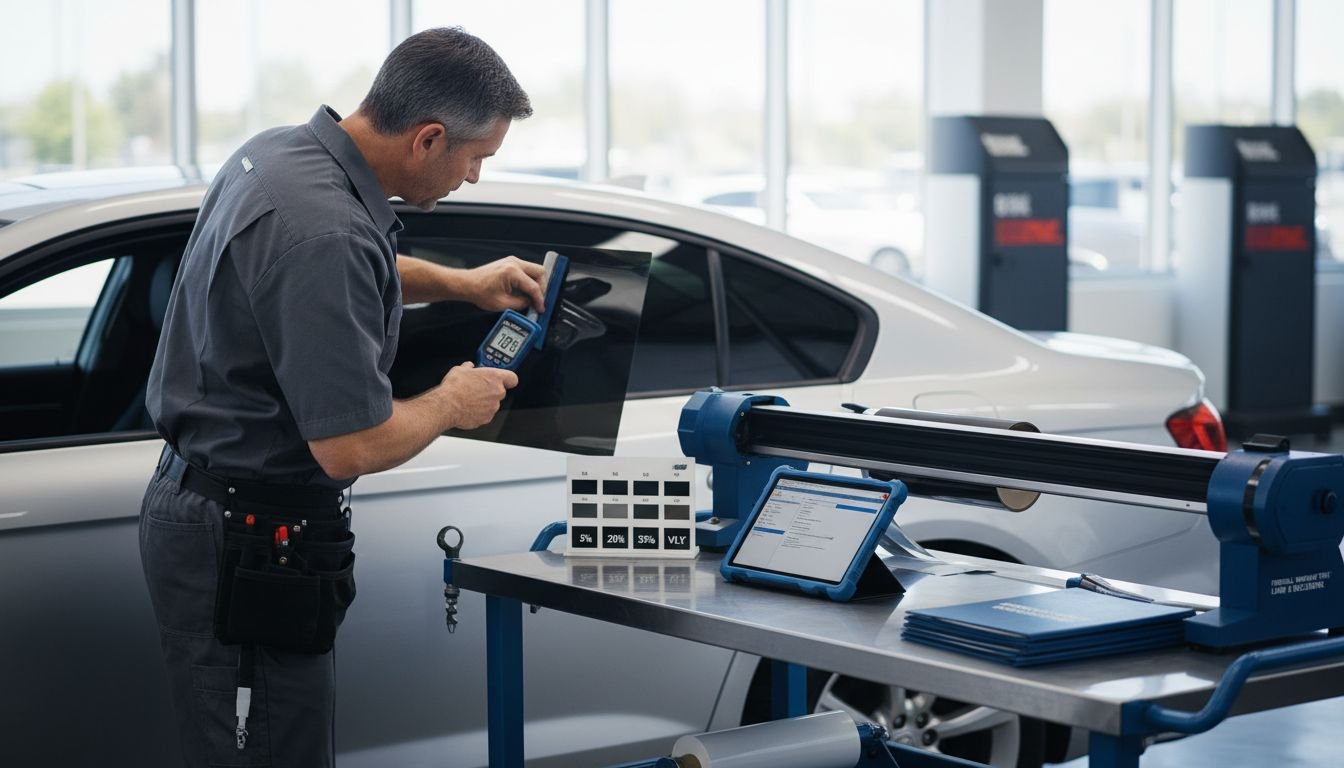
Many automotive professionals believe their tint installations meet legal standards, yet subtle variations in measurement, vehicle type, and regional updates can render seemingly compliant work illegal. Window tint regulations have evolved significantly, with 2026 bringing stricter enforcement on front windshield treatments and more precise Visible Light Transmission requirements. Misconceptions about legal limits create risk for installers and vehicle owners alike. This guide clarifies current regulations, measurement protocols, and compliance strategies to help professionals deliver quality service whilst navigating complex legal frameworks across different vehicle classes.
Table of Contents
- Understanding Window Tint Regulations In 2026
- Visible Light Transmission (VLT) Measurement And Its Critical Role
- Variations In Tint Regulations By Vehicle Type And Practical Implications
- Ensuring Professional Compliance: Meters, Documentation And Installer Responsibility
- How AEONCUT Software Supports Precise And Compliant Tinting
- Frequently Asked Questions About Window Tinting Regulations
Key takeaways
| Point | Details |
|---|---|
| Stricter front window rules | State tint laws intensified front windshield and side window restrictions in 2026, requiring higher light transmission percentages. |
| VLT measurement precision | Visible Light Transmission must be measured with calibrated professional meters accounting for temperature and angle variables. |
| Vehicle type distinctions | Passenger cars face tighter limits than SUVs and vans, which receive darker tint allowances on rear windows. |
| Compliance documentation | Certified meters and installer records provide legal proof of VLT percentages, protecting both professionals and clients. |
Understanding window tint regulations in 2026
Regulatory frameworks governing automotive window tinting have undergone substantial revision over recent years. State tint laws have changed multiple times, with front windshield regulations becoming particularly restrictive to address safety concerns about driver visibility and law enforcement identification needs. These changes directly impact professional installers who must stay current with evolving legal standards whilst meeting customer aesthetic preferences.
The 2026 regulatory landscape emphasises front window restrictions more aggressively than previous years. Front side windows typically require at least 27% light transmission in most jurisdictions, though this threshold varies by location. Rear windows and back glass often permit darker treatments, yet these allowances differ substantially based on vehicle classification. SUVs and larger vehicles sometimes qualify for tints as dark as 15% on rear windows, whilst sedans face stricter limitations.
Vehicle type determines legal tint boundaries in ways many customers don’t initially understand. A sedan and an SUV receiving identical tint film can result in one vehicle being compliant and the other violating local statutes. This distinction stems from regulatory categories that classify vehicles by weight, passenger capacity, and design purpose. Professional installers must verify vehicle classification before recommending tint darkness levels.
Current regulations also address windshield tinting with renewed scrutiny. Most regions prohibit aftermarket tint on front windshields except for narrow strips along the top edge, typically limited to manufacturer AS1 lines or specific measurement thresholds. These restrictions aim to preserve maximum visibility for drivers during varied lighting conditions and weather scenarios.
“Understanding the specific legal limits for each window position and vehicle type prevents costly compliance failures and protects your professional reputation.”
The regulatory complexity extends beyond simple percentage thresholds. Reflectivity limits, colour restrictions, and medical exemption processes add layers of consideration for professionals. Some jurisdictions prohibit metallic or mirrored finishes regardless of light transmission levels. Others restrict red, amber, or other coloured tints that might interfere with vehicle lighting visibility. Staying informed about car window tint law requirements becomes essential for maintaining compliant operations.
Key regulatory elements professionals must track include:
- Front windshield strip height limitations and VLT requirements
- Front side window minimum light transmission percentages
- Rear window and back glass allowances by vehicle class
- Reflectivity and colour prohibitions specific to your jurisdiction
- Medical exemption documentation and application processes
Visible light transmission (VLT) measurement and its critical role
Visible Light Transmission represents the percentage of visible light spectrum that passes through window glass and any applied film. A 35% VLT rating means 35% of visible light transmits through whilst 65% is blocked or absorbed. This measurement forms the foundation of tinting compliance, yet achieving accurate readings requires understanding technical nuances that affect measurement outcomes.

Professional installers use calibrated meters to measure VLT accurately, as these devices provide readings law enforcement and regulatory bodies recognise. Consumer grade meters or visual estimation cannot deliver the precision necessary for compliance verification. Certified professional meters undergo regular calibration to maintain accuracy within acceptable tolerances, typically plus or minus 2% across the measurement range.
Temperature significantly influences VLT readings in ways that surprise many installers. Film adhesive properties and glass composition respond to thermal changes, causing VLT measurements to fluctuate between hot and cold conditions. A window reading 32% VLT in summer heat might measure 30% during winter cold, potentially crossing legal thresholds. Professional meters compensate for temperature variables, yet installers should conduct measurements in controlled environments when possible.
Measurement angle introduces another variable affecting reading accuracy. Light transmission meters require perpendicular positioning against glass surfaces to capture accurate data. Angled measurements produce artificially high or low readings depending on sensor orientation and ambient light interference. Proper measurement protocol demands positioning the meter flush against glass with the sensor centred and stable during reading capture.
Factory tinted glass complicates VLT calculations because aftermarket film combines with existing glass tint multiplicatively rather than additively. If factory glass transmits 70% light and you apply 50% VLT film, the resulting transmission isn’t 60% average but rather 35% (0.70 × 0.50). This multiplicative relationship means professionals must measure factory glass VLT before calculating final transmission levels with proposed film darkness. Ignoring factory tint leads to unintentional non-compliance when darker films push combined VLT below legal minimums.
Proper VLT measurement follows a systematic protocol:
- Verify meter calibration status and battery charge before beginning measurements
- Clean glass surfaces thoroughly to remove contaminants affecting light transmission
- Measure factory glass VLT on untinted windows to establish baseline transmission
- Calculate combined VLT by multiplying factory glass percentage by proposed film VLT
- Document all measurements with vehicle identification and window position details
- Remeasure completed installations to verify actual achieved VLT matches projections
Pro Tip: Always measure VLT after installation completion rather than relying solely on pre-installation calculations, as application technique and environmental factors can shift final transmission percentages by several points.
Understanding these measurement intricacies helps professionals avoid compliance issues whilst delivering customer satisfaction. Accurate VLT assessment protects your business from liability whilst ensuring clients receive legal installations. Resources about car window tint limit compliance and best window tint types provide additional technical guidance for achieving optimal results within legal parameters.
Variations in tint regulations by vehicle type and practical implications
Vehicle classification dramatically alters permissible tint darkness in ways that confuse consumers and occasionally challenge professionals. Passenger cars typically face the strictest limitations, particularly on front side windows where visibility and law enforcement interaction concerns drive regulatory conservatism. SUVs, vans, and trucks often receive more permissive treatment for rear windows based on assumptions about passenger privacy needs and reduced driver visibility requirements for rear glass.
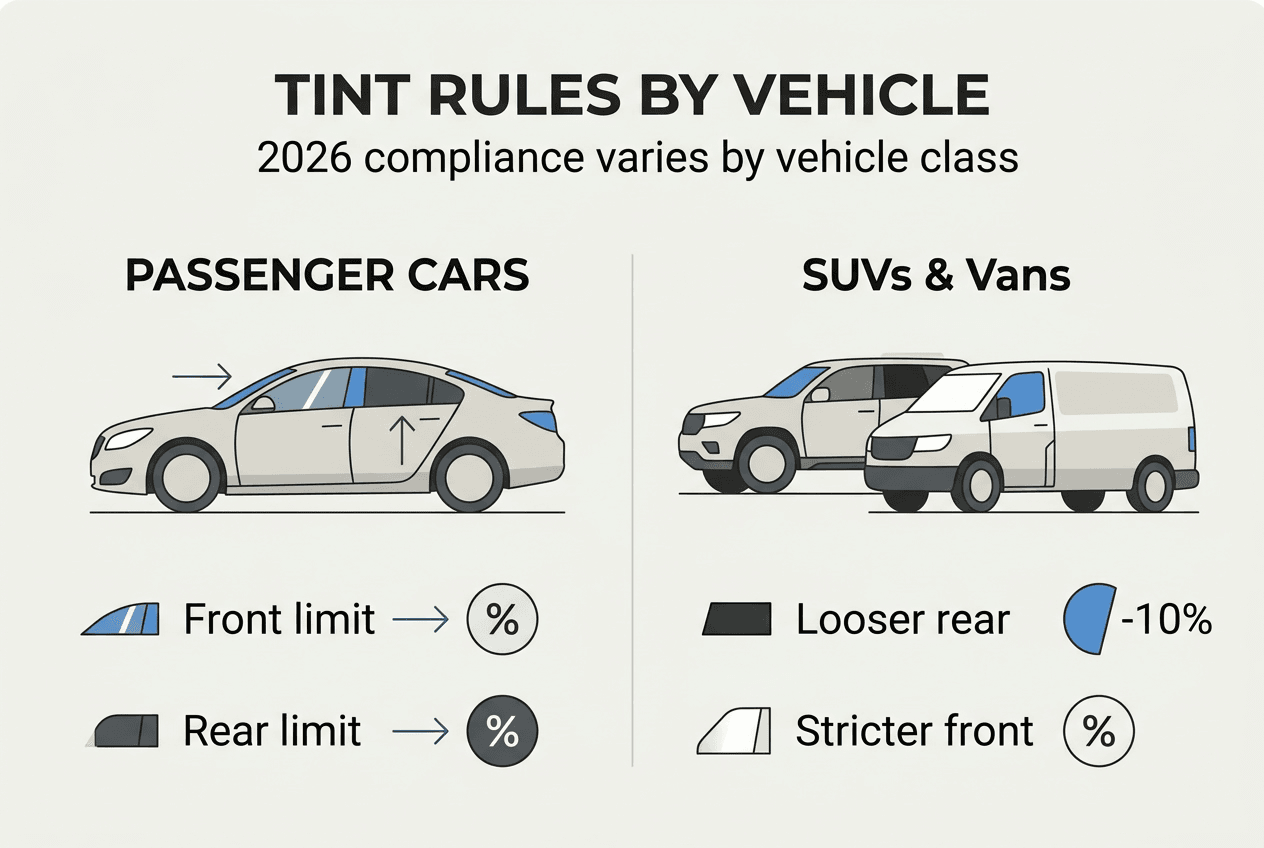
These vehicle type distinctions stem from regulatory philosophy balancing privacy, aesthetics, and safety considerations differently across vehicle categories. A sedan might require 35% minimum VLT on rear side windows whilst an SUV permits 15% darkness on identical window positions. This disparity reflects assumptions that SUV rear passengers sit farther from driver sightlines and that larger vehicles serve different functional purposes than traditional passenger cars.
Real world scenarios illustrate how vehicle classification impacts tint legality. Consider two customers requesting identical 20% VLT film on rear side windows. The SUV owner receives a fully compliant installation meeting all legal requirements. The sedan owner unknowingly drives an illegally tinted vehicle subject to citations and forced removal. Both vehicles look similar with matching tint darkness, yet legal status differs entirely based on vehicle classification.
| Vehicle Type | Front Side Windows | Rear Side Windows | Back Glass | Front Windshield |
|---|---|---|---|---|
| Passenger Cars | 27% minimum | 27% minimum | 27% minimum | Top strip only |
| SUVs/Vans | 27% minimum | 15% allowed | 15% allowed | Top strip only |
| Commercial Vehicles | 27% minimum | Varies by use | Varies by use | Top strip only |
Manufacturer vehicle classification doesn’t always align with regulatory definitions, creating additional complexity. Some crossover vehicles blur boundaries between passenger car and SUV categories. Weight thresholds, seating configurations, and design characteristics determine regulatory classification rather than marketing labels. Professionals must verify how local regulations classify specific vehicle models before recommending tint specifications.
Front window regulations remain consistently strict across vehicle types with rare exceptions. Both passenger cars and SUVs typically face identical front side window and windshield restrictions regardless of size or purpose differences. This uniformity reflects safety priorities around driver visibility and law enforcement interaction needs that apply equally across vehicle categories.
Pro Tip: Always reference current window tinting legal limits specific to the vehicle classification and your jurisdiction before finalising tint specifications, as assumptions based on similar vehicles can lead to compliance failures.
The practical implications extend beyond simple legal compliance to customer satisfaction and business reputation. Explaining vehicle type distinctions helps customers understand why their neighbour’s darker tint might be legal whilst the same darkness violates regulations on their vehicle. This education builds trust and positions you as a knowledgeable professional rather than someone arbitrarily restricting customer choices. Documentation showing vehicle specific legal limits protects both parties when questions arise about installation compliance.
Ensuring professional compliance: meters, documentation and installer responsibility
Professional installers shoulder significant responsibility for ensuring tint installations meet legal standards. Using certified equipment and maintaining detailed documentation separates reputable professionals from casual operators whilst protecting your business from liability claims. Professional compliance depends on certified meters and thorough record keeping that demonstrates due diligence in meeting regulatory requirements.
Certified VLT meters represent the primary tool for compliance verification. These devices undergo calibration processes that ensure accuracy within specified tolerances recognised by regulatory authorities. Regular calibration maintenance keeps meters performing within acceptable ranges, typically requiring annual or biannual recertification depending on usage frequency and manufacturer specifications. Calibration records document meter accuracy at specific dates, providing evidence that measurements reflect true VLT values rather than drifted readings from uncalibrated equipment.
Compliance documentation serves multiple purposes beyond legal protection. Detailed records showing measured VLT values for each window position create transparency with customers about exactly what they’re receiving. These documents prove invaluable if customers face questions from law enforcement or during vehicle inspections. Written records also protect installers from liability claims alleging non-compliant work when installations actually met legal standards at completion time.
Professional installer responsibilities encompass several critical compliance elements:
- Maintaining calibrated meters with current certification documentation
- Measuring factory glass VLT before calculating combined transmission with aftermarket film
- Documenting pre-installation and post-installation VLT readings for each window
- Providing customers with compliance certificates showing achieved VLT percentages
- Staying current with regulatory changes affecting legal tint limits
- Educating customers about legal requirements and maintenance considerations
“Certified equipment and thorough documentation transform tinting from a cosmetic service into a professionally executed installation backed by verifiable compliance evidence.”
Record keeping extends beyond individual installation documentation to broader business practices. Maintaining calibration certificates, regulatory update logs, and customer installation records creates a compliance framework that demonstrates professional standards. These records prove particularly valuable during disputes or regulatory inquiries where you must demonstrate adherence to legal requirements and industry best practices.
Pro Tip: Keep meter calibration records readily accessible and schedule recertification proactively before expiration dates to avoid gaps in measurement credibility that could undermine compliance documentation.
The investment in certified equipment and systematic documentation processes pays dividends through enhanced customer confidence and reduced liability exposure. Customers increasingly value transparency and professionalism, particularly when legal compliance affects their vehicle registration and driving privileges. Demonstrating your commitment to proper measurement and documentation distinguishes your services in competitive markets whilst building long term customer relationships based on trust and reliability.
Professionals seeking to master maximum legal window tint limits benefit from understanding how proper equipment and documentation integrate into broader business practices. Resources like dtf supplies thermal tape guides demonstrate how attention to technical details and proper material handling elevate service quality across automotive customisation disciplines.
How AEONCUT software supports precise and compliant tinting
Navigating complex tint regulations whilst delivering precise installations requires tools that streamline accuracy and reduce error margins. AEONCUT software provides cutting edge solutions specifically designed for automotive tinting professionals who demand precision in every installation. The platform’s extensive pattern library and AI driven optimisation ensure your cuts align perfectly with vehicle specifications whilst supporting compliance through accurate material usage and waste reduction.
Professionals using window tint software for precise installations report significant improvements in installation speed and accuracy. The software eliminates measurement errors that can compromise VLT compliance when film overlaps or gaps create unintended transmission variations. Cloud based updates ensure you’re always working with current vehicle patterns, adapting to new models and design changes without manual pattern development.
Comparing top window tint software options reveals how AEONCUT’s features specifically address professional installer needs. The platform’s auto nesting capabilities maximise material efficiency whilst maintaining cut precision, reducing costs and environmental impact. Subscription flexibility through professional and enterprise plans accommodates businesses at different scales, from independent installers to multi-location operations.
Exploring the full capabilities at AEONCUT demonstrates how advanced software transforms tinting from a manual craft into a precision service backed by technology. The investment in proper tools complements your commitment to compliance and quality, positioning your business as a leader in professional automotive customisation.
Frequently asked questions about window tinting regulations
Can I legally tint my front windshield?
Most jurisdictions prohibit aftermarket tint on front windshields except for narrow strips along the top edge, typically limited to the manufacturer’s AS1 line or approximately 10 to 15 centimetres from the top. Medical exemptions may allow additional coverage with proper documentation, but standard installations must avoid obstructing driver vision through the primary viewing area.
How does temperature affect VLT measurement?
Temperature influences film adhesive properties and glass composition, causing VLT readings to fluctuate by 2 to 4 percentage points between extreme heat and cold conditions. Professional meters compensate for these variables, yet installers should conduct measurements in controlled environments when possible to ensure readings reflect typical operating conditions rather than temperature extremes.
Why is factory glass tint important to consider?
Factory tinted glass already reduces light transmission before any aftermarket film application, and these values combine multiplicatively rather than additively. Ignoring factory tint of 70% when applying 50% film results in 35% combined VLT, not 60%, potentially violating legal minimums. Always measure factory glass transmission before calculating final VLT with proposed film darkness.
Are tint rules the same for all vehicle types?
Vehicle classification dramatically affects permissible tint darkness, particularly on rear windows where SUVs and vans often receive allowances for much darker tints than passenger cars. Front window regulations remain relatively consistent across vehicle types, but rear side windows and back glass limits vary substantially based on vehicle weight, design, and passenger configuration.
What documents prove legal compliance for window tinting?
Compliance documentation should include pre-installation factory glass VLT measurements, post-installation combined VLT readings for each window position, installer certification details, and meter calibration records. These documents demonstrate that installations met legal requirements at completion time, protecting both installers and vehicle owners from liability whilst providing evidence during regulatory inquiries or law enforcement interactions.
Do medical exemptions change tint requirements?
Medical exemptions allow darker tints than standard regulations permit for individuals with documented light sensitivity conditions or specific health requirements. These exemptions require physician certification and formal application through regulatory authorities, resulting in permits that must be displayed in vehicles. Exemption processes, qualifying conditions, and permitted darkness levels vary significantly by jurisdiction, requiring careful verification before installation.
Recommended
- Complete Guide to Window Tint Laws 2025 – AEONCUT PPF Pre-cut Cutting software
- Mastering maximum legal window tint limits for 2026 – AEONCUT PPF Pre-cut Cutting software
- Car window tint law guide for professional installers 2026 – AEONCUT PPF Pre-cut Cutting software
- Complete Guide to Window Tinting Legal Limits – AEONCUT PPF Pre-cut Cutting software