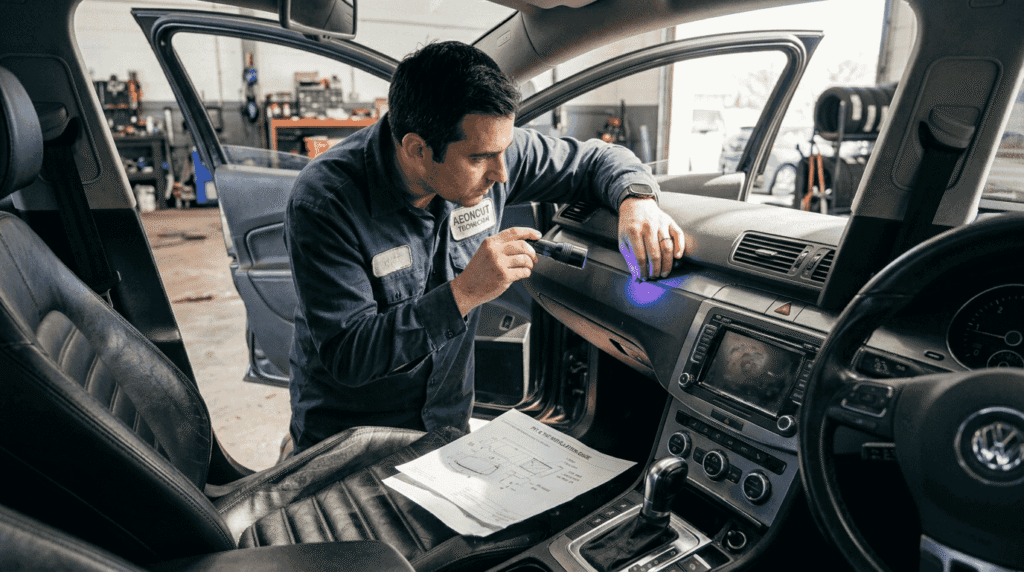
Most installers underestimate how rapidly UV radiation destroys automotive interiors, with unprotected materials losing up to 50% of their lifespan within just a few years of exposure. Professional detailers who master advanced UV protection technologies can transform this challenge into a premium service offering that delivers lasting value to clients whilst building a competitive edge in an increasingly quality-focused market. This guide explores the science behind UV damage, cutting-edge protection technologies, and practical application methods that enable installers to provide superior interior preservation services.
Table of Contents
- Understanding UV Radiation And Its Impact On Car Interiors
- Key UV Protection Technologies For Automotive Interiors
- Selecting And Applying UV Protection Products Effectively
- Comparing UV Protection Solutions: Effectiveness, Durability And Installer Considerations
- Enhance Your Service With Advanced Automotive Protection Solutions
- Frequently Asked Questions
Key takeaways
| Point | Details |
|---|---|
| UV damage mechanism | Ultraviolet radiation breaks chemical bonds in plastics, leather, and fabrics, causing fading, cracking, and brittleness that reduces material lifespan significantly. |
| Protection technology | Combining UV absorbers, HALS stabilisers, and ceramic coatings provides comprehensive defence against radiation-induced degradation. |
| Application precision | Surface-specific products applied correctly with proper preparation and regular maintenance maximise protection effectiveness and longevity. |
| Professional advantage | Installers offering advanced UV protection solutions address growing market demand whilst enhancing service value and customer satisfaction. |
Understanding UV radiation and its impact on car interiors
Ultraviolet radiation fundamentally alters the molecular structure of automotive interior materials through photochemical reactions that break down polymer chains and chromophores. When UV radiation causes degradation of plastics, leather, and fabrics, it initiates a cascade of chemical changes that manifest as visible fading, surface cracking, and material embrittlement. The severity of this damage depends on multiple environmental factors including geographic location, seasonal variation, and daily exposure patterns.
Different wavelengths within the UV spectrum attack materials in distinct ways. UVA rays penetrate deeply into leather and vinyl, degrading the underlying structure whilst UVB radiation primarily affects surface colouration and finish integrity. Dashboard plastics become sticky and deformed as UV energy breaks down plasticisers and stabilisers originally incorporated during manufacturing. Fabric upholstery loses tensile strength and colour vibrancy as dye molecules fragment under sustained radiation exposure.
Pro Tip: UV aging tests simulate years of sunlight exposure in controlled laboratory conditions, allowing manufacturers to predict material durability and develop targeted protection strategies before real-world degradation occurs.
The cumulative effect of UV damage creates serious economic and aesthetic consequences for vehicle owners. Cracked dashboards develop structural weaknesses that compromise safety systems integration. Faded leather seats lose resale value and visual appeal. Dried-out door panels become brittle and prone to breakage during routine use. Understanding these degradation mechanisms enables installers to communicate protection value effectively to clients whilst selecting appropriate solutions for each interior surface type, as detailed in comprehensive car interior protection guides.
Common signs of UV damage include:
- Colour fading across dashboard surfaces, seats, and door panels
- Crack formation in plastic trim pieces and vinyl surfaces
- Leather becoming dry, stiff, and prone to tearing
- Sticky residue developing on dashboard and console surfaces
- Fabric upholstery weakening and developing threadbare patches
Key UV protection technologies for automotive interiors
Modern UV protection relies on sophisticated chemical compounds that either absorb harmful radiation or neutralise the free radicals generated during photochemical degradation processes. UV absorbers such as benzotriazoles function as molecular filters that capture UV photons before they can damage underlying materials. These compounds convert UV energy into harmless heat through internal molecular rearrangement, effectively shielding sensitive polymers and dyes from radiation exposure.
Hindered Amine Light Stabilisers represent a complementary protection mechanism that addresses degradation through a different pathway. TINUVIN light stabilisers combine UV absorbers and HALS technology to create synergistic protection systems. HALS molecules like HALS 2020 trap free radicals generated when UV radiation breaks chemical bonds, interrupting the chain reaction that leads to polymer degradation. This dual-action approach provides superior long-term protection compared to single-mechanism solutions.
Ceramic coating technology adds a physical barrier layer that enhances UV resistance whilst providing additional benefits for interior surfaces. When interior ceramic coatings create UV-resistant layers, they form a dense, cross-linked network that reflects and absorbs radiation before it reaches vulnerable materials beneath. These coatings typically last one to three years depending on application quality, environmental conditions, and maintenance practices. Professional installers can leverage ceramic technology to deliver premium protection services that justify higher pricing through demonstrable longevity and performance.
| Protection Technology | Primary Mechanism | Typical Durability | Best Application |
| — | — | — |
| UV Absorbers | Filter harmful radiation | 6-12 months | Leather, vinyl surfaces |
| HALS Stabilisers | Neutralise free radicals | 12-24 months | Plastics, polymers |
| Ceramic Coatings | Physical barrier layer | 12-36 months | All interior surfaces |
| Combination Systems | Multi-mechanism defence | 24-48 months | Premium applications |
Pro Tip: Combining UV absorbers, HALS stabilisers, and ceramic coatings yields superior comprehensive protection that addresses both immediate radiation filtering and long-term degradation prevention through multiple defensive mechanisms.
The most effective protection strategies integrate multiple technologies to create layered defence systems. TINUVIN blends combine UVA and HALS components in optimised ratios that provide both immediate UV filtering and ongoing free radical scavenging. Installers who understand these synergies can recommend tailored solutions matching specific client needs, vehicle usage patterns, and budget constraints. Advanced auto interior protection products enable professionals to differentiate their services through technical expertise and measurable performance outcomes.
Key technology benefits:
- Benzotriazole UV absorbers prevent colour fading in dyed materials
- HALS stabilisers stop cracking and chalking in plastic components
- Ceramic coatings reduce surface wear and maintain material flexibility
- Integrated systems provide comprehensive protection across all degradation pathways
Selecting and applying UV protection products effectively
Successful UV protection requires matching product chemistry to specific interior materials whilst following precise application protocols that ensure optimal bonding and coverage. Professional installers must first identify the exact composition of surfaces being treated, as leather, vinyl, plastic, and fabric each demand different protectant formulations. Using incorrect products can actually accelerate degradation through incompatible chemical interactions or inadequate protection mechanisms.
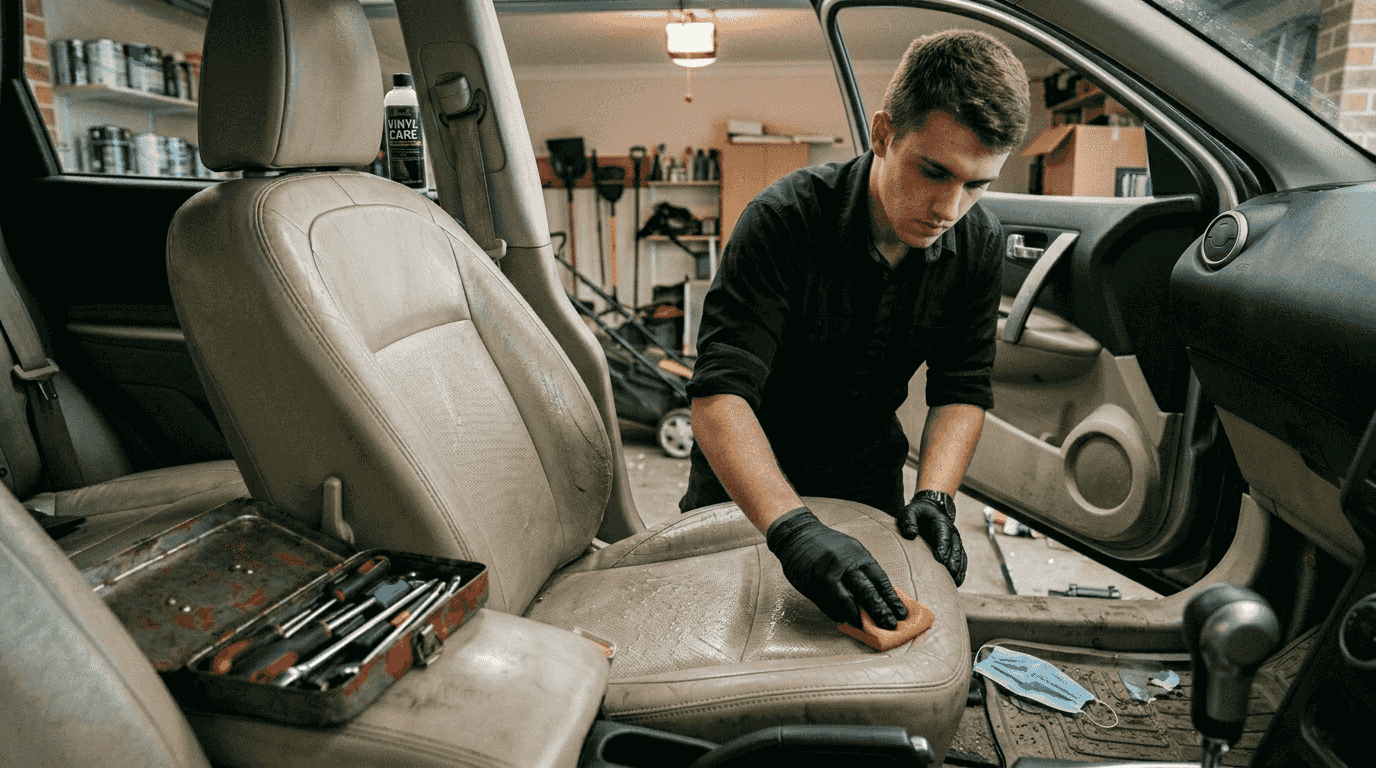
The application process begins with thorough surface preparation using mild, pH-neutral cleaners that remove contaminants without damaging existing finishes or compromising coating adhesion. Harsh chemicals strip away protective layers and create surface irregularities that reduce protectant effectiveness. Once surfaces are properly cleaned and dried, installers should apply products evenly using appropriate tools such as microfibre applicators for liquids or foam pads for creams and gels.
- Identify the interior material composition through visual inspection and manufacturer specifications
- Select UV protectants formulated specifically for leather, vinyl, plastic or fabric surfaces
- Clean all surfaces with mild, pH-neutral products designed for automotive interiors
- Apply protectant evenly using manufacturer-recommended tools and techniques
- Allow proper curing time before exposing treated surfaces to sunlight or use
- Schedule regular maintenance reapplications based on product specifications and environmental exposure
Pro Tip: Avoid harsh chemicals that degrade coatings and interior materials, as this compromises UV protection effectiveness. Use mild cleaners specifically designed for coated surfaces to maintain long-term protection integrity.
Maintenance schedules significantly impact protection longevity and effectiveness. Most liquid protectants require monthly reapplication to maintain optimal UV filtering, whilst ceramic coatings need refreshing every 12 to 36 months depending on formulation and exposure conditions. Installers should educate clients about proper care practices including regular cleaning with compatible products and avoiding abrasive tools that damage protective layers. Establishing maintenance programmes creates recurring revenue opportunities whilst ensuring clients receive maximum value from initial protection investments, as outlined in professional vehicle interior protection tips.
Application best practices include working in controlled temperature environments, applying thin even coats rather than thick uneven layers, and allowing adequate curing time before vehicle use. Understanding various protectant types and benefits enables installers to recommend optimal solutions for each client scenario whilst demonstrating technical expertise that builds trust and justifies premium pricing.
Comparing UV protection solutions: effectiveness, durability and installer considerations
Different UV protection approaches offer distinct advantages and limitations that installers must evaluate based on client needs, budget constraints, and vehicle usage patterns. Traditional UV protectants delivered as wipes, sprays, or liquid applications provide convenient, low-cost solutions requiring minimal technical skill or equipment investment. These products typically contain UV absorbers and conditioners that temporarily shield surfaces whilst restoring moisture and flexibility to dried materials. However, their protection duration rarely exceeds four to eight weeks, necessitating frequent reapplication to maintain effectiveness.
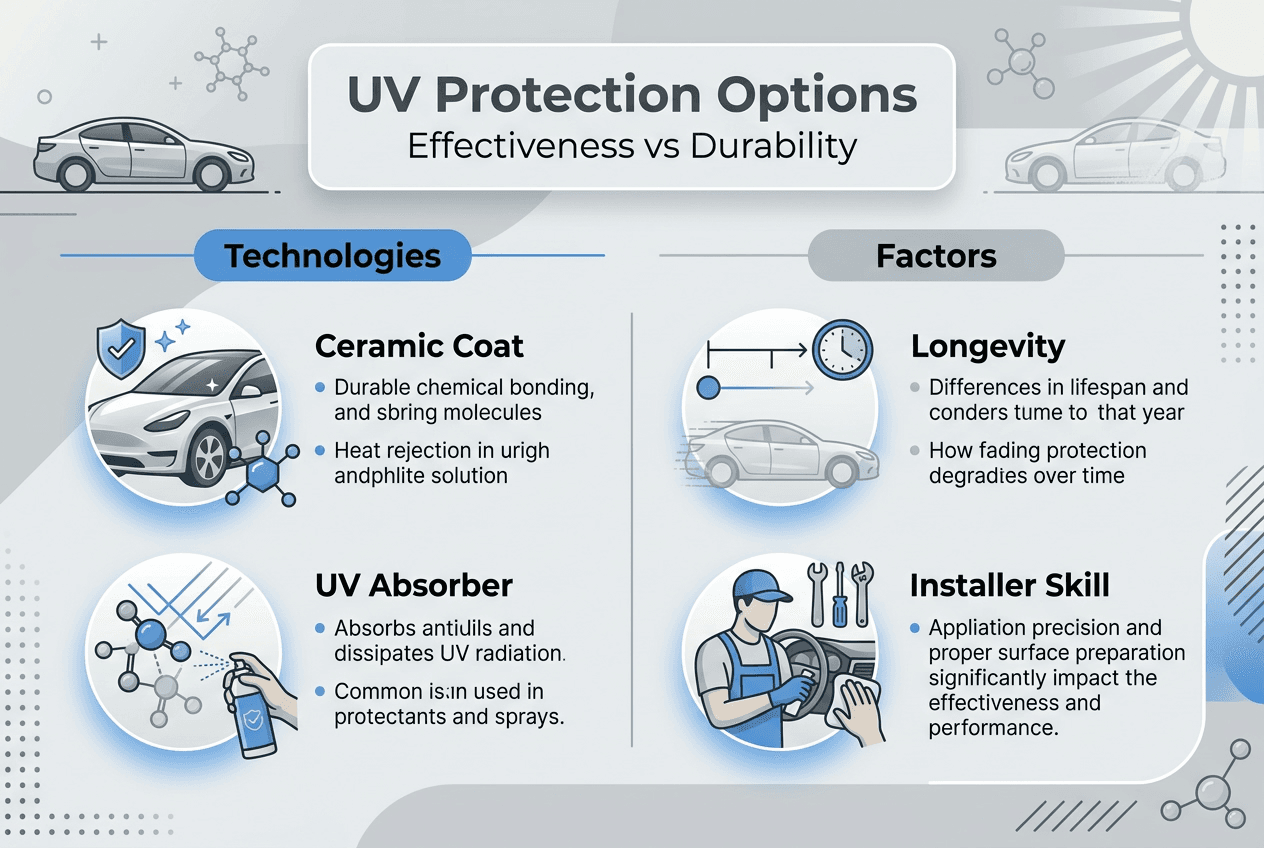
Ceramic coating systems represent the premium protection category, offering durability lasting 12 to 36 months with proper application and maintenance. These solutions require greater installer expertise, specialised application tools, and controlled environmental conditions to achieve optimal results. The higher labour and product costs translate into premium pricing that appeals to discerning clients seeking long-term value and superior protection performance. Professional installers can differentiate their services by mastering ceramic application techniques and educating clients about the substantial longevity advantages.
| Solution Type | Effectiveness | Durability | Application Complexity | Cost Structure |
|---|---|---|---|---|
| UV Protectant Sprays | Moderate | 4-8 weeks | Low | Low product, low labour |
| Conditioning Creams | Moderate to High | 8-12 weeks | Low to Moderate | Moderate product, low labour |
| Ceramic Coatings | High | 12-36 months | High | High product, high labour |
| Integrated Systems | Very High | 24-48 months | Very High | Premium product, premium labour |
UV stabilisers integrated into materials during manufacturing provide inherent protection that installers cannot modify or enhance post-production. Whilst these built-in defences offer baseline protection, they degrade over time and rarely match the performance of professionally applied aftermarket solutions. Installers should recognise these factory protections when assessing vehicle condition and recommending supplementary treatments.
Combination approaches yield optimal results by layering multiple protection mechanisms for comprehensive defence against UV degradation. Applying UV absorbing conditioners beneath ceramic top coats creates synergistic protection that addresses both immediate radiation filtering and long-term surface preservation. This strategy particularly suits high-value vehicles or clients in extreme sun exposure environments where maximum protection justifies premium investment.
Key selection factors:
- Installer skill level and available training resources
- Client budget and value perception
- Vehicle usage patterns and sun exposure intensity
- Desired maintenance frequency and convenience
- Material-specific compatibility and performance requirements
Professionals exploring best interior car protection options should evaluate total cost of ownership including initial application, ongoing maintenance, and expected protection lifespan. Educating clients about these factors builds trust whilst positioning installers as technical advisors rather than mere service providers. Comprehensive new car interior protection programmes combining multiple technologies create compelling value propositions that justify premium pricing through demonstrable performance advantages.
Enhance your service with advanced automotive protection solutions
Professional installers seeking to elevate their UV protection offerings can leverage cutting-edge tools and products that streamline application whilst delivering superior results. AEONCUT provides advanced cutting software specifically designed for automotive paint protection film and window tint applications, enabling precise pre-cut patterns that minimise material waste and installation time.
Our comprehensive pattern libraries and AI-driven auto-nesting capabilities help installers deliver consistent, high-quality protection solutions that exceed client expectations. Explore how automotive paint protection film technologies integrate with interior UV protection strategies to create complete vehicle preservation programmes. Discover the precision and value of professional-grade protective films and advanced car interior protection coatings that position your business as an industry leader in comprehensive automotive care.
Frequently asked questions
What causes UV damage in car interiors?
UV radiation breaks down chemical bonds in plastics, leather, and fabrics through photochemical reactions that cause fading, cracking, and brittleness. The combined effect of UV rays, infrared heat, and visible light accelerates interior wear by degrading polymer structures and colour pigments simultaneously.
How does HALS technology protect car interior materials?
HALS compounds trap free radicals generated when UV radiation breaks chemical bonds, stopping the chain reaction that leads to polymer degradation. They prevent cracking, chalking, and discolouration whilst extending the lifespan of coatings and underlying materials through continuous free radical scavenging.
What is the typical lifespan of interior ceramic coatings?
High-quality interior ceramic coatings last one to three years depending on application quality, environmental exposure, and maintenance practices. Proper surface preparation, correct application technique, and regular cleaning with compatible products optimise coating longevity and protection effectiveness.
What application practices maximise UV protection effectiveness?
Clean surfaces thoroughly with mild, pH-neutral cleaners before applying UV protectants to ensure proper bonding and coverage. Apply products evenly using appropriate tools, allow adequate curing time, and schedule regular reapplications based on product specifications. Avoid harsh chemicals that damage protective layers and compromise underlying materials.
Can UV protection be applied to all interior materials?
Most automotive interior materials accept UV protection treatments when matched with appropriate product formulations. Leather, vinyl, plastic, and fabric each require specific protectant chemistries designed for their unique composition and porosity characteristics to ensure compatibility and optimal performance.
Recommended
- UV Window Tint: Precision Solutions for Installers – AEONCUT PPF Pre-cut Cutting software
- 7 Top Auto Interior Protection Products for Installers – AEONCUT PPF Pre-cut Cutting software
- Complete Guide to Protection for Car Interior – AEONCUT PPF Pre-cut Cutting software
- Vehicle Interior Protection Tips for Professional Results – AEONCUT PPF Pre-cut Cutting software
- Upholstery Fabrics and Cleaning Guide 2025 for Yarra Valley – Yarra Valley Carpet Cleaning