
Finding efficient ways to keep car interiors scratch free is a daily demand for installers working across the United Kingdom, Australia, and Europe. Scratches from keys, bags, and regular use can quickly ruin the appearance of even high-end vehicles, making effective solutions for interior protection critical to your work. Combining protective films and coatings with advanced cutting software gives you a professional edge, reducing waste and ensuring that every client’s vehicle leaves the workshop looking immaculate.
Table of Contents
- What Is Car Interior Scratch Protection?
- Types of Interior Scratch Protection Methods
- Using Pre-Cut Film Patterns for Interiors
- Professional Application: Common Mistakes to Avoid
- Maximising Material Efficiency with Cutting Software
Key Takeaways
| Point | Details |
|---|---|
| Importance of Interior Scratch Protection | Applying protective films and coatings preserves vehicle aesthetics, enhances resale value, and maintains material integrity. |
| Professional Installation Benefits | Accurate application techniques and pre-cut patterns reduce material waste and improve efficiency, leading to consistent results and customer satisfaction. |
| Types of Protection Techniques | Protective films offer targeted defence for high-contact areas, while ceramic coatings provide seamless coverage across larger panels, each with unique benefits. |
| Environmental and Preparation Considerations | Proper surface preparation and controlled environmental conditions are crucial for effective application and longevity of protective measures. |
What Is Car Interior Scratch Protection?
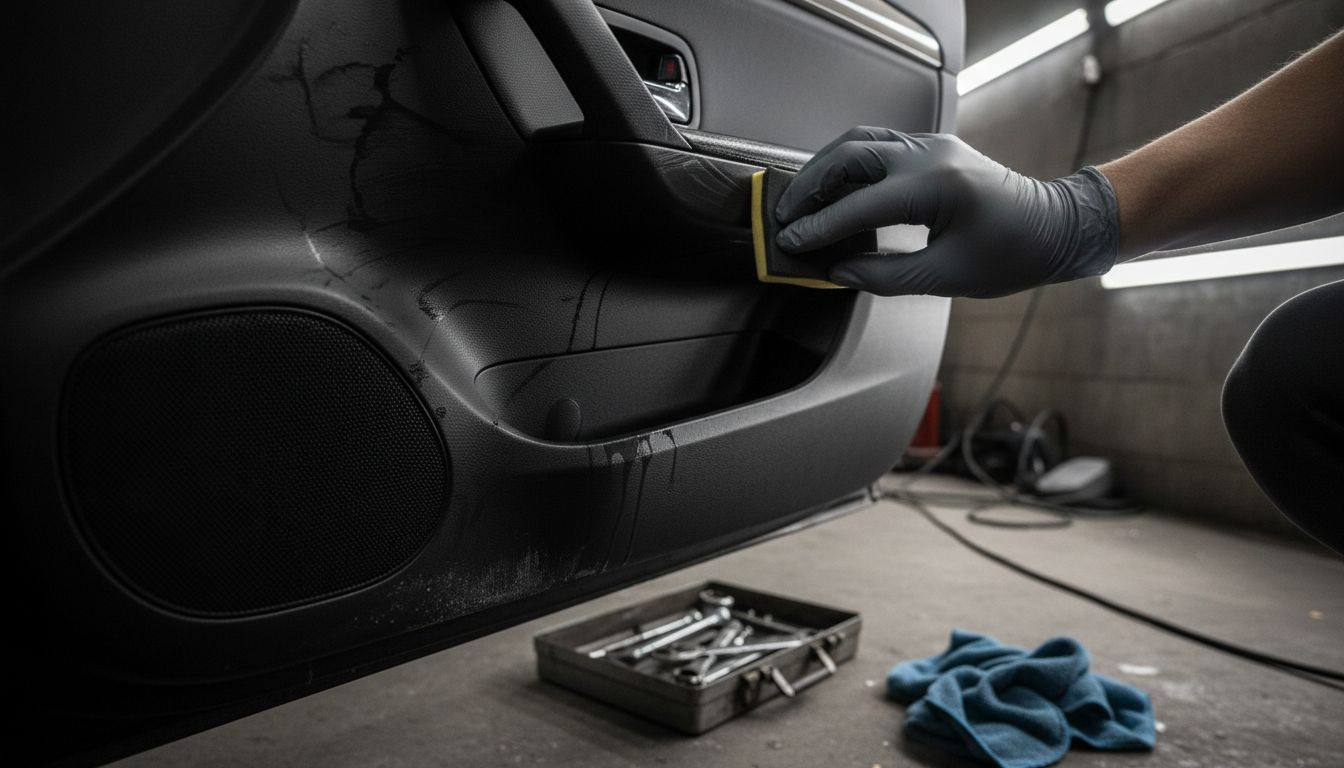
Car interior scratch protection involves applying protective films and coatings designed to defend vehicle interiors from daily wear, abrasion, and damage. These solutions act as transparent barriers between your car’s surfaces and the objects that cause scratches—keys, bags, phone cases, and passenger movement.
Think of it like applying armour to your dashboard, door panels, and centre console. Without protection, these high-touch areas accumulate visible scratches within months of ownership, reducing resale value and aesthetic appeal.
How Interior Protection Works
Protective films function as physical shields against abrasion and impact. Advanced coatings with ceramic formulations provide enhanced hardness and scratch resistance whilst maintaining the original surface appearance. These layers protect softer interior plastics and materials from damage caused by daily use and UV exposure.
The best solutions combine multiple protective mechanisms:
- Physical barrier protection against direct contact damage
- Hydrophobic properties that repel liquids and oils
- UV protection against fading and degradation
- Reduced friction to minimise abrasion over time
- Long-term durability without requiring frequent reapplication
Why Professionals Specify Interior Protection
Professional installers understand that car interior protection directly impacts customer satisfaction and vehicle longevity. Interior scratches appear immediately—they’re impossible to ignore and difficult to repair without professional intervention.
Owners invest in this protection because it preserves:
- Resale value (protected interiors command higher prices)
- Warranty compliance (many manufacturers require protective measures)
- Aesthetic appeal (scratches disappear, replaced with pristine surfaces)
- Material integrity (prevents deeper damage and material degradation)
For professionals, precision application is essential. Using cutting software to ensure exact pre-cut patterns for your specific vehicle model eliminates material waste and guarantees seamless coverage.
The Difference Between Films and Coatings
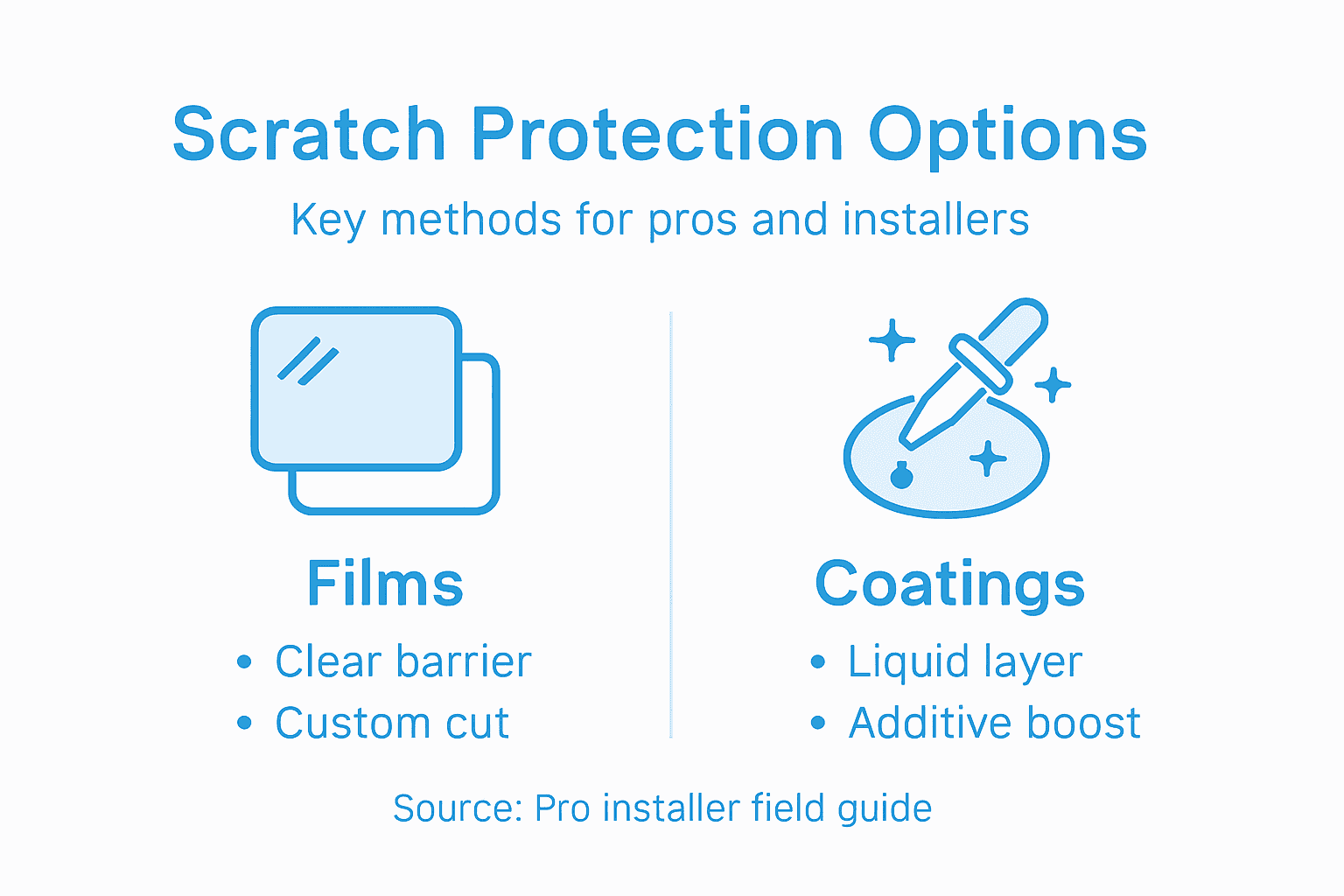
Protective films offer maximum defense but require precise installation. They’re typically transparent, self-adhesive, and provide immediate, visible protection. These work brilliantly for high-impact areas like door handles, steering wheel surrounds, and gear shifters.
Protective coatings work differently. They bond chemically to surfaces, reducing friction and preventing soiling without changing gloss. Ceramic and hybrid formulations offer enhanced durability, making them ideal for broader interior coverage.
Both approaches complement regular cleaning and maintenance routines to keep interiors in pristine condition.
Interior protection isn’t optional for professionals seeking to differentiate their work—it’s a service that transforms customer ownership experiences and protects your reputation.
Pro tip: Map high-risk areas on each vehicle model you work with, then prepare standardised cutting patterns using AEONCUT to streamline your application process and reduce installation time by up to 40 per cent.
Types of Interior Scratch Protection Methods
Professional installers work with several distinct protection approaches, each offering different levels of defence and application complexity. Understanding these methods helps you recommend the right solution for each customer’s priorities and budget.
Protective Films
Clear protective films are the gold standard for targeted interior protection. These transparent, self-adhesive layers shield high-impact areas from scratches whilst remaining virtually invisible once applied. Films excel on steering wheels, door handles, centre consoles, and gear shifters—exactly where customers experience the most wear.
Key advantages of film protection:
- Provides maximum scratch resistance on vulnerable surfaces
- Self-adhesive application without additional bonding
- Easily removable without residue or damage
- Precision cutting eliminates material waste
- Maintains factory appearance when properly installed
Films work brilliantly because they create a physical barrier between surfaces and abrasive contact. Precision cutting software ensures every application fits perfectly without gaps or overlaps.
Ceramic and Hybrid Coatings
Ceramic coatings bond chemically to interior surfaces, creating durable protective layers. Anti-scratch coatings containing materials like siloxane and titanium dioxide enhance surface hardness whilst remaining clear and maintaining original gloss. Hybrid formulations combine ceramic strength with flexibility, adapting to textured plastics and vinyl materials.
Coatings offer distinct benefits:
- Seamless protection across entire interior panels
- Enhanced resistance to UV fading and discolouration
- Hydrophobic properties that repel oils and liquids
- No visible seams or application lines
- Long-term durability when properly maintained
These coatings work best on softer interior plastics where traditional hard finishes would look unnatural.
Specialist Additive Solutions
Scratch protection additives like waxes, polytetrafluoroethylene (PTFE), and aluminium oxide enhance coating durability and slip properties. These materials increase surface hardness or reduce friction, preventing scratches before they form.
The comparison matters for your workflow:
| Method | Application Time | Durability | Coverage | Best For |
|---|---|---|---|---|
| Films | 2-4 hours | 5-7 years | Targeted areas | High-touch zones |
| Ceramic coatings | 4-6 hours | 3-5 years | Full panels | Broad protection |
| Additives | Built-in | 2-3 years | Variable | Custom formulations |
Here’s a quick reference comparing when to choose each type of interior protection method:
| Protection Type | Ideal Use Case | Installation Skill Needed |
|---|---|---|
| Protective Films | Frequent contact zones | Advanced, precise fitting |
| Ceramic Coatings | Large panel coverage | Moderate, even application |
| Additive Solutions | Enhancing coatings | Basic, regular integration |
Professional installers combine methods strategically—films for handles and controls, coatings for dashboard and door panels—creating comprehensive protection that withstands years of daily use.
Pro tip: Pre-cut film patterns using AEONCUT for each vehicle model you service regularly, storing them in labelled batches to dramatically reduce installation time and eliminate pattern mistakes on repeat jobs.
Using Pre-Cut Film Patterns for Interiors
Pre-cut film patterns transform interior protection from a time-consuming custom process into a streamlined, repeatable workflow. Rather than measuring and cutting patterns on site for every vehicle, you apply patterns already optimised for specific makes and models.
Why Pre-Cut Patterns Matter for Professionals
Custom cutting on-site wastes time and materials. Pre-cut patterns eliminate both problems simultaneously. You receive precisely dimensioned film sections ready for immediate application, reducing installation time by 30-50 per cent depending on coverage area.
Benefits for your operation:
- Dramatically reduced labour time per vehicle
- Minimal material waste from precise cutting
- Consistent results across every installation
- Faster client turnaround and increased throughput
- Reduced training time for new installers
When patterns are pre-cut using professional cutting software, every section aligns perfectly with vehicle contours. No gaps. No overlaps. No field adjustments needed.
Pattern Coverage Strategies
Not every interior requires full coverage. Strategic pattern placement protects high-wear areas whilst maintaining aesthetic consistency. Most professionals focus on:
- Steering wheel rim and spokes
- Door handle surrounds and inserts
- Centre console trim and controls
- Gear shifter surround
- Dashboard edges and trim strips
- Armrest contact points
This targeted approach covers 80 per cent of visible scratches whilst keeping application times manageable. Dashboard films require additional precision since even slight misalignment becomes visible during normal use.
Storage and Inventory Management
Organised film storage keeps patterns accessible and prevents damage. Most professional installers maintain a labelled system by vehicle model, sorted by year and generation. Store patterns flat in protective sleeves to prevent curling and adhesive degradation.
Key storage practices:
- Label patterns with vehicle model, year, and application area
- Store horizontally in protective envelopes
- Keep temperature stable between 15°C and 25°C
- Maintain dry conditions to prevent adhesive issues
- Organise by frequency of use for quick access
This system eliminates searching through unlabelled stock and reduces ordering errors during busy installation periods.
Application Workflow Integration
Pre-cut patterns fit naturally into your existing installation sequence. Surface preparation remains identical—clean, dry, and contamination-free. The difference appears immediately during application, where you simply position the film section instead of measuring, cutting, and adjusting.
Pre-cut patterns aren’t just time savers—they’re quality assurance built into your workflow, guaranteeing consistent results that justify premium pricing and customer confidence.
Pro tip: Create a physical or digital reference book photographing each pattern placement on representative vehicles, allowing new installers to match positioning perfectly without guidance or trial-and-error adjustments.
Professional Application: Common Mistakes to Avoid
Interior protection failures rarely stem from poor product choice. They happen during installation—when professionals rush, skip steps, or ignore environmental conditions. Understanding these pitfalls protects your reputation and ensures clients experience lasting results.
Surface Preparation Errors
Dirty surfaces are the fastest path to protection failure. Applying coatings on contaminated surfaces reduces effectiveness and creates adhesion problems that become visible within weeks. Dust, oils, and residue prevent films from bonding properly and coatings from curing correctly.
Proper preparation requires:
- Complete vacuum cleaning of all target areas
- Microfibre cloth wipe-down to remove invisible oils
- Isopropyl alcohol cleansing on slick surfaces
- Minimum 15-minute air drying before application
- Final dust inspection under bright lighting
Skip this step once, and you’ll spend twice as long removing failed applications later. It costs nothing but time and saves everything else.
Environmental Control Failures
Temperature and humidity dramatically affect curing and adhesion. Applying films or coatings under direct sunlight, in cold conditions, or with high humidity causes finish defects that become permanent. Most professionals know this intellectually but ignore it when schedules tighten.
Environmental standards:
- Maintain workshop temperature between 18°C and 25°C
- Keep humidity below 60 per cent relative humidity
- Avoid direct sunlight on application areas
- Allow proper curing time before vehicle use
- Never rush jobs due to time pressure
Patient work in controlled conditions beats rushed work in adverse conditions every single time.
Application Technique Problems
Careless handling causes the very scratches you’re trying to prevent. Improper use of heat guns and delicate handling during installation directly damage interior components you’re protecting. Rushing application leads to wrinkles, bubbles, and misalignment.
Avoid these application mistakes:
- Using excessive heat that damages plastic or vinyl
- Forcing film sections into place instead of guiding them
- Skipping protective coverings on adjacent surfaces
- Working too quickly to maintain precision
- Neglecting to remove dust between sections
Application speed matters less than application quality—a perfectionist installer builds reputation; a rushed installer builds regret.
Taking 30 extra minutes creates seamless results; saving 30 minutes creates callbacks and reputation damage.
Product Selection Errors
Wrong products for wrong materials fail immediately. Using film designed for paint protection on delicate leather, or ceramic coatings incompatible with vinyl, causes damage or ineffective protection. Read material specifications before every job.
Pro tip: Create a pre-application checklist documenting surface preparation steps, environmental conditions, and product specifications for each interior protection job, signing off before beginning any application work.
Maximising Material Efficiency with Cutting Software
Material waste directly impacts profitability. Hand-cutting interior protection patterns wastes 15-25 per cent of every film roll through measurement errors, overlaps, and repositioning. Professional cutting software eliminates this waste by optimising layouts before a single cut happens.
The Problem with Manual Cutting
Cutting film on-site creates multiple efficiency problems simultaneously. Installers measure repeatedly, cut conservatively to avoid mistakes, and often discard sections due to positioning errors. These practices consume far more material than necessary whilst still producing inconsistent results.
Manual cutting costs include:
- Wasted film from conservative cutting margins
- Time spent measuring and re-measuring patterns
- Labour time solving fit problems on installation
- Discarded sections that don’t align properly
- Inconsistent coverage across the same vehicle model
These costs compound across dozens of vehicles annually, turning profitable jobs into marginal ones.
How Cutting Software Maximises Efficiency
Cutting software optimises material usage through extensive vehicle databases that enable precise pattern creation for specific models. Rather than guessing measurements, software calculates exact dimensions and nests multiple patterns onto single film sheets, dramatically reducing waste.
Key efficiency benefits:
- Automatic pattern nesting to fit maximum pieces per roll
- Pre-calculated measurements eliminating field adjustment
- Precise templates preventing installation errors
- Reduced labour time through streamlined application
- Consistent results across identical vehicle models
The difference appears immediately. Software-generated patterns waste 2-5 per cent of material; manual patterns waste 20-25 per cent. On large installations, this difference becomes revenue.
See how cutting software boosts operational efficiency in professional workshops:
| Metric Improved | Manual Workflow | Software-Driven Workflow |
|---|---|---|
| Material Waste | 20-25% wasted film | 2-5% wasted film |
| Installation Time | Slow, variable | Fast, consistent |
| Repeatability | Inconsistent patterns | Precisely repeatable |
| Stock Management | Manual sorting required | Auto-labelled, searchable |
Automation and Workflow Integration
Cloud-based cutting software integrates seamlessly with your existing workflow. Upload vehicle specifications, select protection areas, and receive optimised cutting patterns within minutes. Regular updates maintain compatibility with new vehicle models without manual recalculation.
Automation transforms your process:
- Select vehicle model and year in the software
- Specify protection areas (steering wheel, doors, console)
- Software calculates optimal nesting arrangement
- Export patterns to cutting equipment or manual application
- Archive patterns for future repeat jobs
This systematisation turns every installation into a repeatable, efficient process.
Real-World Efficiency Gains
Professionals using cutting software report significant time and material savings. AI-powered auto-nesting features consistently reduce waste by 30-40 per cent compared to manual methods. On an average installation consuming 3-4 metres of film, this translates to recovering approximately 1 metre per job.
Over 50 installations annually, that’s 50 metres of reclaimed material—or roughly 12-15 additional complete jobs worth of stock. The software investment pays for itself within months.
Cutting software isn’t an optional upgrade—it’s a competitive requirement that turns material waste into material savings and converts labour time into client satisfaction.
Pro tip: Batch similar vehicle models together before software optimisation to maximise nesting efficiency, then store generated patterns by model and year for instant reuse on repeat customers.
Elevate Your Car Interior Scratch Protection with Precision Cutting
Protecting high-wear car interior areas demands precise, efficient solutions that save time and reduce material waste. As the article highlights, applying pre-cut film patterns and professional coatings calls for accuracy and consistency to maintain flawless surfaces over time. With AEONCUT’s advanced Paint Protection Film – AEONCUT PPF Pre-cut Cutting software, installers gain access to expertly crafted, vehicle-specific patterns that eliminate measuring errors and optimise material usage.
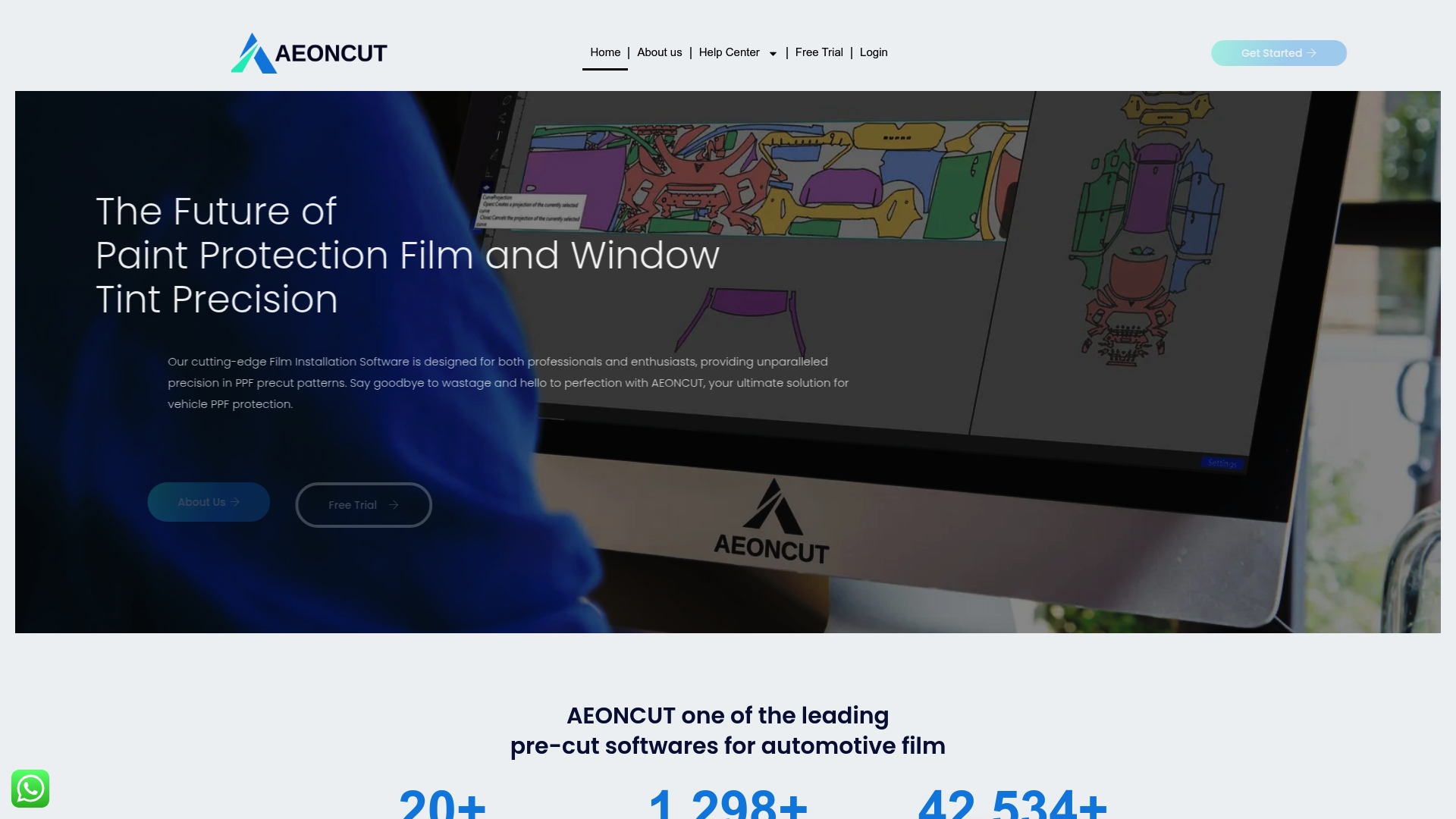
Enhance your interior scratch protection services by integrating AEONCUT’s cloud-based platform into your workflow. Experience rapid pattern generation, AI-driven auto-nesting for maximal film efficiency, and reliable repeatability across every job. Don’t let manual cutting slow you down or risk customer dissatisfaction. Visit AEONCUT today to discover how you can reduce installation time by up to 40 per cent while delivering professional-grade protection that your clients trust. Begin transforming your business with exact patterns and seamless applications now.
Frequently Asked Questions
What is car interior scratch protection?
Car interior scratch protection involves applying protective films and coatings that defend vehicle interiors from wear, abrasion, and damage. These serve as transparent barriers against scratches from everyday items like keys and bags.
How do protective films differ from ceramic coatings?
Protective films are self-adhesive, transparent layers offering maximum defence and requiring precise installation, ideal for high-impact areas. Ceramic coatings chemically bond to surfaces, providing a durable layer that’s less visible, excellent for broader areas.
What are the benefits of using pre-cut film patterns?
Pre-cut film patterns streamline the application process by eliminating on-site measurements and cuts, dramatically reducing installation time and material waste while ensuring consistent results across installations.
What common mistakes should be avoided during the application of interior protection?
Common mistakes include inadequate surface preparation, disregarding environmental conditions, and careless application techniques. Proper preparation and care during installation are crucial for ensuring the longevity and effectiveness of the protective products.
Recommended
- Protectant for Car Interior: Enhancing Long-Term Value – AEONCUT PPF Pre-cut Cutting software
- Vehicle Interior Protection Tips for Professional Results – AEONCUT PPF Pre-cut Cutting software
- Car Interior Protection Coating: Enhancing Longevity and Value – AEONCUT PPF Pre-cut Cutting software
- Car Interior Leather Protection for Professionals – AEONCUT PPF Pre-cut Cutting software