
Navigating car window tint laws across the United States can feel like solving a puzzle with 50 different pieces. Each state sets its own rules on tint darkness and placement, making compliance challenging for professional installers. This comprehensive guide cuts through the complexity, arming you with the legal knowledge needed to serve customers confidently whilst avoiding costly penalties. You’ll learn the standards that define legal tints, how enforcement works, and practical tools to stay compliant in 2026.
Table of Contents
- Introduction To Car Window Tint Laws In The US
- Understanding US Window Tint Law Basics
- State Variations In Window Tint Restrictions
- How Tint Compliance Is Measured And Enforced
- Common Exemptions And Special Conditions
- Common Misconceptions About Tint Laws
- Legal Consequences And Penalties
- Technology Tools To Ensure Legal Compliance
- Staying Informed: Updates And Resources
- Maximise Your Tint Installations With Aeoncut Software
- Frequently Asked Questions
Key takeaways
| Point | Details |
|---|---|
| VLT standards define legality | Visible Light Transmission percentages determine how much light passes through tinted windows, with lower percentages indicating darker tints that may breach legal limits. |
| State laws vary dramatically | Front side window VLT requirements range from 35% to 70% across states, with different rules for rear and side windows based on vehicle type. |
| Enforcement uses calibrated tools | Officers typically employ portable tint metres meeting SAE J1757 standards to measure compliance accurately during traffic stops or inspections. |
| Medical exemptions require documentation | Certified health conditions allow darker tints in some states, but installers must verify official paperwork to avoid liability. |
| Non-compliance carries serious risks | Fines range from $50 to $500 depending on jurisdiction, with additional penalties including inspection failures and potential business reputation damage. |
Introduction to car window tint laws in the US
Window tint regulations exist primarily for safety and visibility. Law enforcement officers need to see inside vehicles during traffic stops, and drivers require clear sightlines for safe operation. These concerns prompted federal oversight and diverse state-level rules that professional installers must navigate daily.
Visible Light Transmission, or VLT, forms the backbone of tint law. This measurement quantifies the percentage of visible light passing through a window and its film. A 70% VLT allows substantial light through, appearing lighter, whilst a 20% VLT blocks most light, creating a much darker appearance. Understanding VLT helps you communicate legal limits to customers precisely.
Federal guidelines provide baseline standards, but states hold primary authority over specific VLT limits. This state-level control creates the patchwork of regulations installers face. Some states permit darker tints on rear windows whilst restricting front side windows heavily. Others apply uniform standards across all windows. This variation demands that you stay informed about every jurisdiction where you operate.
Key regulatory factors include:
- VLT percentage thresholds for front side, rear side, and rear windows
- Different standards for passenger cars versus commercial vehicles
- Reflection limits on metallic or mirrored tints
- Colour restrictions to prevent unsafe hues like red or amber
- Requirements for dual side mirrors when rear windows are heavily tinted
Understanding US window tint law basics
VLT percentage serves as the universal legal standard for measuring tint darkness. When a state law specifies “35% VLT minimum,” it means the combined light transmission of the window and film must allow at least 35% of visible light through. Installing a film that drops below this threshold violates the law, regardless of the customer’s preferences or aesthetic goals.
Window position dramatically affects legal limits. Front side windows, which flank the driver and front passenger, typically face the strictest VLT requirements. Many states mandate 50% to 70% VLT for these windows to ensure officer visibility and driver awareness. Rear side windows and rear windscreens often permit darker tints, sometimes with no VLT minimum at all in certain jurisdictions.
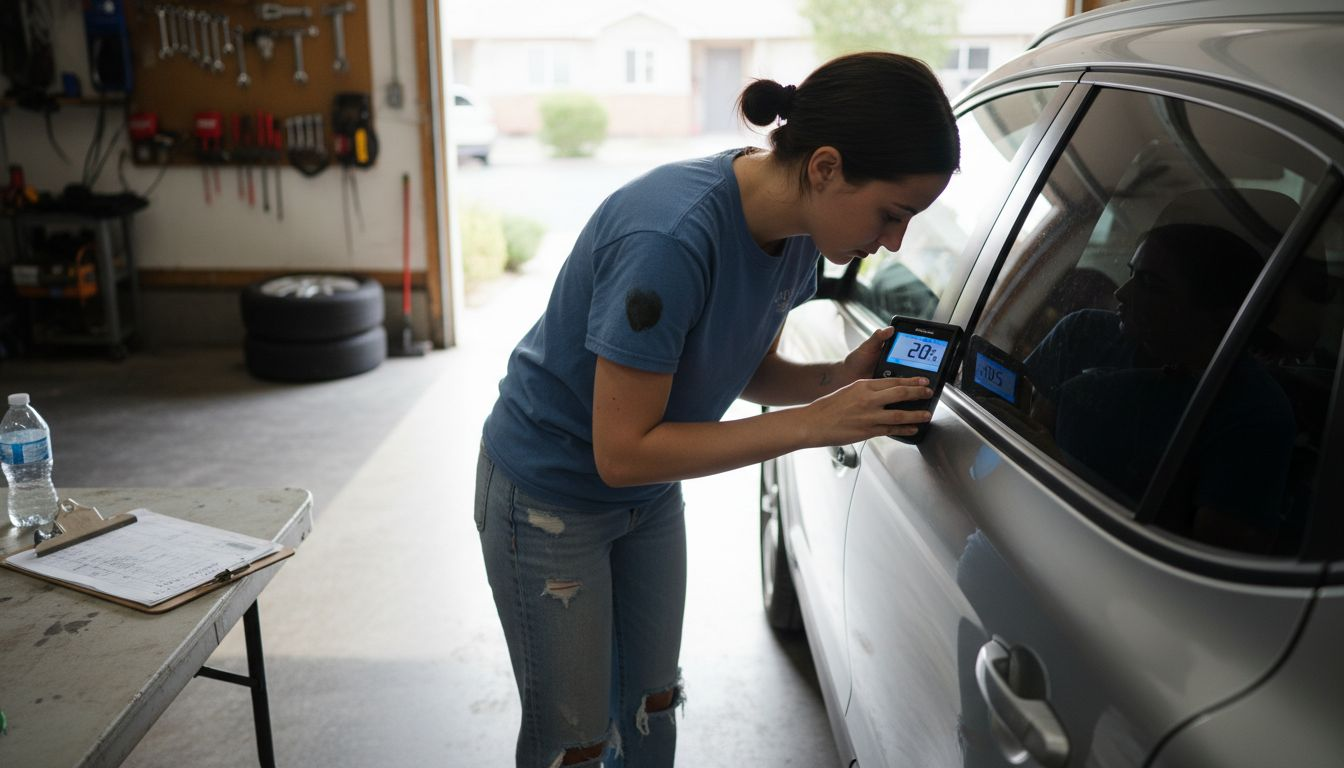
Factory tint adds complexity to compliance calculations. Many vehicles leave manufacturing facilities with slightly tinted glass, often around 70% to 80% VLT. When you apply aftermarket film, you must account for this existing tint. A 50% VLT film on 80% VLT factory glass results in approximately 40% VLT overall, potentially breaching laws requiring 50% minimum. Reading tint percentages accurately prevents these miscalculations.
Common legal elements across states include:
- Windscreen tint strips limited to the top few inches above the AS-1 line
- Prohibitions on reflective or mirrored films exceeding certain thresholds
- Mandatory certifications or stickers identifying film specifications
- Side mirror requirements when rear visibility is reduced by dark tints
State variations in window tint restrictions
Tint law diversity across America creates operational challenges for installers serving customers in multiple states. California permits 70% VLT on front side windows but allows any darkness on rear windows for passenger cars. Meanwhile, Vermont requires 50% VLT on all side windows with no distinction between front and rear. These differences mean a legal installation in one state may be illegal just across the border.
Vehicle classification introduces another layer of complexity. Commercial vehicles, including vans and trucks used for business purposes, often receive more permissive tint allowances than passenger cars. Some states allow limousines and other specialty vehicles to have virtually unlimited rear tint darkness. You must verify whether your customer’s vehicle qualifies for these exceptions before installation.
| State Example | Front Side VLT | Rear Side VLT | Rear Window VLT |
|---|---|---|---|
| California | 70% | Any | Any |
| Texas | 25% | Any | Any |
| New York | 70% | 70% | Any |
| Vermont | 50% | 50% | 50% |
| Florida | 28% | 15% | 15% |
Multi-state operators face the toughest compliance burden. If you install tints in border regions or serve customers who travel frequently, you should recommend specifications meeting the strictest jurisdictions they’ll encounter. This conservative approach protects your customers from citations and shields your business from liability claims. Resources detailing state-specific tint limits and highlighting the importance of adherence help you maintain compliant practices.
Pro Tip: Keep a laminated reference card in your workspace listing VLT requirements for states where 80% of your customers reside. Quick access prevents costly mistakes during busy installation schedules.
How tint compliance is measured and enforced
Law enforcement officers rely on specialised equipment to verify tint legality during traffic stops and inspections. Portable tint metres using SAE J1757 standard are common enforcement tools, providing objective VLT measurements in seconds. These devices shine light through the window and film, calculating the percentage transmitted to determine compliance.
Visual inspection remains the initial enforcement step in most jurisdictions. Officers trained to recognise obviously illegal tints may issue citations based on appearance alone, though metre confirmation typically follows. If an officer suspects non-compliance, they’ll request permission to measure or may mandate testing at an inspection station. Refusing measurement often results in automatic citations and increased penalties.
Measurement procedures vary slightly by location, but most follow consistent principles. The officer positions the metre against the exterior glass surface with the sensor on the interior side. Multiple readings at different window locations ensure accuracy, and the lowest VLT reading determines compliance status. Factory tint and aftermarket film are measured together, so combined transmission matters most.
Enforcement considerations include:
- Random roadside inspections during routine traffic stops
- Scheduled vehicle safety inspections in states requiring periodic checks
- Targeted enforcement campaigns in areas with high violation rates
- Metre calibration verification to ensure measurement accuracy
Installers who invest in precision compliance tools can pre-verify installations before customers leave. This self-checking prevents customer citations and builds trust in your professionalism.
Pro Tip: Offer free tint measurements as a value-added service during consultations. Demonstrating compliance reassures customers and differentiates your business from less thorough competitors.
Common exemptions and special conditions
Medical conditions provide legitimate grounds for darker tints in many states, but strict documentation requirements apply. Medical exemptions require certified health conditions and official documentation such as letters from licenced physicians specifying photosensitivity disorders, lupus, or other light-sensitive conditions. The exemption typically permits VLT levels below standard limits on specific windows for a defined period.
State-specific exemption processes vary considerably. Some require drivers to carry exemption certificates alongside licences, whilst others mandate special window stickers or registration notations. A few states offer no medical exemptions at all, forcing affected residents to comply with standard limits regardless of health needs. You must research your jurisdiction’s exact requirements before accepting exemption claims.
Verifying exemption authenticity protects your business from liability. Request official documentation showing the issuing physician’s credentials, the specific condition, and the exemption’s expiry date. Photocopy these documents for your records before proceeding with installation. If a customer later receives a citation due to fraudulent paperwork, your due diligence demonstrates reasonable professional conduct.
Other exemption categories include:
- Law enforcement and government vehicles with operational security needs
- Armoured vehicles requiring enhanced protection from threats
- Commercial transport vehicles carrying sensitive or valuable cargo
- Classic or antique vehicles with grandfathered tint installations
Detailed information about medical exemption details clarifies which conditions typically qualify and the application processes involved. Staying current on these nuances positions you as a knowledgeable resource for customers exploring their options.
Common misconceptions about tint laws
Many customers believe tint darkness laws relax after sunset, assuming reduced visibility at night justifies darker films. This misconception is completely false. Tint regulations apply uniformly 24 hours daily regardless of lighting conditions. Officers enforce VLT limits just as strictly during night-time traffic stops, and darkness actually increases the safety concerns that prompted tint laws originally.
Commercial vehicle exemptions confuse installers and customers alike. Whilst some states do permit darker tints on commercial vehicles, these allowances are specific, not universal. A plumber’s van may not qualify for the same exemptions as a limousine or shuttle service. Assuming commercial status grants automatic tint freedom leads to violations and penalties. Always verify your jurisdiction’s exact commercial vehicle definitions and corresponding VLT requirements.
Visual inspections carry full legal weight despite customer beliefs that only metre readings matter. Officers can issue citations based on trained observation, particularly for obviously illegal tints. Arguing that “it needs to be measured” after receiving a visual-based citation won’t dismiss the penalty. Courts generally uphold officer testimony regarding tint darkness when supported by training and experience.
Other prevalent myths include:
- “Ceramic films bypass legal limits because they’re high quality” — VLT standards apply equally to all film types
- “Tint laws only affect sports cars and luxury vehicles” — Regulations cover all passenger vehicles uniformly
- “Previous owners’ installations can’t be penalised” — Current vehicle operators face citations regardless of who installed tints
- “Out-of-state plates exempt vehicles from local tint laws” — Most states enforce their rules on all vehicles driven within their borders
Pro Tip: Educate customers proactively about these myths during consultations. Correcting misconceptions before installation prevents disappointment and builds your reputation as a compliance-focused professional.
Legal consequences and penalties
Financial penalties for tint violations vary dramatically by jurisdiction and violation severity. Fines range from $50 to $500 with additional sanctions like licence points or vehicle inspection failures. First-time offenders typically receive lower fines, whilst repeat violations trigger escalating penalties. Some states impose separate fines for each non-compliant window, multiplying costs quickly for vehicles with illegal tints on multiple surfaces.
Vehicle inspection failures create cascading problems for customers. In states requiring periodic safety inspections, illegal tints automatically fail the vehicle until corrected. Customers must remove or replace non-compliant films and pay re-inspection fees, all whilst being unable to legally operate their vehicles. This inconvenience often damages installer reputations when customers blame you for their predicament, even if they requested illegal specifications.
Installers face professional liability risks beyond customer dissatisfaction. If you knowingly install non-compliant tints, customers may pursue legal action claiming you misrepresented legal status or failed to provide adequate warnings. These disputes can trigger costly litigation, insurance claims, and regulatory scrutiny from state consumer protection agencies. Documenting customer acknowledgment of legal risks protects you somewhat, but prevention through compliant installations remains the best defence.
“An installer’s responsibility extends beyond technical skill to include legal guidance. Customers trust you to steer them towards compliant solutions, and that trust carries professional obligations you cannot ignore.”
Additional consequences include:
- Business licence suspensions or revocations for pattern violations
- Increased insurance premiums following liability claims
- Negative online reviews damaging your local reputation
- Lost referral business from dissatisfied citation recipients
Maintaining strict compliance standards protects both your customers and your business viability. The short-term revenue from illegal installations never justifies the long-term risks to your professional standing.
Technology tools to ensure legal compliance
Modern window tint software transforms compliance from guesswork into precision. These platforms store updated VLT requirements for all 50 states, alerting you when customer requests exceed legal limits. Pattern libraries ensure cuts match factory specifications exactly, eliminating the dimensional errors that can inadvertently create coverage violations. Cloud-based updates deliver law changes instantly, keeping your knowledge current without manual research.
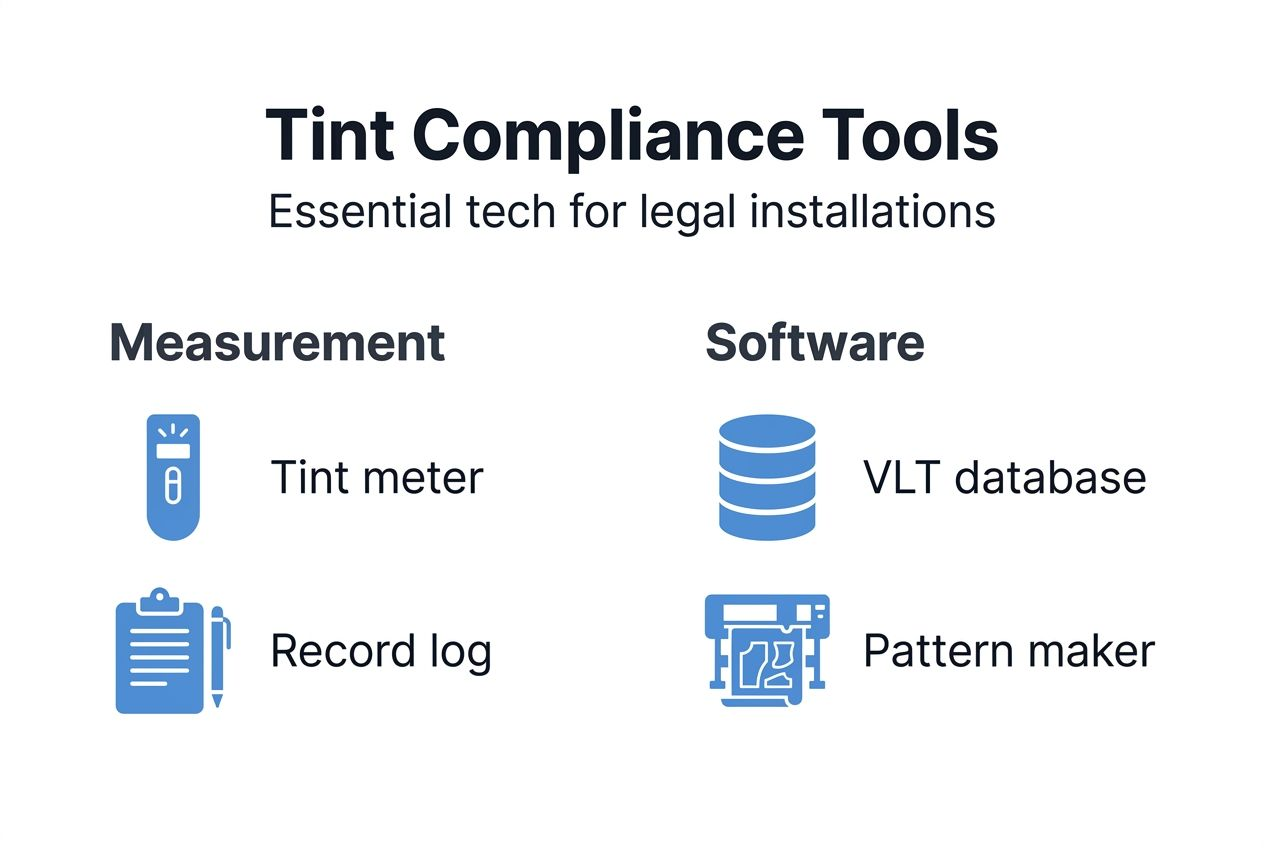
Portable tint metres integrated with compliance software enable self-verification before customers leave your facility. Measuring completed installations confirms VLT accuracy and provides documentation proving due diligence. These readings reassure customers about legality and create evidence of compliant workmanship should disputes arise later. Investing in quality measurement equipment pays dividends through reduced liability exposure and enhanced customer confidence.
Automated pattern generation reduces material waste whilst ensuring legal coverage. Software calculates optimal film dimensions accounting for factory tint, achieving target VLT levels precisely. This accuracy prevents the over-tinting that occurs when installers estimate combined transmission manually. Reduced waste also improves profit margins, offsetting software subscription costs through material savings.
| Software Feature | Compliance Benefit | Business Impact |
|---|---|---|
| State law database | Instant VLT limit reference | Prevents illegal installations |
| Pattern libraries | Accurate dimensional cuts | Reduces re-work and waste |
| VLT calculators | Combined transmission prediction | Ensures factory tint compatibility |
| Update notifications | Current regulation awareness | Maintains long-term compliance |
Professional installers comparing tint software comparison options discover varied capabilities and pricing structures. Premium platforms offer comprehensive features including customer management and invoicing alongside compliance tools. Entry-level solutions focus specifically on pattern accuracy and legal databases. Evaluate your business volume and multi-state exposure when selecting appropriate technology investments.
Resources like the legal limits guide supplement software tools by explaining the regulatory reasoning behind VLT standards. Understanding why laws exist helps you communicate compliance importance persuasively to customers considering illegal specifications.
Pro Tip: Demonstrate your compliance software during customer consultations. Showing real-time legal lookups and pattern precision builds confidence that you’re not guessing about regulations or cutting corners on quality.
Staying informed: updates and resources
Tint laws evolve as legislatures respond to safety concerns, technology advances, and constituent pressures. A regulation that’s current today may change by next session, making ongoing education essential for professional installers. Relying on outdated knowledge risks violations and customer citations that damage your reputation and business viability.
Official state DMV websites provide authoritative information about current VLT requirements and exemption processes. Most maintain dedicated pages explaining tint regulations with specific percentage requirements by window location. Bookmark these resources for your primary operating states and check quarterly for updates. Legislature websites publish bill tracking information when tint law amendments are under consideration, offering advance warning of coming changes.
Professional associations serving the tinting industry offer valuable networking and educational opportunities. These organisations often provide member alerts when significant regulatory changes occur, condensing complex legal language into actionable guidance. Annual conferences and regional meetings facilitate peer learning where experienced installers share compliance strategies and lessons from enforcement encounters.
Useful information channels include:
- State DMV tint regulation pages for official requirements
- International Window Film Association (IWFA) for industry standards
- Automotive Film Association resources and compliance bulletins
- Manufacturer technical support lines for film-specific guidance
Specialised newsletters and update services track weekly or annual law changes across multiple jurisdictions. These subscriptions prove particularly valuable for installers operating in border regions or serving mobile customers who travel extensively. The time saved through curated updates justifies the modest subscription costs, freeing you to focus on installation excellence rather than legal research. Platforms offering window tint law updates consolidate changes into accessible formats designed for busy professionals.
Building regulations extend beyond tints into related areas like energy savings compliance guide for commercial installations, showing how window treatment regulations intersect across industries. Understanding these broader contexts enhances your professional knowledge base.
Maximise your tint installations with AEONCUT software
Professional installers juggling complex state regulations need tools that simplify compliance whilst enhancing precision. AEONCUT software delivers both through intelligent pattern libraries and real-time legal guidance that keep your installations within legal bounds. The platform’s extensive database covers every vehicle make and model, generating pre-cut patterns that account for factory glass curvature and existing tint levels.
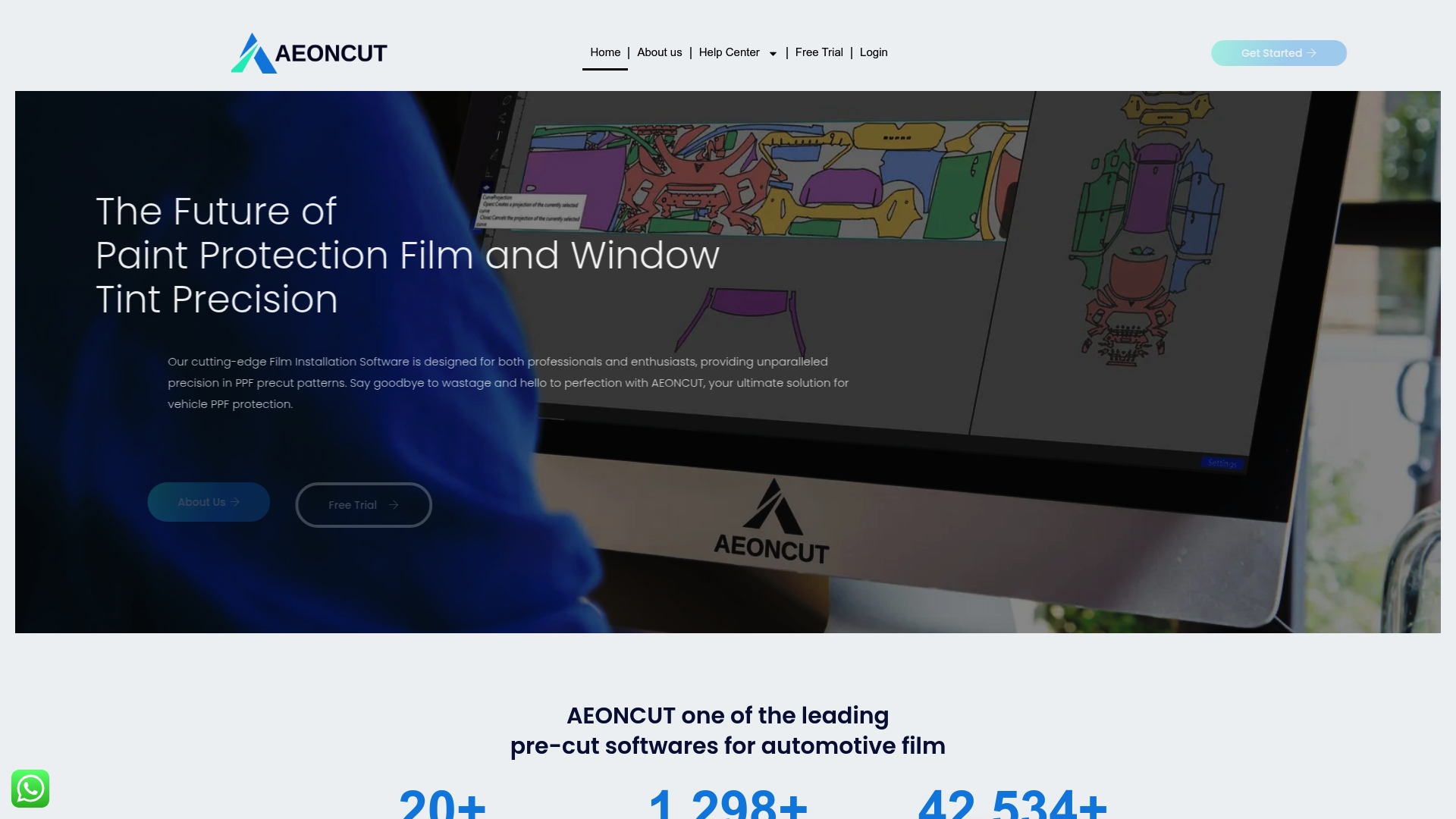
Reducing material waste directly improves your bottom line whilst supporting compliant installations. AEONCUT’s AI-driven auto-nesting optimises film layout, minimising offcuts and ensuring you achieve target VLT percentages consistently. When you eliminate guesswork through precise calculations, you protect customers from citations and shield your business from liability. The software’s cloud-based updates deliver 2026 law changes automatically, keeping you current without manual research.
Exploring master window tint software capabilities reveals how technology transforms tinting from a manual craft into a precision science. Comparing top window tint software options demonstrates AEONCUT’s competitive advantages in pattern accuracy and compliance support. For installers focused on back window tint legal compliance, AEONCUT provides specific guidance ensuring rear installations meet jurisdiction requirements.
Frequently asked questions
What is the legal definition of visible light transmission (VLT) in tint laws?
VLT percentage measures the amount of visible light passing through a window and its applied film combined. Legal limits specify minimum VLT percentages that installations must maintain, with lower numbers indicating darker tints that block more light. States define these thresholds differently by window location and vehicle type.
Can installers apply darker tint for medical exemptions without documentation?
No, medical exemptions require certified documentation from licenced physicians specifying qualifying health conditions. Installers must verify and copy official paperwork before installing below-standard VLT levels to avoid legal liability. Each state defines acceptable medical conditions and exemption processes differently, requiring jurisdiction-specific research.
How do law enforcement officers typically measure tint compliance?
Officers use calibrated portable metres meeting SAE J1757 standards that measure VLT by shining light through windows and calculating transmission percentages. Visual inspections serve as preliminary checks, with metre readings confirming suspected violations. Multiple measurements at different window locations ensure accuracy, and the lowest reading determines compliance status.
What penalties do installers face for non-compliant window tint installations?
Fines typically range from $50 to $500 per violation depending on jurisdiction and severity, with repeat offences triggering escalating penalties. Installers risk damaging their professional reputation through customer dissatisfaction and potential liability claims. Business licence suspensions and increased insurance premiums can follow pattern violations or knowing installation of illegal tints.
Recommended
- Complete Guide to Window Tint Laws 2025 – AEONCUT PPF Pre-cut Cutting software
- Types of Window Tint: Guide for Installers and Dealers 2025 – AEONCUT PPF Pre-cut Cutting software
- Window Tinting Explained: Complete Guide for Installers – AEONCUT PPF Pre-cut Cutting software
- What Type of Window Tint Is Best for Professional Installers – AEONCUT PPF Pre-cut Cutting software