Many drivers believe the darkest window tint delivers the best heat protection, but modern tinting technology tells a different story. In 2026, nano-ceramic films block 80-98% infrared rays regardless of how dark they appear. This guide reveals the best window tint options for automotive professionals and enthusiasts, explaining how to evaluate films based on total solar energy rejection, signal compatibility, and real-world durability rather than darkness alone. You’ll discover why ceramic films dominate the market, how to avoid signal interference issues, and what installation factors determine long-term performance.
Table of Contents
- Understanding Car Window Tint Types
- Why Nano-Ceramic Tint Films Lead In Performance
- Balancing Signal Interference And Heat Rejection: Choosing The Right Tint For Your Needs
- Importance Of Professional Installation And Compliance In 2026
- Explore Professional Window Tint Solutions And Software
Key takeaways
| Point | Details |
|---|---|
| Nano-ceramic tints lead performance | They deliver superior heat rejection, UV blocking, and optical clarity without signal interference. |
| Metallic films disrupt electronics | These tints can interfere with GPS, mobile signals, and keyless entry systems. |
| Carbon tints balance needs | They offer strong heat rejection and signal compatibility at mid-range pricing. |
| Professional installation matters | Expert application ensures durability, warranty validity, and regulatory compliance. |
| Look beyond darkness percentage | Total solar energy rejection (TSER) reveals true performance better than VLT alone. |
Understanding car window tint types
Modern car window tint films use multiple layers with nano-particles and coatings for performance, creating distinct categories with varying benefits. Knowing the differences helps you match film technology to your specific requirements, whether you prioritise heat rejection, signal clarity, or budget constraints.
Dyed films represent the most affordable entry point. Manufacturers sandwich dye between adhesive and protective layers to absorb solar energy. These films fade within three to five years, losing their heat-blocking properties as UV exposure degrades the dye molecules. They typically reject only 30-40% of total solar energy, making them suitable for cosmetic purposes rather than serious heat management.
Metallic films incorporate microscopic metal particles that reflect infrared radiation and solar heat. They excel at heat rejection, often blocking 50-60% of total solar energy whilst maintaining excellent durability. The metallic content creates a shiny, reflective appearance that some drivers find attractive. However, these same metal particles disrupt radio frequencies, causing operational problems with modern vehicle systems.
Carbon films use carbon particle technology instead of metals or dyes. The carbon matrix blocks infrared radiation effectively whilst maintaining signal transparency. These films reject 40-50% of total solar energy without the signal interference issues of metallic options. They resist fading better than dyed films and cost less than ceramic alternatives, positioning them as a practical middle ground.
Ceramic films represent the latest advancement in window tint film technologies. Manufacturers embed nano-ceramic particles throughout the film structure, creating superior heat rejection without metal content. These films block 60-80% of total solar energy whilst maintaining exceptional optical clarity. They never fade, resist scratching, and allow all electronic signals to pass through unimpeded.
When evaluating types of window tint, consider these key performance factors:
- Total solar energy rejection (TSER) percentage
- Infrared rejection capability
- UV blocking rating
- Signal compatibility with vehicle electronics
- Warranty duration and coverage terms
- Fade resistance and longevity expectations
Why nano-ceramic tint films lead in performance
Nano-ceramic window tint blocks highest solar heat without needing extreme darkness, making these films the preferred choice for drivers who want maximum comfort without compromising visibility. The technology relies on billions of non-metallic, non-conductive ceramic particles distributed throughout the film structure.
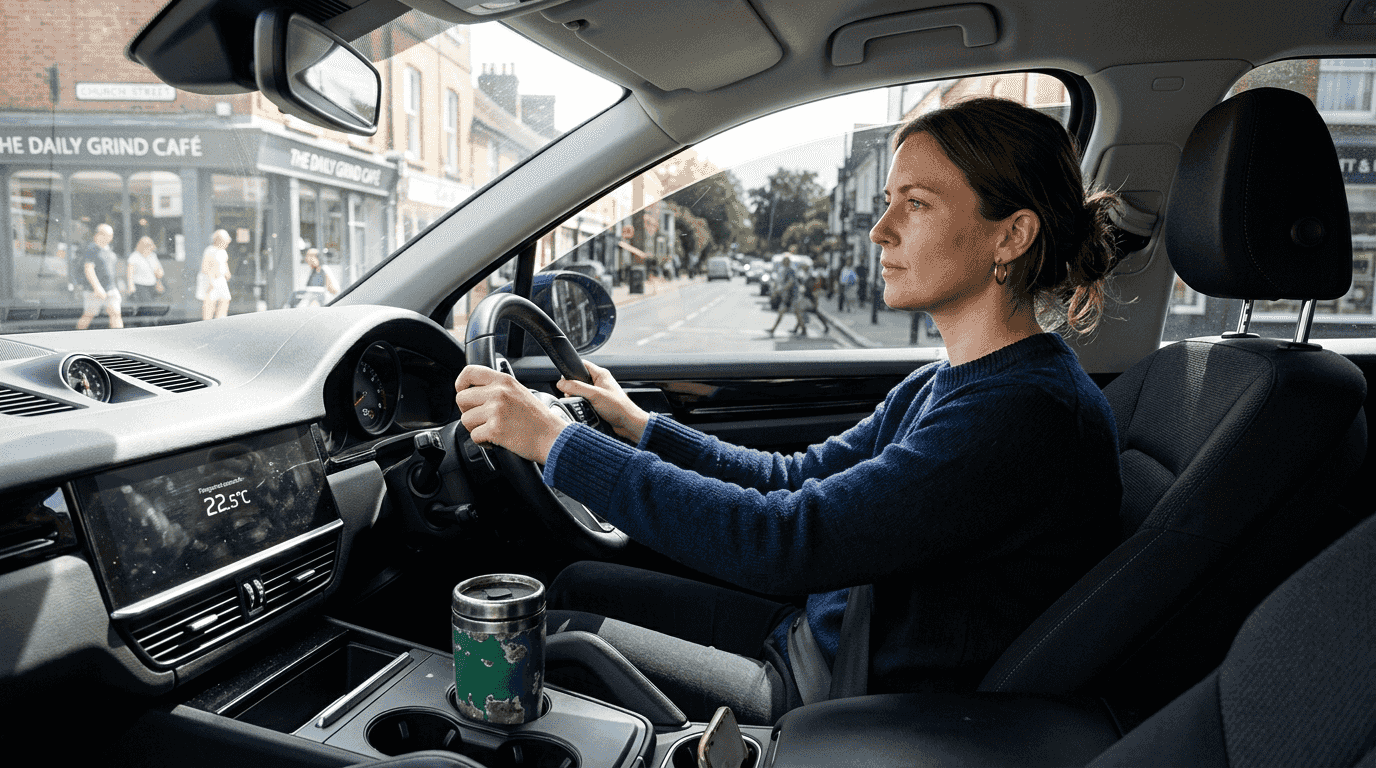
These ceramic particles target specific wavelengths of solar radiation. Ceramic films block up to 99% UV and 80-98% infrared rays, the two primary sources of heat and interior damage. This selective filtering allows visible light to pass through whilst rejecting the wavelengths that cause discomfort and material degradation. A 70% VLT ceramic film often outperforms a 35% VLT metallic film in heat rejection, demonstrating why darkness percentage alone misleads consumers.
Optical clarity distinguishes premium ceramic films from other technologies. The nano-ceramic particles scatter minimal light, reducing glare and eye strain during long drives. You’ll notice sharper visibility through ceramic-tinted windows compared to dyed or metallic alternatives, particularly in challenging lighting conditions like dawn, dusk, or rainy weather.
Signal compatibility solves a critical problem with older tint technologies. Ceramic tints do not interfere with electronic signals, preserving full functionality of GPS navigation, mobile phones, satellite radio, toll transponders, and keyless entry systems. This signal transparency becomes increasingly important as vehicles integrate more wireless technologies.
Durability and warranty coverage reflect manufacturer confidence in ceramic film longevity. Most premium ceramic films carry lifetime warranties covering fading, bubbling, peeling, and discolouration. The ceramic particles remain chemically stable under UV exposure, maintaining performance characteristics for the vehicle’s entire lifespan. Scratch-resistant coatings protect the film surface from daily wear.
Pro Tip: Compare TSER specifications rather than just VLT percentages when evaluating ceramic films. A film with 70% VLT and 65% TSER delivers better heat rejection than a darker film with 50% VLT but only 55% TSER.
| Specification | Entry Ceramic | Premium Ceramic | Ultra Premium Ceramic |
| — | — | — |
| TSER | 45-55% | 60-70% | 75-85% |
| IR Rejection | 70-80% | 85-92% | 95-98% |
| UV Block | 99% | 99% | 99% |
| Warranty | 10 years | Lifetime | Lifetime |
| VLT Options | 35%, 50%, 70% | 20%, 35%, 50%, 70% | 5%, 20%, 35%, 50%, 70%, 90% |
The ceramic window tint benefits extend beyond immediate comfort. Interior materials last longer when protected from UV degradation. Upholstery colours remain vibrant, dashboard plastics resist cracking, and leather seats avoid premature ageing. These preservation benefits add measurable resale value to vehicles.
Balancing signal interference and heat rejection: choosing the right tint for your needs
Metallised films can cause keyless entry and GPS signal interference, creating frustrating operational issues that many drivers discover only after installation. The metal particles that reflect heat also block radio frequencies, weakening or completely disrupting wireless communications. You might experience dropped mobile calls, delayed keyless entry responses, or inaccurate GPS navigation when metallic tint covers your windows.
Signal disruption affects multiple vehicle systems simultaneously. Satellite radio loses connection quality, toll transponders fail to register at payment gates, and tyre pressure monitoring systems struggle to communicate with dashboard displays. Modern vehicles rely heavily on wireless data transmission, making signal-transparent tints essential for full functionality.
Carbon film offers balance between performance and signal friendliness, positioning these tints as practical alternatives for budget-conscious buyers. The carbon particle matrix rejects 40-50% of total solar energy whilst maintaining complete signal transparency. You’ll notice measurable cabin cooling compared to untinted windows, though not quite matching ceramic film performance.
Carbon tints suit vehicles with moderate electronic requirements and drivers prioritising value. They cost 30-40% less than ceramic films whilst delivering significantly better heat rejection than dyed alternatives. The non-metallic composition eliminates all signal interference concerns, making carbon films reliable choices for vehicles equipped with advanced driver assistance systems.
Ceramic tints provide the highest heat rejection with zero signal disruption, justifying their premium pricing for performance-focused applications. Professional installers and discerning vehicle owners choose ceramic films when maximum comfort, clarity, and technology compatibility matter most. The investment pays dividends through superior daily comfort and long-term durability.
Consider these factors when selecting your tint technology:
- Vehicle electronic features requiring wireless connectivity
- Daily driving conditions and climate severity
- Budget constraints and long-term value expectations
- Legal VLT requirements in your jurisdiction
- Warranty coverage and installer reputation
Legal considerations significantly influence tint selection in 2026. Each region maintains specific VLT percentage requirements for front side windows, rear side windows, and rear windscreens. Some jurisdictions prohibit reflective tints entirely, whilst others restrict certain colours. Understanding these regulations prevents costly removal and replacement after installation.
Pro Tip: Test signal functionality before leaving the installation shop. Make a phone call, check GPS accuracy, and verify keyless entry operation to confirm your chosen tint doesn’t disrupt critical systems.
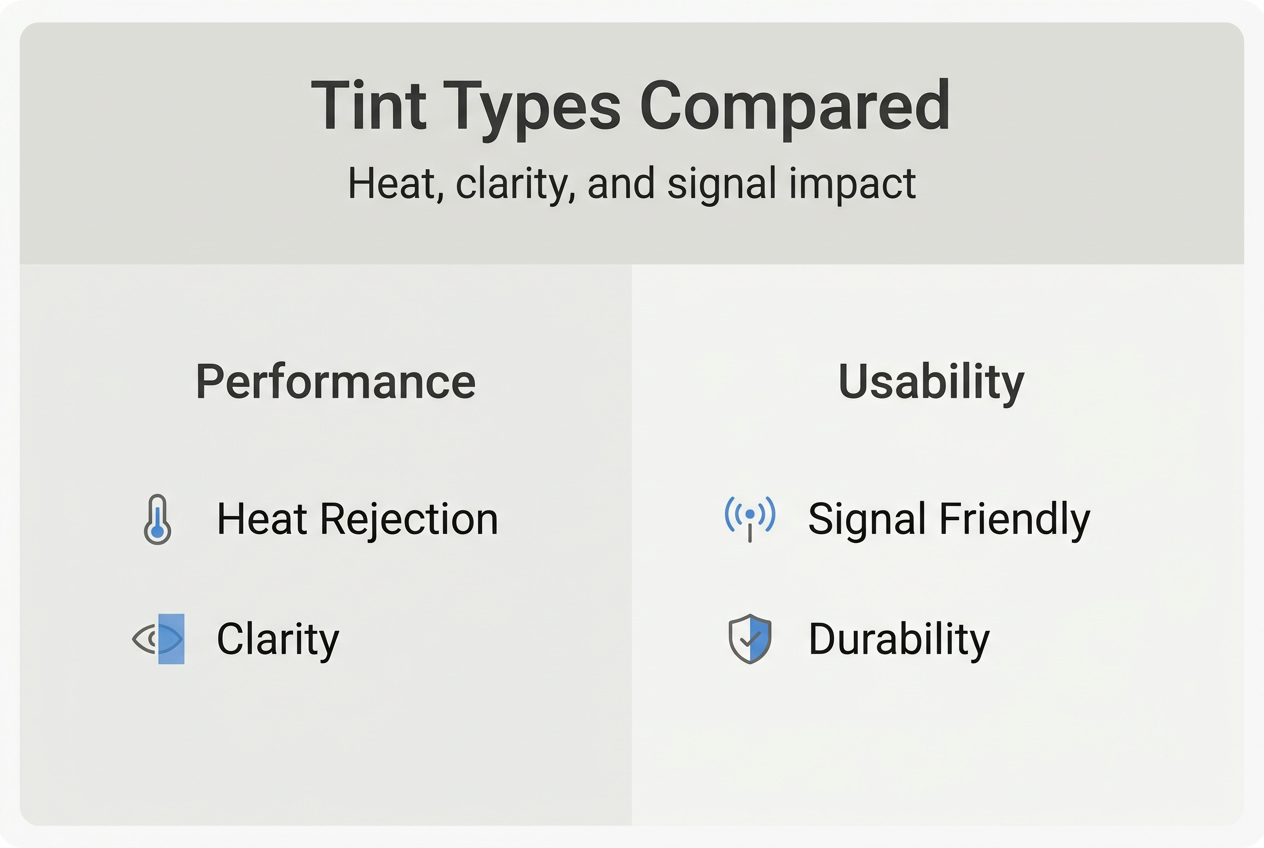
| Tint Type | Heat Rejection | Signal Impact | Durability | Cost Range |
|---|---|---|---|---|
| Dyed | Low (30-40% TSER) | None | 3-5 years | £100-200 |
| Metallic | Good (50-60% TSER) | High interference | 7-10 years | £200-350 |
| Carbon | Good (40-50% TSER) | None | 7-10 years | £250-400 |
| Ceramic | Excellent (60-85% TSER) | None | Lifetime | £400-800 |
Explore best window tint types for pros to understand how installation professionals evaluate and recommend films based on client requirements and vehicle specifications.
Importance of professional installation and compliance in 2026
Professional installation ensures lasting results and avoids common errors that compromise tint performance and appearance. Window film application demands precise technique, specialised tools, and environmental control that DIY attempts rarely achieve. Even premium ceramic films fail prematurely when improperly installed.
Complexities of proper film application begin with thorough surface preparation. Glass must be completely clean, free from oils, residues, and contaminants that prevent adhesive bonding. Professional installers use specific cleaning solutions and techniques to achieve surgical-level cleanliness. They work in controlled environments that minimise dust and debris contamination during the vulnerable installation process.
Common DIY mistakes include trapped air bubbles, adhesive contamination, improper edge sealing, and incorrect film sizing. Bubbles form when installers fail to properly squeegee water and air from beneath the film. Contamination occurs when dust particles settle on adhesive surfaces. Poor edge sealing allows moisture infiltration that causes peeling. Incorrect sizing leaves gaps or creates excess material that bunches awkwardly.
Professional installers achieve smooth, bubble-free, durable coatings through systematic processes:
- Measure windows precisely and cut film with appropriate margins
- Clean glass surfaces using professional-grade solutions and techniques
- Apply slip solution to facilitate film positioning and adjustment
- Position film accurately and remove backing to expose adhesive
- Squeegee systematically from centre outward to eliminate water and air
- Trim edges precisely for clean, professional appearance
- Allow proper curing time before window operation
Knowing local 2026 regulatory limits for VLT and placement protects you from legal complications. Front side windows typically require higher VLT percentages than rear windows, ensuring driver visibility for safe vehicle operation. Some regions prohibit any tint on front side windows, whilst others allow up to 70% VLT. Rear windows and rear windscreens generally permit darker tints, sometimes as low as 5% VLT.
Verify film certification and TSER ratings with your installer before proceeding. Reputable manufacturers provide documentation proving their films meet advertised specifications. Ask to see certification papers showing UV rejection percentages, TSER values, and VLT measurements. This documentation becomes essential if authorities question your tint’s legality.
Consequences of non-compliance include fines, required removal, and failed vehicle inspections. Police officers use VLT metres to measure tint darkness during traffic stops. Excessively dark tints trigger citations requiring you to remove the film and pay penalties. Some jurisdictions impose escalating fines for repeat violations.
Poor installation affects safety and warranty coverage beyond legal concerns. Bubbles and distortions impair visibility, creating hazardous blind spots. Peeling edges distract drivers and look unprofessional. Most importantly, manufacturers void warranties when detecting improper installation, leaving you without recourse for premature film failure.
Review diy tint installation tips if you’re considering self-installation, but understand the risks and limitations. Study the window tinting law guide 2026 to ensure your chosen tint complies with current regulations in your area.
Explore professional window tint solutions and software
Achieving professional-grade window tint installations requires precision tools and expert knowledge. AEONCUT delivers window tint software for precise installations that eliminates guesswork and material waste through accurate pre-cut patterns for thousands of vehicle models.
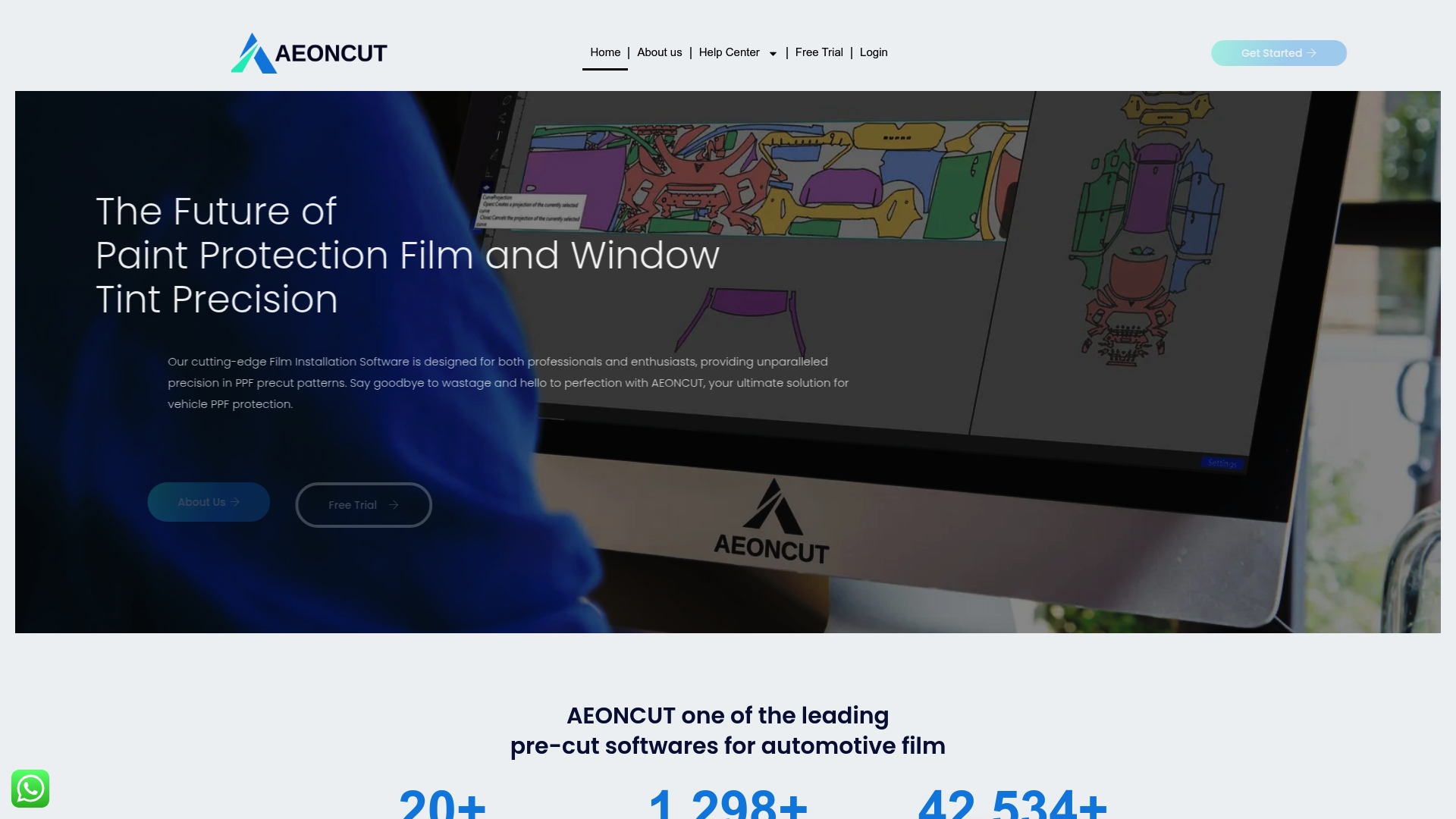
Our comprehensive pattern library covers 2026 vehicle releases alongside classic models, ensuring you’ll find exact specifications for any tinting project. The software optimises material usage through intelligent nesting algorithms, reducing costs whilst maintaining precision. Cloud-based updates deliver new patterns immediately, keeping your library current with emerging vehicle designs.
Explore detailed guides on selecting best window tint types for pros to match client requirements with appropriate film technologies. Stay compliant with our window tinting law guide 2026 covering regional VLT regulations and certification requirements. AEONCUT provides the tools and knowledge professional installers need to deliver exceptional results efficiently.
FAQ
What is the best tint percentage for UV protection?
Quality films block 99% or more of UV radiation regardless of darkness level, making VLT percentage irrelevant for UV protection specifically. Focus on film technology rather than darkness when prioritising UV blocking. Even a 70% VLT ceramic film provides complete UV protection, whilst a 5% VLT dyed film might block only 60-70% of harmful rays. Check manufacturer specifications for UV rejection ratings rather than assuming darker tints offer better protection.
Can metallic window tints affect my car’s electronics?
Yes, metallic films disrupt GPS, cellular, and keyless entry signals because metal particles block radio frequencies alongside solar radiation. You’ll likely experience weakened mobile reception, delayed keyless entry responses, and inaccurate GPS navigation with metallic tints installed. Modern vehicles rely heavily on wireless communications, making signal-transparent alternatives like carbon or ceramic films more practical choices. If you’ve already installed metallic tint and experience signal problems, replacement with ceramic film solves the issue permanently.
Is DIY installation of window tint recommended?
Professional installation ensures longevity and avoids common installation errors that compromise appearance and performance. DIY attempts frequently result in trapped bubbles, contamination, improper edge sealing, and premature peeling. Professionals work in controlled environments with specialised tools and techniques that home installers cannot replicate. If budget constraints require DIY installation, study comprehensive guides thoroughly and practise on scrap glass first. Review diy tint installation tips for detailed techniques, but recognise that professional results justify the additional cost for most applications.
How long does professional window tint installation take?
Professional installers typically complete a full vehicle in two to four hours, depending on the number of windows and vehicle complexity. Curved rear windscreens require more time than flat side windows. The process includes thorough cleaning, precise cutting, careful application, and proper curing time. Rush installations compromise quality, so avoid shops promising completion in under 90 minutes. Most installers recommend leaving your vehicle for half a day to ensure proper attention and curing before driving.
What maintenance does window tint require?
Quality window tints require minimal maintenance beyond basic cleaning practices. Wait three to seven days after installation before cleaning to allow adhesive full curing time. Use soft microfibre cloths and ammonia-free cleaning solutions to avoid damaging the film surface. Never use abrasive materials, paper towels, or harsh chemicals that scratch or degrade the tint. Properly maintained ceramic films last the vehicle’s lifetime without fading or peeling, whilst lower-quality films may require replacement after five to ten years.
Recommended
- Ceramic Window Tint Benefits: Essential Guide for 2025 – AEONCUT PPF Pre-cut Cutting software
- 6 Essential Tint Types for Cars Every Installer Should Know – AEONCUT PPF Pre-cut Cutting software
- Mastering maximum legal window tint limits for 2026 – AEONCUT PPF Pre-cut Cutting software
- How Window Tint Works: Essential Guide for Auto Professionals 2025 – AEONCUT PPF Pre-cut Cutting software