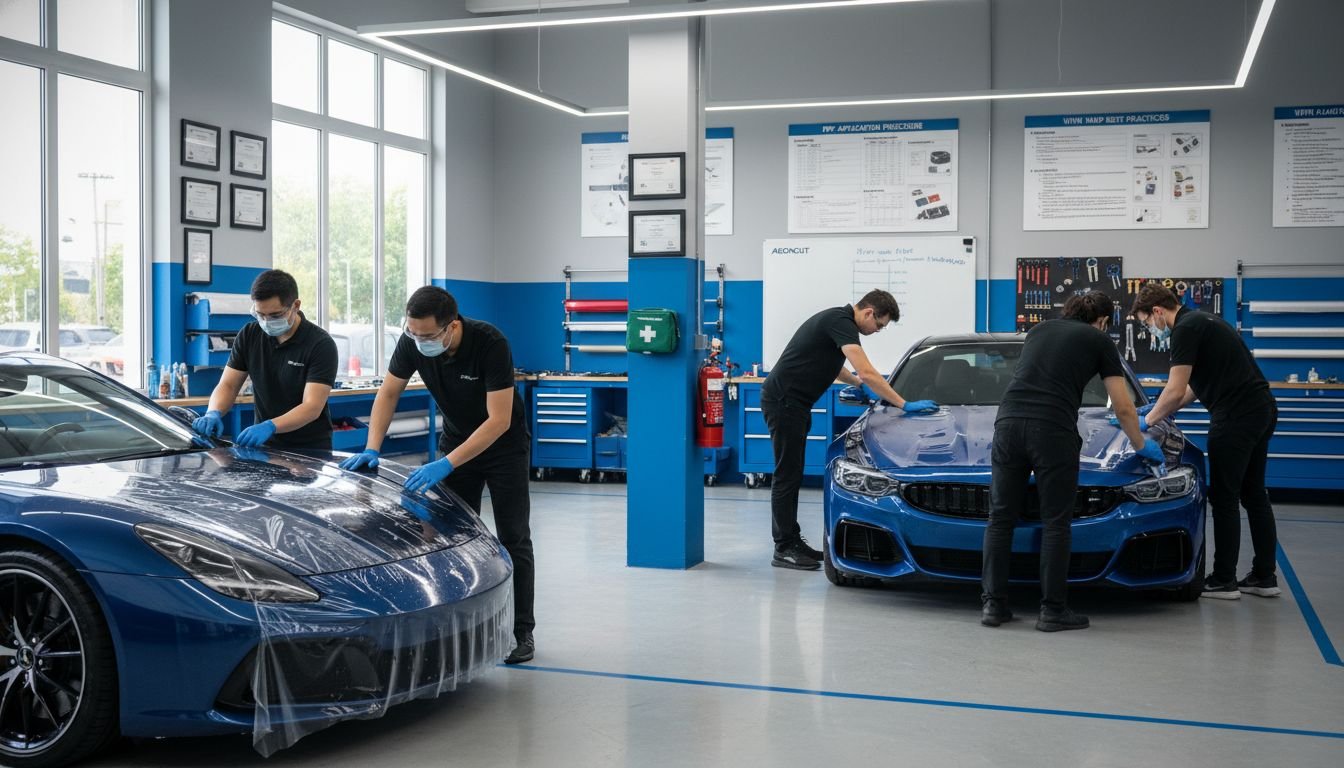
Window film technology has evolved dramatically, yet many installers still rely on outdated assumptions about performance capabilities. Modern automotive films leverage nanotechnology and advanced ceramics to deliver heat rejection and UV protection that far exceeds traditional tinted glass. This guide examines the core technologies, practical benefits, and installation considerations that separate professional-grade applications from basic tinting services.
Table of Contents
- What Is Window Film And How Does It Work?
- Types Of Window Film: Carbon, Ceramic And Nano Ceramic Explained
- Benefits Of Advanced Window Films For Automotive Professionals And Customers
- Best Practices For Installing And Recommending Window Film
- Enhance Your Window Film Services With Aeoncut Software
- Frequently Asked Questions About Window Film
Key takeaways
| Point | Details |
|---|---|
| Advanced film construction | Multilayer films use nanotechnology with over 200 microscopic layers for precise light and heat control |
| Performance hierarchy | Carbon films offer mid-tier protection, whilst ceramic films reject up to 85% solar heat and nano ceramic blocks 95% |
| Signal compatibility | Non-metalised films maintain GPS, 5G, and satellite radio function without interference |
| Measurable comfort gains | Premium films reduce cabin temperature by 26°C without air conditioning, lowering cooling demands |
What is window film and how does it work?
Window film consists of thin laminate layers applied to vehicle glass surfaces to control solar energy transmission. Unlike simple dyed films that merely darken glass, advanced automotive films employ sophisticated construction to selectively block infrared radiation whilst maintaining visible light clarity. This distinction matters enormously for installer credibility and customer satisfaction.
Modern film architecture relies on multilayer technology that would astonish installers from even a decade ago. The 3M Crystalline Series uses over 200 layers thinner than a Post-it Note, each engineered to target specific wavelengths. These microscopic layers function as optical filters, reflecting infrared heat back through the glass whilst allowing visible light to pass.
The mechanism works through wavelength-selective rejection rather than absorption. When sunlight strikes the film, infrared wavelengths (which carry heat energy) bounce back, preventing thermal buildup inside the vehicle. Simultaneously, the film absorbs ultraviolet radiation that causes interior fading and skin damage. This dual action creates measurably cooler cabins without the dark appearance of traditional tints.
Key functional benefits installers should communicate:
- Reduced solar heat gain maintains comfortable temperatures and lowers air conditioning load
- UV blocking preserves leather, plastics, and fabrics from degradation
- Glare reduction improves driver visibility and reduces eye strain
- Enhanced privacy without sacrificing outward visibility
Pro Tip: Understanding UV and IR rejection science helps you explain why premium films justify higher pricing despite similar visible light transmission percentages.
The film’s adhesive system also plays a critical role in longevity. Pressure-sensitive adhesives bond to glass through molecular attraction, creating a permanent seal that withstands temperature cycling and moisture exposure. Quality films use optically clear adhesives that won’t bubble, discolour, or delaminate over years of service.
Types of window film: carbon, ceramic and nano ceramic explained
Three primary film technologies dominate the professional automotive market, each offering distinct performance characteristics and price points. Understanding these differences enables installers to match products to customer priorities rather than defaulting to whichever film stocks your supplier promotes.
Carbon films contain microscopic carbon particles suspended throughout the polymer matrix. These particles absorb and scatter infrared wavelengths, providing moderate heat rejection whilst delivering rich, fade-resistant colour. Carbon films prevent interior fading and offer mid-tier durability at accessible price points. They represent the entry level for quality installations, suitable for budget-conscious customers seeking noticeable improvement over factory glass.
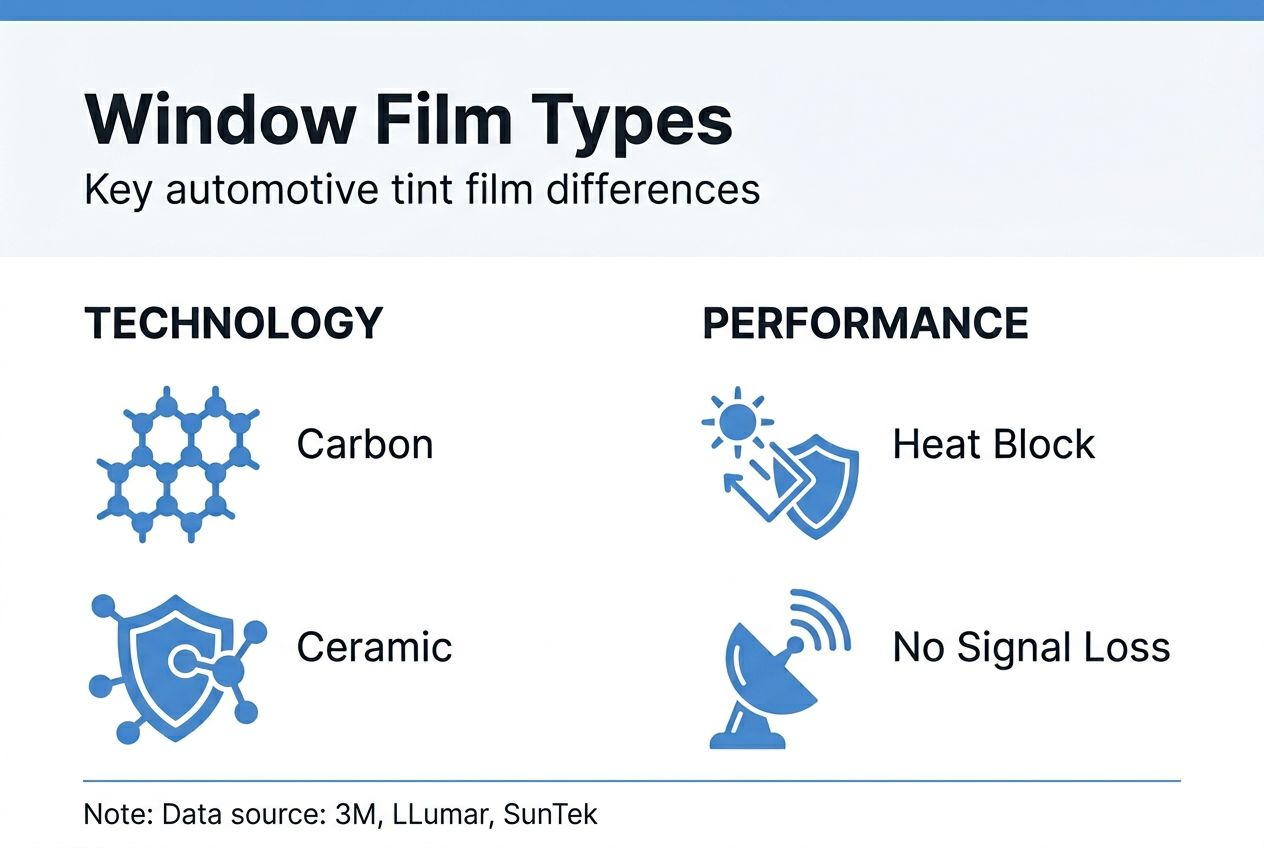
Ceramic films elevate performance substantially through nano-ceramic particle technology. These films reject up to 85% solar heat and block 99% of UV radiation without any metallic content. The absence of metal particles means zero interference with mobile phones, GPS systems, or keyless entry functions. Ceramic films suit customers prioritising electronics compatibility and superior heat control.
Nano ceramic films represent the pinnacle of current film technology. Advanced manufacturing processes create even finer ceramic particles distributed more densely throughout the film structure. This architecture rejects up to 95% heat and blocks over 90% of infrared radiation whilst maintaining exceptional optical clarity. Despite their thin profile, nano ceramic films outlast and outperform thicker carbon alternatives.
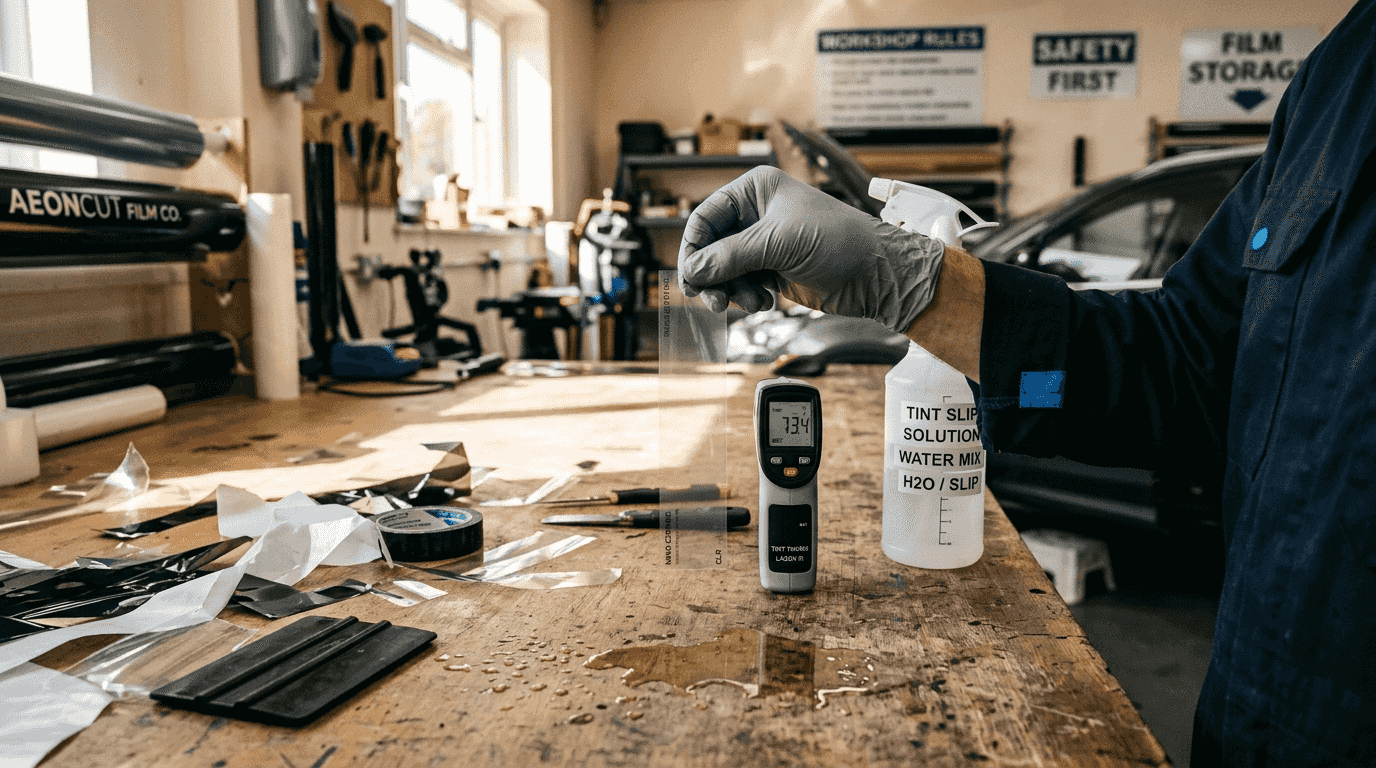
| Film Type | Heat Rejection | UV Protection | Signal Interference | Durability | Price Point |
|---|---|---|---|---|---|
| Carbon | 40-50% | 99% | None | Good | Budget |
| Ceramic | 60-85% | 99% | None | Excellent | Mid-range |
| Nano Ceramic | 85-95% | 99% | None | Superior | Premium |
Pro Tip: Essential tint types for cars vary by regional climate, but ceramic films deliver measurable comfort gains even in moderate temperatures where carbon films underperform.
Each film type serves legitimate market segments. Carbon suits cost-sensitive customers in temperate climates. Ceramic fits mainstream buyers seeking noticeable comfort improvement. Nano ceramic targets luxury vehicle owners and those in extreme heat environments where maximum rejection matters. Position these as good, better, best rather than pushing only the highest-margin option.
The key differentiator lies in particle size and distribution density. Smaller ceramic particles block more infrared wavelengths without reducing visible light transmission. This explains how nano ceramic films achieve darker heat rejection with lighter visual appearance compared to carbon alternatives.
Benefits of advanced window films for automotive professionals and customers
Advanced window films deliver measurable improvements that translate directly into customer satisfaction and repeat business. These benefits extend beyond simple aesthetics, addressing practical comfort, health protection, and vehicle preservation concerns that resonate with discerning clients.
The thermal management capability alone justifies premium film investment. The 3M Crystalline Series rejects 64% solar energy and 99% infrared heat, cooling vehicles by up to 26°C without air conditioning. Real-world testing shows ceramic films keep vehicles 8°C cooler than metallic films during summer peak hours. This temperature reduction decreases air conditioning load, improving fuel efficiency and reducing engine strain.
UV protection provides critical health benefits that many customers overlook. Window films block 99% of ultraviolet radiation, protecting occupants from cumulative skin damage during daily commutes. This protection remains constant regardless of weather conditions, since UV rays penetrate cloud cover. The same UV blocking prevents interior materials from fading, cracking, and degrading, maintaining vehicle resale value.
Key customer benefits installers should emphasise:
- Dramatic cabin cooling reduces discomfort and air conditioning dependency
- Year-round UV protection safeguards skin health and interior materials
- Glare reduction improves visibility and reduces driver fatigue
- Enhanced privacy without compromising outward visibility or safety
- Non-metallic films maintain full electronics functionality
“Premium window films cool vehicle interiors by up to 26°C without activating air conditioning, delivering measurable comfort whilst reducing fuel consumption and environmental impact. This performance transforms summer driving from uncomfortable to pleasant.”
The electronics compatibility of non-metalised films addresses a common customer concern. Modern vehicles rely on wireless connectivity for navigation, emergency services, and infotainment. Ceramic window films maintain signal integrity that metalised alternatives compromise, eliminating the frustrating GPS dropouts and mobile phone dead zones that plague older film technologies.
Aesthetics matter equally to performance for many customers. Films enhance vehicle appearance through uniform darkness and elimination of visible light hotspots. They provide privacy for valuable cargo whilst maintaining the crisp, professional appearance that distinguishes quality installations. Properly applied films become invisible except for their beneficial effects.
Pro Tip: Frame heat rejection window film benefits in terms of reduced air conditioning runtime rather than absolute temperature numbers, since customers understand fuel savings more intuitively than infrared percentages.
For installers, these benefits translate into competitive advantages. Offering advanced films positions your business as technical experts rather than commodity service providers. Customers willing to invest in nano ceramic films typically pursue other premium services, increasing average transaction values and lifetime customer worth.
Best practices for installing and recommending window film
Successful window film installation requires matching appropriate film types to customer needs whilst executing flawless application technique. These practices separate professional results from disappointing DIY attempts that damage your reputation through customer complaints.
Selecting the right film begins with understanding customer priorities and environmental factors:
- Assess the customer’s primary concern (heat, UV protection, privacy, or aesthetics)
- Consider regional climate and typical driving conditions
- Evaluate budget constraints and willingness to invest in premium options
- Verify legal tint limits for front, rear, and side windows in your jurisdiction
- Discuss electronics usage patterns to confirm non-metallic film necessity
Surface preparation determines application quality more than any other single factor. Clean glass thoroughly using alcohol-based solutions that leave zero residue. Inspect for existing damage or contamination that might telegraph through the film. Work in controlled environments whenever possible to minimise dust and temperature fluctuations during curing.
Precision cutting eliminates material waste whilst ensuring perfect fit. Window tint pattern tools like computerised plotters deliver consistent accuracy that hand cutting cannot match. These tools pay for themselves through reduced film waste and faster installation times on complex curved glass.
Proper application technique requires patience and attention to detail. Use generous slip solution to position film accurately before squeegeeing. Work from centre outward to eliminate air bubbles and water pockets. Maintain consistent pressure and overlapping strokes to avoid lines or streaks.
Pro Tip: Non-metalised films avoid GPS interference and satellite radio signal loss, making them essential for modern vehicles with extensive wireless connectivity requirements.
Customer education extends film lifespan and prevents warranty issues. Instruct clients to avoid rolling windows down for 3-5 days whilst adhesive cures. Recommend ammonia-free cleaning products and soft microfibre cloths. Explain that slight haziness during initial curing is normal and will disappear.
Maintenance protocols matter for long-term satisfaction. Films require minimal care beyond gentle cleaning, but customers need realistic expectations about longevity. Quality films backed by manufacturer warranties last 5-10 years depending on exposure and care. Document installation dates and warranty terms clearly to manage future service expectations.
The DIY tint installation approach differs substantially from professional methods, particularly regarding tool quality and technique precision. Emphasise these differences when customers question professional installation costs.
Enhance your window film services with AEONCUT software
Mastering window film technology requires precision tools that match your technical expertise. AEONCUT delivers cutting-edge pattern software specifically engineered for automotive tint and PPF installers who refuse to compromise on accuracy. The platform’s extensive pattern library covers thousands of vehicle models, eliminating guesswork and reducing costly material waste.
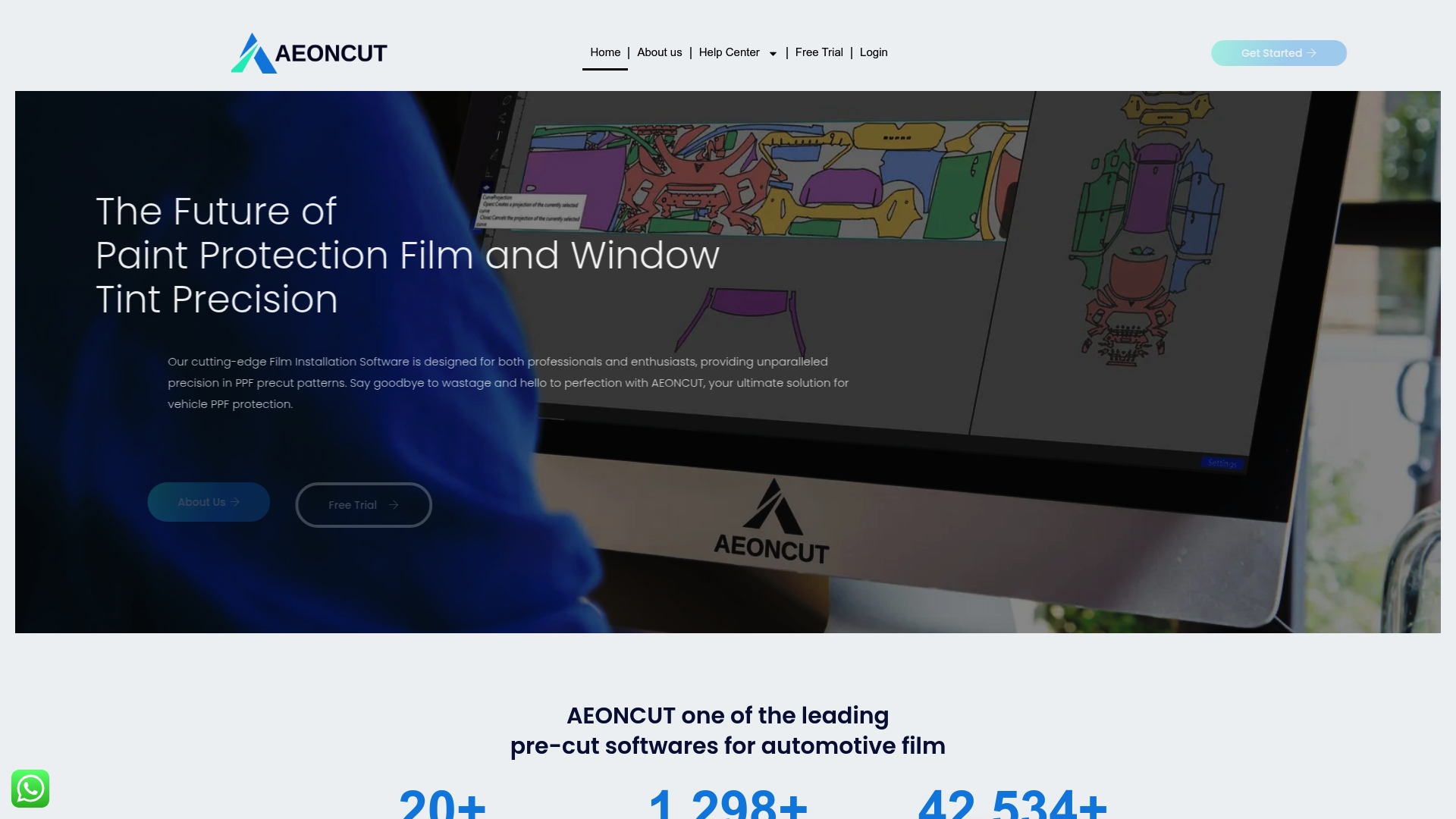
Our cloud-based system provides instant access to updated patterns as new vehicles enter the market, ensuring you’re never caught without the right template. The AI-driven auto-nesting feature optimises film layout automatically, maximising yield from every roll. Professional installers using AEONCUT report 30% faster cutting times and dramatically reduced recut rates compared to manual methods.
Explore window tint pattern tools for 2026 to understand how specialised software transforms installation efficiency. Discover window tint software for precise installations and see why leading shops rely on AEONCUT. Review essential tint types to expand your service offerings with confidence.
Frequently asked questions about window film
What makes ceramic window film better than carbon film?
Ceramic films use nano-ceramic particles that reject 60-85% solar heat compared to carbon’s 40-50%, whilst maintaining complete electronics compatibility. The ceramic construction delivers superior durability and optical clarity without the signal interference metallic films cause.
How long does professionally installed window film last?
Quality ceramic and nano ceramic films backed by manufacturer warranties typically last 5-10 years depending on climate exposure and maintenance. Carbon films generally provide 3-5 years of reliable performance before showing signs of fading or adhesive degradation.
Does window film interfere with mobile phone or GPS signals?
Non-metalised ceramic and nano ceramic films maintain full signal integrity for mobile phones, GPS navigation, satellite radio, and keyless entry systems. Only older metallic films cause the interference issues customers often associate with window tinting.
Can window film be applied to the windscreen legally?
Windscreen film legality varies by jurisdiction, with most regions permitting only the top 10-15cm strip or requiring minimum visible light transmission percentages. Consult local regulations before offering windscreen UV protection services to ensure compliance.
Why do premium films cost significantly more than basic tints?
Advanced films incorporate nano-ceramic technology requiring sophisticated manufacturing processes and quality control. The superior heat and UV rejection performance, extended warranties, and guaranteed electronics compatibility justify the investment through measurable comfort gains and longevity.
Recommended
- How Window Tint Works: Essential Guide for Auto Professionals 2025 – AEONCUT PPF Pre-cut Cutting software
- Window Tinting Explained: Complete Guide for Installers – AEONCUT PPF Pre-cut Cutting software
- Types of Window Tint: Guide for Installers and Dealers 2025 – AEONCUT PPF Pre-cut Cutting software
- What is Window Tint? Essential Guide for Tinting Pros 2025 – AEONCUT PPF Pre-cut Cutting software