Many installers assume commercial window tinting pricing is straightforward, yet costs swing wildly from £4 to £15 per square foot depending on film type, installation complexity, and project scope. Underestimating these variables risks slashed profit margins and unsustainable pricing. This guide unpacks the key cost drivers and proven pricing strategies professional installers need to quote accurately and profitably in 2026.
Table of Contents
- Breaking Down Commercial Window Tinting Cost Drivers
- Comparing Film Types And Their Cost Implications
- How Installation Complexity And Project Scope Affect Pricing
- Pricing Strategies And Profit Optimisation For Installers
- Enhance Your Commercial Tinting Business With Aeoncut
- Frequently Asked Questions
Key takeaways
| Point | Details |
|---|---|
| Costs vary by film and complexity | Film type and installation difficulty are primary cost determinants. |
| Typical range is £4 to £15 per sq ft | Standard films start lower, ceramic and security films command premium pricing. |
| Profit margins span 20% to 50% | Specialised films and value-added services enable higher margins. |
| Volume discounts on large jobs | Commercial contracts offer scale economies but demand logistical planning. |
| Installation quality drives pricing | Professional execution justifies premium rates and boosts client satisfaction. |
Breaking down commercial window tinting cost drivers
Understanding what shapes pricing lets you quote jobs confidently and protect margins. Commercial window tinting costs are typically priced per square foot, reflecting installation difficulty, labour time, and film material cost. This standardised metric simplifies comparison but masks significant variation.
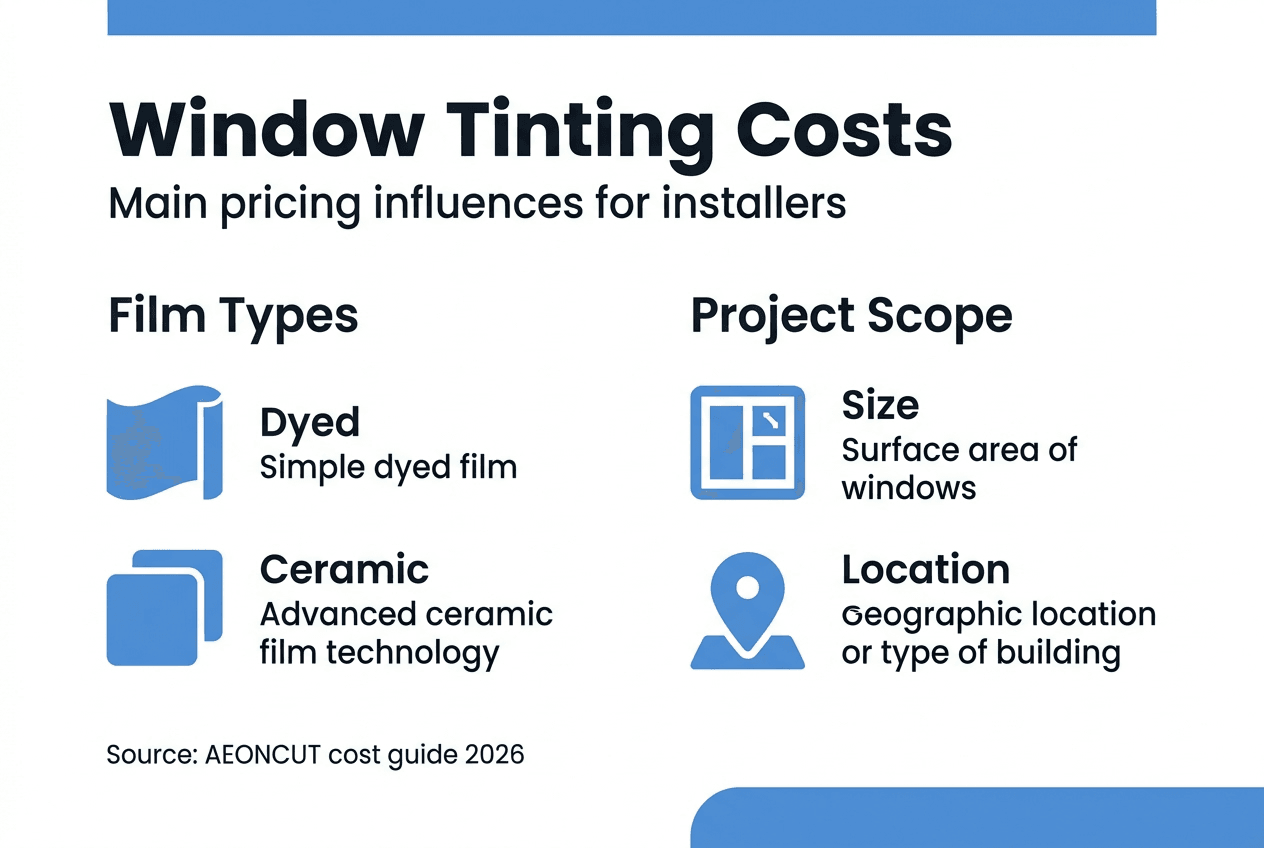
Film selection exerts the strongest pricing influence. Standard dyed films sit at the affordable end, whilst ceramic, security, and decorative films push costs higher due to advanced materials and performance benefits. Installation complexity adds another layer. Larger window areas, awkward shapes, and difficult access points inflate labour hours and equipment needs.
Project size, geographic location, and warranty terms further modulate pricing. Urban centres typically demand higher rates than regional markets due to elevated overheads. Warranty coverage reflects film quality and installer confidence, with premium films justifying extended guarantees that clients value.
Pro Tip: Always conduct site visits before quoting to assess window dimensions, accessibility, existing tint removal needs, and surface condition, preventing costly underpricing surprises.
Other critical factors include surface preparation requirements, regulatory compliance for energy codes, and client-specific needs like privacy levels or UV rejection targets. Each variable compounds, making blanket pricing dangerous. Review the broader cost of window tinting guide to contextualise commercial pricing within the full spectrum of tinting work.
Comparing film types and their cost implications
Film choice directly dictates your material costs and the value proposition you present. Standard dyed films cost £4 to £6, ceramic films £9 to £12+ per sq ft, with security and decorative options spanning the mid to high range depending on specifications.

| Film Type | Cost per Sq Ft | Primary Benefits | Best For |
|---|---|---|---|
| Standard Dyed | £4–£6 | Basic UV protection, privacy | Budget-conscious clients |
| Solar Control | £6–£9 | Heat rejection, energy savings | Offices, retail spaces |
| Ceramic | £9–£12+ | Superior heat/UV rejection, no signal interference | Premium commercial buildings |
| Security | £10–£15 | Shatter resistance, break-in deterrence | High-security facilities |
| Decorative | £7–£11 | Branding, aesthetics, privacy | Corporate lobbies, storefronts |
Standard dyed film appeals to clients prioritising affordability over performance, offering reasonable UV protection and privacy without advanced heat rejection. Solar control films use metallic or hybrid technologies to reflect infrared radiation, cutting cooling costs and improving occupant comfort.
Ceramic films represent the premium tier, delivering exceptional heat rejection and UV protection without metallic interference that disrupts mobile signals or Wi-Fi. Security films add structural reinforcement, holding glass fragments together during impacts or break-in attempts. Decorative films combine function with branding opportunities through custom graphics, frosted effects, or gradient designs.
Pro Tip: Present tiered film packages (good, better, best) during consultations to educate clients on performance differences and naturally guide upselling without aggressive tactics.
Aligning film recommendations to client needs rather than pushing the cheapest option builds trust and justifies higher pricing. A corporate office prioritising employee comfort and energy efficiency will gladly pay for ceramic film when you quantify cooling cost savings. Explore best window tint types for deeper insights into matching films to applications.
How installation complexity and project scope affect pricing
Even identical film can double in labour costs depending on installation challenges. Installation complexity includes surface preparation, window design, height, and accessibility, all raising prices significantly.
High or hard-to-reach windows demand scaffolding, lifts, or suspension equipment, adding rental costs and slower installation pace. Ground-level storefronts install quickly, whilst 10th-floor office towers multiply labour hours and safety requirements. Removing existing tint compounds complexity, requiring careful scraping, adhesive removal, and surface cleaning before new film application.
Large commercial projects create volume pricing opportunities but introduce logistical hurdles. Coordinating multi-floor installations, managing building access restrictions, and working around tenant schedules demand meticulous planning. Unique architectural features like curved glass, skylights, or French doors require custom cutting and specialised techniques that increase time and skill requirements.
Geographic location influences both labour rates and material transport costs. Urban installers face higher wages, parking challenges, and congestion delays, whilst rural areas may reduce competition but increase travel distances. Consider these variables:
- Window height and accessibility requirements
- Existing tint removal needs and adhesive condition
- Custom shapes requiring precision cutting
- Site access restrictions and working hour limitations
- Multi-floor coordination and safety equipment
Accurately estimating labour hours prevents margin erosion on complex jobs. Factor in setup time, surface prep, actual application, cleanup, and post-installation inspection. Understand key factors setting good price to benchmark your quotes against market realities whilst protecting profitability.
Pricing strategies and profit optimisation for installers
Effective pricing balances competitive positioning with healthy margins. Calculate your base price using the formula: (material cost + labour cost) × (1 + desired profit margin). Profit margins commonly range between 20% to 50%, with specialised films and complex installations justifying the upper end.
Material costs include film purchase price, application solution, squeegees, and blade replacements. Labour encompasses your hourly rate multiplied by estimated hours, accounting for prep, installation, and cleanup. Overhead allocation for rent, utilities, insurance, and equipment depreciation should factor into your hourly rate calculation.
Package pricing simplifies client decisions and facilitates upselling. Create three tiers: a basic package with standard film for budget clients, a mid-tier option featuring solar control film with moderate performance, and a premium package showcasing ceramic film with extended warranties. This structure lets clients self-select based on priorities without feeling pressured.
“Customers pay for comfort, UV protection, style, privacy, and your expertise, not just a roll of film.”
Large commercial contracts generate recurring revenue through maintenance agreements, periodic inspections, and multi-location rollouts. Security film installations open doors to add-on services like safety assessments and emergency glazing consultations. Position yourself as a solutions provider, not just a film applicator.
Follow these steps to develop robust pricing:
- Calculate true costs including materials, labour, and overhead allocation.
- Research competitor pricing and market positioning in your geography.
- Set profit margin targets based on job complexity and value delivered.
- Create tiered packages that span budget to premium segments.
- Review pricing quarterly, adjusting for material cost changes and market shifts.
Higher margins become achievable when you demonstrate expertise, provide detailed consultations, and guarantee quality workmanship. Clients willingly pay premiums for installers who solve problems, respect timelines, and stand behind their work. Master pricing window tinting profitably to refine your strategy and maximise returns per job.
Enhance your commercial tinting business with AEONCUT
Precision cutting technology transforms commercial window tinting profitability by slashing material waste and installation time. AEONCUT offers professional-grade cutting software delivering pre-cut patterns that eliminate measuring errors, reduce film scrap by up to 40%, and accelerate installations.
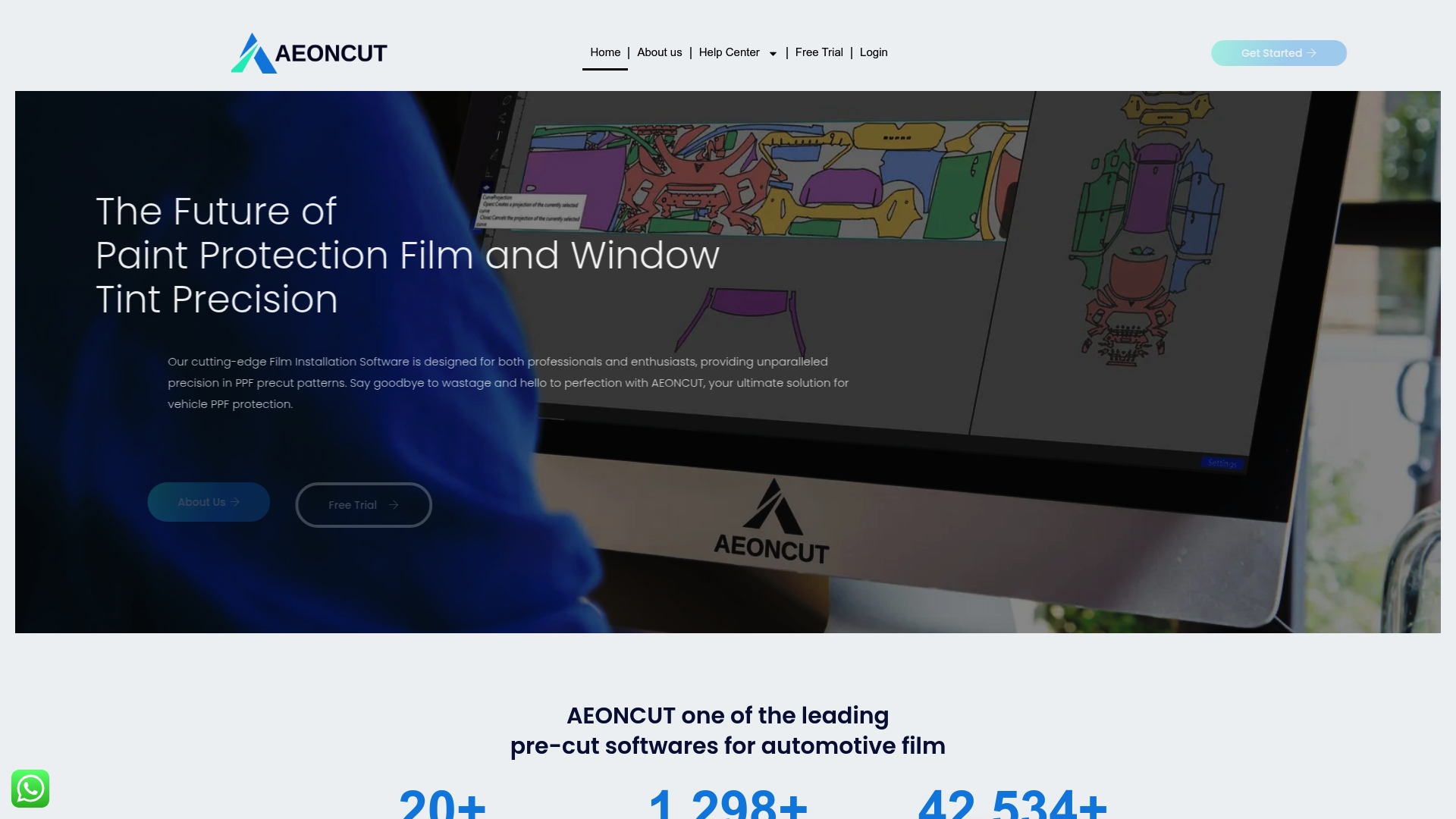
Integrating master window tint software into your workflow means faster job completion, consistent quality, and impressed clients who notice flawless edges and perfect fits. Precut software reduces film waste, directly boosting your bottom line by preserving expensive ceramic and security film rolls. The cloud-based platform delivers unlimited pattern access, regular updates, and comprehensive support, scaling with your business whether you run a single shop or multi-location operation. Explore mobile paint protection software capabilities to expand service offerings beyond window tinting.
Frequently asked questions
What factors most significantly influence commercial window tinting costs?
Film type and installation complexity dominate pricing. Ceramic films cost double standard dyed films, whilst high or difficult-access windows demand specialised equipment and extended labour hours. Project size, location, and existing tint removal further modulate total costs.
What is the typical price range for commercial window tinting?
Most commercial jobs range from £4 to £15 per square foot depending on film selection and installation difficulty. Standard films in accessible locations sit at the lower end, whilst ceramic or security films in multi-storey buildings command premium pricing. Always quote after site assessment.
How can installers maximise profit margins on commercial tinting jobs?
Develop tiered package pricing spanning basic to premium options, allowing natural upselling based on client priorities. Focus on value delivery through expert consultations, quality guarantees, and post-installation support. Specialised films and complex installations justify profit margins of 30% to 50%.
Does old tint removal significantly increase project costs?
Yes, removing existing tint adds substantial labour time for scraping, adhesive removal, and surface cleaning before new film application. Charge separately for removal work, factoring in adhesive condition and window size. This prevents underquoting jobs requiring full strip and reapplication.
Why do ceramic films cost more than standard tinted films?
Ceramic films utilise advanced nano-ceramic particle technology delivering superior heat rejection, UV protection, and optical clarity without metallic interference affecting signals. Manufacturing complexity and performance benefits justify premium pricing. Clients prioritising comfort and energy savings readily invest in ceramic options when benefits are quantified.
How does project size affect per square foot pricing?
Larger commercial contracts enable volume discounts due to bulk material purchasing and streamlined logistics across identical window types. However, multi-floor coordination, extended timelines, and site access challenges can offset economies of scale. Balance competitive volume pricing against logistical complexity. Review pricing window tinting profitably for scalable pricing frameworks.
Recommended
- Cost of Window Tinting: 2025 Guide for Installers – AEONCUT PPF Pre-cut Cutting software
- Car Window Tinting Cost – Key Factors for Installers – AEONCUT PPF Pre-cut Cutting software
- 6 Essential Factors Shaping House Window Tinting Prices – AEONCUT PPF Pre-cut Cutting software
- What Type of Window Tint Is Best for Professional Installers – AEONCUT PPF Pre-cut Cutting software