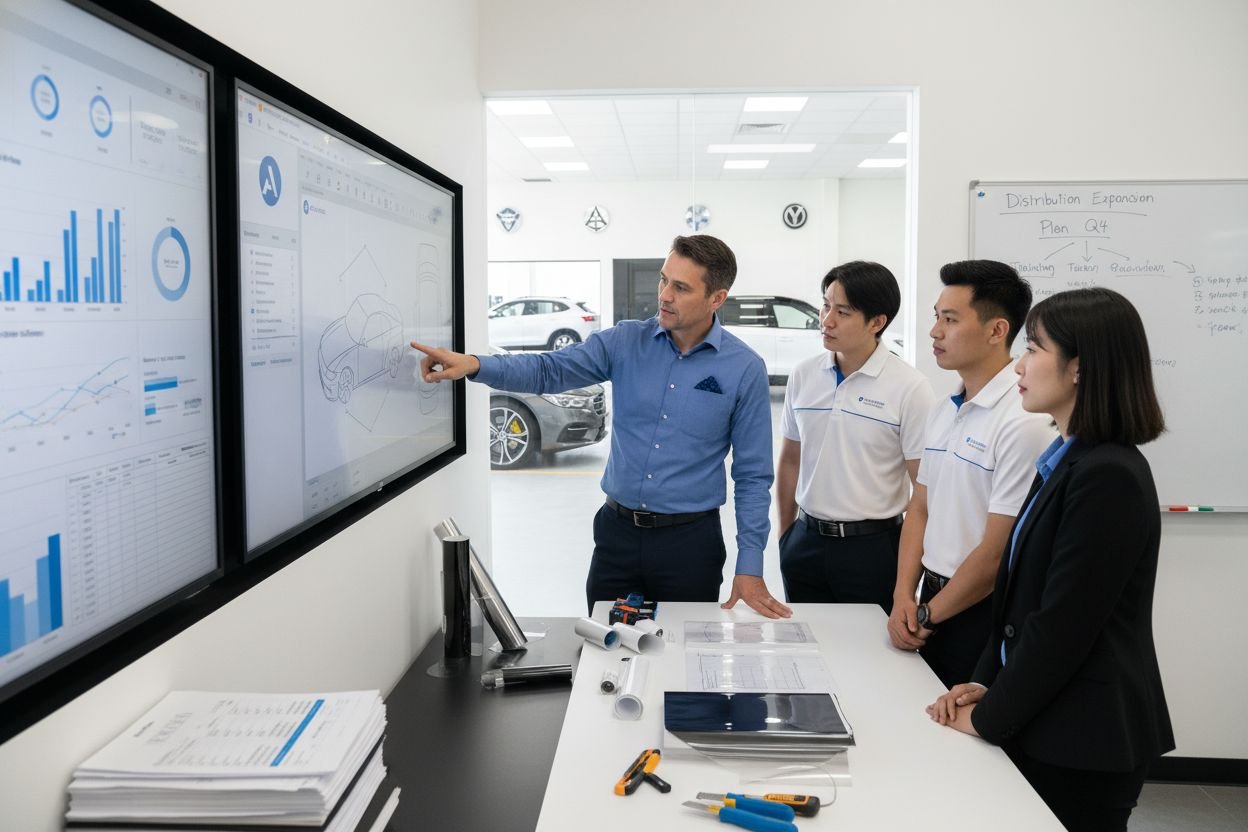
Many professional installers assume one way window tint delivers 24/7 privacy, yet its reflective privacy effect only works when the outside is brighter than the inside, failing at night or low light conditions. This lighting dependency creates mismatched client expectations and installation challenges you can overcome with precision cutting software and proper technique. We’ll guide you through one way tint technology, legal compliance in North America, installation best practices, and how advanced software like AEONCUT boosts your accuracy and efficiency by up to 60%.
Table of Contents
- Understanding One Way Window Tint Technology
- Legal and Regulatory Compliance for One Way Window Tint in North America
- Installation Challenges and Solutions
- Advanced Software Solutions for Precision Tint Cutting
- Common Misconceptions About One Way Window Tint
- Bridging Understanding to Practical Application
- Elevate Your One Way Window Tint Installation With AEONCUT
Key Takeaways
| Point | Details |
|---|---|
| One way tint requires exterior brightness | Reflective privacy works only when outside light exceeds interior illumination, protecting heat and UV rays effectively |
| Legal restrictions vary across regions | Most North American jurisdictions ban mirror tints, but compliant alternatives with proper VLT exist |
| AI cutting software accelerates workflow | Advanced platforms reduce installation time by 60% and film waste by 15% through precision patterns |
| Controlled environments prevent defects | Professional setups with temperature and dust control eliminate bubbling, cracking, and peeling issues |
Understanding One Way Window Tint Technology
One way window tint works by reflecting light from brighter outside environments and allowing clear visibility from the inside, providing privacy and heat rejection benefits. This reflective property depends entirely on lighting contrast between exterior and interior spaces. When sunlight floods the outside while your vehicle cabin stays darker, the metallic or ceramic layers in the film create a mirror effect that blocks outside observation.
The technology delivers measurable performance advantages beyond privacy:
- Up to 70% solar heat rejection keeps interiors cooler
- 99.9% UV protection prevents interior fading and skin damage
- Glare reduction improves driver visibility and comfort
- Energy efficiency reduces air conditioning load
You’ll notice effectiveness varies dramatically with lighting conditions. During bright daylight, occupants enjoy clear outward views while outsiders see only reflections. At night or in dim conditions, the contrast reverses and interior lighting makes the cabin visible from outside. This fundamental limitation means you must educate clients that one way tint offers conditional privacy, not absolute concealment. Understanding this lighting dependency helps you set realistic expectations and recommend appropriate applications. The heat rejection window film overview explores how metallic and ceramic films balance reflectivity with heat control. Professional installers who grasp these technical principles position themselves as trusted advisors rather than order takers. You can verify technical data on one way tints to compare film specifications across manufacturers.
Legal and Regulatory Compliance for One Way Window Tint in North America
Most North American states prohibit one way mirror type window tints due to visible light transmission laws but alternative reflective films with legal VLT compliance exist for installers. Each jurisdiction enforces specific Visible Light Transmission percentages that determine how much light must pass through automotive glass. These regulations typically ban fully mirrored exteriors while permitting reflective films that meet minimum VLT thresholds.
Navigating compliance requires attention to several regulatory layers:
- State and provincial laws set baseline VLT requirements for windshields, front side windows, and rear windows
- Local municipalities sometimes impose stricter limits than state regulations
- Commercial vehicles face different standards than passenger cars
- Law enforcement officers use light meters to verify compliance during traffic stops
You face penalties ranging from fines to installation license suspension when applying illegal films. Most regions allow higher reflectivity on rear windows compared to front side glass, creating opportunities for graduated tint designs that maximize privacy where legally permissible. California permits 70% VLT on front side windows with limited reflectivity, while Texas allows 25% VLT with more reflective options on rear glass. Staying current with changing regulations protects your business and builds client trust. You should consult legal restrictions on one way window tint regularly to verify jurisdiction specific requirements before each installation.
Pro Tip: Create a digital reference chart mapping VLT limits and reflectivity rules for every state and province you service, updating it quarterly to catch regulatory changes that affect your installation practices.
Installation Challenges and Solutions
Poor installation environments create defects that undermine even premium one way tint films. Dust particles, temperature fluctuations, and humidity variations cause bubbling, cracking, and premature peeling that damage your reputation and trigger warranty claims. Professional window tinting processes require controlled environmental conditions including temperature and dust control to ensure the durability and aesthetic quality of one way window tint installations.
Establishing optimal conditions solves common installation problems:
- Climate controlled workspace maintains 20 to 25 degrees Celsius for proper adhesive activation
- HEPA filtration systems remove airborne particles that create trapped debris
- Humidity levels between 40% and 60% prevent adhesive complications
- Clean room protocols minimize contamination from clothing and equipment
Certified technicians using precision cutting software achieve flawless one way tint installation with no bubbling, cracking, or peeling, improving long term durability and customer satisfaction. You need squeegees, heat guns, and slip solutions specifically designed for reflective films, which behave differently than standard dyed tints during application. The metallic layers in one way films require gentler heat application to avoid delamination, while their rigidity demands more aggressive squeeze techniques to evacuate water.
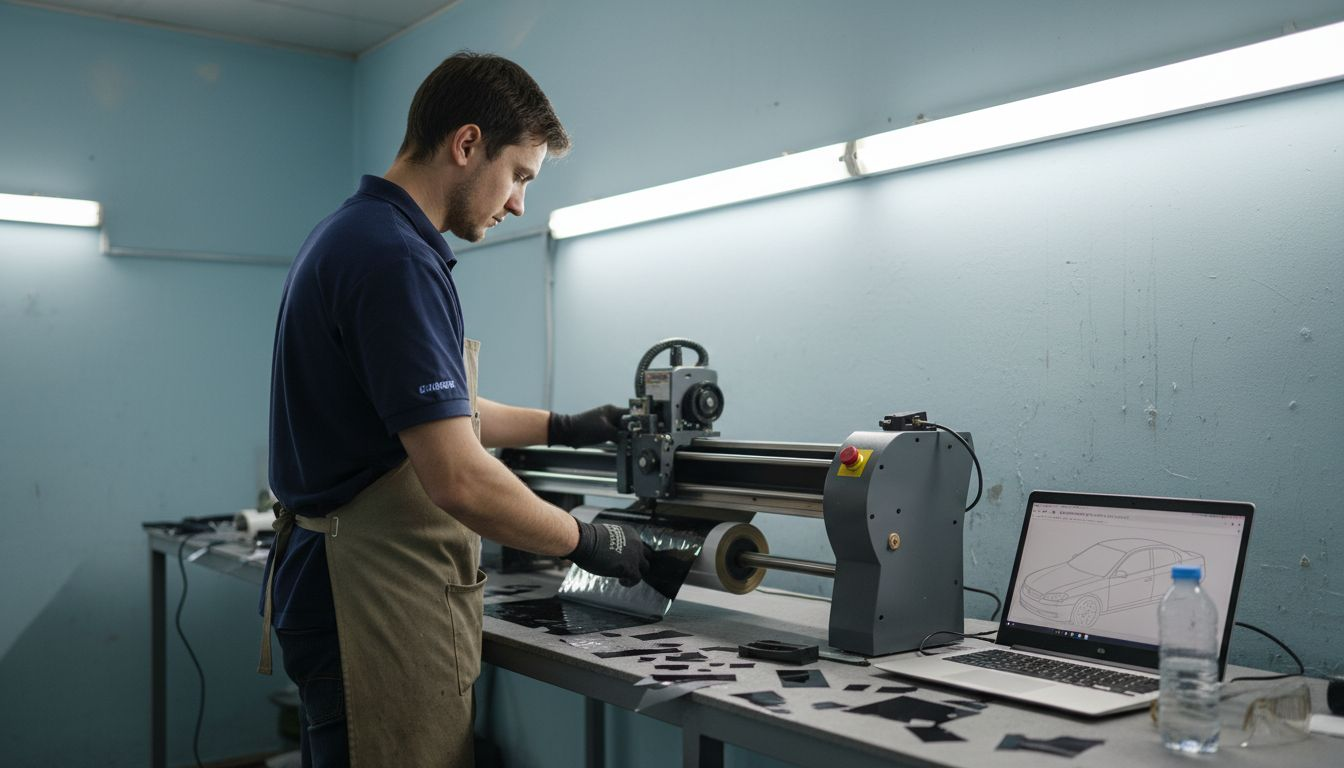
Proper curing protocols extend tint lifespan significantly. You should advise clients to avoid window operation for 3 to 5 days post installation, allowing adhesive to fully bond. Expert tint installation standards detail temperature and humidity specifications that optimize curing. Training your team on film specific handling prevents costly do overs and warranty work. Investment in controlled installation environments pays dividends through reduced material waste and enhanced client satisfaction.
Pro Tip: Document environmental conditions for each installation using data loggers, creating quality control records that demonstrate professionalism and support warranty claims if clients report issues.
Advanced Software Solutions for Precision Tint Cutting
Cutting edge software transforms one way window tint installation from labor intensive craft to efficient production workflow. AEONCUT provides AI driven auto nesting and extensive pattern libraries; Platinum Cut software reduces installation time by up to 60%; Film Designs 4 offers over 130000 patterns and offline usability. These platforms eliminate manual templating, reduce film waste, and ensure consistent precision across installations.
| Software | Key Advantage | Pattern Count | Special Feature |
|---|---|---|---|
| AEONCUT | AI auto nesting reduces waste 15% | 100000+ | Cloud updates weekly |
| Platinum Cut | 60% faster installation workflow | 95000+ | Largest vehicle database |
| Film Designs 4 | Offline capability for remote shops | 130000+ | No internet required |
AI driven auto nesting analyzes film dimensions and pattern layouts to optimize material usage, cutting waste from typical 20% down to 5% or less. This efficiency directly improves your profit margins on every installation. The technology automatically rotates and positions patterns to minimize scrap while maintaining grain direction for reflective films. Cloud based updates keep your pattern library current with new vehicle models released throughout 2026, ensuring you never turn away a client because you lack their vehicle template.
Integration with cutting plotters automates the physical cutting process:
- USB or wireless connectivity streams patterns directly to cutting devices
- Pressure and speed settings optimize for different film thicknesses
- Multi layer cutting handles complex curves and compound surfaces
- Batch processing prepares multiple vehicle patterns simultaneously
You gain competitive advantages through speed and consistency that manual cutting cannot match. A top tint cutting software comparison reveals how different platforms balance pattern coverage, ease of use, and cost. Advanced cutting techniques for installers explores software specific workflows that maximize throughput. The AEONCUT software advantages include seamless updates and comprehensive technical support that keeps your operation running smoothly.
Pro Tip: Calculate your current film waste percentage over one month, then project annual savings from 15% waste reduction to justify software investment through measurable ROI rather than subjective efficiency claims.
Common Misconceptions about One Way Window Tint
Widespread myths about one way window tint create installation problems and disappointed clients when reality fails to match expectations. One way window tint does not block visibility at night or in low light; Its effectiveness depends on lighting conditions. You must educate customers about this fundamental limitation before installation to prevent satisfaction issues and negative reviews.
Several misconceptions plague the industry:
- One way tint provides constant 24 hour privacy regardless of lighting (false)
- All reflective films labeled one way meet North American legal standards (false)
- DIY installation achieves the same quality as professional application (false)
- One way tint blocks more heat than ceramic films (depends on specific product)
- Darker tint percentages always increase privacy (reflectivity matters more than darkness)
The night visibility reversal surprises many vehicle owners who assume daytime performance continues after dark. When interior cabin lights activate or phone screens glow, the lighting contrast flips and outside observers see into the vehicle clearly. You should demonstrate this effect during client consultations using a light source to illustrate how brightness differential drives the privacy effect. Setting accurate expectations prevents disputes and builds trust through transparency.
Not all films marketed as one way comply with regional VLT regulations. Some manufacturers sell highly reflective products suitable for residential or commercial buildings but illegal for automotive use in most jurisdictions. You protect your license and reputation by verifying compliance before ordering inventory. Professional installation matters critically because one way films cost significantly more than standard tints, making amateur mistakes expensive. The misconceptions about one way tint highlights how lighting physics determines performance regardless of film quality.
Bridging Understanding to Practical Application
Translating technical knowledge into streamlined workflows requires strategic software selection and operational refinement. You need evaluation criteria that match your shop’s specific needs rather than chasing feature lists that sound impressive but offer little practical value.
Follow these prioritized steps for software adoption:
- Audit your current vehicle mix to ensure pattern database covers 95% of jobs
- Verify plotter compatibility and test integration before committing to subscriptions
- Calculate waste reduction ROI using your actual material costs and monthly volume
- Evaluate cloud update frequency to maintain current model year coverage
- Test customer support responsiveness during trial periods before purchase
Pattern database coverage matters more than total pattern count because having 130000 templates means nothing if your regional market drives vehicles not included. You should request detailed coverage reports showing pattern availability for your top 50 vehicle models before selecting software. Integration capability determines whether software enhances or disrupts your existing workflow, so compatibility testing prevents expensive mistakes.
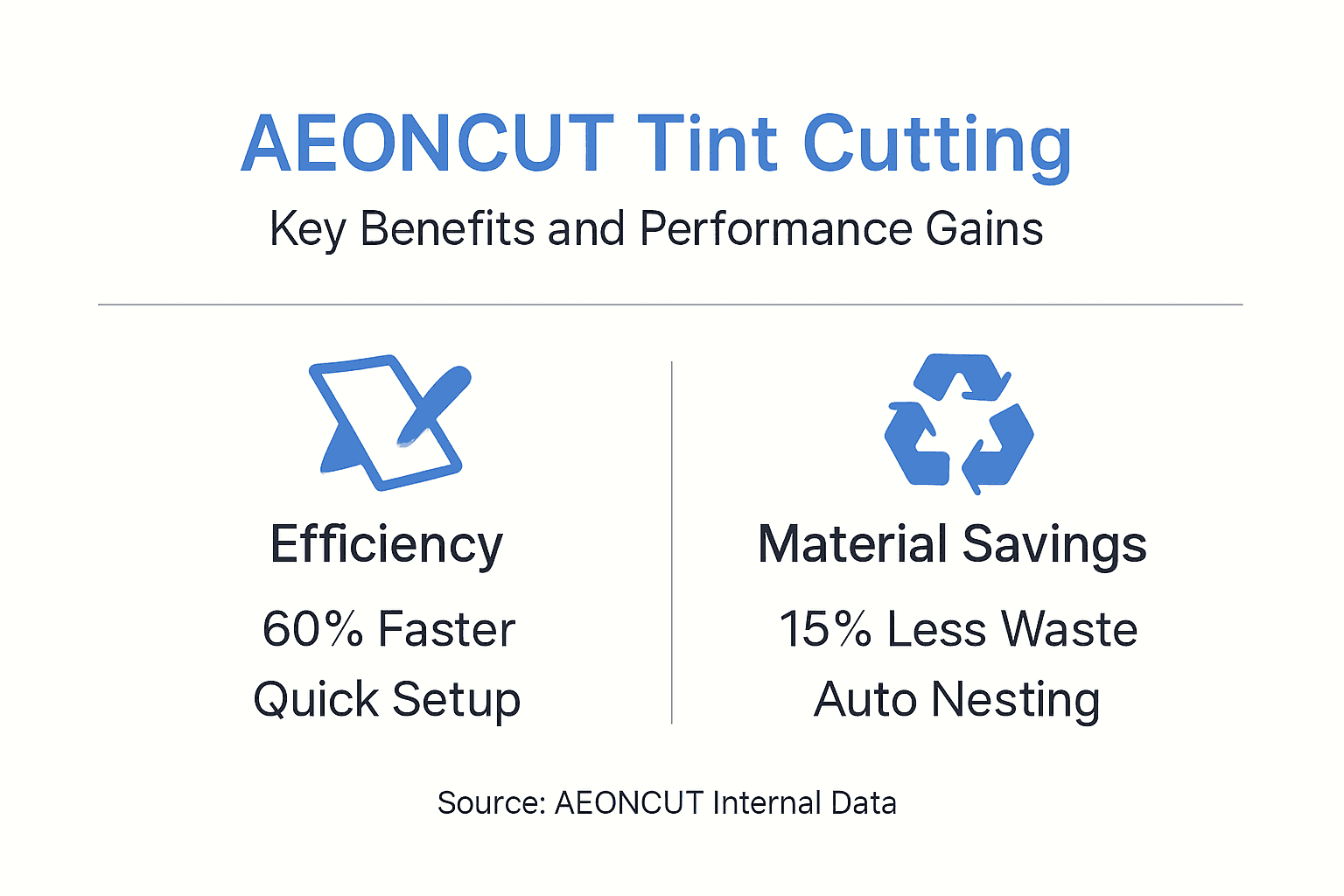
Establishing controlled installation environments pays long term dividends through reduced defect rates and warranty claims. You can start with basic improvements like HEPA air filtration and climate control, then add humidity monitoring as budgets allow. AI optimized layouts minimize film waste and speed workflow by eliminating manual pattern arrangement, freeing installers to focus on application quality. The best window tint pattern tools examines how different platforms balance automation with user control.
Regularly training installation teams on new tools and legal updates maintains quality standards as your operation scales. You should schedule quarterly sessions covering software updates, technique refinements, and regulatory changes. Choosing precision tint software guides you through feature prioritization based on shop size and specialization. Understanding software vs manual cutting efficiency quantifies productivity gains in measurable metrics rather than subjective impressions.
Pro Tip: Track three metrics before and after software adoption: average installation time per vehicle, film waste percentage, and customer satisfaction scores to demonstrate ROI and identify areas needing additional training or process refinement.
Elevate Your One Way Window Tint Installation with AEONCUT
You’ve mastered the technical principles, legal requirements, and installation challenges that define professional one way window tint application. Now you need tools that translate expertise into competitive advantages through speed, precision, and efficiency.
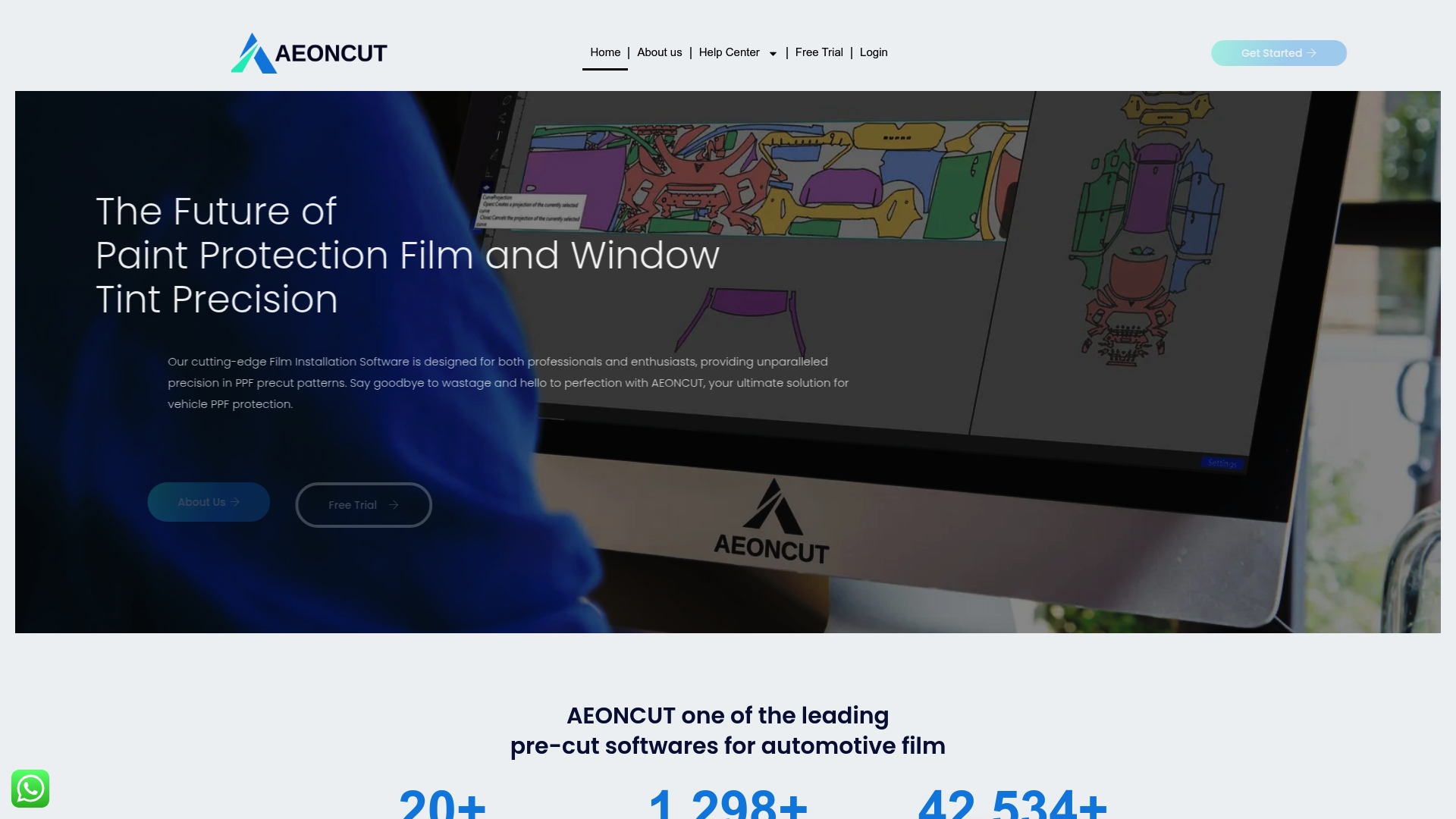
AEONCUT delivers AI driven auto nesting that cuts installation times by up to 60% while reducing material waste by 15% through intelligent pattern optimization. You gain access to the industry’s most comprehensive vehicle pattern library, updated weekly via cloud to ensure coverage for 2026 model releases. Our platform integrates seamlessly with all major cutting plotters, automating pattern transfer and eliminating manual template creation. Expert support teams guide you through setup, troubleshooting, and workflow optimization to maximize your return on investment. Professional installers using master window tint software report dramatic efficiency gains and reduced material costs. Discover how automatic car tint software transforms your operation from labor intensive to precision automated. Compare AEONCUT against alternatives using our best window tint pattern tools analysis.
Frequently Asked Questions
What sets one way window tint apart from standard tints?
One way window tint features metallic or ceramic layers that reflect exterior light, creating a mirror effect when outside brightness exceeds interior illumination. Standard tints absorb light through dyes or pigments without reflective properties, offering privacy through darkness alone rather than lighting contrast.
How do I ensure my one way tint installations comply with state laws?
Verify Visible Light Transmission percentages for each window position against your jurisdiction’s regulations before installation, using light meters to confirm compliance. Maintain updated reference charts for all states and provinces you service, consulting legal resources quarterly to catch regulatory changes.
Which cutting software is best for minimizing film waste?
AEONCUT’s AI driven auto nesting reduces film waste by up to 15% through intelligent pattern layout optimization that considers film dimensions, grain direction, and vehicle specific curves. The software automatically positions patterns to maximize usable material while maintaining quality standards.
Can one way tint reduce interior heat effectively?
Quality one way window films reject up to 70% of solar heat through metallic or ceramic layers that reflect infrared radiation before it enters the cabin. This performance often matches or exceeds ceramic tints, though specific results depend on film thickness, reflectivity, and installation quality.
Is professional installation critical for one way window tint performance?
Professional installation in controlled environments prevents bubbling, peeling, and cracking that compromise both appearance and function, protecting your investment in premium reflective films. Certified technicians using precision tools and proper curing protocols deliver durability that DIY methods cannot match.
Recommended
- Window Tinting Cheapest Price: Save 50% with Dyed Films in 2026 – AEONCUT PPF Pre-cut Cutting software
- Master Window Tint Cut Software for Perfect Film Fitting – AEONCUT PPF Pre-cut Cutting software
- Cost of Window Tinting: 2025 Guide for Installers – AEONCUT PPF Pre-cut Cutting software
- Window Glass Sun Protection Film: Maximising Efficiency – AEONCUT PPF Pre-cut Cutting software