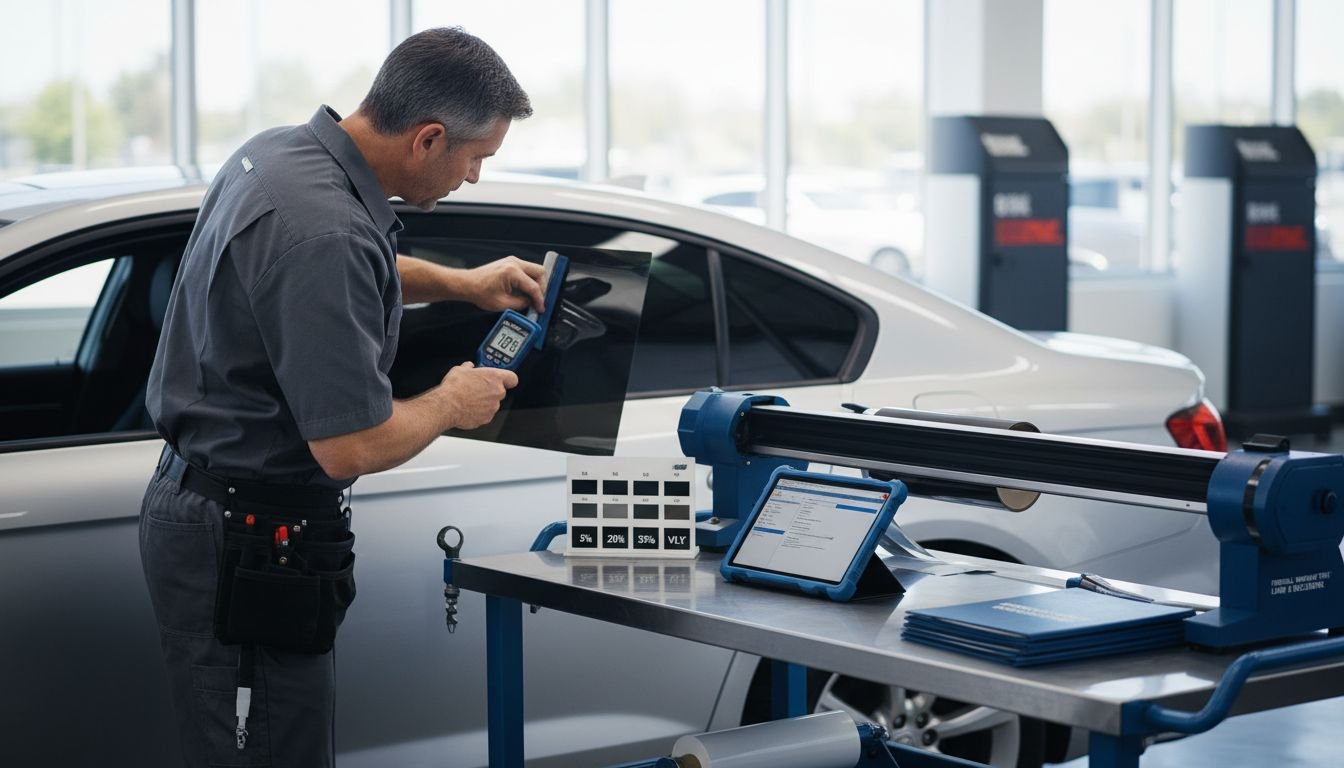
Pricing paint protection film services accurately remains one of the most challenging aspects of running a profitable installation business. Many installers struggle to balance competitive market rates with the need to cover all costs and generate healthy margins. Understanding the precise cost components, applying proven pricing methodologies, and implementing strategic upselling can transform your business from barely breaking even to consistently profitable. This guide provides professional installers with actionable frameworks to calculate costs, set prices confidently, and optimise profitability through overhead management and technology.
Table of Contents
- Key takeaways
- Understanding the cost components in paint protection pricing
- Pricing paint protection services based on vehicle coverage and film type
- Optimising profitability through overhead management and upselling
- Leveraging software and supplier negotiations to reduce costs and waste
- Discover AEONCUT software and resources to streamline your PPF pricing and installation
- Frequently asked questions about pricing paint protection services
Key Takeaways
| Point | Details |
|---|---|
| Cost plus pricing | The industry standard pricing method covers film cost labour hours, pattern software allocations, overhead and a target margin to secure profit. |
| Film cost range | Material costs range from £15 to £35 per square foot depending on film type and supplier. |
| Overhead allocation | Overheads are allocated as a percentage of direct costs, typically thirty to fifty per cent. |
| Time tracking benefits | Installing time tracking software yields accurate labour hours per vehicle type and coverage area to refine pricing. |
Understanding the cost components in paint protection pricing
Accurate pricing begins with understanding every cost element that contributes to delivering paint protection services. The foundation of professional pricing relies on identifying material costs, labour requirements, software expenses, overhead allocation, and target profit margins. Missing or underestimating any component leads directly to unprofitable jobs that erode your business viability.
The industry standard PPF pricing uses cost-plus methodology: Suggested Price equals Film Cost plus Labour Hours multiplied by Billable Rate plus Pattern Software Allocation, then multiplied by one plus Overhead Percentage, then multiplied by one plus Target Margin Percentage. This formula ensures every expense gets covered whilst building in your desired profit. Material costs include the actual film purchased from suppliers, typically ranging from £15 to £35 per square foot depending on quality and finish. Labour represents the billable hours spent on installation multiplied by your shop’s hourly rate, which varies based on technician experience and regional market conditions.
Software and pattern fees represent an often overlooked cost component. Professional installers invest in cutting software subscriptions and pattern libraries that streamline installation and reduce material waste. These costs should be allocated across jobs based on usage frequency. Overhead encompasses all fixed and variable expenses beyond direct job costs: rent, utilities, insurance, marketing, administrative salaries, and equipment depreciation. Most successful shops allocate overhead as a percentage of direct costs, typically ranging from 30% to 50% depending on business size and location.
Your target margin sits atop all other costs and represents actual profit. Industry professionals typically aim for 20% to 35% net margins on paint protection services, with higher margins achievable through efficiency gains and premium positioning. Tracking these components precisely allows you to adjust pricing dynamically as costs fluctuate, ensuring consistent profitability across all jobs.
Cost component breakdown:
- Film material costs per square foot based on supplier pricing and film type
- Labour hours multiplied by your established billable rate per technician
- Pattern and software subscription costs allocated per job or monthly
- Overhead percentage covering all fixed business expenses
- Target profit margin ensuring business growth and sustainability
| Cost component | Typical range | Notes |
|---|---|---|
| Film material | £15-£35/sq ft | Varies by quality, finish, and supplier |
| Labour rate | £40-£75/hour | Based on technician skill and market |
| Software allocation | £5-£15/job | Depends on subscription model |
| Overhead | 30-50% | Percentage of direct costs |
| Target margin | 20-35% | Net profit after all expenses |
Pro Tip: Install time-tracking software that logs actual labour hours per vehicle type and coverage area. After completing 20-30 installations, you’ll have precise data showing your true labour costs, allowing you to refine pricing and identify efficiency opportunities that competitors miss.
Understanding these cost components provides the foundation for the protection film car price guide framework, whilst the car protection film cost guide offers deeper insights into material cost management strategies.
Pricing paint protection services based on vehicle coverage and film type
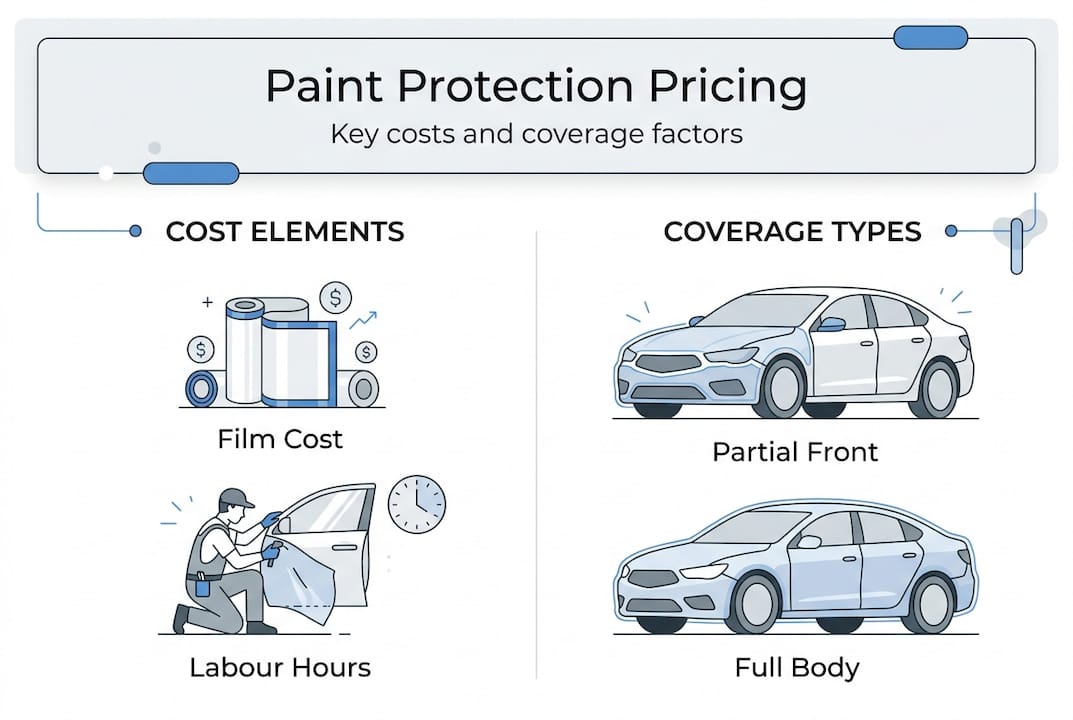
Once you understand cost components, translating them into actual service prices requires considering coverage extent and film type. Market benchmarks provide guidance, but your specific costs and positioning determine final pricing. Professional installers typically offer tiered packages based on coverage area: partial front, full front, and full body protection.
Partial front coverage protects high-impact zones like the bonnet leading edge, front bumper, wing mirrors, and headlights. 2025-2026 US benchmarks show £900-£2,500 for partial front installations, with pricing influenced by vehicle size and film quality. Full front coverage extends protection across the entire bonnet, full bumper, wings, and headlights, typically ranging from £1,800 to £3,500. Full body installations that wrap the entire vehicle command premium pricing, generally starting at £5,000 and extending beyond £8,000 for luxury or large vehicles.
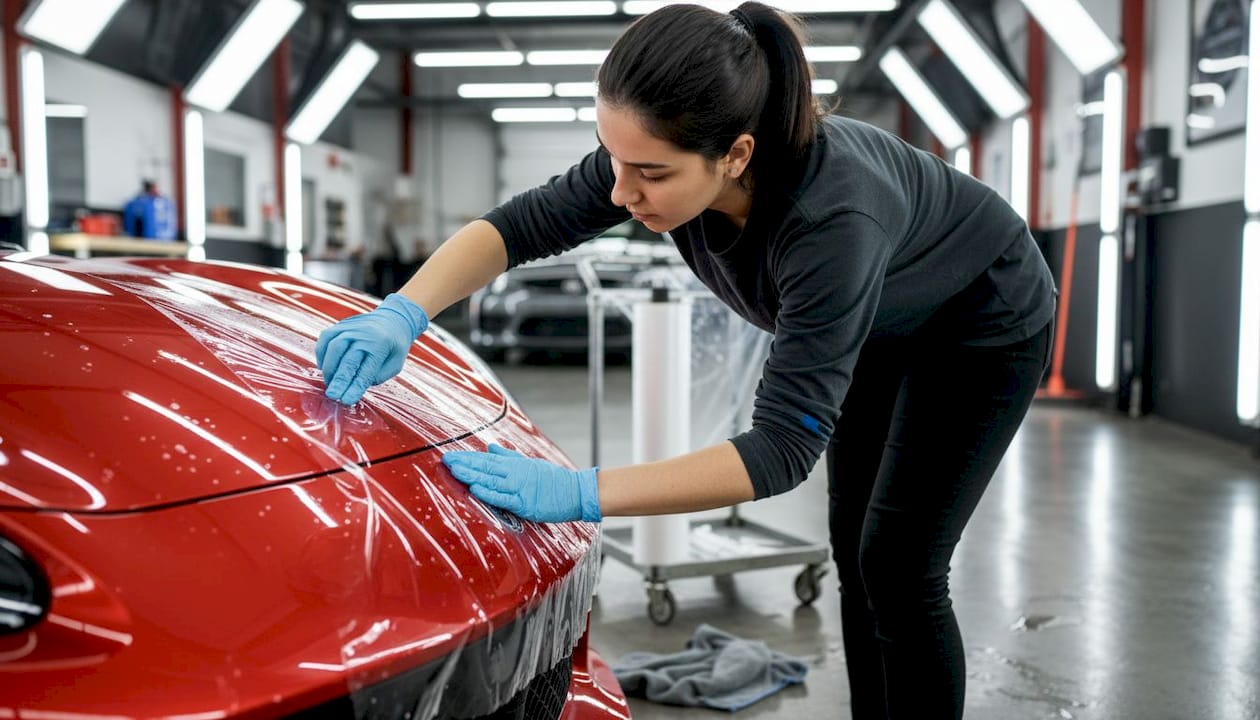
Film type dramatically impacts pricing structure. Clear PPF represents the baseline option, providing invisible protection whilst maintaining original paint appearance. Colour PPF introduces aesthetic customisation alongside protection, commanding significant premiums. Colour PPF priced 15-40% premium over clear due to material costs, specialised application techniques, and the enhanced value proposition. Matte, satin, and metallic finishes further increase pricing due to limited availability and installation complexity.
Vehicle class influences pricing beyond simple surface area calculations. Exotic and luxury vehicles require additional care, precision, and often custom pattern work, justifying 25% to 50% premiums over standard vehicles. Complex body lines, intricate curves, and tight tolerances demand experienced technicians and extended installation time. Regional market conditions also affect pricing, with metropolitan areas supporting higher rates than rural locations due to elevated overhead costs and different customer expectations.
Pricing comparison by coverage and film type:
| Coverage level | Clear PPF range | Colour PPF range | Typical labour hours |
|---|---|---|---|
| Partial front | £900-£2,500 | £1,100-£3,200 | 3-6 hours |
| Full front | £1,800-£3,500 | £2,200-£4,500 | 6-10 hours |
| Full body | £5,000-£8,000 | £6,500-£10,500 | 16-24 hours |
| Exotic/luxury | +25-50% premium | +30-60% premium | +20-40% time |
Factors influencing pricing beyond coverage:
- Vehicle make, model, and body complexity affecting installation difficulty
- Regional market rates and local competition positioning
- Film brand reputation and warranty terms influencing perceived value
- Seasonal demand fluctuations creating pricing opportunities
- Customer segment targeting affecting premium positioning viability
Pro Tip: Create visual comparison samples showing clear versus colour PPF finishes on similar paint colours. When clients see and touch the difference, they understand the value premium immediately, increasing colour PPF conversion rates by 30% or more whilst justifying higher pricing.
The PPF for car price guide explores coverage-based pricing in greater depth, whilst auto paint protection film insights examines film type selection considerations that inform pricing strategies.
Optimising profitability through overhead management and upselling
Mastering cost components and coverage-based pricing establishes your baseline profitability, but truly successful installers maximise margins through disciplined overhead control and strategic upselling. Understanding where money disappears in overhead and identifying high-margin add-on opportunities transforms good businesses into exceptional ones.
Overhead represents the silent profit killer in many installation businesses. Wrap shops typically carry £26,000-£45,000 in monthly overhead excluding cost of goods sold. This encompasses payroll for administrative staff, facility rent or mortgage, utilities, insurance premiums, marketing expenditure, equipment maintenance, and depreciation. Each pound spent on overhead must be recovered through job pricing, making overhead management critical to profitability.
Successful installers track overhead meticulously and seek continuous reduction opportunities. Negotiating longer lease terms locks in favourable rent rates. Investing in energy-efficient equipment reduces utility costs over time. Cross-training staff creates flexibility that reduces payroll waste during slow periods. Strategic marketing focused on high-margin services improves return on advertising spend. Even small percentage reductions in overhead translate directly to improved net margins across all jobs.
Upselling represents the fastest path to increased profitability because it leverages existing customer relationships and installation appointments. Prioritising high-margin upsells like PPF post-wrap services with minimal material costs but high labour value can boost average order value by 10% or more. Common high-margin upsells include ceramic coating application over PPF, which requires minimal material cost but commands premium pricing. Window tinting complements PPF installations naturally and uses similar skills. Paint correction before PPF application ensures optimal results whilst adding significant value.
Door handle protection, boot lip guards, and rocker panel extensions represent small add-ons with excellent margins. These items use minimal film but require skilled installation, creating favourable labour-to-material ratios. Presenting these options systematically during initial consultations rather than as afterthoughts increases attachment rates significantly. Creating package bundles that combine PPF with complementary services at slight discounts encourages customers to purchase more whilst maintaining healthy overall margins.
Successful wrap shops achieve 80-88% gross margins on high-value services by focusing on labour-intensive offerings with minimal material costs, demonstrating that strategic service mix drives profitability more than volume alone.
Practical overhead reduction strategies:
- Negotiate bulk purchasing agreements for consumables reducing per-unit costs
- Implement energy-efficient lighting and climate control reducing utility expenses
- Cross-train technicians enabling flexible scheduling during demand fluctuations
- Focus marketing spend on high-margin services improving return on investment
- Regularly review insurance policies and shop for competitive rates annually
Pro Tip: Create a simple spreadsheet tracking monthly overhead as a percentage of revenue. When this percentage creeps above your target range, immediately identify the largest cost increases and address them before they become permanent fixtures eroding profitability.
The PPF installer best practices guide explores operational efficiency strategies that reduce overhead, whilst advanced cutting techniques PPF installers use can decrease installation time and labour costs per job.
Leveraging software and supplier negotiations to reduce costs and waste
Technology and strategic supplier relationships represent the final frontier in cost optimisation for paint protection installers. Professional cutting software and volume-based supplier negotiations directly impact material costs and waste rates, creating competitive advantages that compound over hundreds of installations.
Material waste represents one of the largest controllable costs in PPF installation. Traditional manual pattern creation and cutting methods generate significant scrap, with DIY approaches risking 30-40% material waste. Professional installers using optimised software reduce waste dramatically through precise pattern libraries and intelligent nesting algorithms. AI-driven auto-nesting analyses each pattern piece and arranges them on film rolls to minimise gaps and offcuts, cutting waste below 5% when implemented properly.
The financial impact of reducing material waste from 15% to 5% is substantial. On a full body installation using £800 in material, eliminating 10% waste saves £80 per job. Across 100 installations annually, that represents £8,000 in recovered material costs flowing directly to profit. Software investments typically pay for themselves within months through waste reduction alone, before considering time savings and improved accuracy.
Supplier relationships deserve equal attention to technology investments. Negotiating bulk supplier discounts of 5-15% on volume purchases reduces material costs significantly. Establishing preferred supplier status often unlocks additional benefits: priority access to new products, extended payment terms improving cash flow, and technical support for challenging installations. Concentrating purchases with fewer suppliers increases your leverage whilst simplifying inventory management.
Quality considerations must balance cost negotiations. Cheaper film that fails prematurely destroys your reputation and creates costly warranty claims that eliminate any initial savings. Evaluate suppliers based on total cost of ownership including warranty terms, technical support quality, and product consistency rather than simply unit price. Building relationships with reputable suppliers who stand behind their products protects long-term profitability.
Software impact comparison:
| Approach | Material waste | Cost per £1,000 material | Annual waste (100 jobs) |
|---|---|---|---|
| Manual cutting | 15-25% | £150-£250 | £15,000-£25,000 |
| Basic software | 8-12% | £80-£120 | £8,000-£12,000 |
| AI-optimised nesting | 3-5% | £30-£50 | £3,000-£5,000 |
| Savings potential | 10-20% reduction | £100-£200/job | £10,000-£20,000/year |
Supplier negotiation strategies:
- Consolidate purchases with fewer suppliers to increase volume leverage
- Request annual contracts with locked pricing protecting against increases
- Ask for extended payment terms improving cash flow management
- Negotiate free shipping thresholds reducing per-order logistics costs
- Establish preferred installer status unlocking priority support and products
Pro Tip: Schedule quarterly pattern library updates even if your software provider doesn’t require it. New vehicle models enter the market constantly, and having current patterns immediately available prevents last-minute scrambling and maintains professional image with clients driving latest models.
The PPF pattern libraries explained article details how comprehensive pattern databases reduce custom work, whilst AI AutoNest in PPF cutting explores the technology driving waste reduction below 5%.
Discover AEONCUT software and resources to streamline your PPF pricing and installation
Implementing the pricing strategies and cost optimisation techniques outlined in this guide requires the right tools and knowledge base. AEONCUT software provides professional installers with cutting-edge pattern creation technology that minimises material waste through AI-driven auto-nesting whilst maintaining precision across thousands of vehicle models. The platform’s extensive pattern libraries eliminate time-consuming custom work, allowing you to quote accurately and install efficiently.
Beyond software capabilities, AEONCUT offers comprehensive resources designed specifically for professional installers seeking to improve profitability. The apply PPF step-by-step guide walks through installation techniques that reduce labour time whilst maintaining quality standards. PPF installer best practices explores operational strategies proven to increase margins and customer satisfaction. The PPF pattern libraries resource explains how comprehensive databases support accurate pricing and efficient installation workflows. These tools and guides work together to help you implement the pricing frameworks and cost controls that transform installation businesses from surviving to thriving.
Frequently asked questions about pricing paint protection services
How do labour rates impact final PPF pricing?
Labour rates directly determine the largest cost component in most paint protection installations. Your billable rate multiplied by installation hours creates the labour cost baseline, which then gets marked up by overhead and margin percentages. Higher rates require justification through superior quality, faster completion, or enhanced customer experience, but directly increase profitability when market positioning supports them.
What causes price differences between clear and colour PPF?
Colour PPF commands 15-40% premiums over clear film due to higher material costs, specialised application techniques, and enhanced aesthetic value. Colour films cost more to manufacture, require careful colour matching and consistency, and often involve more complex installation processes. The premium also reflects the transformative visual impact that justifies higher pricing in customer perception.
How can installers reduce material waste?
Professional cutting software with AI-optimised nesting reduces waste below 5% by intelligently arranging pattern pieces on film rolls. Maintaining current pattern libraries eliminates custom cutting that generates excess scrap. Proper storage preventing film damage and careful handling during installation further minimise waste. These practices compound to significantly reduce material costs per installation.
Are overheads usually included in service quotes?
Professional installers always include overhead allocation in pricing, though it’s rarely itemised separately on customer quotes. Overhead typically adds 30-50% to direct costs and covers all business expenses beyond materials and direct labour. Failing to account for overhead in pricing guarantees unprofitability regardless of how busy your shop appears.
What is the best software to manage PPF patterns and pricing?
AEONCUT software provides comprehensive pattern libraries, AI-driven auto-nesting for waste reduction, and cloud-based updates ensuring access to latest vehicle models. The platform’s precision cutting capabilities and material optimisation directly support accurate pricing by reducing waste and installation time. Professional and enterprise subscription tiers offer features scaled to different business sizes and needs. Explore the car protection film cost guide for additional pricing insights supported by efficient software tools.
Recommended
- Paint Protection Cost: Factors Impacting Professional Pricing – AEONCUT PPF Pre-cut Cutting software
- How to Price Window Tinting for Maximum Profitability – AEONCUT PPF Pre-cut Cutting software
- How to Find Reliable Auto Paint Protection Near Me Easily – AEONCUT PPF Pre-cut Cutting software
- Car Protection Film Cost: Complete Breakdown Guide – AEONCUT PPF Pre-cut Cutting software