Many professional installers believe one way tinted window films deliver absolute privacy around the clock, but this widespread assumption is fundamentally incorrect. The reality involves complex optical physics, ambient light ratios, and installation nuances that separate exceptional results from disappointed clients. This comprehensive guide equips you with the scientific principles, material comparisons, cutting techniques, and maintenance practices necessary to elevate your one way tinted film installations and set accurate customer expectations.
Table of Contents
- Understanding One Way Tinted Window Film: Optical Properties And Mechanics
- Common Misconceptions About One Way Tinted Window Films
- Comparing One Way Tinted Films To Alternative Tint Types
- Advanced Cutting And Application Techniques For One Way Tinted Film
- Durability And Maintenance For Professional One Way Tinted Films
- Unlock Professional Efficiency With Aeoncut Cutting Software
- FAQ
Key takeaways
| Point | Details |
|---|---|
| Daytime privacy advantage | One way tinted films rely on exterior ambient light exceeding interior light for effective privacy during daylight hours. |
| Night privacy limitation | Privacy reverses at night when interior lighting is stronger, potentially exposing cabin visibility from outside. |
| Signal interference risk | Metallic film layers can reduce GPS and cellular signal strength by disrupting electromagnetic transmission. |
| Digital precision gains | AI-driven pre-cut software reduces material waste by up to 35% whilst improving installation accuracy and speed. |
| Longevity factors | Proper cleaning with pH-neutral products and avoiding abrasives extends film lifespan to 5-7 years under typical conditions. |
Understanding one way tinted window film: optical properties and mechanics
One way tinted window films achieve their distinctive privacy effect through microporous metallic layers engineered to create directional reflectance. During daylight, these films reflect exterior light away from the vehicle whilst allowing occupants clear outward visibility. The physics centres on manipulating reflection, transmission, and absorption ratios to create asymmetric visual access.
The metallic coating acts as a semi-permeable optical barrier. When exterior ambient light intensity surpasses interior illumination, the reflective surface bounces incoming photons back, preventing outside observers from seeing inward. Simultaneously, the film transmits over 70% of visible light on the viewing side, ensuring occupants maintain unobstructed sightlines.
Several factors govern this optical behaviour:
- Metallic particle density determines reflectance intensity and privacy levels
- Film thickness influences light absorption and heat rejection properties
- Ambient light differential between exterior and interior spaces
- Viewing angle affects perceived reflectivity and transmission clarity
- Surface preparation impacts optical uniformity and film adhesion
Professional installers must grasp these principles to communicate realistic privacy expectations. The effect is not magical or absolute. It depends entirely on environmental lighting conditions that fluctuate throughout the day and across seasons. Understanding this optical science prevents overpromising and builds client trust through transparent, educated consultations.
Common misconceptions about one way tinted window films
The most damaging myth plaguing the industry is that one way films provide constant, 24-hour privacy regardless of lighting conditions. This misunderstanding leads to customer dissatisfaction and tarnishes professional reputations. At night, when interior cabin lights illuminate the vehicle whilst exterior darkness prevails, the privacy effect completely reverses. Outside observers gain clear visibility inward whilst occupants face reflective glare on their windows.
Another frequent confusion conflates one way tinted films with blackout or full privacy films. Blackout films block visibility in both directions regardless of lighting, sacrificing outward visibility for complete concealment. One way films maintain transparency from inside, making them fundamentally different products serving distinct purposes.
Metallic layers responsible for reflectivity introduce electronic signal complications. These conductive particles can disrupt GPS, cellular, and radio signals by up to 15%, affecting navigation systems and mobile connectivity. Installers rarely disclose this limitation, leading clients to blame unrelated vehicle electronics for degraded performance.
Key misconceptions include:
- Believing one way films work identically day and night without lighting considerations
- Assuming all tinted films provide equivalent privacy regardless of construction type
- Overlooking potential electronic interference from metallic film components
- Expecting zero interior visibility from outside under all conditions
- Misunderstanding the role of ambient light ratios in privacy effectiveness
Addressing these myths during client consultations demonstrates expertise and manages expectations proactively. Educate customers about lighting dynamics, suggest interior lighting controls for night privacy, and recommend ceramic alternatives when electronic compatibility is paramount. This honest approach builds long-term relationships and reduces warranty claims.
Comparing one way tinted films to alternative tint types
Selecting the optimal window film requires understanding performance tradeoffs across material types. Reflective one way films, dyed films, and ceramic films each deliver distinct advantages depending on client priorities and vehicle usage patterns.
| Feature | One way reflective | Dyed film | Ceramic film |
|---|---|---|---|
| Daytime privacy | Excellent | Moderate | Moderate |
| Night privacy | Poor | Moderate | Moderate |
| Signal interference | High | None | Minimal |
| Heat rejection | Good | Fair | Excellent |
| Durability | 5-7 years | 3-5 years | 8-10 years |
| Cost | Moderate | Low | High |
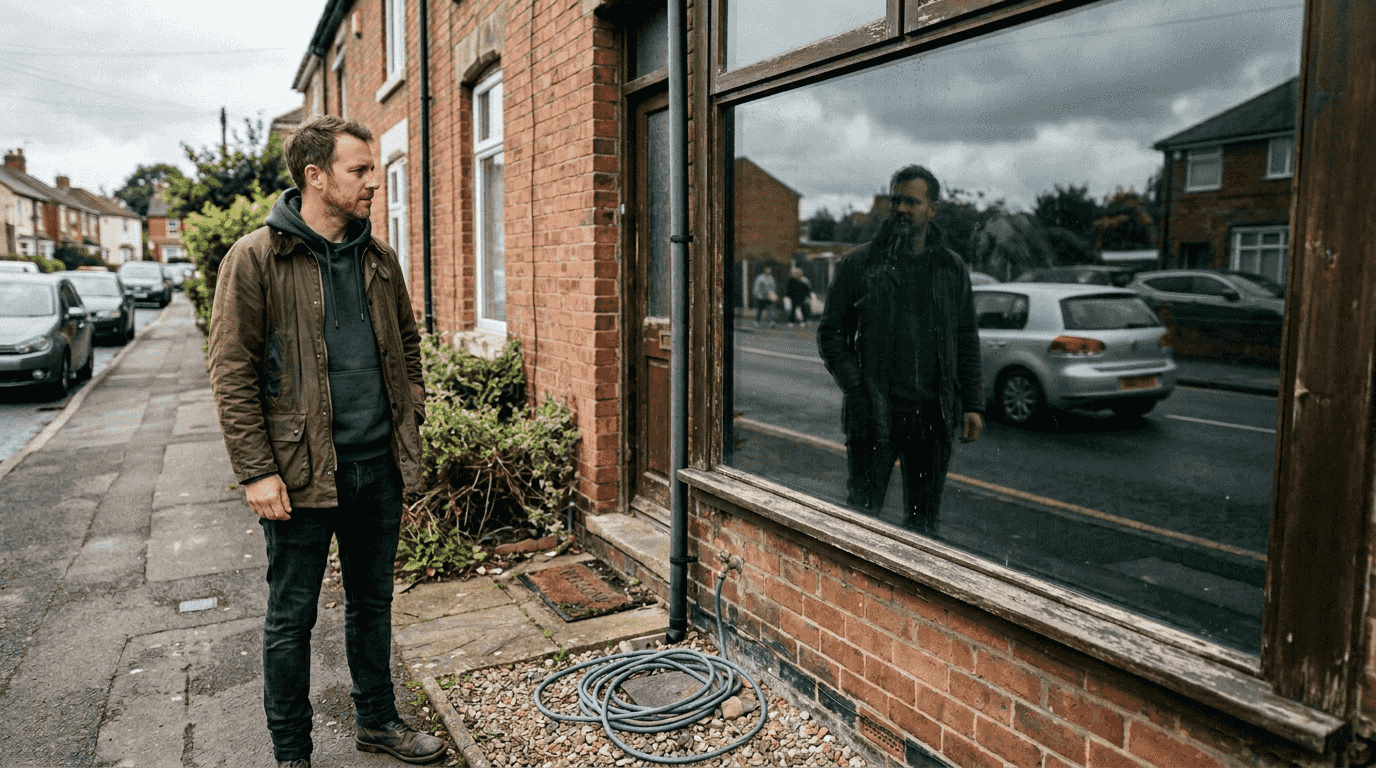
Reflective one way films excel at daytime privacy through metallic coatings that create mirror-like exteriors. However, this same metallic construction interferes with electronic signals and reverses privacy at night. They suit clients prioritising daytime concealment who understand lighting limitations.
Dyed films use colour pigments to reduce light transmission uniformly in both directions. They avoid electronic interference entirely but sacrifice the asymmetric privacy advantage. Visual appearance remains consistent regardless of lighting conditions, offering predictable but less dramatic privacy.
Ceramic films represent premium technology using nano-ceramic particles for superior heat rejection without metallic components. They maintain electronic compatibility whilst delivering exceptional durability and UV protection. The tradeoff is substantially higher cost and moderate rather than excellent daytime privacy.
Selection criteria include:
- Vehicle usage patterns (urban commuting versus highway travel)
- Client budget constraints and value priorities
- Electronic system sensitivity (navigation, toll transponders)
- Desired privacy levels during specific hours
- Climate considerations for heat rejection needs
Professional installers should present these comparisons transparently, guiding clients toward materials matching their specific requirements rather than pushing highest-margin products. This consultative approach builds expertise reputation and repeat business.
Advanced cutting and application techniques for one way tinted film
Precision cutting and flawless application separate professional installations from amateur attempts. Digital pre-cut pattern technology has revolutionised the industry by eliminating hand-cutting errors and reducing material waste dramatically. AI-driven auto-nesting algorithms optimise pattern placement on film rolls, cutting waste by up to 35% whilst ensuring millimetre-perfect fits for complex vehicle window geometries.
Digital pre-cut patterns eliminate the tedious measuring and hand-cutting process. Software databases contain templates for thousands of vehicle makes, models, and years, accounting for window curves and trim variations. This precision prevents costly material overruns and accelerates installation timelines significantly.
Surface preparation remains critical regardless of cutting method. Contaminants like dust, oils, or residual adhesives create bubbles and adhesion failures that compromise optical clarity and longevity. Thorough cleaning with isopropyl alcohol and lint-free cloths establishes the foundation for professional results.
Installation best practices include:
- Using window film plotters for consistent cutting accuracy
- Applying slip solutions to enable repositioning during initial placement
- Squeegeing from centre outward to eliminate trapped air and moisture
- Trimming edges with precision blades for clean, professional borders
- Allowing proper curing time before exposing film to moisture or stress
Pro tip: Integrate advanced one way tint installation techniques with digital pattern viewers to visualise final appearance before cutting. This workflow prevents costly errors and demonstrates professionalism to clients.
Precision cutting tips extend beyond software. Blade sharpness, cutting pressure, and material handling all influence final quality. Dull blades create ragged edges that peel prematurely, whilst excessive pressure scores window glass. Mastering these tactile skills alongside digital tools produces consistently superior outcomes.
The combination of window tint cut software and refined manual technique accelerates learning curves for new installers. Pattern databases provide instant access to proven templates whilst hands-on practice develops the touch sensitivity necessary for bubble-free applications. This hybrid approach balances efficiency with craftsmanship.
Durability and maintenance for professional one way tinted films
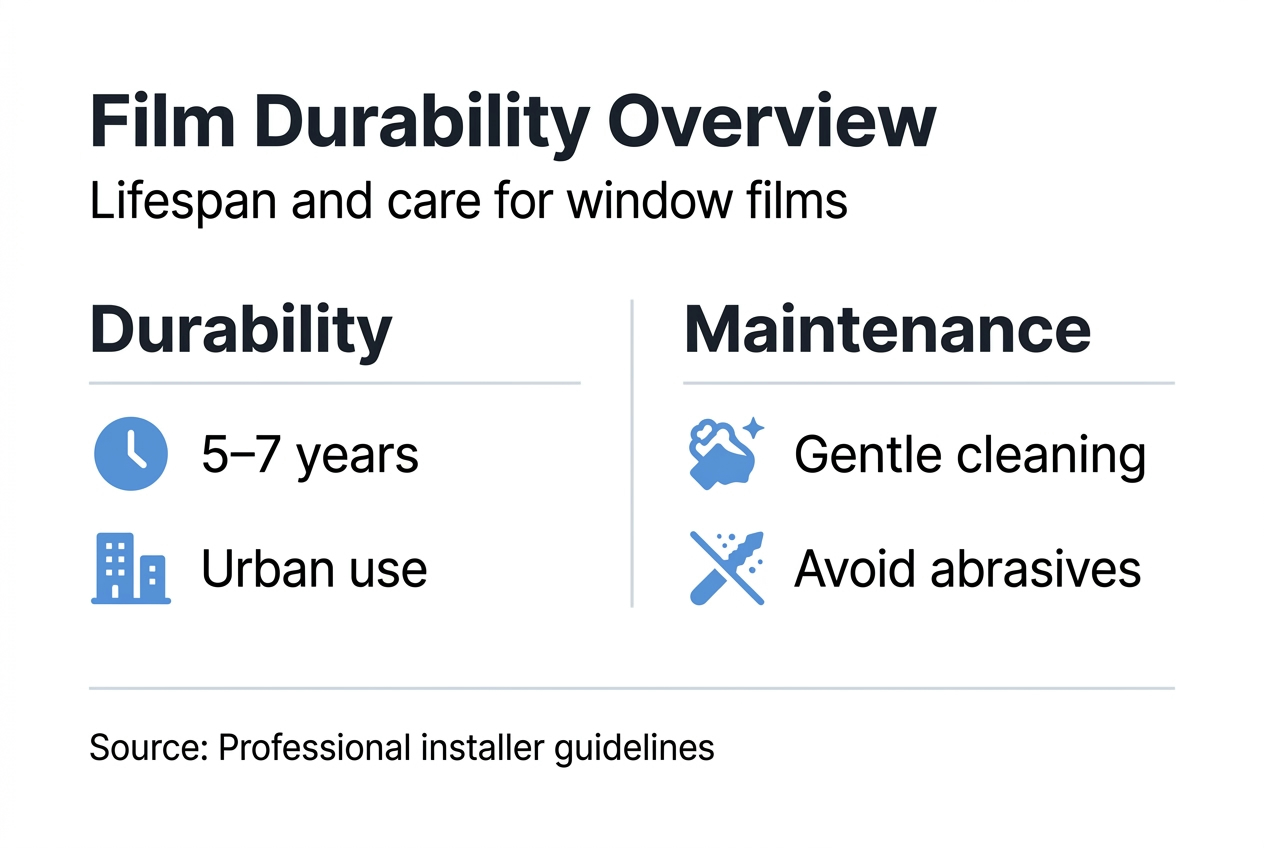
One way tinted films typically last 5-7 years under normal urban conditions before optical clarity and reflective properties degrade noticeably. Longevity depends on environmental stressors including UV radiation intensity, temperature fluctuations, and atmospheric contaminants. Coastal installations face salt spray corrosion, whilst desert climates accelerate UV degradation.
Metallic layers oxidise gradually when exposed to oxygen and moisture, dulling the mirror finish and reducing privacy effectiveness. This chemical process is inevitable but can be substantially slowed through proper maintenance protocols. Educating clients about care requirements during installation consultations improves satisfaction and reduces premature replacement requests.
Cleaning techniques significantly impact film lifespan. Abrasive materials like paper towels or rough sponges scratch the reflective surface, creating haze and reducing optical performance. Similarly, ammonia-based cleaners attack the metallic layers and adhesive bonds, accelerating delamination. Harsh chemicals might deliver immediate cleaning satisfaction but guarantee premature failure.
Recommended maintenance practices include:
- Using pH-neutral, automotive-specific glass cleaners formulated for tinted windows
- Applying cleaners with soft microfibre cloths using gentle circular motions
- Avoiding abrasive scrubbing pads or rough materials that scratch surfaces
- Cleaning windows in shade to prevent rapid drying and streaking
- Inspecting edges regularly for lifting or delamination requiring professional attention
Temperature extremes stress the adhesive bond between film and glass. Rapid heating during summer or freezing during winter causes expansion and contraction cycles that weaken adhesion over time. Parking in shaded areas when possible and using windscreen sunshades reduces thermal cycling stress.
Informing clients about these factors during installation demonstrates thoroughness and manages expectations realistically. Providing written care instructions as part of service delivery adds professionalism and reduces warranty claims stemming from improper maintenance. This educational approach positions you as a knowledgeable partner rather than merely a service provider.
Unlock professional efficiency with AEONCUT cutting software
Transitioning from maintenance best practices, discover how dedicated digital tools transform installation workflows and elevate finish quality consistently. AEONCUT software delivers AI-driven pre-cut patterns tailored precisely to specific vehicle models, cutting installation time by up to 60% whilst reducing material waste by up to 40%.
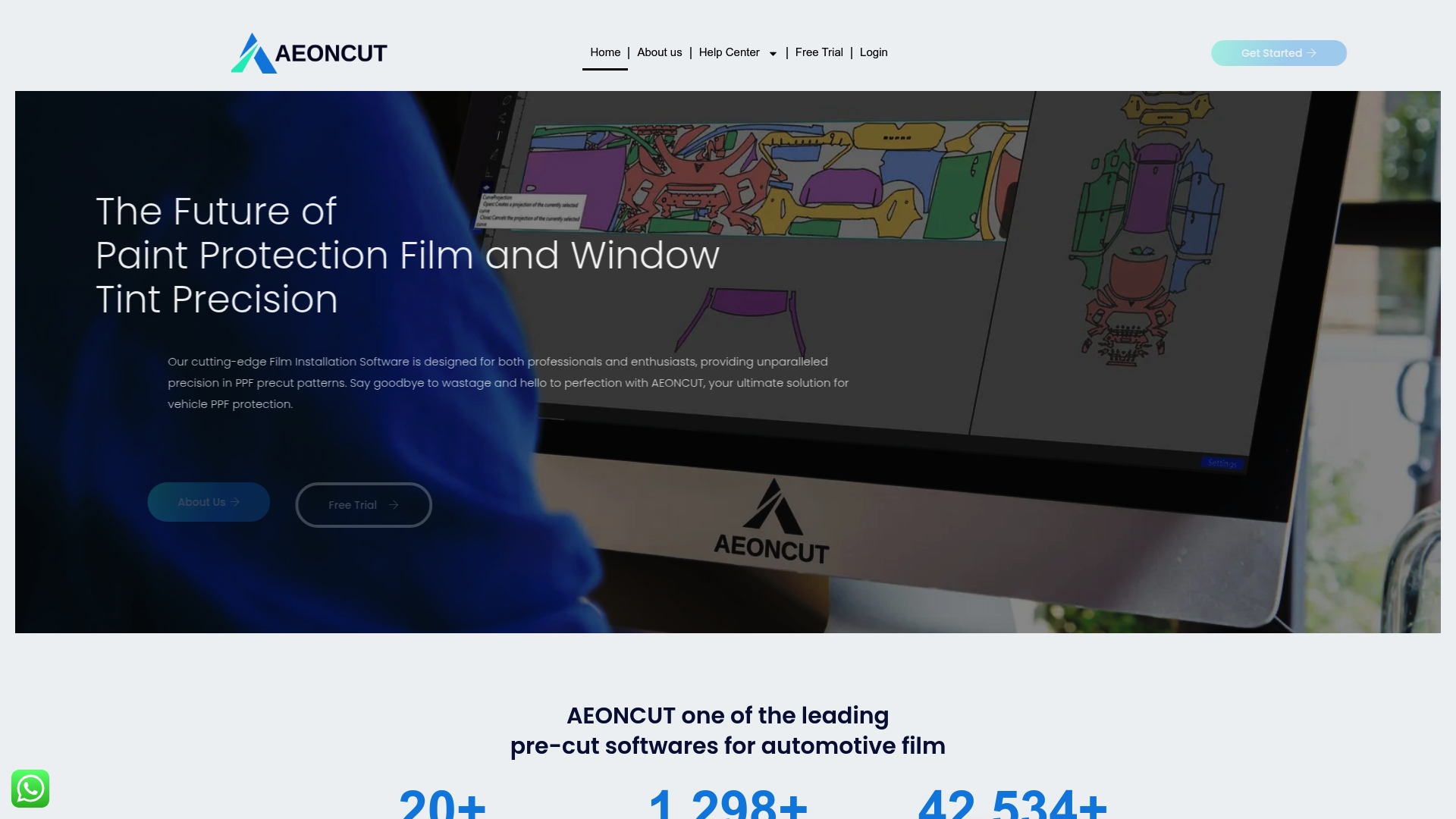
The platform integrates seamlessly with existing workflows, offering cloud-based pattern access, automatic updates, and comprehensive support. Professional installers gain millimetre-perfect accuracy without tedious hand-measuring, whilst reducing film waste significantly through intelligent nesting algorithms.
Master window tint software capabilities extend beyond basic cutting. Advanced features include pattern customisation, multi-vehicle project management, and real-time material tracking. This comprehensive approach addresses every aspect of professional tint operations.
Explore how one way window tint installations become 60% faster with AEONCUT tools designed specifically for automotive customisation professionals. Enhance precision, accelerate timelines, and deliver consistently superior results that build reputation and repeat business.
FAQ
What is one way tinted window film and how does it work?
One way tinted window film uses metallic reflective layers to create privacy by reflecting exterior light whilst allowing visibility from inside during daylight hours. Effectiveness depends on ambient light differences between outside and inside environments. When exterior light intensity exceeds interior illumination, the reflective surface prevents outside observers from seeing inward whilst occupants maintain clear outward views.
Can one way tinted films interfere with vehicle electronics?
Metallic layers in one way films may reduce GPS, cellular, and radio signal strength by up to 15%, affecting navigation systems and mobile connectivity. Consider film composition carefully when selecting materials for vehicles with sensitive electronic systems. Ceramic alternatives eliminate this interference whilst maintaining moderate privacy levels.
How does lighting affect one way tinted window film privacy?
Privacy is highest during daytime when exterior light is stronger than interior illumination. At night, with interior cabin lighting activated, privacy reverses completely and can expose interior visibility to outside observers. Clients must understand this fundamental limitation to avoid dissatisfaction and should consider interior lighting controls for night privacy.
What maintenance practices extend the lifespan of one way tinted films?
Use gentle, pH-neutral cleaners specifically formulated for tinted windows and soft microfibre cloths for cleaning. Avoid abrasive materials like paper towels and harsh chemicals including ammonia-based products that degrade metallic layers. Regular maintenance helps maintain reflectivity and optical clarity for 5-7 years under typical urban exposure conditions.
Recommended
- DIY Tint Installation Tips for Flawless Window Films – AEONCUT PPF Pre-cut Cutting software
- The Essential Guide to Window Tinting Basics – AEONCUT PPF Pre-cut Cutting software
- Types of Window Tint: Guide for Installers and Dealers 2025 – AEONCUT PPF Pre-cut Cutting software
- Window Tinting Explained: Complete Guide for Installers – AEONCUT PPF Pre-cut Cutting software
- How to Choose the Right Window Film for Your Home